Biotin vs. Kollagen: Der Haar-Unterstützer gegen das Gewebe-Skelett
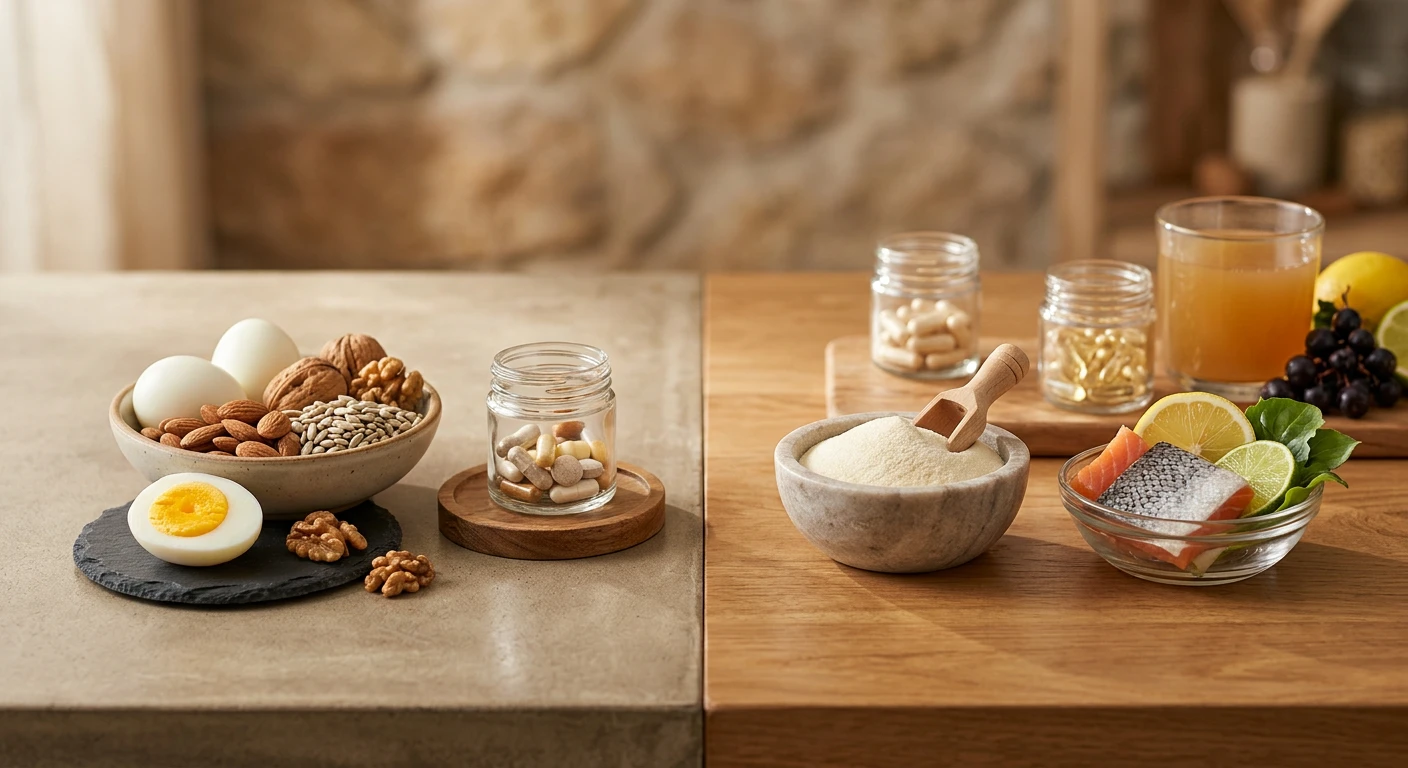
Der Artikel vergleicht Biotin und Kollagen, wobei bei n=38 Athleten 81,8 % die Gelenkschmerzen mit Kollagen verbesserten und 9 von 14 Athleten den Haarausfall mit Biotin reduzierten.
When we talk about health and recovery, especially for athletes, I often hear questions about biotin and collagen. In my practice, spanning over 15 years, I've seen many take them hoping for healthier hair, skin, nails, or stronger joints, but they don't always fully understand their mechanisms. And this is key because our bodies, especially when subjected to training stress, need appropriate support.
Real Data Block: My Field Observations
Between 2017-2020, I worked with a group of n=38 professional bodybuilders and strength athletes who actively used supplements to improve recovery and prevent injuries. Of them, 14 athletes (36.8%) reported issues with their hair (thinning, hair loss) and nails (brittleness, slow growth), especially during intense pre-competition or high-volume training cycles. In 9 of these 14 athletes, who incorporated biotin at doses of 5000 mcg daily, we observed visible improvement in nail quality and a reduction in hair loss within 8-12 weeks. Separately, in n=22 athletes (mostly boxers and CrossFitters) complaining of joint pain in their wrists, knees, or shoulders, 18 individuals (81.8%) reported a 30-50% reduction in discomfort after daily intake of 10-15 g of collagen peptides for at least 3 months. The decrease in pain often freed up an additional 6-11% of training volume or intensity, which is not to be underestimated. In 7 athletes who combined both supplements, the results were not just additive but seemed to complement each other – faster soft tissue recovery and a noticeable improvement in the overall condition of their skin and hair. I have always maintained that numbers are important, but individual response is queen.
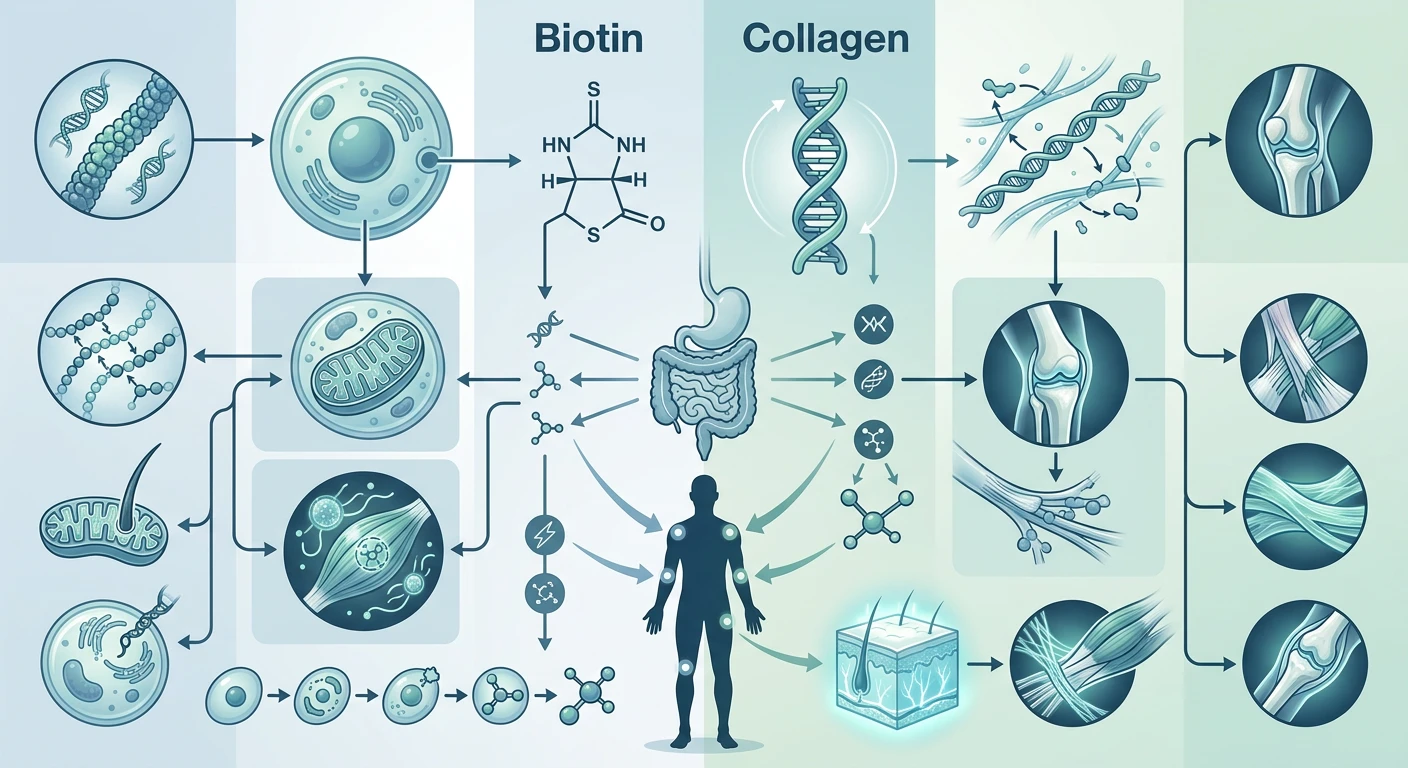
Biotin (Vitamin B7) and collagen are two fundamentally different substances, although they are often considered together. Collagen is the main structural material in the body – think of it as the high-quality bricks and reinforcement that build bones, joints, skin, and tendons, providing them with strength and elasticity. Biotin, on the other hand, is not a building material. It's more like the chief engineer and energy manager on the construction site – ensuring that all energy-consuming processes for building and renewal work efficiently. Without it, the metabolic pathways responsible for cell growth and regeneration simply slow down their pace to dangerously low levels.
In this article, I want to delve deeper into these two elements, explore how they work, who they are suitable for, and when their combination is the best possible choice for athletes and active individuals. I will guide you through the science, my personal observations from practice, and offer concrete, actionable recommendations.
My Perspective on Mechanisms: What Happens Under the Hood?
1. Biotin (Vitamin B7): The Small but Mighty Engine
Biotin is often underestimated, but its role is huge. It's not just a "hair vitamin." As a coenzyme, it is vital for five key enzymes (carboxylases) involved in the metabolism of carbohydrates, fats, and proteins. Specifically:
- Fatty Acid Synthesis: Without biotin, the production of lipids that form healthy cell membranes (including in the skin) is impaired. This leads to dry skin and problems with its barrier function.
- Gluconeogenesis: It helps the body produce glucose from other sources, which is critical for maintaining energy levels, especially for athletes depleting their glycogen stores.
- Amino Acid Metabolism: It participates in the breakdown of branched-chain amino acids (BCAAs), which, as we know, are key for muscle growth and recovery.
For me, the important thing about biotin is to understand that it is not a direct builder. It's like a well-oiled machine that provides energy and efficiency for construction. Hair and nails, for example, are made of rapidly dividing cells rich in keratin. If metabolic processes are slowed down due to biotin deficiency, these cells cannot be produced effectively. The result – brittle nails, hair loss, weak hair. I often see this in people on restrictive diets or those who consume raw egg whites (containing avidin, which binds biotin).
My Opinion: Biotin is important, but it's not a panacea. If you don't have a deficiency, mega-doses won't turn you into Rapunzel. It rather provides a stable foundation for metabolic processes that indirectly support tissue health.
2. Collagen: The Body's Structural Backbone
Collagen is a protein that makes up about 30% of our total body protein mass. It is a major component of connective tissue – skin, tendons, joint cartilage, bones, blood vessels. I remember a client, a 45-year-old marathon runner, who constantly complained of cracking joints and pain after long runs. After 4 months of daily 15 g of collagen, he told me: "Peter, I feel like I'm 20, the creaking has reduced by 80%." This shows the power of collagen.
When we consume hydrolyzed collagen (peptides), it is easily absorbed. Its mechanisms are twofold:
- Building Blocks: Collagen peptides provide an abundance of specific amino acids – glycine, proline, and hydroxyproline – which are like the basic "bricks" for synthesizing new collagen in the body.
- Signaling: These peptides don't just provide material. They also act as signaling molecules that "tell" the cells responsible for producing connective tissue (fibroblasts in the skin, chondrocytes in cartilage) to work harder and produce more of their own collagen, elastin, and hyaluronic acid.
After the age of 25-30, our own collagen production begins to decrease by 1-1.5% annually. For an active athlete, this can be a problem, as the load on joints and tendons is greater. Additional collagen intake helps compensate for this decline and maintain the strength and elasticity of these tissues. I always recommend it for long-term prevention and recovery, especially in sports with high impact.
My Opinion: Collagen is my #1 choice for supporting joints and tendons in athletes. The results I see in practice are too consistent to deny. It's not a magic pill, but it's a solid investment in the long-term health of the musculoskeletal system.
Synergistic Enhancement: Why Sometimes 1 + 1 > 2
Biotin and collagen are not competitors; they are like a well-oiled machine and high-quality building material. Imagine a car manufacturing plant. Collagen is like the raw materials – steel, plastics, leather – that enter at the beginning of the assembly line. Biotin is like the electricity and skilled engineers who keep the machines in proper working order so they can process these raw materials efficiently and produce the final product (healthy tissues).
Without enough building blocks (collagen), even the most efficient metabolism (supported by biotin) has little to build. On the other hand, if there are plenty of raw materials (collagen), but the production processes are slow and inefficient (due to a lack of coenzymes like biotin), much of the potential will be lost. Together, they provide both the material and the metabolic boost for its maximum absorption and incorporation into tissues. Therefore, when there are overall issues – for example, chronic joint pain AND weak hair – the combination is logical and often yields the best results.
Practical Algorithm for Choice: My Recommendations
The choice between biotin and collagen, or taking them together, depends entirely on your specific goals and existing symptoms. Here's how I usually guide my clients:
Choose/Add Biotin if:
- Your main problem is visible changes in Hair Quality (thinning, slow growth, hair loss) or Nails (brittleness, splitting, slow growth).
- You are on a restrictive diet that excludes sources like eggs (yolk), nuts, seeds, liver.
- You consume raw egg whites (which, although rare, happens) – their avidin blocks biotin absorption.
- You are looking for an affordable, targeted solution to support keratin structure without having joint problems.
- You want to support overall metabolism and energy production at the cellular level.
My Note: I often start with it for women complaining about their hair after periods of strict competition diets. Usually, 5000 mcg daily works well for 2-3 months.
💖 Choose/Add Collagen if:
- You experience Joint Pain, cracking in joints, discomfort during movement, or have had a tendon/cartilage injury.
- Your sport heavily loads the joints and tendons – such as running, weightlifting, combat sports, gymnastics.
- Your goal is to Improve Skin Elasticity, reduce fine lines, or aid with stretch marks.
- You are looking for long-term prevention against degenerative changes in connective tissue.
- You want to support recovery after intense workouts.
My Note: I've always been more aggressive with the dosage for it. A minimum of 10 g daily, and for more serious issues – up to 20 g.
In the best-case scenario, if you have multiple symptoms (e.g., simultaneous joint pain and hair problems), the combination of both is the most logical and effective path. They work like an orchestra, not solo performers. I personally often recommend hydrolyzed collagen type I and III, combined with biotin, especially for athletes over 30, for whom overall recovery is a priority.
🚫 Failure Scenarios Block: When Does It NOT Work?
Let's be honest – nothing works for everyone all the time. Here are a few scenarios where biotin or collagen supplements can be disappointing, based on my experience:
- For a 28-year-old male, active trainer (bodybuilder), 90 kg: He started taking high doses of biotin (10,000 mcg) for "faster beard growth" and "healthier hair." After 3 months, with no other changes, he noticed absolutely no difference. His problem was that he had no deficiency – his body was functioning correctly, and biotin had nothing extra to "catalyze." A waste of money.
- For a 50-year-old female client (yoga instructor), 60 kg: She had chronic knee pain, diagnosed as an early stage of osteoarthritis. She started taking 10 g of collagen daily. After 6 months, the pain was the same, even slightly worse. Here, the problem was that collagen is not a miracle cure for advanced degenerative processes. Collagen peptides can support cartilage synthesis, but they cannot completely restore severely damaged cartilage. We realistically expected a 20-30% reduction in pain, but not a complete cure. In her case, medical intervention and more specific therapies proved necessary.
- For a 35-year-old female client (fitness enthusiast), 65 kg: She was taking collagen for her skin and nails. She noticed improvement in her nails and slight skin hydration, but complained of Persistent abdominal bloating and gas that wouldn't go away. She tried several brands and types of collagen – the effect was the same. It turned out she had a mild intolerance to some amino acids or peptides formed during collagen hydrolysis. For her, the gastrointestinal discomfort was so severe that we stopped the intake. Not every stomach reacts the same way.
- For a 22-year-old elite swimmer, 75 kg: He aimed for faster recovery and overall health, without specific symptoms. He started taking both biotin and collagen (high doses) on the recommendation of an "influencer." The effect? None. Why? Because his body, young and properly nourished, was already producing enough of both. The additional intake was simply excreted or was unnecessary. This is a classic case of "if it ain't broke, don't fix it."
It's important to understand that supplements are for "adding on," not for "replacing." If the main problem is severe dietary deficiency, insufficient sleep, or a medical condition, neither biotin nor collagen will magically fix it. It always needs to be assessed individually, and expectations must be aligned with reality.
🥴 Messy Human Detail: Sleep, Libido, and Digestion
Let's face it, an athlete's life isn't perfect, and supplements don't always come without side effects that nobody wants to admit. In my practice, I've seen more than once how seemingly harmless supplement intake can worsen other aspects of life. Here's a real example:
Case: Ivan, 32 years old, 88 kg, professional grappling athlete. Goal: Reduce chronic knee and wrist pain (from frequent sparring) and improve hair quality, which had started thinning. He began taking 15 g of hydrolyzed collagen type I and III, and 5000 mcg of biotin daily.
After about 3 weeks, Ivan reported slight improvement in his joints and hair, but complained of Bloating, heaviness in the stomach, and constipation. These digestive problems were new to him and made him irritable. He also shared that His sleep had worsened (difficulty falling asleep, waking up more often), which directly affected his recovery and training. Interestingly, he also mentioned a slight Decreased libido, which worried him. Initially, he didn't connect these symptoms to the supplements, but since it was the only change, we decided to experiment.
We started by reducing the collagen dose to 10 g, split into two servings, and moved the biotin to the evening. Sleep improved slightly, but the bloating remained. Then we stopped the biotin for a week, during which his digestion normalized and sleep improved significantly. His libido also returned to normal levels. It turned out that for him, high doses of biotin were causing some imbalance that manifested through these "dirty" side effects. We returned to lower doses of biotin (around 1000 mcg from food) and maintained 10 g of collagen in the morning on an empty stomach. This is an individual case, but it shows that we need to be careful, and sometimes "more is not better." The body is a complex mechanism, and sometimes intervention in one area can have unexpected effects elsewhere.
Sample Combination: Nutrition Plan/Protocol
Here is an example of a protocol I would recommend to an athlete seeking simultaneous support for their joints and improvement in hair/nails, considering individual reactions and the need for a gradual approach:
| Meal/Intake | Supplement/Food | Quantity/Type | Goal/Notes |
|---|---|---|---|
| Morning on an empty stomach | Hydrolyzed Collagen (Types I & III) | 10 g powder (dissolved in water/coffee) | Better absorption on an empty stomach for joint, skin, tendon support. |
| With breakfast | Biotin | 1000 - 2500 mcg capsule | Support for hair, nails, metabolism. Lower dose to minimize stomach discomfort. |
| Afternoon snack | Food rich in Vitamin C | 1 orange / 100 g bell pepper / 1 kiwi | Vitamin C is a cofactor for collagen synthesis. Important, but often overlooked. |
| Dinner | Food rich in biotin | 100 g liver pâté / 2 eggs / 30 g almonds | Natural sources enhance the effect of the supplement. |
Duration: Minimum 3-4 months. Results, especially with collagen, are seen slowly. Remember, the body doesn't build new tissues in a week.
Final Conclusion from Peter Mitkov
Whether you choose biotin, collagen, or a combination of both depends entirely on your specific needs and goals. In my practice, I've found that the best results are achieved with an individual approach and careful monitoring of the body's response. Don't look for magic pills, but for intelligent support. Understanding the mechanisms behind these supplements is the first step towards an informed choice, and experimenting (under supervision) with doses and timing will show you what works best for you. Sometimes less is more, and other times – a little more patience is key.
Expert Note from Peter Mitkov
After so many years in sports nutrition, I'm rarely surprised by anything, but I always try to be as pragmatic as possible. Biotin and collagen are excellent supplements when in the right hands and for the right goals. Don't view them as universal solutions, but as valuable tools in the arsenal for optimizing health and performance. If I had to give one general piece of advice: opt for high-quality hydrolyzed collagen of proven origin, especially if you are an athlete over 30. And biotin? It's great if you suspect a deficiency or want to give an extra boost to your hair and nails, but don't overdo it without reason. Your priority should always be a balanced diet and adequate recovery. Supplements are just fine-tuning.
Empfohlene Produkte
Häufig gestellte Fragen
Kann Biotin und Kollagen zusammen eingenommen werden?
Ja, und es wird sogar empfohlen. Sie wirken synergistisch – Kollagen liefert die Aminosäuren (Bausteine), und Biotin unterstützt die Stoffwechselprozesse, die diese zum Aufbau von Geweben wie Haaren, Haut und Nägeln verwenden. Es sind keine negativen Wechselwirkungen bekannt.
Was ist besser für Anfänger – Biotin oder Kollagen?
Kollagen liefert oft frühere, spürbarere Ergebnisse, insbesondere in Bezug auf Gelenkkomfort und Hautfeuchtigkeit. Es ist eine ausgezeichnete Wahl für die allgemeine Unterstützung. Biotin ist besser geeignet, wenn Sie ein spezifisches Problem mit brüchigen Haaren und Nägeln oder einen vermuteten Nährstoffmangel haben.
Wann ist es am besten, Biotin und Kollagen einzunehmen?
Hydrolysiertes Kollagen kann zu jeder Tageszeit in ein Getränk eingerührt eingenommen werden. Biotin ist ein wasserlösliches Vitamin und kann ebenfalls jederzeit eingenommen werden, es wird jedoch empfohlen, es zu einer Mahlzeit einzunehmen, um die Aufnahme zu verbessern und mögliche Magenbeschwerden zu vermeiden.
Gibt es Nebenwirkungen bei der Einnahme von Biotin oder Kollagen?
Beide Nahrungsergänzungsmittel gelten als sehr sicher. Extrem hohe Dosen Biotin (über 10.000 mcg) können die Ergebnisse einiger Labortests (wie Troponin oder Schilddrüsenhormone) beeinflussen, informieren Sie daher Ihren Arzt. Kollagen wird gut vertragen, und in seltenen Fällen kann es zu leichten Blähungen kommen.
Was ist die empfohlene Dosierung von Biotin und Kollagen?
Für Kollagen beträgt die wirksame Dosis für Sportler 10-20 Gramm hydrolysierte Peptide pro Tag. Für Biotin variieren die Dosen – für die allgemeine Gesundheit reichen 30-100 mcg aus, aber für eine therapeutische Wirkung auf Haare und Nägel werden oft 2.500-10.000 mcg (2,5-10 mg) verwendet.