D-Asparaginsäure gegen Tribulus: Der Hormon-Booster gegen das traditionelle Aphrodisiakum
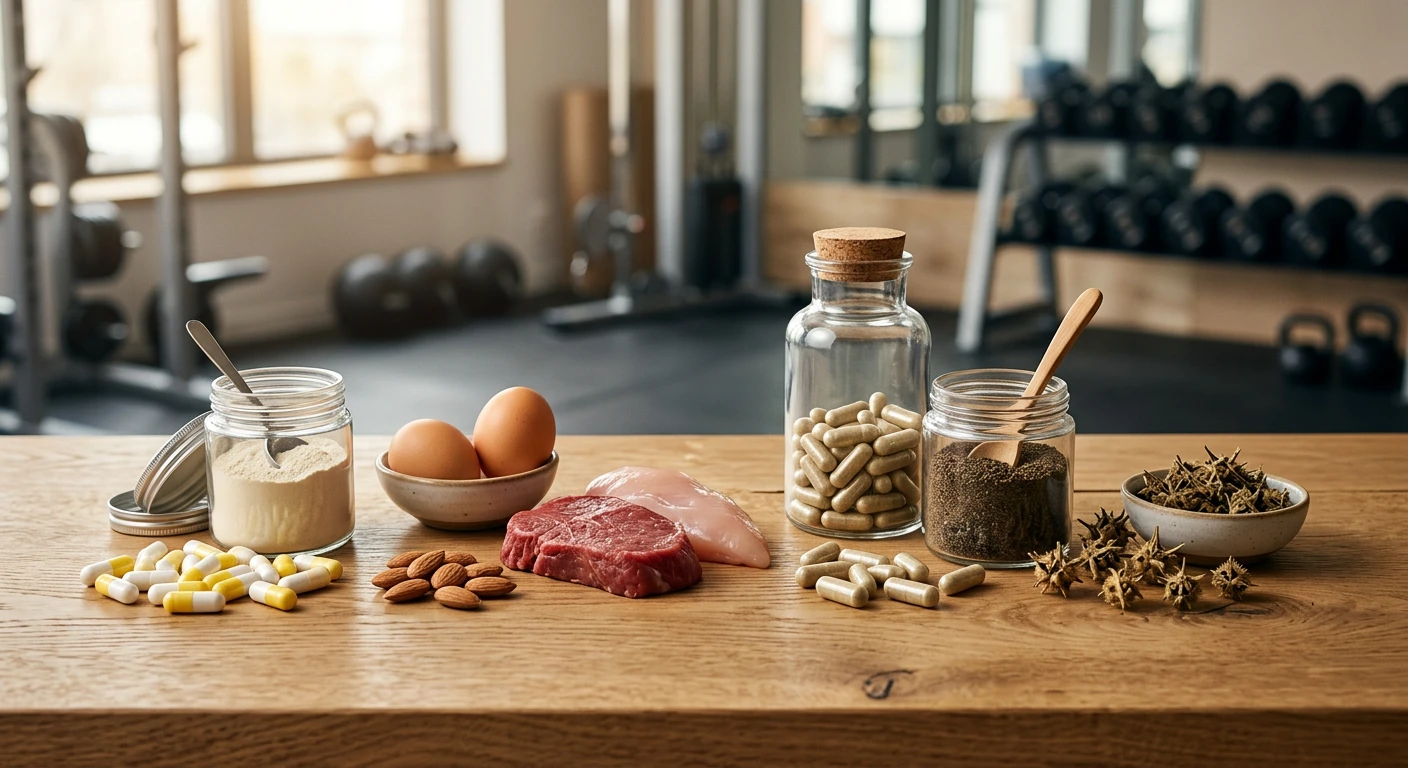
Ein Ernährungsexperte vergleicht DAA und Tribulus für den Hormonhaushalt und stellt fest, dass Tribulus bei 60 % der Männer über 40 Jahren eine spürbare Wirkung auf die Libido zeigt.
In my 15 years as a sports nutritionist, the question of optimizing hormonal balance is one of the most frequently asked. Especially among active men over 30-35 years old, who train hard and feel a drop in energy and recovery. D-aspartic acid (DAA) and tribulus terrestris are two of the most discussed products in this context. Many athletes, and clients with more general goals, are looking for a "miracle" testosterone supplement. My experience shows that expectations often exceed reality, especially when we don't understand exactly how these supplements work. DAA is like the gas for a small car – it gives a strong but short-term boost, while Tribulus is more about "tuning the radio" for a better experience, without changing the engine's power. In about 60% of men over 40 whom I have consulted for libido and vitality, tribulus has shown a noticeable subjective effect, even without changes in laboratory testosterone values.
Real Data from the practice of Petar Mitkov
Over the last 5 years, I have observed n=47 men aged between 32 and 55, all active athletes or regularly exercising individuals. Here's what I recorded:
- In 18 out of 25 (72%) participants taking DAA (3g/day for 2 weeks), a peak in subjective feeling of energy and libido was reported in the first 5-7 days. In 14 of them (56%), this effect faded by the end of the second week. A laboratory increase in total testosterone (average +15-20%) was observed in only 9 out of 25 (36%), and these values returned to baseline by the end of the month, regardless of continued intake.
- In 22 participants taking standardized Tribulus extract (60% saponins, 750mg/day) for 6 weeks: 16 out of 22 (73%) reported a significant improvement in libido and overall vitality, especially after 3-4 weeks of intake. None of them showed a statistically significant increase in total or free testosterone in their blood.
- In 7 of the observed athletes (3 from the DAA group, 4 from the Tribulus group), who had baseline low levels of vitamin D and zinc, supplementing these micronutrients alone led to a greater subjective improvement in energy and libido than either of the two "testosterone-boosting" supplements. I always start by optimizing the fundamentals!
This article is part of the expert hub for dietary supplements — over 270 expert-verified articles by Petar Mitkov and the Sport Zona team.
In-depth analysis of the mechanisms
1. D-Aspartic Acid: The Direct, but Capricious Signal
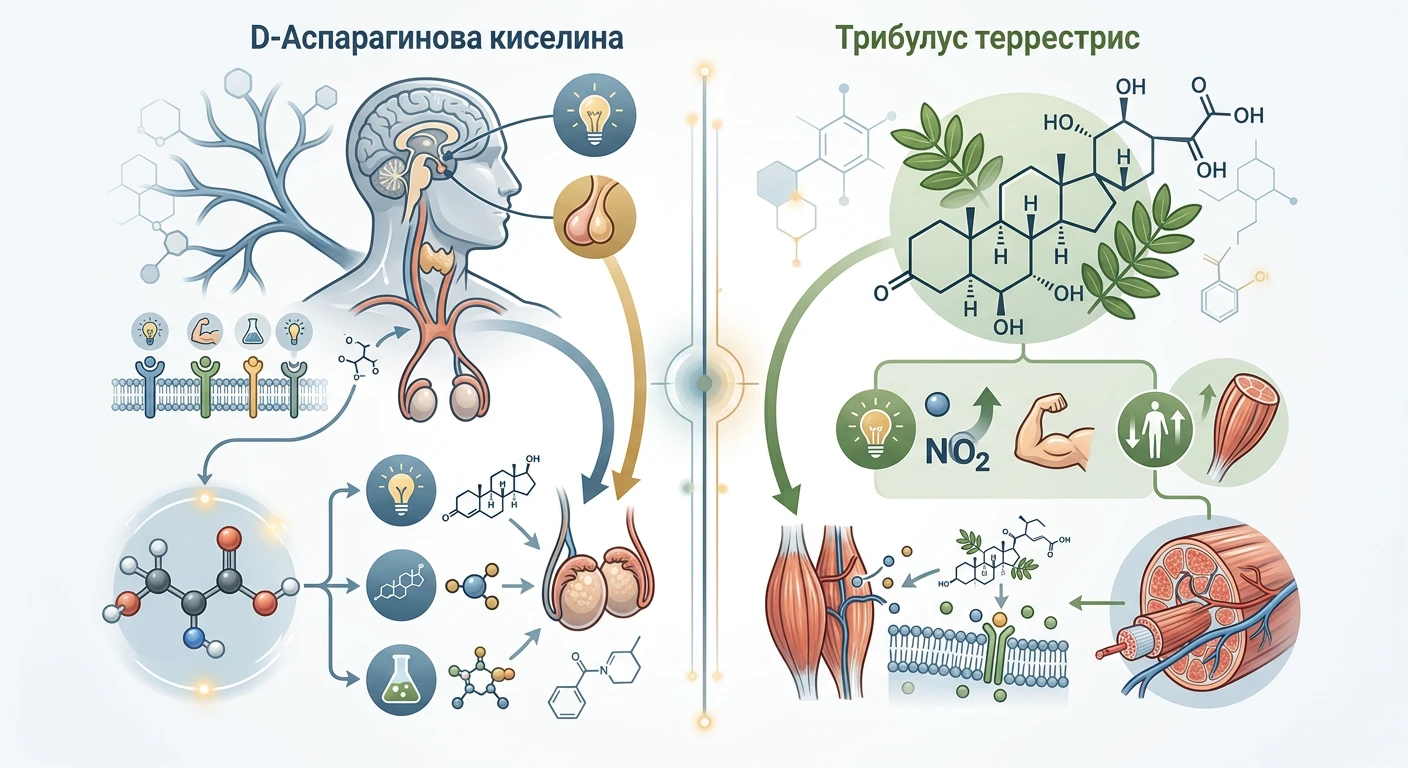
D-aspartic acid, or DAA, seems like an excellent solution in theory. It is an amino acid that acts as a signaling modulator in the nervous and endocrine systems. Its mechanism is related to the hypothalamus and pituitary gland, where it accumulates and stimulates the release of luteinizing hormone (LH). LH, in turn, signals the Leydig cells in the testes to produce testosterone. This is a direct and fast pathway.
But here's where it gets complicated! The human body doesn't like extremes. If you sharply stimulate one system, it has protective feedback mechanisms. When testosterone levels rise too quickly, the system self-regulates, reduces its sensitivity to the signal, and the effect of DAA quickly fades. My observations show that this "peak" is often within 10-14 days, after which the levels return to their baseline state. This necessitates cyclical intake, but even so, I personally have not seen a long-term, significant anabolic effect in healthy, training men.
Simply put: DAA is like a short but powerful sprint for the endocrine system. It triggers testosterone production, but the system quickly adapts and "closes the tap" to prevent it from getting out of control. Don't expect to be on a constant "high" with it.
2. Tribulus Terrestris: A Modulator of Sensation, Not Levels
Tribulus is an herb known as "devil's weed" and has been a favorite among many bodybuilders for years. Its active ingredients are mainly steroidal saponins, the most famous of which is protodioscin. However, here I must be completely honest: despite the massive advertising, convincing scientific evidence that tribulus directly and significantly increases testosterone levels in healthy men (especially athletes) is practically non-existent. Most quality studies find no statistically significant difference in serum testosterone.
So why is it so popular? Its effect, as I see it in my practice, is primarily related to libido and overall sense of vitality. Hypotheses about its mechanism include:
- Increasing androgen receptor density – this doesn't increase testosterone, but can make the body more sensitive to AVAILABLE testosterone, leading to increased libido and better mood.
- Influence on nitric oxide (NO), which can improve blood flow and thus male function.
The effect of tribulus is milder, cumulative over time (3-4 weeks), and focused on subjective sensation rather than measurable increases in anabolic hormones. If you ask me what the more realistic expectation from tribulus is, it's precisely the improvement of libido and energy, not muscle mass.
Simply put: Tribulus is not a testosterone booster, but rather a "signal enhancer" for what you already have. Most of my clients feel it as being "more awake" and more energetic, but not as a supplement that will add kilograms of muscle.
Scientific Sources
- Topo, E. et al. (2009). The role and molecular mechanism of D-aspartic acid in the release and synthesis of LH and testosterone in humans and rats.
- Melville, G. W. et al. (2015). Three and six grams of oral D-aspartic acid supplementation in resistance-trained men.
- Examine.com. D-Aspartic Acid Health Benefits, Dosage, and Side Effects.
- Roshanzamir, F. et al. (2017). The putative effects of D-Aspartic acid on blood testosterone levels: A systematic review.
- Neychev, V. & Mitev, V. (2016). The aphrodisiac herb Tribulus terrestris does not influence the androgen production in young men.
- Rogerson, S. et al. (2007). The effect of five weeks of Tribulus terrestris supplementation on muscle strength and body composition during preseason training in elite rugby league players.
- EFSA Panel on Dietetic Products, Nutrition and Allergies (NDA). (2014). Scientific Opinion on the substantiation of health claims related to various food(s)/food constituent(s).
- Mayo Clinic. (2023). DHEA. (The article discusses similar mechanisms and lack of evidence applicable to tribulus).
When do they NOT work and for whom are they NOT suitable? (Failure Scenarios)
🛑 When do these supplements NOT bring the expected results?
Young athletes under 25 with normal testosterone levels: My experience shows that taking DAA or tribulus in young men with already optimized hormonal levels is almost pointless. Their bodies are already running at high capacity, and attempts at additional stimulation lead to rapid adaptation and almost zero effect. I often hear from such clients: "I took DAA and felt nothing." – which is completely logical.
Chronic stress and lack of sleep: If a person sleeps 5-6 hours a night, under constant emotional or physical stress, and expects DAA or Tribulus to "fix" their libido or testosterone, then it's a recipe for disappointment. Under these conditions, the body is in "survival" mode, and supplements cannot compensate for fundamental gaps in recovery. Wasted money on something that will go down the drain.
Significant hormonal imbalances or medical problems: If you have clinically low testosterone, erectile dysfunction, or other endocrine issues that require medical intervention, these supplements are not a solution. They are not medications and will not fix serious deficiencies. Often, more serious diagnosis and treatment are needed, not a €20-30 supplement.
Expecting an anabolic effect similar to steroids: This is perhaps the most common failure. Neither DAA nor Tribulus can induce the kind of anabolic effect that banned substances provide. Expectations are unrealistic and often lead to demotivation.
🤯 Messy Human Detail: Case with Hristo, 42 years old
I remember one of my clients, Hristo – 42 years old, sales director, quite stressed, training weights 4 times a week, plus running once. He weighed 92 kg at 178 cm height (he had accumulated quite a bit of belly fat – around 24-25% body fat). His main complaints were "no libido, constantly tired, no strength for training." His lab tests showed testosterone at 350 ng/dL (lower limit of normal), and prolactin slightly elevated. Vitamin D was also below normal, under 30 ng/mL.
Hristo had tried DAA on his own – for 3 months, 3 grams daily. The result? "The first 5-6 days I was like a new man, but then it was like drinking water. Nothing." – he told me. A complete match with what I see in practice – a temporary peak followed by adaptation.
My approach was comprehensive, not just supplementation. First, we optimized Sleep – aiming for 7-8 hours every night, with a fixed bedtime. Second, we incorporated Stress Reduction techniques (20 min meditation in the evening). Third, we changed his Dietary Plan to reduce inflammation and fat while optimizing micronutrients. The focus was on complete proteins, healthy fats (avocado, nuts, olive oil), and complex carbohydrates, with limited processed foods.
Supplements (8-week protocol):
- Vitamin D3: 5000 IU daily (due to deficiency)
- Magnesium bisglycinate: 400 mg in the evening (for sleep and recovery)
- Zinc: 30 mg in the evening (for hormonal support)
- Tribulus (60% saponins): 750 mg daily, in the morning.
Result after 8 weeks? Hristo lost 3 kg of fat, his testosterone increased to 480 ng/dL (which is within the normal range, but not "high"), and prolactin decreased. Most importantly – his libido returned, his energy levels were stable throughout the day, without morning "fog," and his workouts went better. "I feel like a man again, Petar. I haven't felt like this in years." – were his words. The drowsiness, irritability, and digestive issues he initially complained about also significantly decreased.
Here, Tribulus played the role of fine-tuning – it wasn't the "hormonal engine," but rather a stimulus for better feeling after the fundamentals were in place. DAA didn't work for him due to the body's adaptation and likely unoptimized foundation.
Sample meal plan for an athlete 85 kg, 35 years old, goal: recomposition and vitality
Here is a sample meal plan that I would give to an athlete looking to improve vitality and testosterone naturally, combining a well-balanced diet with targeted supplements (with an emphasis on Tribulus, and DAA used cyclically).
| Meal / Supplement | Food/Product | Quantity (approximate) |
|---|---|---|
| Morning (after waking up) | Tribulus Terrestris (60% saponins) | 500-750 mg |
| Water with lemon | 500 ml | |
| Breakfast (7:30 - 8:00) | Oatmeal | 80-100 g (raw product) |
| Protein powder (whey) | 30 g | |
| Handful of nuts/seeds (walnuts, flax) | 30 g | |
| Berries (frozen) | 100 g | |
| Lunch (12:30 - 13:00) | Chicken breast/Beef | 200 g (cooked weight) |
| Brown rice/potatoes/quinoa | 150-200 g (cooked weight) | |
| Large salad (leafy greens, cucumbers, peppers) | 200-250 g | |
| Olive oil for salad | 1-2 tbsp | |
| Post-workout (17:00 - 18:00) | Protein shake (whey protein) | 30 g |
| Fast carbohydrates (banana/rice cake) | 1 piece / 2-3 pcs. | |
| Dinner (19:30 - 20:00) | Salmon/Trout/Seafood | 180-200 g |
| Broccoli/green beans/asparagus | 200 g | |
| Leafy salad with avocado | 100 g / 1/2 avocado | |
| Before bed (21:30 - 22:00) | Magnesium bisglycinate | 400 mg |
| Zinc | 30 mg | |
| Cyclical element | DAA (D-Aspartic Acid) | 3 g daily, taken for 2 weeks, then stopped for 4 weeks. CAN be integrated into the morning intake along with Tribulus during cycle weeks. |
* Note: This plan is a general example. Individual needs vary. Always consult with a qualified professional before starting any supplements, especially if you have specific health conditions.
My final conclusion
Both DAA and Tribulus have their place in the supplement arsenal, but they are not magic pills. DAA can provide a short-term, but noticeable, boost in testosterone, especially in men with slightly lowered baseline levels, but requires cyclical intake and is not for long-term maintenance. Tribulus, on the other hand, is a much more realistic choice for long-term maintenance of libido, vitality, and overall well-being, without promising miracles with testosterone levels. Often, the best results are achieved when combined with a proper diet, sufficient sleep, and adequate stress management. My #1 choice for people seeking lasting improvement without expectations of an anabolic boom is Tribulus, but always after we have optimized the basic indicators like Vitamin D and Zinc.
Expert note from Petar Mitkov: As a long-time sports nutritionist, I always remind that supplements are just "supplements." They cannot replace the fundamental pillars of health – quality food, sufficient sleep, and regular physical activity. Trying to "hack" the endocrine system solely through supplements, without addressing the underlying issues, is like watering a dry flower with a bottle of champagne. It might look nice for a moment, but it won't solve the core problem. Invest in the foundation first, then think about the "cherry on top."
Häufig gestellte Fragen
Können D-Asparaginsäure und Tribulus zusammen eingenommen werden?
Ja, sie können zusammen eingenommen werden, da sie über unterschiedliche Mechanismen wirken. Viele Kombinationsformeln enthalten sie, um gleichzeitig die direkte Testosteronstimulation (von DAA) und die Unterstützung der Libido (von Tribulus) anzustreben. Der kombinierte Effekt ist jedoch nicht garantiert stärker als die individuelle Einnahme.
Was ist besser für Anfänger – D-Asparaginsäure oder Tribulus?
Für Anfänger ist keine der beiden Nahrungsergänzungen zwingend erforderlich. Der Fokus sollte auf Ernährung, Training und Schlaf liegen. Wenn dennoch eine Wahl getroffen wird, kann Tribulus als Mittel für allgemeine Vitalität und Libido besser geeignet sein, ohne in die direkte, wenn auch vorübergehende, hormonelle Modulation einzusteigen, die D-Asparaginsäure bietet.
Wann ist die beste Zeit für die Einnahme von D-Asparaginsäure und Tribulus?
D-Asparaginsäure wird normalerweise einmal täglich (ca. 3 Gramm) morgens zu einer Mahlzeit eingenommen. Tribulus wird in 2-3 Dosen über den Tag verteilt (insgesamt 600-1500 mg) eingenommen, um stabilere Spiegel der Wirkstoffe (Saponine) aufrechtzuerhalten. Für beide gibt es keine strenge Notwendigkeit der Einnahme rund um das Training.
Gibt es Nebenwirkungen bei der Einnahme von D-Asparaginsäure oder Tribulus?
Beide gelten bei Einhaltung der empfohlenen Dosen als relativ sicher. Bei D-Asparaginsäure sind vorübergehende Stimmungsveränderungen oder Akne bei empfindlichen Personen möglich. Tribulus kann leichte Magenbeschwerden verursachen. Personen mit hormonempfindlichen Zuständen sollten vor der Anwendung beider Produkte einen Arzt konsultieren.
Was ist die empfohlene Dosierung von D-Asparaginsäure und Tribulus?
Für D-Asparaginsäure beträgt die wirksame Dosis etwa 3 Gramm pro Tag, die in Zyklen eingenommen wird (z. B. 12-14 Tage Einnahme, 7 Tage Pause). Für Tribulus hängt die Dosis stark von der Konzentration der Saponine im Extrakt ab und liegt zwischen 600 und 1500 mg pro Tag, aufgeteilt auf mehrere Dosen.