Wie man das richtige Gewicht für jede Übung wählt
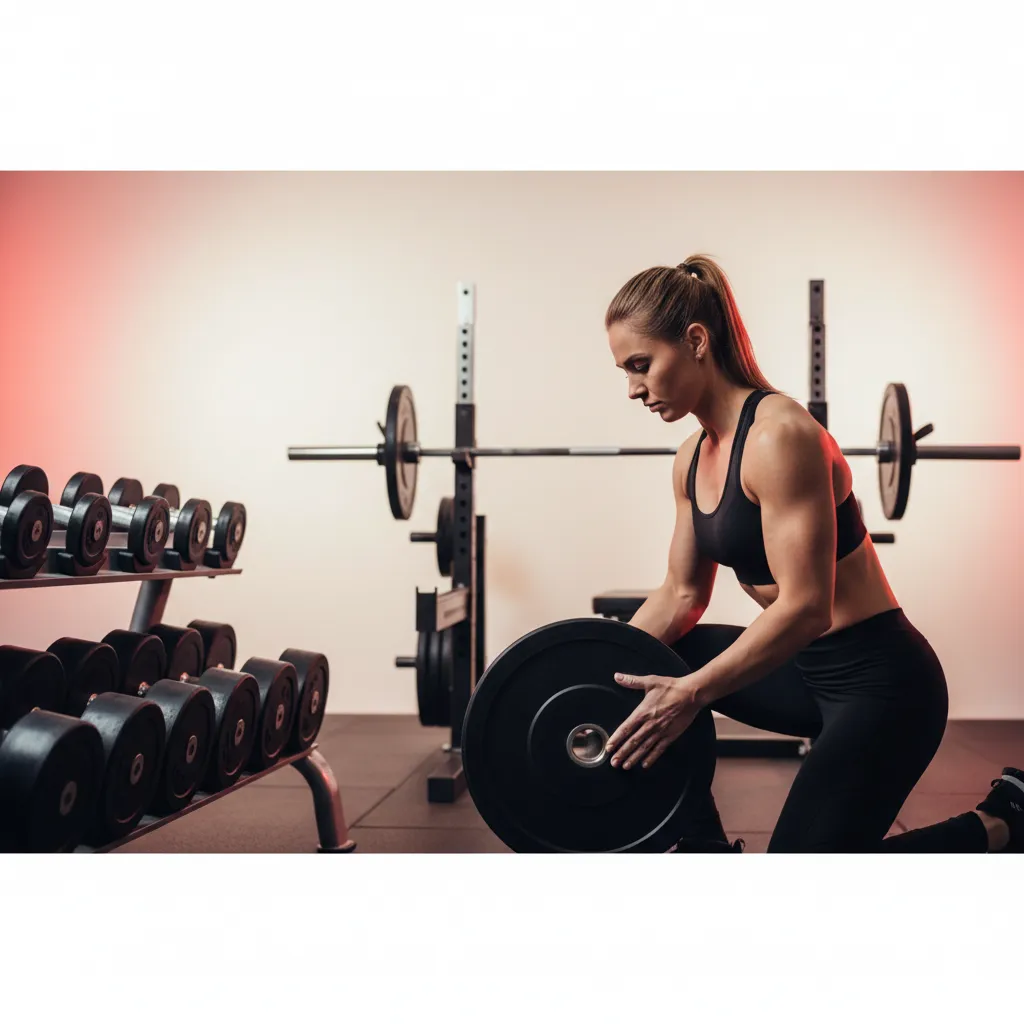
Erfahren Sie, wie Sie mit unserem Leitfaden, der sich auf RPE, Wiederholungsbereiche und Deload-Indikatoren konzentriert, das optimale Gewicht für jede Übung auswählen, um maximale Fortschritte zu erzielen und Übertraining zu vermeiden.
How to choose the right weight for each exercise is essential for the effectiveness of the training program, minimizing the risk of injuries, and achieving optimal hypertrophic and strength progress.
Choosing the right weight for each exercise is a cornerstone of strength training. Too light a weight will not stimulate the muscles enough, while too heavy a weight can lead to poor technique, injuries, and overtraining. The goal is to find the optimal balance that challenges the muscles enough to adapt and grow, but without compromising safety and recovery. In this guide, we will explore methods such as RPE (Rate of Perceived Exertion), repetition zones like 8-12, and indicators for the need for a deload phase, so you can train smarter and more effectively.
Understanding RPE (Rate of Perceived Exertion)
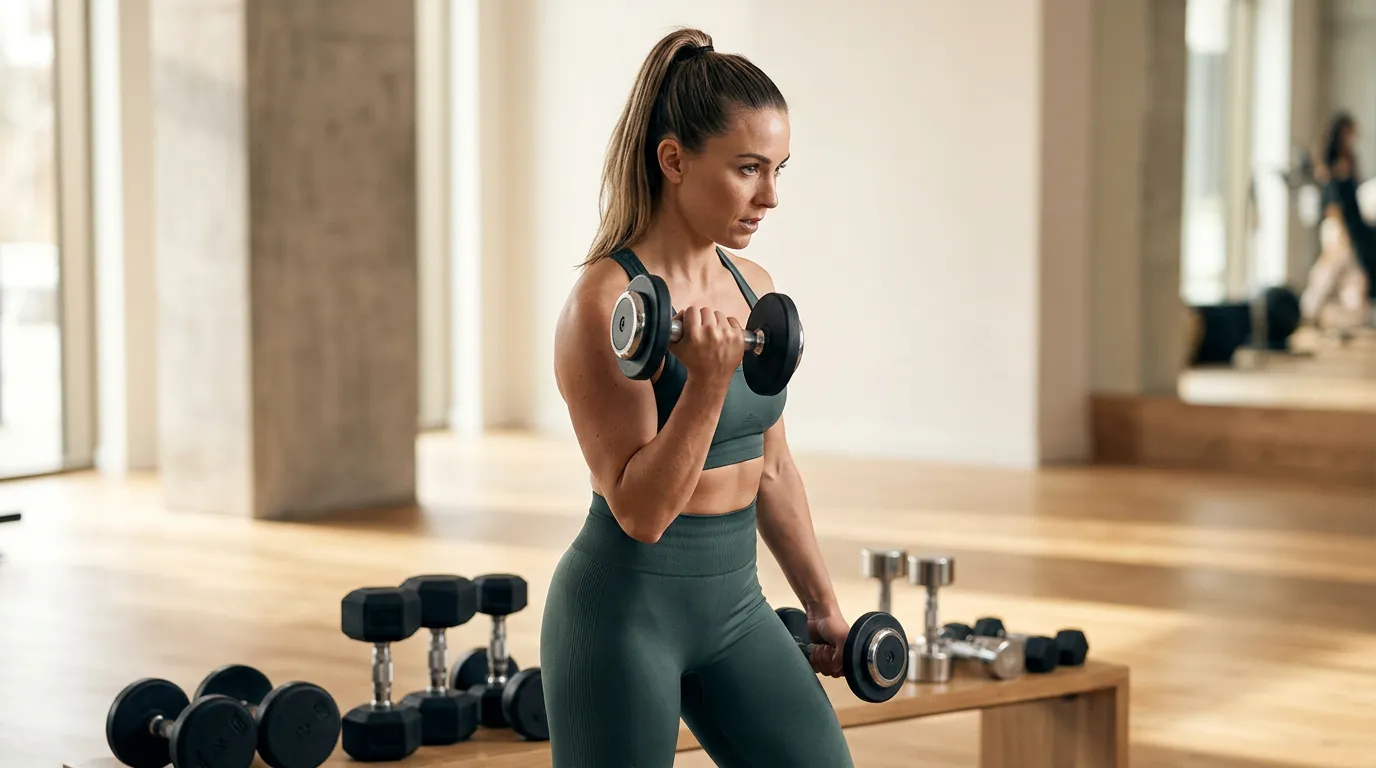
💬 Simply put: To train effectively and without injury, you need to use a weight that is challenging enough but allows you to perform the exercises with proper technique in every set.
RPE, or the Rate of Perceived Exertion scale, is a subjective tool that helps you gauge how difficult a particular lift or set was. The scale typically ranges from 1 to 10, where 1 is extremely easy, and 10 is maximal effort, where you couldn't do another repetition.
For hypertrophy and strength training, working in the RPE 7-9 range is often recommended. This means you should feel like you could do 1-3 more repetitions before reaching muscular failure. For example, if you are doing a set of 10 repetitions at RPE 8, it means that after those 10 repetitions, you could have done 2 more repetitions before complete muscular fatigue.
How to use RPE in training:
- Start of workout: Begin with a lower RPE (7-8) to warm up and gauge how you feel on a particular day.
- Main sets: Aim for RPE 8-9 for most working sets to provide sufficient stimulus for growth.
- Accessory exercises: You can use a slightly lower RPE (7-8) for more isolation exercises, where the focus is on volume and control.
- Progression: Over time, when you feel that a weight with a certain number of repetitions is now an RPE 7, it's a signal to increase the weight to maintain the desired RPE.
Optimal Repetition Range for Hypertrophy: 8-12 Repetitions
Although modern research shows that muscle growth can be achieved in a wide range of repetitions (from 5 to 30+), the 8-12 repetition range remains the gold standard for hypertrophy for most trainees.
The reason for this is that this range provides a good balance between sufficient mechanical tension (achieved with moderately heavy weight) and metabolic stress (achieved with higher blood volume in the muscle and accumulation of metabolites). Both are key mechanisms for muscle growth, as highlighted by leading researchers like Brad Schoenfeld.

How to combine 8-12 repetitions with RPE:
When choosing a weight to perform in the 8-12 repetition range, the goal is to reach RPE 7-9. This means:
- If you are doing 8 repetitions, the weight should be heavy enough that you feel you could do 1-3 more repetitions.
- If you are doing 12 repetitions, the weight should be such that after the 12th repetition, you are close to muscular failure, but still have 1-2 repetitions in reserve.
This combination allows you to find the weight that is "just right" – not so light that it's pointless, and not so heavy that it compromises technique or leads to excessive fatigue.
Progressive Overload: The Key to Long-Term Success
Without progressive overload, muscles have no reason to adapt and grow. This means gradually increasing the demands you place on them over time. There are several main ways to achieve progressive overload:
- Increasing the weight: The most obvious way. When a certain weight becomes easier (i.e., RPE decreases for a given number of repetitions), it's time to try a slightly heavier weight.
- Increasing the number of repetitions: If you can't increase the weight, try doing more repetitions with the same weight. For example, if you are doing 3 sets of 8 repetitions, try 3 sets of 9-10 repetitions.
- Increasing the volume: Add sets or exercises.
- Decreasing rest time: Makes you more resilient.
- Improving technique: Allows you to lift more effectively and safely.
- Optimal muscle growth (hypertrophy).
- Development of strength and endurance.
- Reduced risk of injury by maintaining good technique.
- Better recovery and less overtraining.
- Allows for intelligent progression and adaptation.
- Initial subjectivity in assessing RPE.
- Requires consistency in tracking workouts.
- Incorrect assessment can lead to insufficient stimulus.
- May be more complex for absolute beginners who are still learning the movements.
- Requires self-discipline to adhere to deload phases.
When to Deload: Indicators for Recovery
A deload phase is a period of temporarily reducing training volume and/or intensity, allowing the body to fully recover from accumulated fatigue. This is crucial for long-term progress and preventing overtraining.
Some sports physiologists, like Dr. Mike Israetel, recommend regular deload phases every 4-6 weeks, regardless of how you feel. Others prefer to emphasize the indicators your body provides.
Key indicators that you need a Deload Phase:
| Category | Indicator | Description |
|---|---|---|
| Physical | Persistent muscle soreness (DOMS) | Muscle soreness that does not subside after 2-3 days. |
| Decreased strength | Unable to lift weights that were previously easy. RPE is higher than usual for the same weight/repetitions. | |
| Joint/tendon pain | Feeling of discomfort or pain in the joints not directly related to the muscles. | |
| Mental/Emotional | Lack of motivation | Don't feel like going to training, feel it as an obligation. |
| Sleep problems | Difficulty falling asleep, restless sleep, waking up tired. | |
| Increased irritability | Easily irritated, feel more tense. |
How to Deload:
- Reduce volume: Do the same number of sets but with fewer repetitions (e.g., 50-60% of the usual number).
- Reduce intensity: Use 50-60% of the weights you normally use, with the same RPE (i.e., the weight should be very light).
- Reduce frequency: Train fewer days per week.
A deload phase typically lasts one week. The goal is to come out of it feeling refreshed and with renewed strength.
Practical Application and Progress Tracking
To choose the right weight and track your progress, it is crucial to keep records. Here's how:
- Record: For each exercise, record the weight, repetitions, and RPE for each set.
- Evaluate: At the end of each workout, review your records. Are you making progress? Do you feel stronger?
- Adjust: If a weight has become too easy (low RPE), increase it slightly. If it's too heavy (RPE 10+ and poor technique), decrease it.
This process of constant monitoring, evaluation, and adjustment is what will allow you to progress sustainably in the long term. Remember that training is both an art and a science. Listen to your body, experiment carefully, and be patient. The results will come.
See more in the fitness guides of Sport Zona Academy.
📚 Scientific Sources
- Strength and Hypertrophy Adaptations Between Low-Load Versus High-Load Resistance Training: A Systematic Review and Meta-Analysis (Schoenfeld BJ, et al., 2017)
- Application of the Repetitions in Reserve-Based Rating of Perceived Exertion Scale for Resistance Training (Helms ER, et al., 2016)
- A new resistance training-specific RPE scale measuring repetitions in reserve (Zourdos MC, et al., 2016)
- The Effects of Training Near to Failure on Muscular Adaptations: A Systematic Review and Meta-Analysis (Grgic J, et al., 2022)
🔬 Expert Note from Sport Zona
In my work with Bulgarian athletes, I observe that most people overestimate their capabilities or are afraid of heavy weights. We often hear "I want to feel the muscle," which leads to using excessively light weights, and this hinders progress. At the same time, the pursuit of "big numbers" pushes towards weights that compromise technique. Therefore, learn to read your body and be honest with yourselves.
See more in the fitness guides of Sport Zona Academy.
Empfohlene Produkte


Häufig gestellte Fragen
Wie oft sollte ich mein Gewicht anpassen?
Passen Sie Ihr Gewicht an, wenn Sie feststellen, dass die RPE für ein bestimmtes Gewicht und eine bestimmte Wiederholungszahl gesunken ist (z. B. von RPE 8-9 auf RPE 7). Dies kann je nach Ihrem Niveau und der Übung alle 1-3 Wochen geschehen.
Kann ich RPE verwenden, wenn ich ein absoluter Anfänger bin?
Für absolute Anfänger ist es wichtiger, sich auf das Erlernen der richtigen Technik zu konzentrieren. Sobald sie die Bewegungen beherrschen, können sie schrittweise mit RPE experimentieren und es als Leitfaden und nicht als feste Regel verwenden.
Wie lang sollte ein Deload sein?
Normalerweise dauert eine Deload-Phase eine Woche. Das Ziel ist es, das Volumen und/oder die Intensität so weit zu reduzieren, dass eine vollständige Erholung möglich ist, ohne Trainingsanpassungen zu verlieren.
Gibt es Übungen, für die der Bereich von 8-12 Wiederholungen nicht am besten geeignet ist?
Ja, für Kraftübungen wie Kniebeugen, Kreuzheben und Bankdrücken entscheiden sich viele Trainierende für niedrigere Wiederholungen (1-6) für maximale Kraftentwicklung. Für Ausdauer haben auch höhere Wiederholungen (15+) ihren Platz. Der Bereich von 8-12 Wiederholungen ist für die Hypertrophie bei den meisten Muskelgruppen optimal.