Ketose
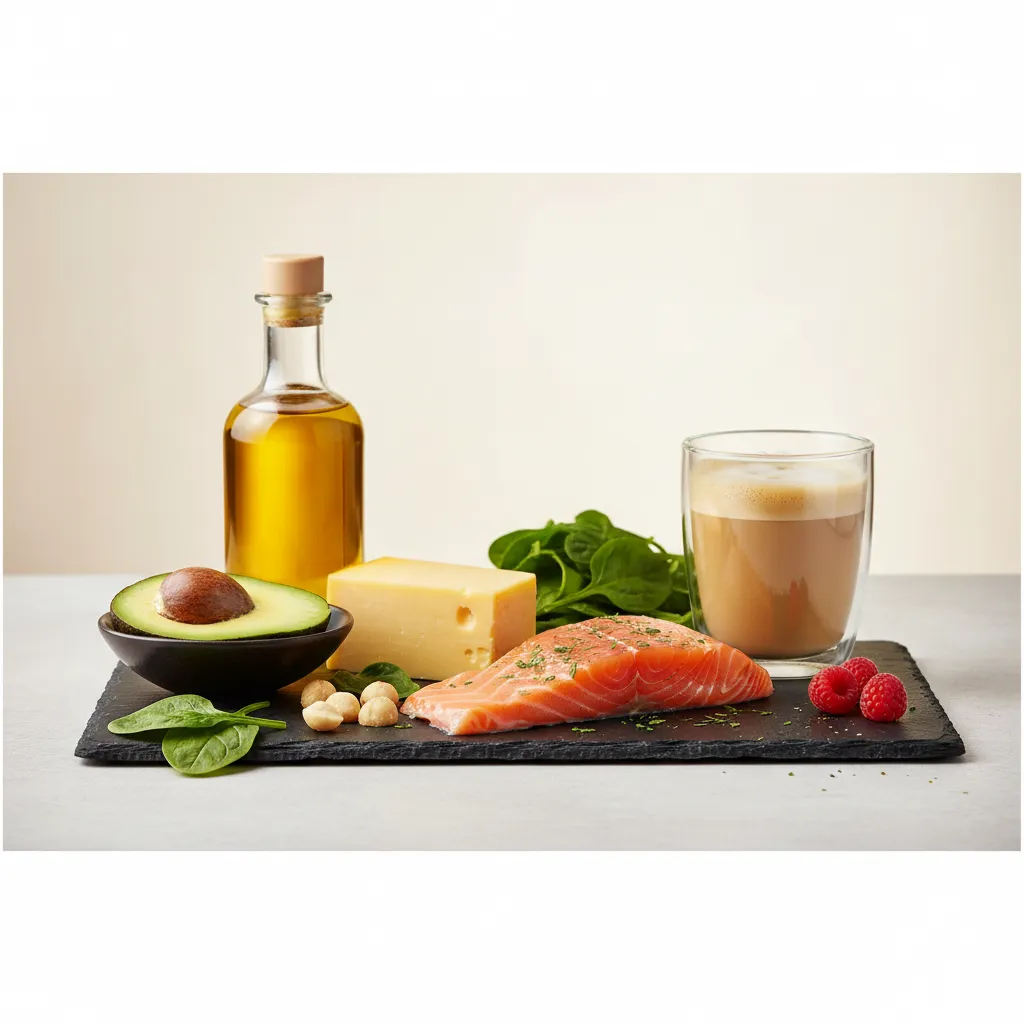
Kurze Experten-Definition: Was ist Ketose, wie funktioniert sie im Körper und wie wird sie im Sporternährung eingesetzt.
Kurze Antwort: Ketose ist ein Stoffwechselzustand, bei dem der Körper Fett zur Energiegewinnung nutzt und dabei Ketonkörper produziert, wenn die Kohlenhydratzufuhr begrenzt ist (unter 50 g/Tag). Sie ermöglicht eine effizientere Nutzung von Fettreserven, was sich positiv auf die Ausdauer auswirkt, aber Kohlenhydrate bleiben für hochintensive Belastungen entscheidend. Praktischer Tipp: Wenn Sie ein Sportler in Ketose sind, stellen Sie sicher, dass Sie täglich 1,6-2,2 g Protein/kg Körpergewicht zu sich nehmen, um Ihre Muskelmasse zu erhalten.
Ketose ist ein Stoffwechselzustand, bei dem der Körper Fett als primäre Energiequelle nutzt und dabei Ketonkörper produziert.
Für einen umfassenden Überblick siehe den vollständigen Leitfaden zur Sporternährung – ein führender Leitfaden des Expertenteams von Sport Zona.
Was ist Ketose?
Ketose ist ein Stoffwechselzustand, bei dem der Körper Fett als primäre Energiequelle anstelle von Kohlenhydraten nutzt und dabei Ketonkörper bildet.
📖 Ketose
Ketose ist ein natürlicher Stoffwechselzustand, bei dem der Körper aufgrund einer stark begrenzten Kohlenhydratzufuhr Fett als primäre Energiequelle nutzt und dabei Ketonkörper produziert.
Ketose ist ein natürlicher Stoffwechselzustand, der durch erhöhte Ketonkörperwerte im Blut gekennzeichnet ist, die als alternative Energiequelle für den Körper, einschließlich des Gehirns, dienen. Dieser Zustand tritt ein, wenn die Kohlenhydratzufuhr erheblich eingeschränkt ist, was zur Erschöpfung der Glykogenspeicher führt und den Stoffwechsel auf die Fettverbrennung umstellt. Die Leber verarbeitet Fettsäuren zu Acetoacetat, Beta-Hydroxybutyrat und Aceton – den drei Hauptketonkörpern.
Im Gegensatz zur Ketoazidose, einem gefährlichen Zustand, der mit unkontrolliertem Typ-1-Diabetes verbunden ist, ist die Ernährungsketose ein physiologischer Prozess, bei dem die Ketonkörperkonzentrationen im Blut normalerweise zwischen 0,5 und 3,0 mmol/L liegen. Dieser Bereich ermöglicht es dem Körper, Ketone effizient zur Energiegewinnung zu nutzen, ohne eine signifikante Senkung des Blut-pH-Werts zu verursachen. Das Einsetzen der Ketose ist eine adaptive Reaktion des Körpers auf Perioden begrenzter Nahrungsaufnahme oder geringer Kohlenhydratzufuhr und gewährleistet eine kontinuierliche Energieversorgung.
Wie funktioniert Ketose?
Ketose ist ein Stoffwechselzustand, bei dem der Körper Fett als primäre Energiequelle anstelle von Kohlenhydraten nutzt, was durch eine strenge Kontrolle der Kohlenhydratzufuhr (unter 50 Gramm pro Tag) erreicht wird.
- Effizientere Nutzung von Fettreserven als Brennstoff.
- Mögliche Verbesserung der Ausdauer bei längeren Belastungen.
- Reduzierung des Körperfetts bei einigen Athleten.
- Schonung der Glykogenspeicher.
Nachteile
- Unzureichende Energie für hochintensive Übungen ohne Kohlenhydrate.
- Risiko des Verlusts von Muskelmasse ohne ausreichende Proteinzufuhr.
- Erfordert eine strenge Kontrolle der Kohlenhydratzufuhr (unter 50 Gramm pro Tag).
Der Mechanismus der Ketose beginnt mit einer Reduzierung der Kohlenhydratzufuhr auf unter 50 Gramm pro Tag, oft sogar noch weniger. Dieser Glukosemangel zwingt den Körper, seine Körperfettreserven zu mobilisieren. Die Leber spielt eine zentrale Rolle, indem sie Fettsäuren, die aus dem Fettgewebe freigesetzt werden, durch einen Prozess namens Ketogenese in Ketonkörper umwandelt. Diese Ketonkörper zirkulieren dann im Blut und können von den meisten Körpergeweben, einschließlich Gehirn, Muskeln und Herz, als primäre Energiequelle genutzt werden.
Hauptschritte der Ketogenese:
- Eine reduzierte Kohlenhydratzufuhr löst einen Abfall des Insulinspiegels und einen Anstieg des Glukagonspiegels aus.
- Diese hormonellen Veränderungen stimulieren die Lipolyse – den Abbau von Triglyceriden in Fettsäuren.
- Fettsäuren werden zur Leber transportiert, wo sie durch Beta-Oxidation in Acetyl-CoA umgewandelt werden.
- Bei ausreichend hohen Acetyl-CoA-Spiegeln beginnt die Leber, Ketonkörper (Acetoacetat, Beta-Hydroxybutyrat und Aceton) zu synthetisieren.
Warum ist Ketose für Sportler wichtig?
Ketose ist für Sportler aufgrund ihres Potenzials, den Energiestoffwechsel und die Substratverwertung zu beeinflussen, von Interesse, da sie eine effizientere Nutzung von Fettreserven als Brennstoff während längerer körperlicher Anstrengungen ermöglicht.
Die National Academy of Sports Medicine (NASM) und die International Society of Sports Nutrition (ISSN) betonen jedoch, dass Kohlenhydrate zwar den Fettstoffwechsel verbessern, aber für hochintensive Übungen entscheidend bleiben. Die Proteinzufuhr für Sportler in Ketose wird im Allgemeinen als höher empfohlen, oft im Bereich von 1,6 bis 2,2 g/kg Körpergewicht pro Tag, um die Muskelmasse zu erhalten. Einige Studien deuten darauf hin, dass Ketose helfen kann, Körperfett zu reduzieren, was für Athleten, die ein optimales Kraft-Gewichts-Verhältnis benötigen, vorteilhaft ist, während andere Studien keine signifikanten Vorteile gegenüber Diäten mit moderater Kohlenhydratzufuhr für alle Arten von sportlichen Leistungen finden.
Was sind verwandte Begriffe?
Die Keto-Diät ist eine Ernährungsweise, die darauf abzielt, einen Zustand der Ketose hervorzurufen und aufrechtzuerhalten. Lipolyse ist der Prozess des Fettabbaus, der für die Produktion von Fettsäuren notwendig ist, die dann in Ketonkörper umgewandelt werden. Glukoneogenese sind die Prozesse der Glukosebildung aus Nicht-Kohlenhydrat-Quellen, die bei geringer Kohlenhydratzufuhr parallel zur Ketose aktiviert werden. Metabolische Flexibilität ist die Fähigkeit des Körpers, effizient zwischen der Nutzung von Kohlenhydraten und Fetten als Energiequelle zu wechseln.
Ketose kann für die Ausdauer von Vorteil sein, aber für hochintensive Aktivitäten bleiben Kohlenhydrate unverzichtbar. Ich empfehle hohe Proteine (1,8-2,2 g/kg) für Sportler in Ketose. – Petar Mitkov
Merke: Ketose ist eine metabolische Anpassung zur Nutzung von Fett als Energiequelle, die Möglichkeiten für sportliche Leistungen, insbesondere in der Ausdauer, bietet, aber eine sorgfältige Ernährungsbalance erfordert.
Wissenschaftliche Quellen
- Die ketogene Diät: Beweise für die Optimierung der menschlichen Gesundheit, 2018
- Jenseits der Gewichtsabnahme: Ein Überblick über die therapeutischen Anwendungen von sehr kohlenhydratarmen (ketogenen) Diäten, 2019
- Ernährungsketose zur Gewichtsregulierung und Umkehrung des metabolischen Syndroms, 2018
- Auswirkungen der ketogenen Diät auf den Trainingsstoffwechsel und die körperliche Leistungsfähigkeit bei Wettkampf-Radsportlern, 2016
Expertennotiz von Sport Zona
Bei unserer Arbeit mit bulgarischen Athleten stelle ich fest, dass Ketose ein nützlicher Ansatz für bestimmte Ziele sein kann, aber eine sorgfältige Überwachung erfordert. Nicht jeder Körper reagiert gleich, und es ist wichtig, die Richtlinien für die Zufuhr von Elektrolyten und Mikronährstoffen strikt einzuhalten. Die besten Ergebnisse erzielen diejenigen, die Ketose mit einem vernünftigen Trainingsplan und einem personalisierten Ernährungsplan integrieren.
Empfohlene Produkte

Häufig gestellte Fragen
Was ist Ketose und was ist ihr Hauptunterschied zur Ketoazidose?
Ketose ist ein natürlicher Stoffwechselzustand, bei dem der Körper Fett zur Energiegewinnung nutzt und dabei Ketonkörper produziert. Ketoazidose hingegen ist ein gefährlicher Zustand, der mit unkontrolliertem Diabetes einhergeht.
Wie funktioniert Ketose im Körper und wie wird sie ausgelöst?
Bei geringer Kohlenhydratzufuhr (unter 50 g/Tag) erschöpft der Körper seine Glykogenspeicher und beginnt, Fette in der Leber zu Ketonkörpern abzubauen, die als Energiequelle dienen.
Welche Vorteile hat Ketose für Sportler?
Ketose kann Sportlern helfen, ihre Fettreserven bei längerer Belastung effektiver als Treibstoff zu nutzen und dabei Glykogen zu schonen. Sie kann auch zur Reduzierung von Körperfett beitragen.
Hat Ketose Nebenwirkungen oder Einschränkungen für Sportler?
Laut Experten bleiben Kohlenhydrate auch bei Ketose für hochintensive Übungen wichtig. Eine erhöhte Proteinzufuhr (1,6-2,2 g/kg) wird zur Erhaltung der Muskelmasse empfohlen.