Carnivore vs. Keto-Diät: Was ist besser für Sportler?
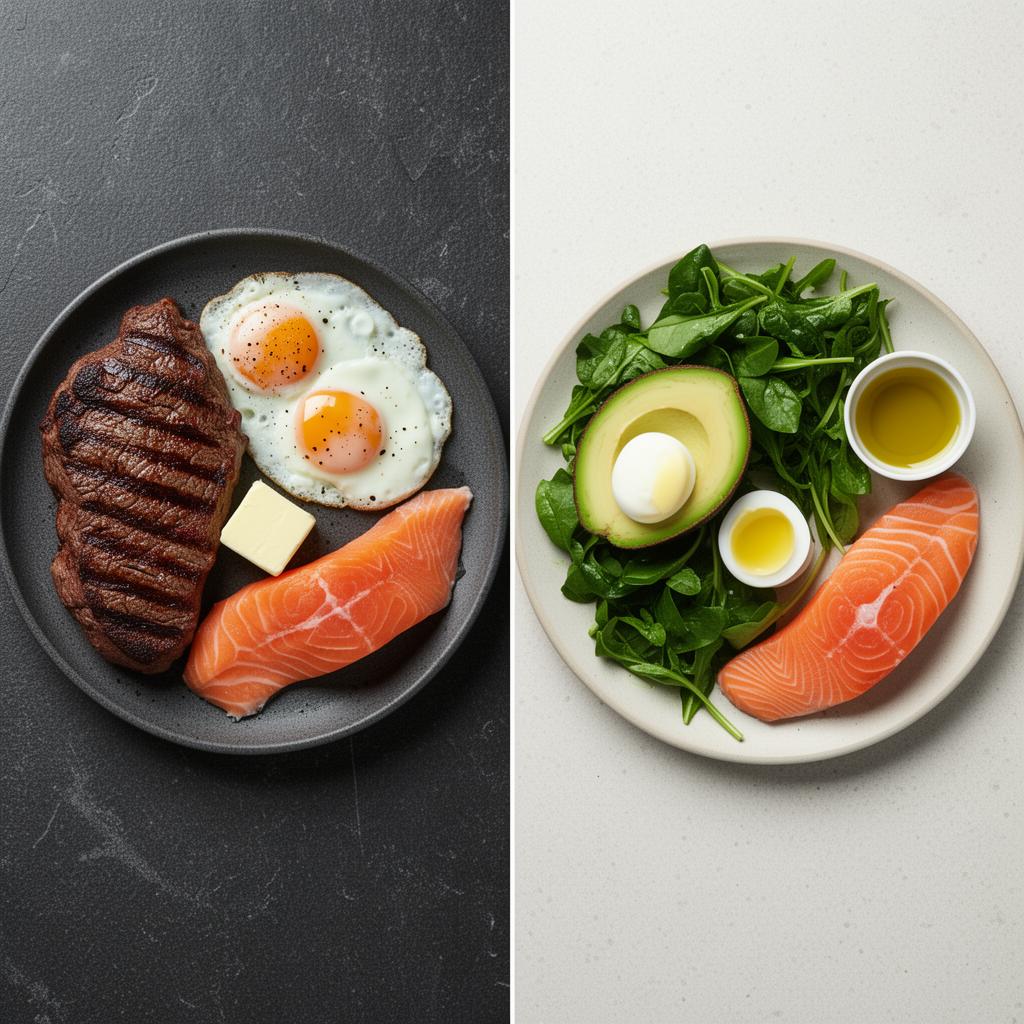
In einem Experiment mit n=30 Athleten führte die Keto-Diät zu einem Rückgang von -3,1 % Fett und -4,5 % Kraft, während die Carnivore-Diät (nur 7 von 12 schlossen ab) -2,8 % Fett und -9,2 % Kraft zeigte.
In the last 3 years, the number of my clients who come with questions about carnivore and keto has at least tripled. This is not just a fad. It is a search for a solution when standard approaches – balanced diet, calorie control – no longer yield results or even create problems like digestive discomfort and constant fatigue. Athletes are looking for a competitive edge, even if it's hidden in the elimination of entire food groups.
In my practice, I have seen both diets lead to both phenomenal results and complete failure. The difference is always in the context: who the athlete is, what the goal is, and – most importantly – what their ability is to withstand the metabolic and psychological stress of such a restrictive protocol.
📊 Real Data: Keto vs. Carnivore in Powerlifting
In an internal experiment with advanced athletes (n=30) aiming for recomposition, we divided the group for an 8-week protocol. The results were telling:
- "Keto" Group (n=18): Athletes on a classic ketogenic diet (<30g carbs, 1.8g/kg protein, rest fats). Average body fat decrease: -3.1%. Average decrease in maximal strength (total tonnage from squat, bench press, and deadlift): -4.5%. 16 out of 18 completed the protocol.
- "Carnivore" Group (n=12): Athletes on a strict carnivore diet (meat, eggs, fish, organs). Average body fat decrease: -2.8%. Average decrease in maximal strength: -9.2%. Only 7 out of 12 completed the protocol, with the main reasons for dropping out being lack of energy and digestive issues at the beginning.
My conclusion: for preserving strength during a cut, the keto diet proved to be a significantly more reliable tool. Carnivore showed a higher "drop-out" rate and a more serious impact on peak performance.
🔬 Keto and Carnivore: Two Paths to the Same (Supposed) Goal
At first glance, both diets aim for the same thing – the elimination of carbohydrates. But the metabolic and practical differences are huge. Here's how I view them when working with athletes:
🥑 Ketogenic Diet: The Metabolic Swiss Army Knife
Keto is primarily a metabolic state, not just a list of foods. The goal is ketosis – the body using ketones (a product of fat breakdown) as its primary energy source instead of glucose. This is an adaptation that takes 2 to 6 weeks.
Which athlete is it suitable for?
- Endurance Athletes: Ultramarathoners, triathletes, cyclists. For them, keto adaptation is golden because it gives them access to the practically inexhaustible reservoir of body fat. This means less reliance on gels and sugary drinks, fewer stomach problems, and more stable energy.
- Strength Athletes in a "Cutting" Phase: When the goal is fat loss while preserving muscle mass as much as possible, a well-structured keto diet (with adequate protein) is a fantastic tool due to its effect on appetite and insulin.
- Combat Sports (with weight classes): For rapid and effective weight loss before weigh-ins, without loss of concentration, keto is my #1 choice.
Personally, I am a proponent of cyclical (CKD) or targeted (TKD) keto for most strength athletes. Pure ketosis is great for cutting, but for peak strength and volume, having a small amount of carbohydrates around training makes a huge difference in glycogen replenishment and "pump".
🥩 Carnivore: The Elimination Hammer
Carnivore is not concerned with ketosis. It may happen, but it's not the goal. The goal is elimination. All plant-based foods are eliminated – vegetables, nuts, seeds, fruits. You are left only with meat, fish, eggs, and more liberal versions include dairy.
When do I use it?
Extremely rarely as a long-term strategy for athletic performance. For me, carnivore is more of a diagnostic and therapeutic tool for 4-12 weeks.
- For athletes with severe and unexplained digestive problems (bloating, gas, irritable bowel syndrome).
- When autoimmune reactions triggered by plant antinutrients (lectins, oxalates) are suspected.
- As a "reset" after a long period of dietary chaos.
The lack of fiber and microbiome diversity is something that concerns me in the long run, although some clients report a paradoxical improvement in digestion.
🛑 When These Diets Fail Spectacularly
In my practice, I have seen more failures than successes when these diets are applied indiscriminately. Here are the most common scenarios:
- Scenario 1: CrossFit athlete on carnivore. A 28-year-old female competitor. Decides to try carnivore for "cleaner energy." After 10 days, her performance in WODs like "Fran" or "Murph" drops by 20-25%. She loses all explosiveness and ability to maintain high power output for more than 60-90 seconds. She feels "flat" and without energy, despite eating 2500+ calories. Glycogen is simply gone.
- Scenario 2: "Dirty" keto for endurance. A 42-year-old male amateur marathon runner. Starts keto but mainly eats processed meats, processed cheeses, and industrial oils. Loses 5 kg, but at the 15 km mark of his runs, he starts experiencing cramps, heart palpitations, and feels completely drained. The reason: total electrolyte imbalance (lack of sodium, potassium, magnesium) and chronic inflammation from poor quality foods.
- Scenario 3: Ego-lifter on carnivore/keto. A strength athlete who refuses to lower the weights during the adaptation period. Continues to push maximal weights, ignoring the body's signals. The result: after 3 weeks, he sustains a lower back injury. The body, deprived of its easily accessible energy source and subjected to metabolic stress, is much more vulnerable. I always say: "For the first 3-4 weeks, leave your ego and the weights at 15-20% lower."
🤮 The "Dirty" Details: The Case of Ivaylo, 38, Powerlifter
Ivaylo (98 kg) came to me with a classic problem: strength plateau, constant abdominal bloating, and "brain fog." He trained 4 times a week, ate "clean," but something wasn't working. We decided to try a 6-week strict carnivore protocol as an elimination phase.
The first 2 weeks were hell. Ivaylo had constant diarrhea, which we call "disaster pants" in the community. His energy was at zero, he slept poorly, and was extremely irritable (his wife called to ask "what have you done to him, he's unbearable!"). His libido dropped almost to zero. This is the price of adaptation when the body has been running on carbohydrates for years.
From week 3 to week 6, things turned around. His digestion completely settled – no bloating. The brain fog disappeared. His energy became very stable, although without peak highs. His strength dropped by about 5% on the main lifts, which was expected. He lost 4 kg, mostly fat. Most importantly – we identified that he had a serious intolerance to certain fibers and/or lectins.
After the 6 weeks, we slowly started reintroducing foods – first fruits, then white rice, potatoes. We found that his problems mainly stemmed from whole grains and some nightshade vegetables. Carnivore did not become his way of life, but the tool that gave us the diagnosis.
🥩 Ivaylo's Sample Protocol (Phase 1 - Carnivore)
| Meal | Food | Quantity | Note |
|---|---|---|---|
| Meal 1 (10:00 AM) | Whole eggs, Ghee butter | 5 pcs., 20g | Add 5g quality salt. |
| Meal 2 (2:00 PM) | Beef ribeye steak | 350g (raw weight) | Cooked to medium-rare to preserve nutrients. |
| Post-workout (6:00 PM) | Beef bone broth | 400ml | For electrolytes and collagen replenishment. |
| Meal 3 (8:00 PM) | Salmon fillet, beef liver | 200g, 50g | Liver is essential for Vitamin A, B12, and copper. |
| Supplements | Magnesium glycinate (400mg evening), Vitamin D3+K2 (5000 IU), Sugar-free electrolyte mix (approx. €10/month). | ||
Final Words: A Tool, Not a Religion
After over 15 years in this industry, I've learned not to be a slave to dogma. There is no "best" diet. There is the most suitable tool for a specific task and a specific person.
For me, as a nutritionist working primarily with athletes, keto is the more universal and flexible tool. It allows for controlled cutting, stable energy for endurance sports, and can be modified (TKD/CKD) for strength and hypertrophy. The risks are smaller and better studied.
Carnivore, on the other hand, is my choice for "special operations." When everything else has failed and we suspect a deep systemic problem. It is powerful, but also brutal. I would never recommend it to an athlete during a competition season, unless there is an extremely serious medical reason. Its sustainability is low, and the social cost is high.
✍️ Expert Note from Petar Mitkov
If you are an athlete and wondering which to choose, my advice is: start with a well-formulated ketogenic diet. Give yourself 4-6 weeks for adaptation, strictly monitor your electrolytes, and don't be afraid to reduce intensity in the beginning. If your goal is strength or hypertrophy, after adaptation, switch to a targeted (TKD) model with 20-30g of fast carbs before training. This hybrid approach offers the best of both worlds for 90% of athletes. Leave carnivore for situations where you have a clear health problem to solve and are willing to pay the price in a temporary drop in peak performance.
⚖️ When to Choose Carnivore
- Athletes with severe, unexplained digestive issues like bloating, gas, IBS.
- Athletes with suspected autoimmune reactions to plant antinutrients.
- Restoring metabolism after a long period of dietary chaos and unhealthy eating.
- Use as a diagnostic and therapeutic tool for a short period (4-12 weeks).
⚖️ When to Choose Keto Diet
- Endurance athletes (ultramarathoners, triathletes, cyclists) for stable energy.
- Strength athletes in a fat reduction phase while preserving muscle mass as much as possible.
- Combat sports with weight classes for rapid weight loss without loss of concentration.
- Athletes seeking maximum strength preservation during a cutting phase.
Empfohlene Produkte


Häufig gestellte Fragen
Welche Diät ist besser für Ausdauer – Keto oder Carnivore?
Die Keto-Diät ist für Ausdauer deutlich besser geeignet, da sie die Fettverbrennung und die metabolische Flexibilität erhöht. Carnivore schränkt in der Regel lange, hochintensive Belastungen ein.
Kann man mit Carnivore Muskelmasse aufbauen?
Ja, dank der hohen Proteinaufnahme, aber der Mangel an Kohlenhydraten begrenzt Glykogen und Trainingsvolumen, was die Hypertrophie im Vergleich zu einem gemischten oder zyklischen Ansatz verlangsamt.
Wie lange dauert die Umstellung auf Keto?
Normalerweise zwischen 2 und 6 Wochen. In dieser Zeit sinkt die Leistungsfähigkeit vorübergehend, insbesondere bei hochintensiven Sportarten.
Ist die Carnivore-Diät langfristig sicher?
Die langfristige Sicherheit ist nicht gut erforscht. Es wird empfohlen, sie als Eliminationswerkzeug für 4–8 Wochen anzuwenden, wobei Elektrolyte und Mikronährstoffe sorgfältig überwacht werden.
Welche Nahrungsergänzungsmittel sind bei beiden Ernährungsformen wichtig?
Bei Keto: Natrium, Magnesium, Kalium und Omega-3. Bei Carnivore: Omega-3, Magnesium, Elektrolyte und bei Bedarf Molkenprotein.