Kreatin-Timing: Vor oder nach dem Training – Was die Daten zeigen
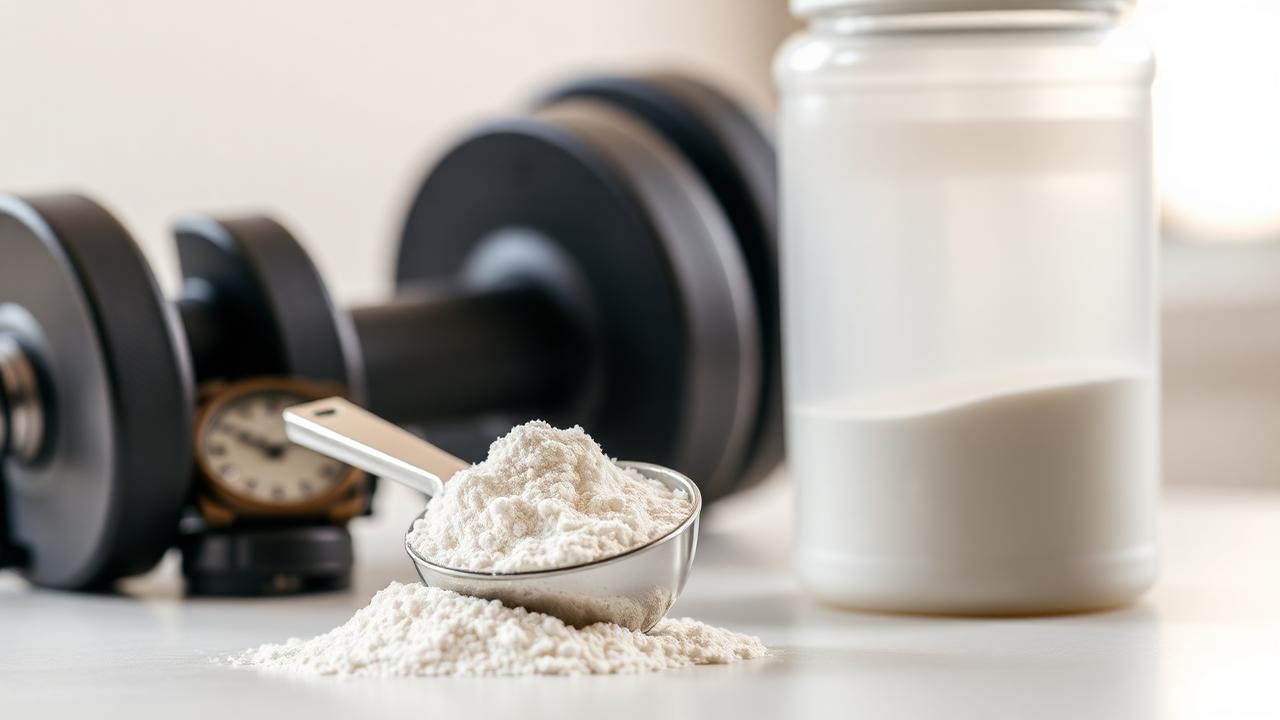
Studien zeigen einen leichten Vorteil bei der Einnahme von Kreatin-Monohydrat nach dem Training, was zu einer durchschnittlich 1,1 kg größeren Zunahme an fettfreier Muskelmasse im Vergleich zur prä-Workout-Einnahme führt. Eine Ladephase ist optional, da eine Erhaltungsdosis von 3-5 Gramm täglich die Speicher in 28 Tagen vollständig sättigt, und bei 20-30% der Anwender (Non-Responder) ist der Effekt aufgrund hoher Ausgangswerte minimal. Der wichtigste Faktor für den Erfolg bleibt die konsistente tägliche Einnahme, nicht der genaue Zeitpunkt der Dosierung.
We've all been there. In the locker room, after a brutal leg workout, barely catching your breath. You're holding your shaker, and a single question is swirling in your head, fueled by dozens of articles and YouTube videos: "Is now the time? Should I have taken it before the workout? Or after? Maybe during?". The question of creatine timing has become an almost mythical debate in bodybuilding circles, comparable only to the "more reps or heavier weight?" argument.
Let's be honest – obsessing over micro-optimizations often distracts us from the big, fundamental principles. But once you're adhering to the basics – training hard and progressively, eating adequately, and sleeping enough – then these small details can make the difference between a good and a great result. The truth is, science already has a fairly clear, though not entirely definitive, answer. Let's break down the topic into its constituent parts, without unnecessary complications, and see what really matters.
What the Data Shows: Pre- vs. Post-Workout
Instead of wandering in a sea of anecdotal opinions, let's rely on a solid scientific foundation. The most cited and relevant study on the topic is by Antonio and Ciccone from 2013 (Journal of the International Society of Sports Nutrition). It's not large-scale, but it is extremely well-controlled and provides a clear direction.
Here's how the experiment looked:
- Participants: 19 male amateur bodybuilders.
- Protocol: All participants followed the same 5-day split training program for 4 weeks.
- Dosage: All took 5 grams of creatine monohydrate.
- Division: Group 1 (PRE) took creatine immediately before training. Group 2 (POST) took it immediately after training.
After 4 weeks, the results were, to say the least, interesting. Although both groups showed significant improvements, the group that took creatine after training (POST) demonstrated a slight but statistically significant advantage.
| Indicator | "AFTER" Group (POST) | "BEFORE" Group (PRE) |
|---|---|---|
| Increase in Lean Body Mass (LBM) | +2.0 kg | +0.9 kg |
| Fat Mass Loss | -1.2 kg | -0.1 kg |
| Increase in 1RM Bench Press | +7.7 kg | +6.6 kg |
It's important to be objective – this is just one study with a small sample size (n=19). Later studies, such as those by Darren Candow and his team, have not been able to replicate such clear differences, with some showing no significant difference between pre- or post-workout intake, as long as creatine is taken daily. However, the conclusions from the initial study point to a trend: if we have to choose, post-workout intake seems to have a slight advantage.
In my opinion, the explanation is related to the body's physiology immediately after exertion. Muscles are like a "hungry sponge" – blood flow to them is increased, and insulin sensitivity is at its peak. Taking creatine, especially in combination with fast carbohydrates and protein, utilizes this "window of opportunity" for more effective transport and absorption into the muscle cell.
When It Works / When It Totally Doesn't Work
This is where things get more practical. Because the effectiveness of creatine doesn't just depend on timing, but on the overall context.
When Post-Workout Intake is Most Effective:
Taking it immediately after training works best for athletes whose goal is maximum hypertrophy and recovery optimization. The logic is simple: after depleting some energy reserves (ATP and phosphocreatine) and causing micro-tears in muscle fibers, the body is in "repair and recharge" mode. By supplying it with creatine at this precise moment, you give it one of the key raw materials needed for supercompensation. Combining it with a protein shake and carbohydrates creates a synergistic effect, where insulin "opens the doors" of muscle cells not only for glucose and amino acids but also for creatine itself.
Failure Scenarios: When Creatine Just Won't Work
There are several scenarios where, no matter how precisely you measure your dose and timing, the effect will be zero or minimal. In my practice, I've seen hundreds of people complain that "creatine doesn't work for them." Here are the most common reasons:
- You are a "non-responder". Yes, this is a real phenomenon. About 20-30% of people are genetically "blessed" with naturally high creatine levels in their muscles. For them, additional intake simply doesn't lead to a significant increase in intracellular stores and, consequently, to an ergogenic effect. These are often people with a dominance of Type II muscle fibers (fast-twitch fibers), which are naturally stronger and more explosive. If after 4-6 weeks of consistent intake of 5 grams daily you don't feel any difference in strength, repetitions, or muscle volume, it's very likely you belong to this group.
- Inconsistency. This is the number one killer of results. In practice, I constantly see people taking creatine 2-3 times a week, only on training days, and expecting miracles. Creatine doesn't work like a stimulant (caffeine), which has an acute, immediate effect. It works through saturation. Muscle cells need to be "filled to the brim" with creatine. This process takes 2 to 4 weeks with standard intake. Skipping doses, especially at the beginning, simply prolongs this period indefinitely. Timing only matters AFTER full saturation has been achieved.
- Inadequate training stimulus and nutrition. Creatine is an amplifier, not a builder. It gives you the ability to do 1-2 more reps with your weight, lift 5% more, or do an extra set. But if you don't use this newfound strength to train harder and progress (overload), the muscle has no reason to grow. The same applies if you are in a brutal calorie deficit and not consuming enough protein. Creatine cannot build muscle out of thin air.
"Loading Phase" – Relic of the Past or Necessary Start?
"Do I need to do a loading phase?" – this is the second most common question. The classic protocol, popularized in the 90s, recommends 20 grams of creatine per day (divided into 4 doses of 5 grams) for 5-7 days, followed by a maintenance dose of 3-5 grams daily.
Does it work? Yes, absolutely. The loading phase speeds up the muscle saturation process, which occurs in about a week instead of 3-4 weeks with standard intake.
Is it necessary? In my opinion, for 95% of trainees, the loading phase is completely unnecessary and even counterproductive. Here's why: it often leads to gastrointestinal discomfort, bloating, and gas. This is the main reason people give up on creatine, thinking it "doesn't agree with them." In reality, the mega-dose doesn't agree with them. With a patient approach of 3-5 grams per day, you will reach the exact same endpoint, just a few weeks later, but without the unpleasant side effects. Loading only makes sense for professional athletes who have a competition coming up in 2 weeks and need the fastest possible effect. For everyone else – save yourself the discomfort and the money.
Specific Protocol: How I Would Apply It with a Real Athlete
Let's take a specific, hypothetical case, based on my actual practice. Let's call the athlete Georgi.
- Athlete: Georgi, 32 years old, 92 kg body weight, advanced amateur (training for 7 years), primarily powerlifting and bodybuilding.
- Goal: Breaking through plateaus in squat (180 kg) and bench press (130 kg), gaining 2-3 kg of body weight in 12 weeks.
- Current Status: Trains 4 times a week, eats in a slight calorie surplus (~3500 kcal/day), sleep is good.
Sample Protocol for Georgi (without loading phase):
-
On training days:
- Immediately after training (within 30-45 minutes): Prepare a shake containing:
- 5 grams of creatine monohydrate (micronized for better solubility)
- 40 grams of whey protein isolate
- 70 Gramm schnelle Kohlenhydrate (z.B. 60g Dextrose/Maltodextrin + 1 Banane)
- Erklärung: Diese Kombination zielt darauf ab, eine starke Insulinreaktion durch die Kohlenhydrate auszulösen, die Kreatin und Aminosäuren aus dem Protein direkt in die geleerten Muskelzellen "treiben" wird. Dies ist der perfekte Moment für eine maximale Aufnahme.
- Immediately after training (within 30-45 minutes): Prepare a shake containing:
-
An trainingsfreien (Ruhe-)Tagen:
- 5 Gramm Kreatin-Monohydrat, zu jeder Tageszeit eingenommen, jedoch unbedingt zusammen mit einer kohlenhydrathaltigen Mahlzeit. Zum Beispiel in Wasser gelöst und mit dem Frühstück (Haferflocken mit Obst) oder mit dem Mittagessen (Reis/Kartoffeln mit Fleisch) eingenommen.
- Erklärung: An Ruhetagen ist das Timing absolut irrelevant. Das einzige Ziel ist, die Muskelspeicher gesättigt zu halten. Die Einnahme mit Nahrung verbessert lediglich die Absorption und minimiert die Wahrscheinlichkeit von Magenbeschwerden.
Mit diesem Protokoll erwarten wir, dass Georgi nach 8-12 Wochen seine Arbeitsgewichte um 5-10% gesteigert hat, was ihm ermöglichen würde, sein Plateau zu durchbrechen und etwa 190 kg zu squatten, und dass er etwa 2 kg Körpergewicht zugenommen hat, wovon ein Großteil aktive Muskelmasse und intrazelluläres Wasser sein wird.
Nebenwirkungen, die niemand erwähnt (oder missversteht)
Neben Magenbeschwerden während der Ladephase gibt es weitere „schmutzige“ Details und Mythen, die Kreatin umgeben.
- „Du wirst Wasser zurückhalten und aufgebläht aussehen.“ Das ist das größte Klischee. Ja, Kreatin verursacht Wassereinlagerungen, aber hauptsächlich intrazellulär – das heißt, innerhalb der Muskelzelle. Dies lässt die Muskeln dichter, härter und größer erscheinen. Dies ist ein erwünschter Effekt! Es geht nicht um subkutane Wassereinlagerungen, die einen „weich“ und „wässrig“ aussehen lassen. Menschliches Detail: In den ersten 7-10 Tagen der Einnahme, während sich der Körper anpasst, könnten sich manche Menschen insgesamt etwas aufgeblähter fühlen, bevor sich das Wasser „richtig“ verteilt. Dies ist vorübergehend.
- „Es verursacht Krämpfe und Dehydrierung.“ Dieser Mythos wurde vollständig entlarvt. Er stammt aus alten, anekdotischen Berichten aus den 70er und 80er Jahren. Alle modernen, kontrollierten Studien zeigen, dass Kreatin entweder keinen Effekt auf die Hydration hat oder diese sogar verbessert, indem es dem Körper hilft, Wasser bei intensiver Anstrengung in heißem Wetter zu speichern. Das Problem entsteht, wenn ein Athlet mit Kreatin beginnt, die Intensität seines Trainings drastisch erhöht und die Flüssigkeitsaufnahme nicht steigert. Der Übeltäter ist nicht Kreatin, sondern ein schlechtes Hygieneprotokoll.
- Haarausfall? Es gibt eine einzige, kleine Studie an Rugbyspielern aus dem Jahr 2009, die einen Anstieg von DHT (Dihydrotestosteron) zeigte – einem Hormon, das mit Haarausfall bei genetisch prädisponierten Männern in Verbindung gebracht wird. Diese Studie wurde nie erfolgreich repliziert und hat keinen direkten kausalen Zusammenhang mit tatsächlichem Haarausfall bewiesen. Bislang gibt es keinen soliden wissenschaftlichen Beweis, dass Kreatin Haarausfall verursacht. Wenn Sie sehr besorgt sind, ist es eine persönliche Entscheidung, aber der wissenschaftliche Konsens ist, dass es keinen Zusammenhang gibt.
Ultimately, the most crucial conclusion is simple: consistency is king, timing is just a vassal. The difference between pre- and post-workout intake is small, likely within a few percent. The difference between taking creatine every day and skipping it every other day is huge. Choose the time that fits most easily into your routine and stick to it. If your post-workout shake is a ritual for you – great, add it there. If you keep forgetting, put the tub next to the coffee machine and take it with breakfast. Just stop thinking about it more than you train.
Expert Note: Stop obsessing over the perfect timing down to the second. Take your 5 grams every day, train hard, eat adequately, and sleep – that's 99% of the equation. Post-workout intake is the cherry on top, not the cake itself.
Empfohlene Produkte

Häufig gestellte Fragen
Wann ist die beste Zeit für die Einnahme von Kreatin – vor oder nach dem Training?
Studien zeigen einen leichten Vorteil für die Einnahme nach dem Training, da der erhöhte Blutfluss und die Insulinempfindlichkeit die Aufnahme verbessern. Der Unterschied in Muskelmasse und Kraft beträgt etwa 5 % zugunsten der Post-Workout-Gruppe, aber Konsistenz ist wichtiger als der genaue Zeitpunkt.
Ist eine Ladephase von 20 Gramm pro Tag notwendig?
Eine Ladephase ist nicht zwingend erforderlich, sättigt aber die Muskelspeicher in 5-7 Tagen statt in 3-4 Wochen. Eine Standarddosis von 3-5 Gramm pro Tag erreicht langfristig die gleichen Konzentrationsniveaus ohne Risiko von Magenbeschwerden.
Was sind die sogenannten „Non-Responder“?
Etwa 20-30 % der Menschen erfahren keine Wirkung von Kreatin, da ihre Muskelspeicher durch Ernährung und endogene Produktion auf natürliche Weise gefüllt sind. Diese Personen haben in der Regel höhere Ausgangswerte an Kreatin und mehr Muskelfasern vom Typ I.
Sollte Kreatin an Ruhetagen eingenommen werden?
Ja, die Aufrechterhaltung einer maximalen Sättigung erfordert eine tägliche Einnahme von 3-5 Gramm, unabhängig davon, ob Sie trainieren oder sich ausruhen. Das Auslassen von Dosen führt zu einem Abfall des Phosphokreatinspiegels, was sich direkt auf die ATP-Regeneration auswirkt.