Kichererbsen gegen Linsen: Nährstoffdichte und glykämische Reaktion
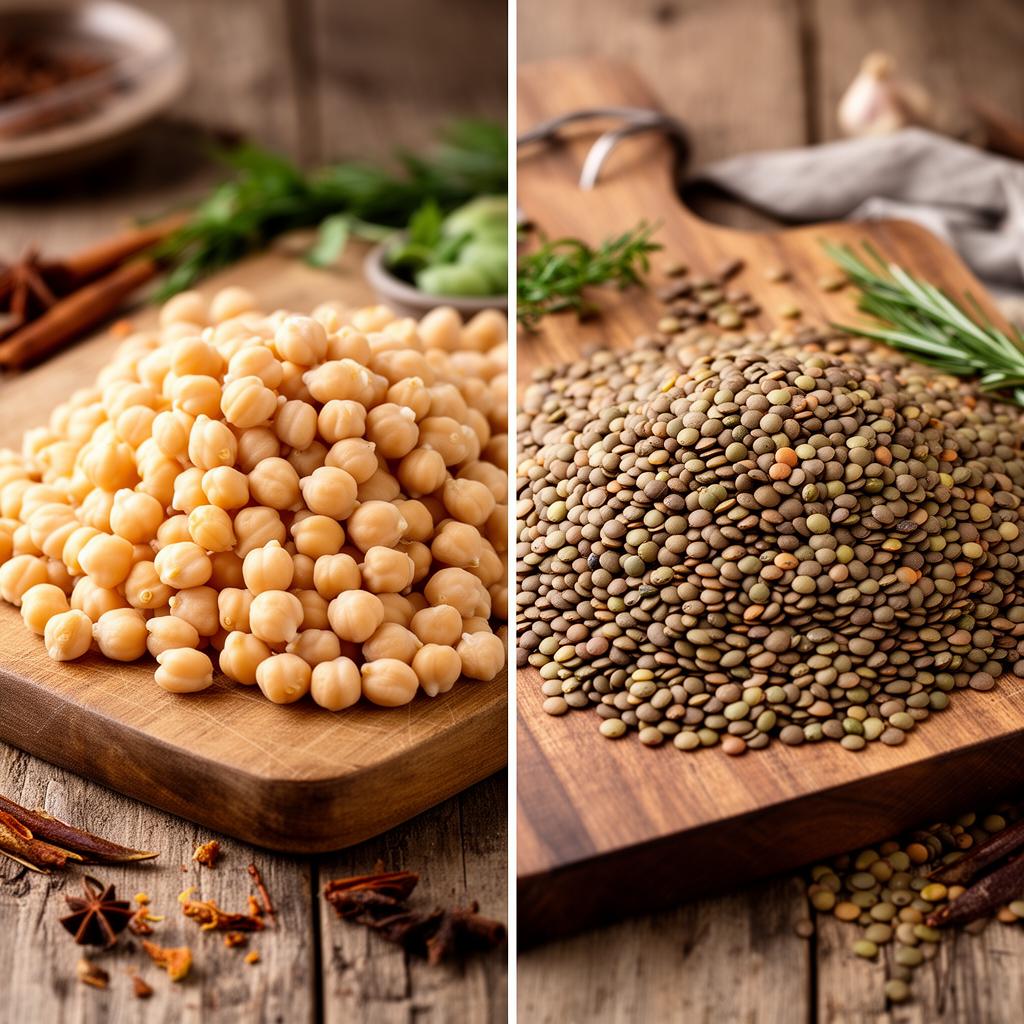
Linsen sind ein schneller Lieferant von Eisen und Folsäure mit einem ultra-niedrigen GI, während Kichererbsen das Darmmikrobiom durch resistente Stärke optimieren. Erfahren Sie, wann Sie sich für welche entscheiden sollten – von der Anti-Anämie bis zur Muskelproteinsynthese.
In modern nutrigenomics (2026), chickpeas and lentils are not just seen as a side dish, but as a strategic tool for regulating the microbiome and metabolic health. While lentils win in iron content, chickpeas offer a unique amino acid balance critical for protein synthesis.
🧩 Simply put
Imagine lentils as a USB-C charger — fast, compact, instantly charging with iron and folate. Chickpeas are like a power bank — larger, slower, but providing stable energy for hours through their fiber and resistant starch.
📊 Comparative Matrix: Systems Analysis (per 100g cooked)
| Characteristic | Brown / Green Lentils | Chickpeas (cooked) |
|---|---|---|
| Protein | 9.0 g | 8.9 g |
| Total Fiber | 7.9 g | 7.6 g |
| Iron (% DV)* | 18 % | 12 % |
| Folate B9 (% DV)* | 45 % | 43 % |
| Manganese (% DV)* | 25 % | 43 % |
| Glycemic Index | Very Low (~21–32) | Low (~28–36) |
| Cooking Time | 15–30 min (no soaking) | 60–90 min (requires soaking) |
*Percent Daily Value (DV) for adults according to USDA.
🧬 In-depth Mechanism Analysis
1. Lentils: The Fast Track to Blood Formation
According to Harvard Health, lentils are one of the best plant-based sources of non-heme iron.
💬 Simply put: Imagine lentils as a sports car – fast, efficient, and delivering energy instantly, ideal for quick recovery. Chickpeas, on the other hand, are like an off-road jeep – slower, but extremely stable and keeping the digestive "road" in perfect condition.
- Metabolic Effect: Its extremely low glycemic index (~21) makes it a "metabolic anchor," preventing sharp insulin spikes.
- Folate (B9): Lentils are critical for DNA synthesis and cell division — more effective than chickpeas in supporting nervous system health and during pregnancy.
🏋️ Observation from SportZone
Athletes who include lentils 3–4 times a week show more stable ferritin levels without the need for iron supplements. The effect is particularly noticeable in women in an active training phase.
2. Chickpeas: The Architect of Satiety and Gut Health
Chickpeas contain a higher percentage of resistant starch and soluble fiber (raffinose).
💬 Simply put: If your body were a computer, lentils would be like a fast RAM module, providing instant access to important data (nutrients). Chickpeas are like a large hard drive, storing information and keeping the system stable in the long run.
- "Second Meal" Effect: Consuming chickpeas improves postprandial glucose and insulin responses, meaning they help stabilize blood sugar levels for hours after eating.
Empfohlene Produkte
Häufig gestellte Fragen
Welches Hülsenfrüchte enthält mehr Eisen – Kichererbsen oder Linsen?
Linsen enthalten etwa 18 % des täglichen Eisengehalts pro 100 g gekochtes Produkt, im Vergleich zu 12 % bei Kichererbsen. Kombinieren Sie sie mit Vitamin C für eine maximale Aufnahme.
Ist es sicher, jeden Tag Kichererbsen und Linsen zu essen?
Ja, bei richtiger Zubereitung (Einweichen und Kochen) ist der tägliche Verzehr sicher und empfehlenswert zur Verbesserung des Mikrobioms und zur Stabilisierung des Blutzuckerspiegels.
Warum verursachen Kichererbsen mehr Blähungen als Linsen?
Kichererbsen enthalten mehr Raffinose und Lektine. 12-stündiges Einweichen mit Wasserwechsel reduziert Lektine um bis zu 85 %, und vollständiges Kochen um über 95 %.
Kann ich Fleisch durch Kichererbsen und Linsen ersetzen?
Die Kombination aus Kichererbsen und Linsen deckt fast das gesamte Aminosäurespektrum ab. Fügen Sie braunen Reis oder Quinoa für eine vollständige Proteinübereinstimmung hinzu.