Hähnchenbrust vs. Schenkel: Die Biomechanik der Nährstoffe
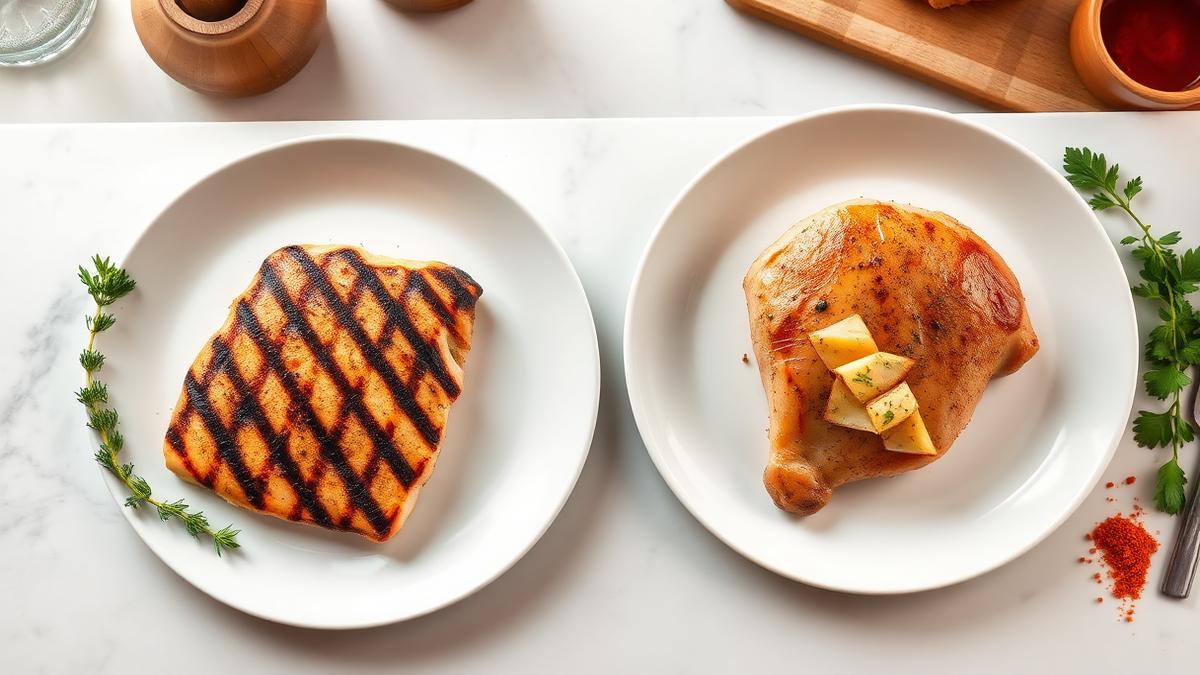
Warum der „Goldstandard“ strategisch durch etwas Besseres ersetzt werden kann. Erfahren Sie die Unterschiede bei Protein, Zink, Eisen, Selen und praktischen Protokollen für Masse und Definition.
In modern sports nutrition in 2026, the focus is shifting from pure protein quantity to micronutrient density. For active individuals, chicken breast is a tool for caloric manipulation, while thighs are a source of essential metals and vitamins often lacking in strict diets.
📊 Comparative Matrix: System Analysis (per 100g raw product)
| Characteristic | Chicken Breast (skinless) | Chicken Thigh (skinless) |
|---|---|---|
| Protein | 23.0 – 24.0 g | 19.0 – 20.0 g |
| Fat | 1.2 – 1.5 g | 4.0 – 8.0 g |
| Iron (% of DV)* | 6% | 9 – 11% |
| Zinc (% of DV)* | 5% | 12 – 15% |
| Selenium (% of DV)* | 40% | 35% |
| Vitamin B12 (% of DV)* | 5% | 10 – 12% |
| Cholesterol | 64 mg | 80 – 85 mg |
*Percentage of Daily Value (DV) for active adults.
🧬 In-depth Analysis of Mechanisms for Athletes
1. Chicken Breast: "The Anabolic Scalpel"
Fillet is almost pure protein, making it ideal for precise muscle mass building without excess calories.
- Low Inflammation: Due to minimal saturated fats, chicken breast is easier for the digestive system to process during periods of intense training when the body is under systemic stress.
- Selenium and Thyroid: Breast is surprisingly rich in selenium, a key co-factor for converting thyroid hormones (T4 to T3), keeping your metabolism high during a deficit.
2. Chicken Thigh: "The Endurance Fuel"
Dark meat is composed of Type I muscle fibers (slow-twitch), which require more myoglobin and oxygen – hence its darker color.
- Heme Iron and Zinc: Thighs contain significantly more zinc, critical for testosterone production and immune function. The iron in them improves oxygen transport to muscles, making them superior for endurance athletes (runners, swimmers).
- Taurine: Dark chicken meat contains taurine – an amino acid that, according to the International Society of Sports Nutrition, helps regulate electrolyte balance and improves muscle contractions.
🛡️ Hidden Risks: Skin and Oxidative Stress
The biggest mistake in sports nutrition is consuming thighs with the skin.
- Calorie Bomb: The skin doubles the fat and calorie content, which can quickly take an athlete out of a caloric deficit.
- Glycation (AGEs): Roasting chicken at high temperatures (especially with skin) forms advanced glycation end products, which increase inflammation levels. Solution: Steaming, slow roasting, or "sous-vide".
- Purines: Dark meat contains slightly more purines, which should be considered by athletes prone to high uric acid.
🛠️ Practical Algorithm for Selection in Sports Diet
✅ Choose CHICKEN BREAST if:
- You are in an extreme cutting phase or preparing for a competition.
- You have already met your daily fat intake from omega-3 supplements or avocado.
- You need a quick and light protein dose before or after an afternoon t
❌ Choose CHICKEN THIGH if:
- You are in a bulking phase or need to increase your caloric intake.
- You are an endurance athlete who needs sustained energy and improved oxygen transport.
- You want to optimize hormonal balance (testosterone) and immune function.
- You need to replenish electrolytes after intense workouts.
Empfohlene Produkte
Häufig gestellte Fragen
Welches Hähnchenfleisch ist besser zum Abnehmen?
Hautlose Hähnchenbrust ist die eindeutig bessere Wahl bei einem Mangel – sie enthält 23–24 g Protein und nur 1,2–1,5 g Fett pro 100 g, was sie zur effektivsten kalorienarmen Proteinquelle macht.
Warum sind Schenkel besser für die Erholung?
Dunkles Fleisch enthält 2–3 Mal mehr Zink und Eisen als Brustfleisch, plus Taurin. Zink unterstützt die Testosteronproduktion und das Immunsystem, während Eisen den Sauerstofftransport verbessert – kritische Faktoren für die Erholung.
Ist es sicher, Hähnchenschenkel mit Haut zu essen?
Die Haut verdoppelt Kalorien und Fett, fügt gesättigte Fettsäuren hinzu und bildet bei hohen Backtemperaturen AGEs (Advanced Glycation Endproducts), die Entzündungen fördern. Der Verzehr ohne Haut wird empfohlen.
Wie oft pro Woche sollte ich Hähnchenfleisch essen?
Für aktive Athleten ist der optimale Ansatz 4–5 Mal pro Woche, wobei Brust (Trainingstage) mit Schenkeln ohne Haut (Erholungstage) abgewechselt wird, um ein Gleichgewicht zwischen Protein und Mikronährstoffen zu erreichen.