Rinderprotein vs. Citrullin: Muskelarchitektur vs. Stoffwechselrate
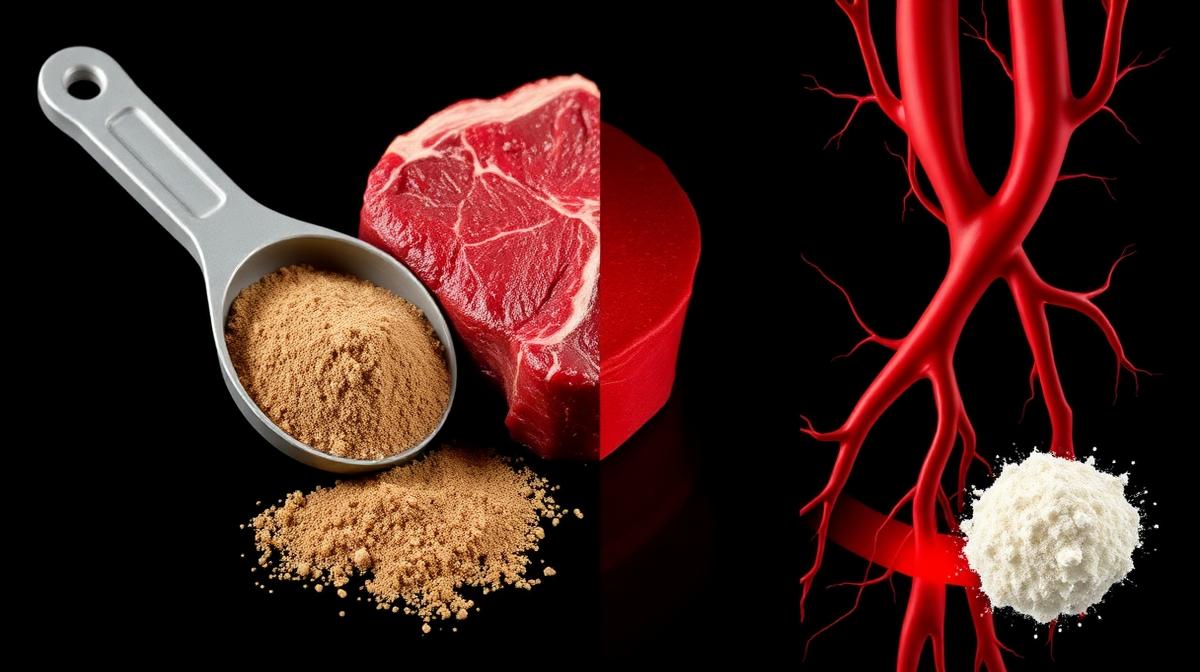
Während Rinderprotein eine grundlegende Ressource für den Gewebeaufbau ist, ist Citrullin ein metabolischer Katalysator, der die Trainingsdynamik selbst verändert. Das Verständnis ihrer Synergie ist der Unterschied zwischen einfacher Ernährung und präziser athletischer Programmierung.
Kurze Antwort: Rinderprotein baut Muskelgewebe mit einem vollständigen Aminosäureprofil auf, während Citrullin den Blutfluss durch Stickoxid um bis zu 30 % erhöht. Praktischer Tipp: Nehmen Sie 30 Minuten vor dem Training 6-8 g Citrullinmalat und danach Rinderprotein für maximale Synergie.
Dieser Vergleich stellt uns vor die Wahl zwischen „struktureller Kapazität“ und „vaskulärer Effizienz“. In der Systemarchitektur des Körpers liefert Rinderprotein die Hardware (Muskelfasern), während Citrullin die Logistik (Blutfluss) optimiert, um Ressourcen schneller und effizienter zu den Zellen zu transportieren.
Verwandte Lektüre: Der detaillierte Leitfaden zu Nahrungsergänzungsmitteln – über 270 von Experten geprüfte Artikel von Petar Mitkov und dem Team von Sport Zona.
Was ist die systemische Rolle und der Wirkmechanismus?
Rinderprotein (Isolat) ist ein Nahrungsergänzungsmittel, das eine vollständige Aminosäurematrix liefert und die strukturelle Synthese (Anabolismus) unterstützt, während Citrullin (Malat/L-Citrullin) die Stickoxid (NO)-Spiegel für Hämodynamik und Entgiftung erhöht.
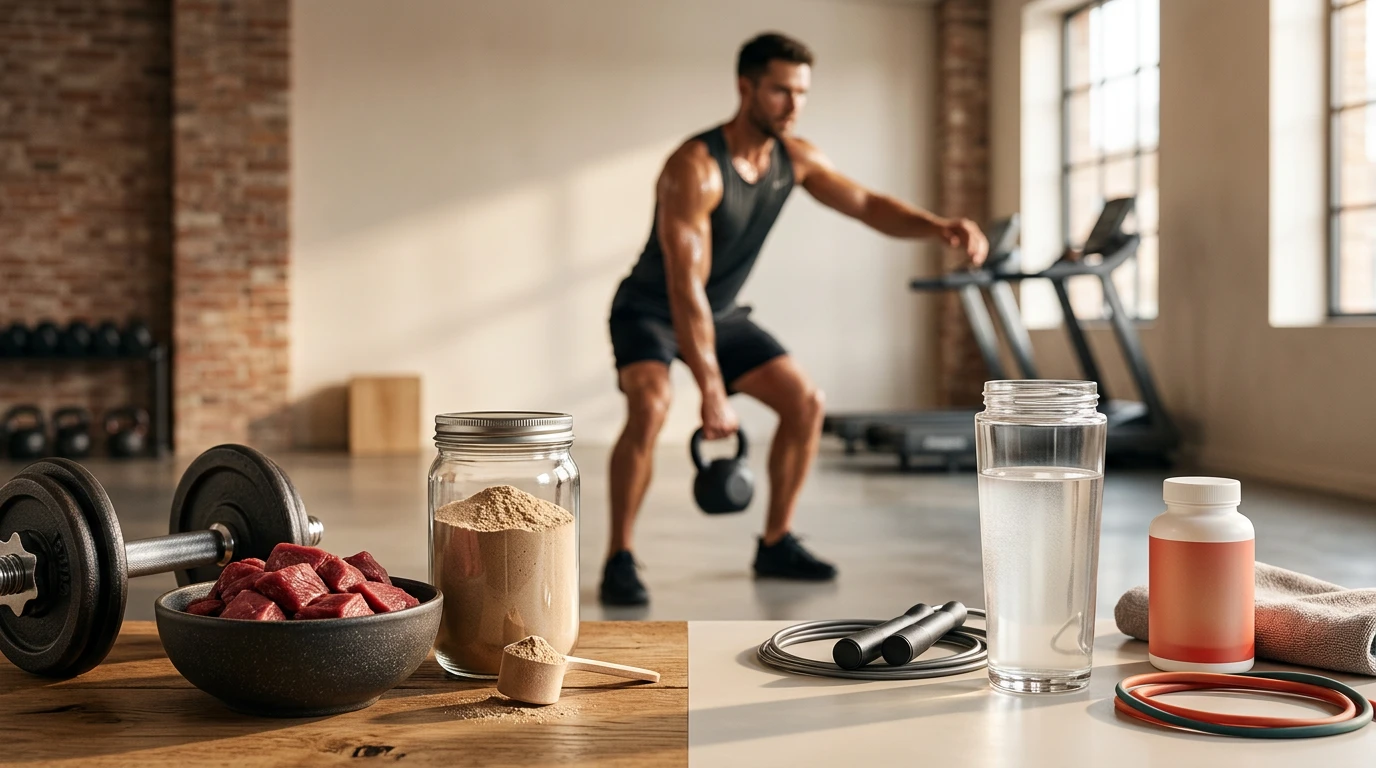
| Merkmal | Rinderprotein (Isolat) | Citrullin (Malat/L-Citrullin) |
|---|---|---|
| Biologischer Fokus | Strukturelle Synthese (Anabolismus) | Hämodynamik und Entgiftung |
| Hauptmechanismus | Lieferung einer vollständigen Aminomatrix | Erhöhung der Stickoxid (NO)-Spiegel |
| Trainingseffekt | Kraft- und Volumenaufbau | Ausdauer und „Pump“ |
| Abfallmanagement | Neutral | Aktive Ammoniak-Ausscheidung |
| Einnahmezeitpunkt | Nach dem Training / Über den Tag verteilt | 30-60 Min. vor dem Training |
| Spezifischer Bonus | Natürliches Kreatin und B12 | ATP- und Phosphokreatin-Resynthese |
Was ist Kollagen in Rinderprotein?
1. Rinderprotein: Die „biologische Hardware“
Rinderprotein (insbesondere Isolat) ist von Kollagenverunreinigungen gereinigt und bietet eine hohe Konzentration spezifischer Aminosäuren.
Einfach ausgedrückt: Dieser Abschnitt vergleicht, wie genau Rinderprotein und Citrullin den Körper beeinflussen, indem er ihre Hauptfunktionen und die Art und Weise, wie sie auf zellulärer Ebene funktionieren, untersucht, als wären sie verschiedene Werkzeuge mit einzigartigen Aufgaben.
Wissenschaftliche Quellen
- Gorissen, S. H. M., et al. (2018). „Protein content and amino acid composition of beef and plant-based protein sources used in the sports nutrition industry.“ Journal of Sports Sciences. (DOI: 10.1080/02640414.2018.1506502)
- Pérez-Guisado, J., & Jakeman, P. M. (2010). „Citrulline malate enhances athletic anaerobic performance and alleviates muscle soreness.“ Journal of Strength and Conditioning Research. (PubMed: 20386132)
- Gonzales, J. U., et al. (2017). „Does L-citrulline supplementation improve exercise performance in adults? A randomized, double-blind, placebo-controlled trial.“ Experimental Gerontology. (DOI: 10.1016/j.exger.2016.12.016)
Wir sehen, dass die Kombination aus Strukturprotein und Vasodilatator oft zu besseren Ergebnissen führt. Ein häufiger Fehler ist es, sich nur auf einen Aspekt zu verlassen – entweder nur auf Baumaterial oder nur auf „Pump“, ohne beide Prozesse gleichzeitig zu optimieren.
- Stickstoffretention: Als vollständiges Protein unterstützt es eine positive Stickstoffbilanz, die eine notwendige Voraussetzung für Muskelwachstum ist.
- Insulin-Co-Faktor: Die Einnahme von Protein stimuliert einen leichten Insulinanstieg, der die „Türen“ der Zellen für Aminosäuren öffnet.
2. Citrullin: Die „Nährstoff-Autobahn“
Citrullin ist einzigartig, da es nicht in der Leber abgebaut wird, sondern direkt in die Nieren gelangt, wo es in Arginin umgewandelt wird.
- Vasodilatationseffekt: Durch die Erhöhung von Stickoxid entspannt Citrullin die glatte Muskulatur der Gefäße. Dies erweitert die Arterien und ermöglicht es, dass mehr Blut, angereichert mit Aminosäuren aus Rinderprotein, den arbeitenden Muskel erreicht.
- Müdigkeitspufferung: Während intensiver Arbeit sammelt sich Ammoniak an, das für die Zellen toxisch ist. Citrullin beschleunigt den „Harnstoffzyklus“ und wandelt Ammoniak in Harnstoff um, was es Ihnen ermöglicht, mehr Wiederholungen zu machen, bevor der Muskel „aufgibt“.
Citrullinmalat vs. L-Citrullin: Was wirkt besser?
Malat – der versteckte Energiebonus
- Energiebonus: Malat ist ein Zwischenprodukt im Krebszyklus (Energieproduktion). Es hilft den Muskeln, Laktat zu recyceln und ATP effizienter zu produzieren.
- Synergie mit Fleisch: Da Rindfleisch reich an Kreatin ist, verstärkt die Zugabe von Citrullinmalat die Geschwindigkeit, mit der der Körper seine Phosphokreatin-Speicher während der Pausen zwischen den Sätzen wieder auffüllt.
Wie lautet der praktische Algorithmus zur Auswahl von Rinderprotein oder Citrullin?
Wählen Sie RINDERPROTEIN, wenn:
- Ihr Hauptziel ist der Aufbau von fettfreier Masse und die Regeneration von Geweben.
- Sie vermeiden Milchprodukte aufgrund von Allergien oder Verdauungsbeschwerden.
- Sie suchen ein vollständiges Aminosäureprofil in einer praktischen Shake-Form.
🔵 Wählen Sie CITRULLIN, wenn:
- Sie die Trainingsintensität steigern möchten (mehr Volumen und Ausdauer).
- Sie einen visuellen „Pump“ und eine bessere Vaskularisierung (sichtbare Venen) suchen.
- Ihr Ziel ist die Reduzierung von Muskelkater an Tagen nach starker Belastung.
- Sie die Herz-Kreislauf-Gesundheit und den Blutdruck verbessern möchten.
Der praktische Auswahlalgorithmus bietet Richtlinien entsprechend den individuellen Zielen: Rinderprotein eignet sich für den Aufbau von fettfreier Masse, Regeneration und die Vermeidung von Milchprodukten, während Citrullin zur Steigerung der Trainingsintensität, für „Pump“, Vaskularisierung und zur Reduzierung von Muskelkater dient.
Für beste Ergebnisse kombinieren Sie 20-30g Rinderprotein-Isolat (nach dem Training) mit 6-8g Citrullinmalat (30-45 Minuten vor dem Training) für einen kombinierten Effekt auf Muskelwachstum und Leistung.
Wann sollte man Rinderprotein gegenüber Citrullin wählen?
🟣 Dreistufige Synchronisation für maximale Wirkung
- Phase 1 – Vorbereitung (Vor dem Training): 6–8g Citrullinmalat 45 Minuten vor dem Training. Dies erweitert die Gefäße und bereitet das „Straßennetz“ vor.
- Phase 2 – Ausführung: Während des Trainings wird Citrullin Ammoniak ausscheiden, was eine höhere Belastung ermöglicht.
- Phase 3 – Aufbau (Nach dem Training): 30g Rinderprotein-Isolat. Dank der verbesserten Durchblutung durch Citrullin erreichen die Aminosäuren aus dem Protein die Muskelfasern viel schneller, um mit der Reparatur zu beginnen.
Das strategische Protokoll „Fluss und Aufbau“ ist ein systematischer Ansatz zur Optimierung sportlicher Leistungen, der die Vorteile von Rinderprotein für die Muskelarchitektur und Citrullin zur Verbesserung des Stoffwechseldurchflusses kombiniert.
- Wählen Sie RINDERPROTEIN, wenn Ihr Ziel die direkte Unterstützung des Muskelwachstums und der Regeneration durch ein hochwertiges Aminosäureprofil ist.
- Wählen Sie CITRULLIN, wenn Sie eine Verbesserung der sportlichen Leistung durch erhöhten Blutfluss und Reduzierung von Müdigkeit suchen.
- Kombinieren Sie beides, wenn Ihr Ziel ein umfassender Ansatz zur Optimierung der Muskelarchitektur und des Stoffwechseldurchflusses für maximale Ergebnisse ist.
- Wählen Sie RINDERPROTEIN, wenn Sie eine leicht verdauliche Proteinquelle ohne Laktose benötigen.
📖 Was ist Rinderprotein und Citrullin?
Rinderprotein ist eine hochwertige Quelle für Aminosäuren, die als Bausteine für Muskelwachstum und Regeneration dienen. Citrullin ist eine Aminosäure, die für den Harnstoffzyklus wichtig ist. Es hilft beim Blutfluss, da es Stickoxid erhöht.
⚖ Vor- und Nachteile
| Vorteile | Nachteile |
|---|---|
|
|
🗣 Einfach erklärt
Rinderprotein ist wie der Bau stabiler Ziegelmauern – es liefert alle Bausteine für Ihre Muskeln. Citrullin hingegen wirkt wie ein Pumpsystem, das die Durchblutung verbessert und hilft, Nährstoffe schneller zu den Muskeln zu transportieren.
Wählen Sie das richtige Produkt für Ihr Ziel:
→ Rinderprotein Pulver
→ Citrullinmalat
→ Aminosäurekomplex (einschließlich Citrullin)
Kombiniertes Protokoll für maximale Effizienz:
Die Kombination von Produkten erhöht die Effektivität. Nach Daten aus der Praxis von Sport Zona.
⚖ Wann Rinderprotein wählen
- Der Athlet strebt den Aufbau von fettfreier Muskelmasse und die Regeneration von Geweben an.
- Der Athlet meidet Milchprodukte aufgrund von Allergien oder Verdauungsbeschwerden.
- Der Athlet benötigt ein vollständiges Aminosäureprofil für den effektiven Muskelaufbau.
- Der Athlet strebt eine positive Stickstoffbilanz für das Muskelwachstum an.
⚖ Wann Citrullin wählen
- Der Athlet möchte das Trainingsvolumen und die Ausdauer während des Trainings steigern.
- Der Athlet strebt einen visuellen „Pump“ und eine bessere Vaskularisierung während des Trainings an.
- Der Athlet zielt darauf ab, Muskelkater nach starker körperlicher Anstrengung zu reduzieren.
- Der Athlet möchte die Herz-Kreislauf-Gesundheit und den Blutdruck verbessern.
Expertenhinweis von Sport Zona
Seit vielen Jahren beobachte ich, dass sich die meisten Trainierenden nur auf eine Art von Ergänzungsmittel konzentrieren. Bei richtiger Dosierung und Kombination von Rinderprotein mit Citrullin sehe ich schnellere und vollständigere Ergebnisse bei Pump und Regeneration.
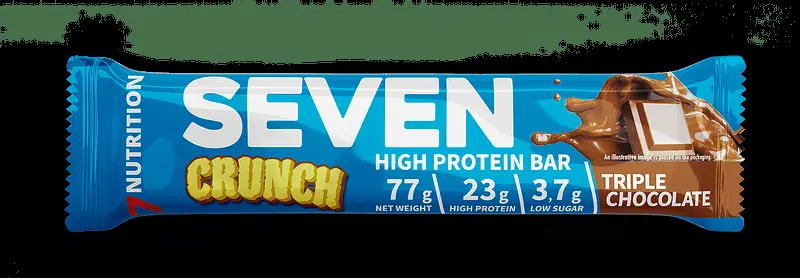
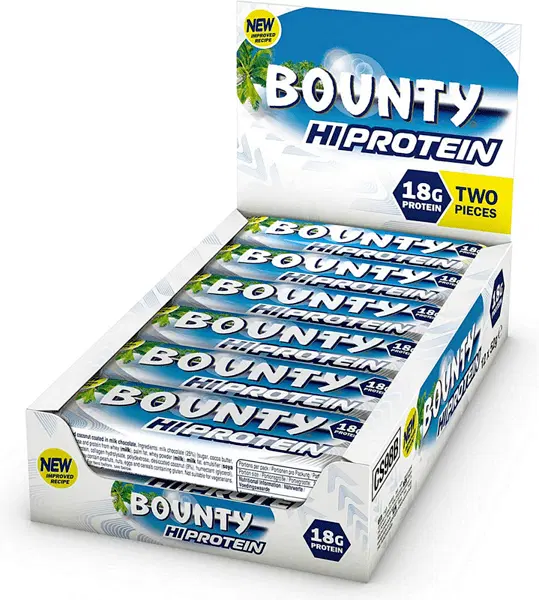
Empfohlene Produkte
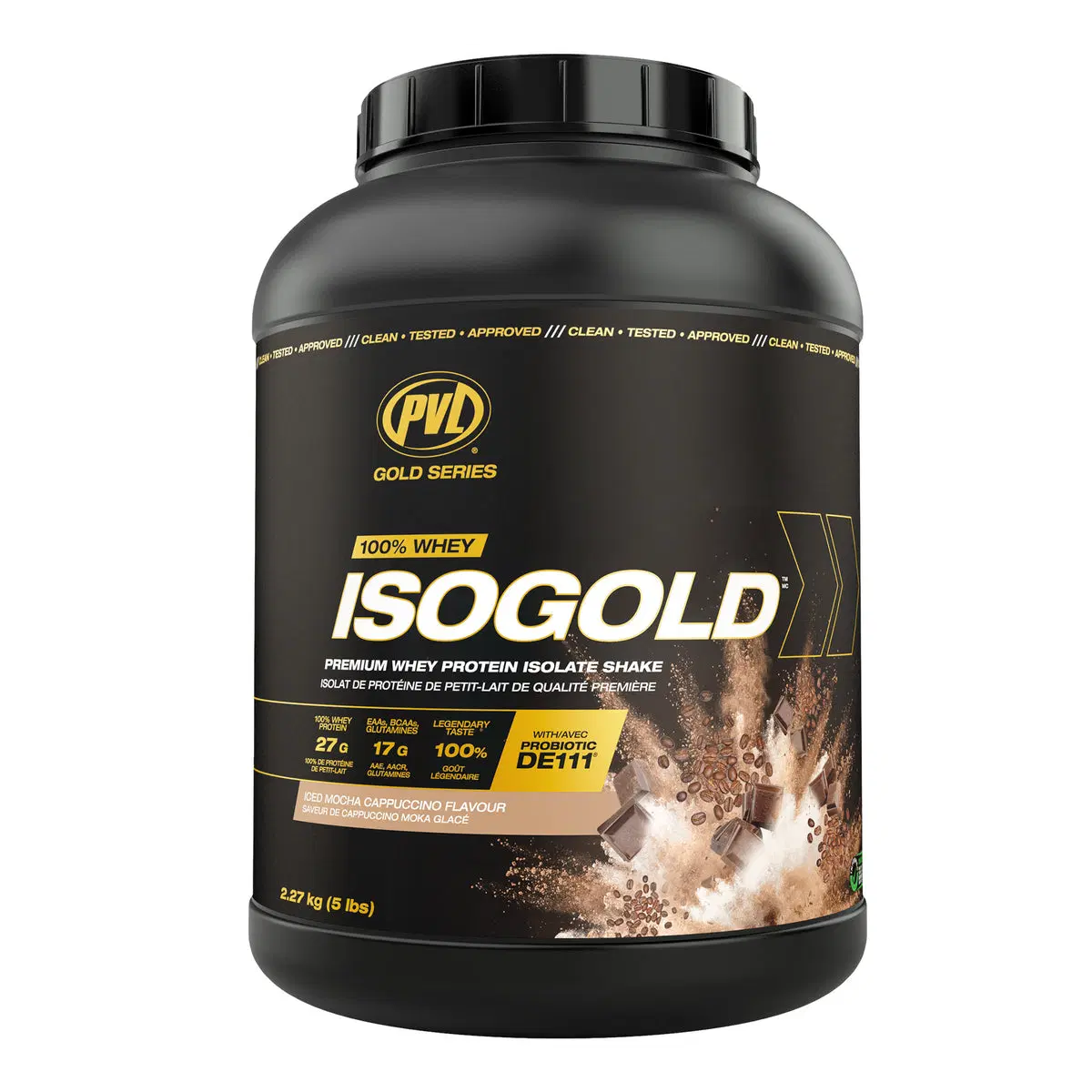
Häufig gestellte Fragen
Können Rinderprotein und Citrullin kombiniert werden?
Ja, die Kombination wird für maximale Wirkung dringend empfohlen. Rinderprotein liefert die Bausteine, und Citrullin verbessert deren Lieferung an die Muskeln.
Wann ist es am besten, Rinderprotein einzunehmen und wann Citrullin?
Rinderprotein wird am besten nach dem Training zur Erholung eingenommen, während Citrullin 30-60 Minuten vor dem Training zur Verbesserung der Durchblutung und Ausdauer wirksam ist.
Wofür sind Rinderprotein und Citrullin hauptsächlich da?
Rinderprotein ist entscheidend für den Aufbau und die Reparatur von Muskelgewebe, indem es eine vollständige Aminosäure-Matrix liefert. Citrullin verbessert die Durchblutung durch Erhöhung von Stickstoffmonoxid, was zu einem besseren Muskelpumpen und besserer Ausdauer führt.
Haben Rinderprotein und Citrullin potenzielle Nebenwirkungen?
Rinderprotein wird im Allgemeinen gut vertragen, außer bei spezifischen Allergien. Citrullin kann bei hohen Dosen leichte Magenbeschwerden verursachen, gilt aber in Bezug auf die Verdauung als besser als Arginin.