Ashwagandha vs. Magnesium: The Adaptogenic Balancer vs. The Mineral Relaxer

Ashwagandha helps with stress, and magnesium is a key mineral for energy and muscles. Understanding their differences helps in making the right choice.
Short answer: Ashwagandha is an adaptogen that reduces stress (cortisol) and improves resilience. Magnesium is a mineral crucial for muscle relaxation, sleep, and over 300 enzymatic reactions. Practical tip: Take 300-600 mg of Ashwagandha in the morning for stress control and 200-400 mg of Magnesium (bisglycinate) in the evening for better recovery.
In sports, recovery is as important as training. Two supplements are often discussed – ashwagandha and magnesium. Both promise better sleep, less stress, and improved performance, but they work differently. Understanding these differences will help you maximize their use for your goals.
Magnesium is an important mineral involved in hundreds of biochemical processes – from energy production to muscle relaxation. Without it, the body doesn't function properly. Ashwagandha, on the other hand, helps the body cope with stress. It's not part of basic functions but supports stability and proper performance in stressful situations. One is a foundation, the other is optimization.
This article is part of the Expert Hub for Nutritional Supplements — over 270 expert-verified articles by Petar Mitkov and the Sport Zona team.
What is the comparative matrix for systemic analysis between Ashwagandha and Magnesium?
The comparative matrix for systemic analysis between Ashwagandha and Magnesium represents a structured approach to comparing these two supplements across key criteria such as biological status, primary focus, key mechanism, time horizon, and main effect, in order to gain a detailed understanding of their individual characteristics and applications.
| Criterion | Ashwagandha (Withania Somnifera) | Magnesium |
|---|---|---|
| Biological Status | Adaptogenic herb | Essential mineral |
| Primary Focus | Modulating the stress response (cortisol) | Cellular energy, muscle function, nervous system |
| Key Mechanism | Regulation of the hypothalamus-pituitary-adrenal (HPA) axis | Cofactor in over 300 enzymatic reactions, including ATP synthesis |
| Time Horizon | Effect after 2-4+ weeks | Immediate and cumulative effect |
| Main Effect | Increased stress resilience, better sleep | Muscle relaxation, better sleep, reduced fatigue |
| Specific Bonus | May slightly increase strength and VO2max | Prevents muscle cramps and spasms |
What are the mechanisms of action of Ashwagandha and Magnesium?
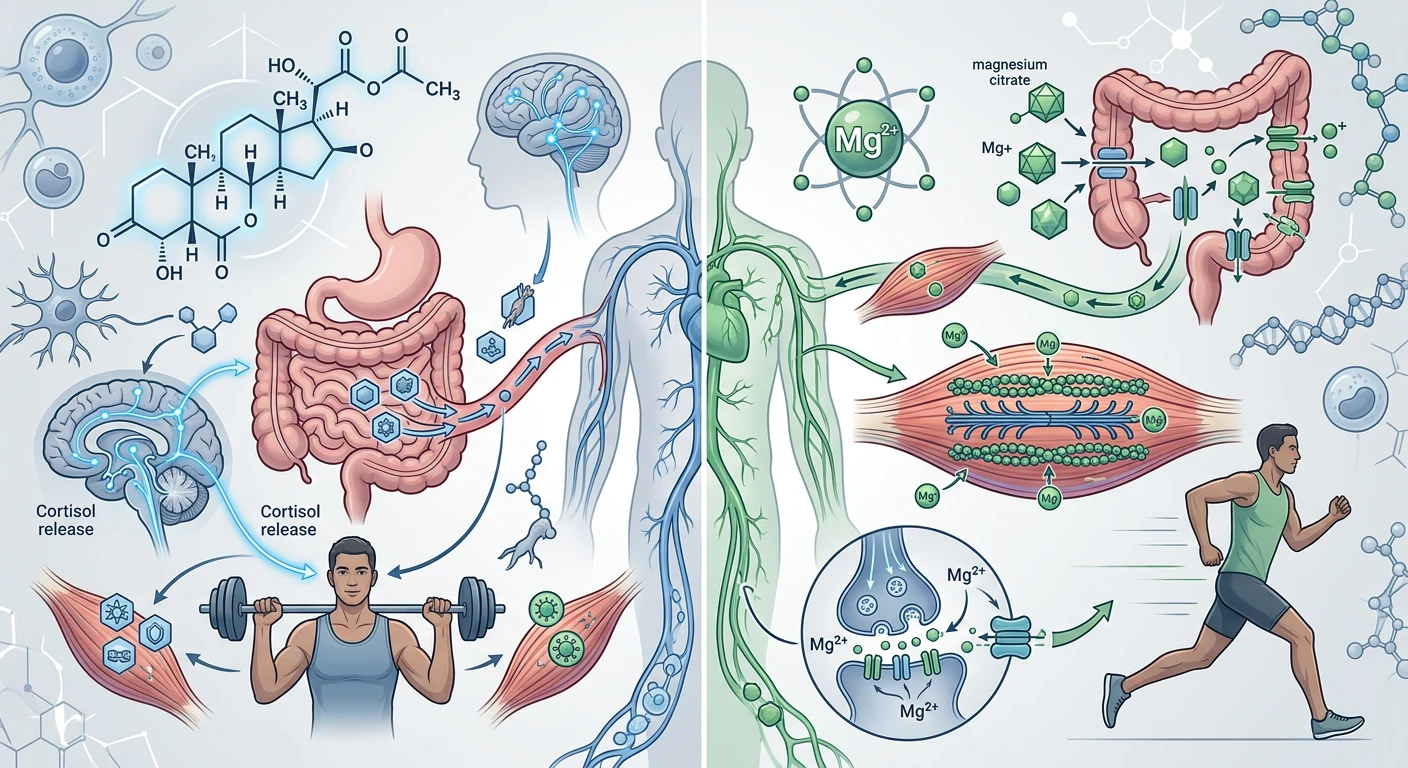
1. Ashwagandha: The Stress Response Regulator
Ashwagandha is an adaptogenic herb that helps the body adapt to physical and mental stress. Its primary action is by modulating the hypothalamus-pituitary-adrenal (HPA) axis – the system that governs stress in the body. The active compounds, called withanolides, reduce the production of cortisol, the stress hormone. High cortisol levels lead to muscle breakdown, fat accumulation, and mental fatigue. By regulating this response, ashwagandha keeps the body in a more anabolic (building) state. It also affects GABA receptors in the brain, contributing to calmness and better sleep.Ashwagandha is an adaptogen that regulates the body's response to stress. It helps calm the system and return it to balance when cortisol levels are elevated, without completely suppressing natural reactions.
2. Magnesium: The Master Cellular Worker
Magnesium is a vital mineral essential for basic bodily functions. Its role is much broader and fundamental. As a cofactor, it participates in over 300 enzyme systems that regulate energy production (ATP synthesis), muscle contraction and relaxation, nervous system function, and protein synthesis. For athletes, this covers all processes – from muscle contraction strength to the muscle's ability to relax and prevent cramps. Magnesium also regulates neurotransmitters that promote calmness and sleep, acting as an agonist of GABA receptors (similar to ashwagandha, but more direct) and blocking excitatory NMDA receptors.Simply put: Magnesium is an essential tool for important tasks in the body: energy, muscle relaxation, nerve signaling, and tissue building.
Scientific Sources
- An investigation into the stress-relieving and pharmacological actions of an ashwagandha (Withania somnifera) extract, 2019
- Effects of Ashwagandha (Withania somnifera) on VO2max: A Systematic Review and Meta-Analysis, 2021
- Magnesium: Fact Sheet for Health Professionals, NIH Office of Dietary Supplements
- Magnesium, Linus Pauling Institute at Oregon State University
- The effect of magnesium supplementation on primary insomnia in elderly, 2012
The Synergistic Effect: Why Do They Work Better Together?
Combining ashwagandha and magnesium creates a combined effect for better recovery. They work on different but complementary levels:- "Central Control" Level: Ashwagandha regulates the hormonal stress response, reducing the panic signal (cortisol) from the brain.
- "Execution" Level: Magnesium provides cells (muscles, neurons) with the necessary tools for relaxation and recovery.
How to Choose Between Ashwagandha and Magnesium?
Choose Ashwagandha if:
- Your main problem is chronic stress, feeling "burned out," or anxiety.
- You feel mentally exhausted, even with light exertion.
- You want to optimize your hormonal balance (cortisol/testosterone).
- You are looking for long-term adaptation to high levels of exertion.
🔵 Choose Magnesium if:
- You suffer from muscle cramps, stiffness, or twitches.
- You have trouble falling asleep or your sleep is restless.
- You have a high training volume that depletes mineral stores.
- You want to ensure basic recovery and energy metabolism.
Recommended Stack for Maximum Recovery:
The practical decision-making algorithm recommends combining Ashwagandha and Magnesium for athletes under significant load. This includes taking 300-400 mg of Magnesium (in a chelated form like bisglycinate or citrate) before bed and 300-600 mg of standardized Ashwagandha extract (e.g., KSM-66) also in the evening or split into two doses (morning and evening).
What is more important for 2026: "Foundation and Performance Stack"?
The modern approach to supplementation divides supplements into "foundation" (essential for health and function) and "performance stack" (for a specific goal).- Foundation (Daily): Magnesium is indispensable. Take 200-400 mg of elemental magnesium in the evening, preferably in a bioavailable form like Magnesium Bisglycinate or Magnesium Malate. This ensures nervous system and muscle function.
- Performance Stack (During periods of high stress): Include Ashwagandha when training volume increases, before a competition, or when external life stress is high. Take 300-600 mg of standardized extract in the evening to support sleep and reduce cortisol levels at night.
Expert Note
Cyclical intake for ashwagandha is important, with 8-12 weeks of intake followed by 4 weeks of rest, keeping the body receptive to the herb, while magnesium, unlike ashwagandha, can and should be taken continuously, especially by active athletes.
🧭 When to Choose Which?
- Choose Ashwagandha if: Mental strain feels greater than physical fatigue. You feel irritable and anxious.
- Choose Magnesium if: Physical symptoms are dominant – muscle cramps, restless sleep, general post-workout fatigue.
- Combine both if: You are training for peak performance, are subjected to high volume and intensity, and aim to optimize every aspect of your recovery.
📖 What are Ashwagandha and Magnesium?
Ashwagandha (Withania Somnifera) is an herb from Ayurvedic medicine, classified as an adaptogen. It helps the body cope with and adapt to stress, without having a specific stimulating or sedating effect, rather a normalizing one.
Magnesium is the fourth most abundant mineral in the human body and is essential for life. It is critical for energy production, bone health, muscle and nerve function, and maintaining a stable heart rhythm.
⚖ Pros and Cons
| Ashwagandha | Magnesium |
|---|---|
| Pros: Reduces cortisol, improves stress resilience, supports sleep, may increase strength. | Pros: Essential, fast effect in deficiency, prevents cramps, aids sleep onset, inexpensive. |
| Cons: Requires time (weeks), needs to be cycled, may cause lethargy in some people, not suitable for autoimmune diseases. | Cons: Cheap forms (oxide) have low bioavailability and a laxative effect. High doses can cause stomach discomfort. |
🗣 Simply Explained
If we had to explain the difference to a friend at the gym:
| Criterion | Ashwagandha | Magnesium |
|---|---|---|
| Type | Supplemental | Essential Foundation |
| Metaphor | Shield against stress | Basic building block |
| When it helps | When you are mentally overloaded | When the body is exhausted |
| Feeling | Calm and focused | Relaxed and recovered |
Magnesium is essential for the body's functioning, and Ashwagandha is something extra you can add if daily life and training strain the nervous system.
Choose the right product for your goal:
- For stress management and adaptation: browse our adaptogens.
- For basic health and muscle function: see our selection of vitamins and minerals.
- 😴 For deeper and quality sleep: explore our sleep and relaxation formulas.
Combined Protocol for Elite Athletes:
- Morning: Vitamin D3+K2 for hormonal balance and bone health.
- Post-Workout: Whey protein for muscle recovery.
- Evening: 300-400 mg Magnesium Bisglycinate + 300-600 mg Ashwagandha (KSM-66) for a complete reset of the nervous and muscular systems.
⚖ When to Choose Ashwagandha
- When you feel constantly irritable.
- When you sleep enough but wake up tired.
- During heavy preparation periods or before a competition.
- If you have hit a plateau and suspect stress is the cause.
⚖ When to Choose Magnesium
- When you suffer from muscle cramps or twitches.
- If it takes you a long time to fall asleep.
- When your diet is restrictive or you train very intensely.
- As a first step to improve overall recovery.
Expert Note from Sport Zona
I notice a recurring mistake: athletes often look for a "magic pill" in adaptogens like ashwagandha but neglect the basics. Magnesium deficiency is common among athletes, and correcting it brings huge and rapid benefits. My advice is: first, ensure your magnesium levels are adequate. Use a quality form like bisglycinate. Only after this foundation is stable, add ashwagandha during periods of high stress. There's no point in building a roof without foundations.
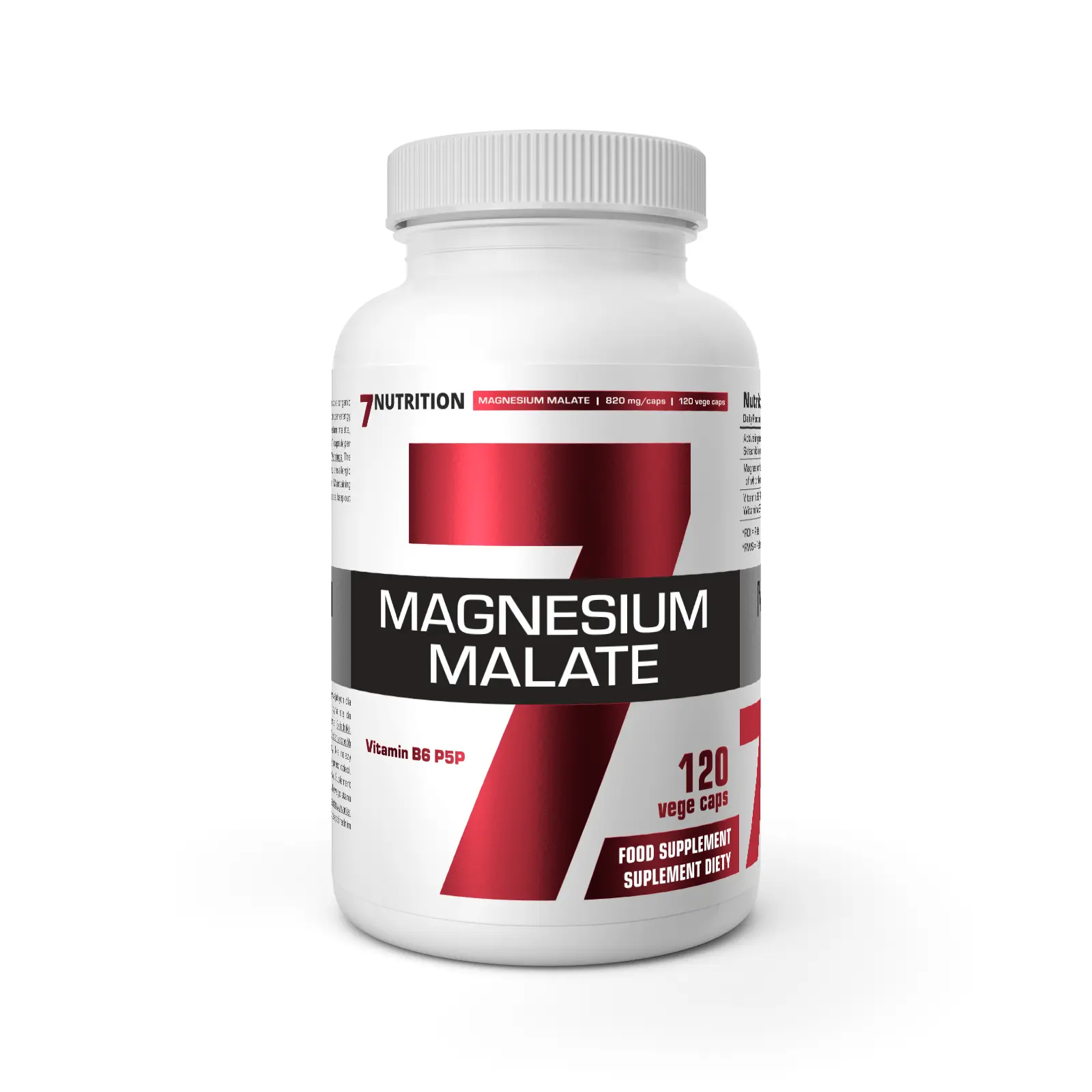
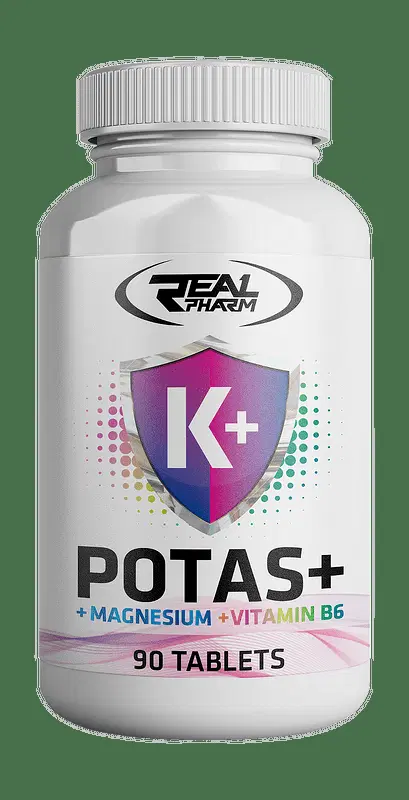
Recommended products



Frequently asked questions
Can Ashwagandha and Magnesium be taken together?
Yes, absolutely. They have different but complementary mechanisms of action. Ashwagandha modulates the body's stress response, while Magnesium supports the nervous system and muscle relaxation. The combination is excellent for tackling stress from different angles.
Which is better for beginners - Ashwagandha or Magnesium?
Magnesium is the better choice for beginners. It is an essential mineral whose deficiency is common and affects basic functions like muscle contraction and sleep. Ashwagandha is more of a performance optimizer, suitable after the basics are covered.
When is the best time to take Ashwagandha and Magnesium?
Magnesium (especially bisglycinate) is best taken 30-60 minutes before bed to improve sleep quality. Ashwagandha can be taken in the morning to reduce daily stress or after training to aid recovery by controlling cortisol.
Are there any side effects from taking Ashwagandha or Magnesium?
Yes. High doses of Magnesium (especially oxide and citrate) can cause gastrointestinal discomfort. Ashwagandha in rare cases can lead to lethargy. Avoid Ashwagandha in case of autoimmune diseases or thyroid problems without consulting a doctor.
What is the recommended dosage of Ashwagandha and Magnesium?
For Ashwagandha, the effective dose is between 300 and 600 mg of standardized extract daily. For Magnesium, the recommended dose for athletes is 200-400 mg of elemental magnesium daily, with preference given to bioavailable forms such as bisglycinate, malate, or citrate.