Ascorbic Acid vs. Liposomal Vitamin C: Standard Protection vs. Optimized Absorption
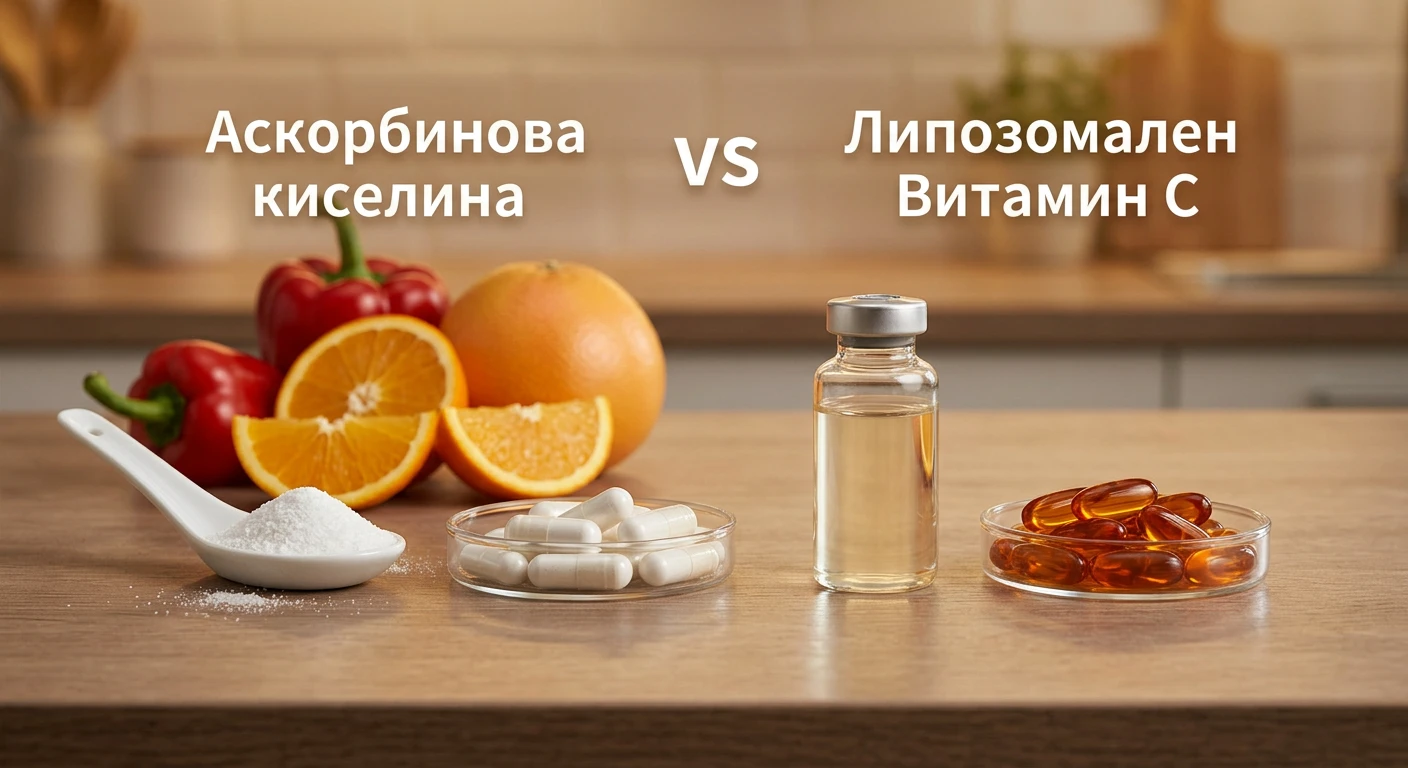
Explore the differences between ascorbic acid and liposomal Vitamin C. The choice between them depends on bioavailability and your health and sports goals.
Short answer: Liposomal Vitamin C offers up to 5 times higher bioavailability (~90%) compared to standard ascorbic acid (~18-20% at high doses). This allows for higher plasma levels without stomach discomfort. Practical tip: For daily support, use 500-1000 mg of ascorbic acid. In cases of high oxidative stress, recovery from trauma or illness, switch to 1000 mg of liposomal Vitamin C daily for maximum effectiveness.
Vitamin C is one of the most sought-after antioxidants. It is essential for immunity, skin health, and recovery. For athletes, whose bodies are under constant strain from heavy training, maintaining adequate levels is crucial. However, when choosing a supplement, we often wonder between two main forms: standard ascorbic acid and the more modern liposomal Vitamin C.
The choice between them is not just about price. It's important to understand how they are absorbed and how they work to optimize our recovery and performance.
This article is part of the Expert Hub for Food Supplements — over 270 expertly verified articles by Petar Mitkov and the Sport Zona team.
What is a Comparative Matrix for System Analysis?
A comparative matrix for system analysis is a detailed review of Ascorbic Acid and Liposomal Vitamin C, analyzing them by criteria such as biological status, main focus, absorption mechanism, and bioavailability, to highlight their differences in effectiveness and application.
| Criterion | Ascorbic Acid | Liposomal Vitamin C |
|---|---|---|
| Biological Status | Standard, water-soluble form of Vitamin C. | Vitamin C encapsulated in a phospholipid shell (liposome). |
| Main Focus | General antioxidant support and immune function. | Maximum bioavailability and cellular delivery. |
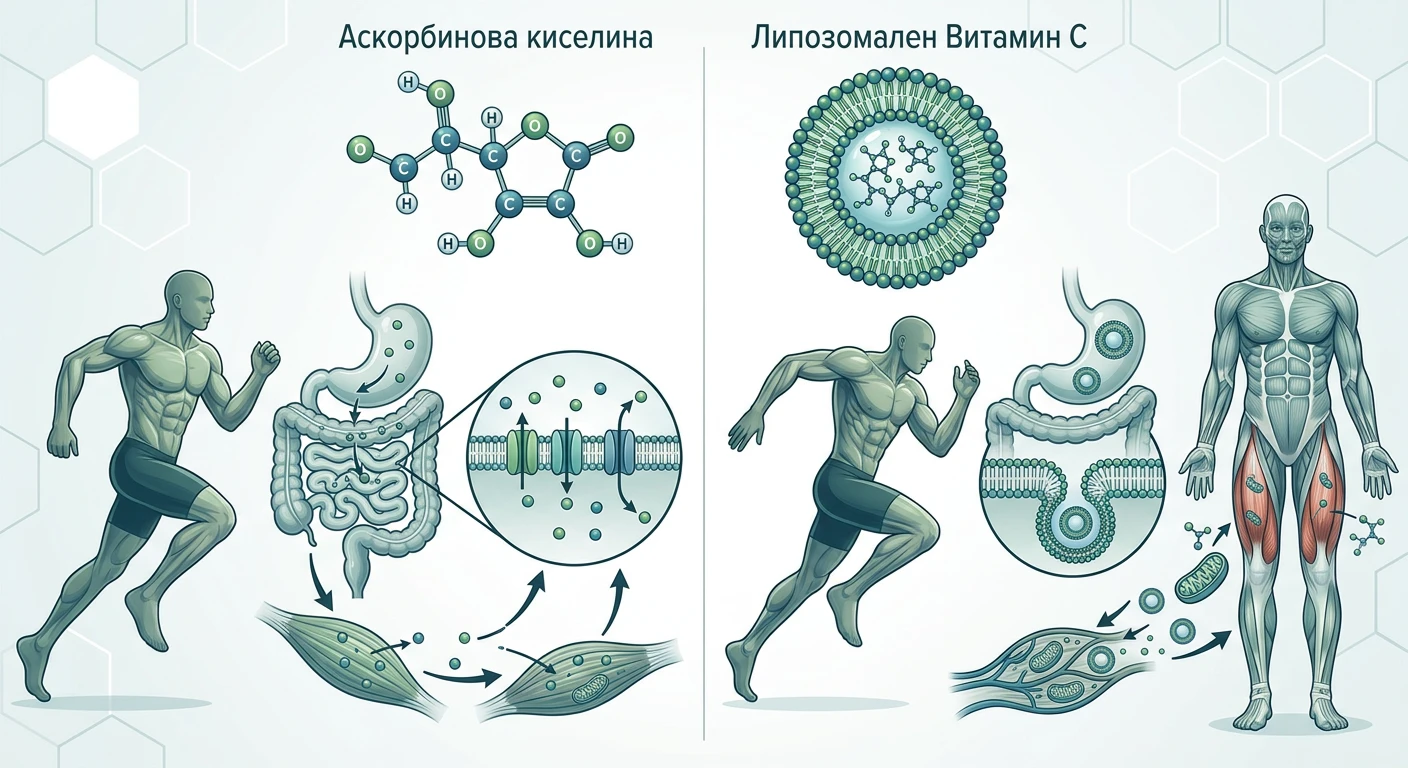
| Absorption Mechanism | Active transport via SVCT1 receptors, which saturate quickly. | Passive diffusion via fusion of the liposome with the cell membrane. |
| Bioavailability | High at low doses (~98% at <200mg), but drops sharply at high doses (<50% above 1g). | Significantly higher and more stable, even at very high doses. |
| Stomach Tolerance | May cause discomfort, diarrhea, and heartburn at doses above 1-2 grams. | Excellent; the phospholipid shell protects the stomach. |
| Cost Per Dose | Very low. | Significantly higher. |
What is the Absorption Mechanism of Ascorbic Acid?
1. Ascorbic Acid: The Workhorse
Ascorbic acid is the most studied form of Vitamin C, absorbed in the small intestine via specific protein transporters (SVCT1). However, at doses above 200 mg, these transporters have limited capacity, leading to a drop in absorption below 50% and potential gastrointestinal discomfort.
Simply put: Ascorbic acid uses specific "gates" to enter the bloodstream. Taking a large amount at once overloads these gates, and a significant portion of the vitamin is not absorbed but excreted.
2. Liposomal Vitamin C: The Technological Breakthrough
Liposomal technology solves the problem of transporter saturation. Here, ascorbic acid molecules are encased in microscopic spheres called liposomes. These spheres are made of phospholipids – the same fats that make up our cell membranes. Thanks to this, liposomes do not need SVCT1 transporters. They can fuse directly with the cells of the intestinal wall and "release" Vitamin C directly into the bloodstream. This passive diffusion process bypasses the limiting factor of active transport.
The result is significantly higher bioavailability. Studies show that liposomal Vitamin C can lead to almost double the plasma concentrations compared to an equivalent dose of standard Vitamin C. Furthermore, because the vitamin is protected within the liposomal shell, it does not irritate the stomach lining, making it suitable for people with sensitive stomachs or those who require very high doses.
Scientific Sources
- Davis, J. L., et al. (2016). Liposomal-encapsulated Ascorbic Acid: Influence on Vitamin C Bioavailability and Capacity to Protect Against Ischemia–Reperfusion Injury. Nutrition and Metabolic Insights.
- Linus Pauling Institute at Oregon State University. Vitamin C.
- National Institutes of Health (NIH), Office of Dietary Supplements. Vitamin C Fact Sheet for Health Professionals.
- Examine.com. Vitamin C Health Benefits, Dosage, and Side Effects.
- EFSA Panel on Dietetic Products, Nutrition and Allergies (NDA). (2013). Scientific Opinion on Dietary Reference Values for vitamin C.
The Synergistic Effect: Why Use Both?
Instead of choosing just one, use ascorbic acid and liposomal Vitamin C strategically. It's not always cost-effective to use the more expensive liposomal form for daily maintenance, especially when the body's needs are relatively low. In such cases, standard ascorbic acid does a good job.
Combine them according to your needs. Use ascorbic acid for a basic, daily dose and add liposomal Vitamin C during extreme stress: heavy training, competitions, travel, or at the first signs of a cold. This way, you ensure baseline protection at all times and have a useful approach for rapid saturation of the body when it needs it most, without straining your budget unnecessarily.
What is the Practical Algorithm for Choosing Vitamin C?
Choose Ascorbic Acid if:
- You are looking for an economical option for daily support.
- You take lower doses, spread throughout the day (e.g., 2 x 250mg).
- You do not have a sensitive stomach and tolerate doses up to 500-1000mg without problems.
- Your goal is general health, not intensive recovery from extreme exertion.
🔵 Choose Liposomal Vitamin C if:
- You need high doses (over 1000mg) for therapeutic purposes or intensive recovery.
- Standard Vitamin C irritates your stomach.
- You want to ensure the highest possible and fastest absorption.
- Budget is not a primary constraint, and you are seeking maximum effectiveness.
The recommended strategic stack for Vitamin C is a combination of 250-500 mg of ascorbic acid daily for baseline support and 1000 mg of liposomal Vitamin C, added after the most strenuous workouts or during illness for a high-impact dose.
What is the "Foundation and Performance Stack" Protocol for 2026?
The 2026 protocol represents a combination of the effectiveness and economy of ascorbic acid and liposomal Vitamin C, aiming for maximum results throughout the year.
- Daily Foundation (Year-round): 500 mg Ascorbic Acid with food, preferably in the morning. This dose is sufficient to cover basic antioxidant needs.
- After Intense Workout (3-5 times per week): 1000 mg Liposomal Vitamin C, taken within 1 hour after the end of the exertion, to support recovery and reduce oxidative stress.
- At the first signs of illness or during travel: Replace the daily intake with 2-3 doses of 1000 mg Liposomal Vitamin C, spread throughout the day, to rapidly saturate the immune system.
Expert Note
Many athletes make the mistake of taking a high dose of Vitamin C immediately before training. This can weaken important adaptive signals triggered by training stress. Stick to taking it after training or away from it, to allow the body to adapt appropriately.
🧭 When to Choose Which?
- Choose Ascorbic Acid for daily, economical support when you are not under extreme stress.
- Choose Liposomal Vitamin C during intensive training camps, competitions, illness, or if you have stomach issues with standard Vitamin C.
- Combine the two, using ascorbic acid as a base and strategically adding the liposomal form for peak loads.
📖 What are Ascorbic Acid and Liposomal Vitamin C?
Ascorbic Acid: This is the chemical name for pure Vitamin C. It is the simplest, most common, and most accessible form of the vitamin in supplement form.
Liposomal Vitamin C: This is a delivery system where ascorbic acid molecules are encapsulated in liposomes (small fat vesicles). This shell protects the vitamin and significantly improves its absorption in the body.
⚖ Pros and Cons
| Ascorbic Acid | Liposomal Vitamin C |
|---|---|
Pros:
|
Pros:
|
Cons:
|
Cons:
|
🗣 Simply Explained
Imagine you need to deliver a valuable package (Vitamin C) to an important building (your cells) through a busy street (the intestines).
- Ascorbic acid is like sending the package with a regular pedestrian courier. They will deliver the package, but if there's traffic (high dose), they will be late, or part of the package will get lost.
- Liposomal Vitamin C is like hiring an armored truck with an escort. It bypasses the traffic and delivers the entire package directly to the entrance, quickly and without loss.
Choose the Right Product for Your Goal:
The choice depends on your specific needs. Here are some guidelines:
- For general immune support and antioxidant protection: Vitamins and Minerals
- ♂ For supporting joints and collagen synthesis: Joint Products
- 🧘 For combating stress and fatigue: Adaptogens
⚖ When to Choose Ascorbic Acid
- You have a limited budget.
- For daily prevention with low doses.
- You have no stomach problems.
- Your main goal is general health, not peak performance.
⚖ When to Choose Liposomal Vitamin C
- You need high doses (>1 gram) without discomfort.
- You are recovering from trauma, illness, or intense training.
- Money is not a major factor; you seek maximum effectiveness.
- You have a sensitive stomach.
Expert Note from Sport Zona
In my work with athletes, I see a difference. For general support, standard ascorbic acid in a good multivitamin complex is perfectly sufficient. However, when an athlete is in the final weeks before a competition, with twice-daily training and high stress, switching to the liposomal form often leads to a better immune response and a faster feeling of freshness. Don't neglect the basics, but don't hesitate to invest in better technology when results are important.
Recommended products
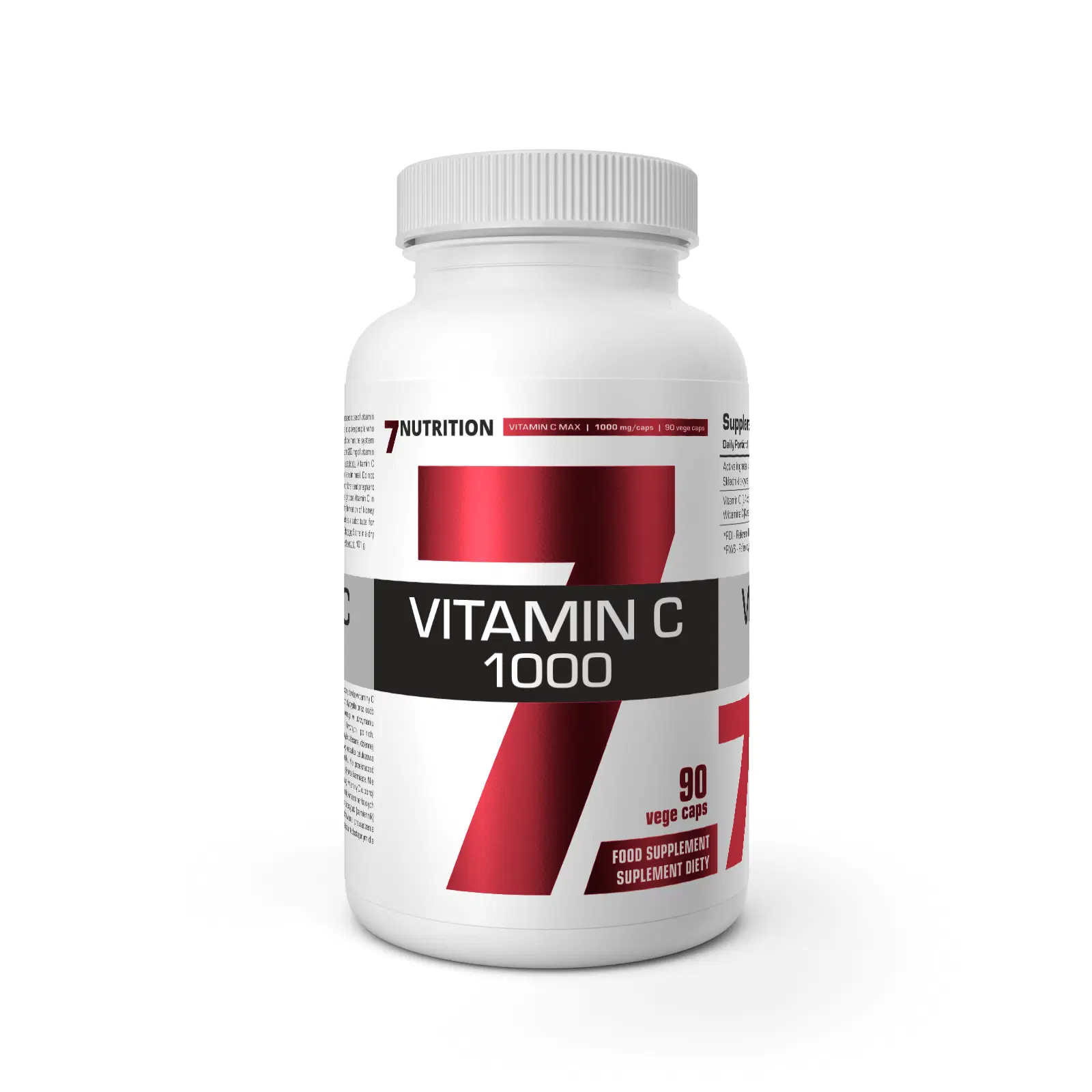
Frequently asked questions
Can Ascorbic Acid and Liposomal Vitamin C be taken together?
Yes, they can be taken together, but it is usually unnecessary and not cost-effective. Combining them does not provide significant additional benefits, as the liposomal form already ensures high and stable plasma concentrations. It is more advisable to choose one form based on specific goals and budget.
Which is better for beginners - Ascorbic Acid or Liposomal Vitamin C?
For beginners who want to cover their basic needs (up to 1000 mg per day), standard ascorbic acid is completely sufficient and economical. The liposomal form is more suitable for advanced athletes, when high doses are needed, or for people with sensitive stomachs.
When is the best time to take Ascorbic Acid and Liposomal Vitamin C?
It is recommended to take both forms with food. For higher doses (over 1000 mg) of ascorbic acid, it is advisable to split the intake into two or three doses throughout the day. Liposomal Vitamin C can be taken at once, even on an empty stomach, due to better gastrointestinal tolerance.
Are there any side effects from taking Ascorbic Acid or Liposomal Vitamin C?
Ascorbic acid, especially in doses above 2000 mg, can cause gastrointestinal problems such as diarrhea, gas, and heartburn. Liposomal Vitamin C significantly reduces this risk thanks to the liposomal coating that protects the stomach. The risk for both forms is minimal when recommended doses are followed.
What is the recommended dosage for Ascorbic Acid and Liposomal Vitamin C?
For general support, 500–1000 mg of ascorbic acid is sufficient. For liposomal Vitamin C, an equivalent effect is achieved with 500–1000 mg, but with much higher plasma concentration. During intense training or immune collapse, doses of 1000–2000 mg of liposomal Vitamin C may be more effective. The upper tolerable limit is around 2000 mg per day.