Astaxanthin vs. Vitamin E: The Marine Super Antioxidant vs. The Classic Cell Protector
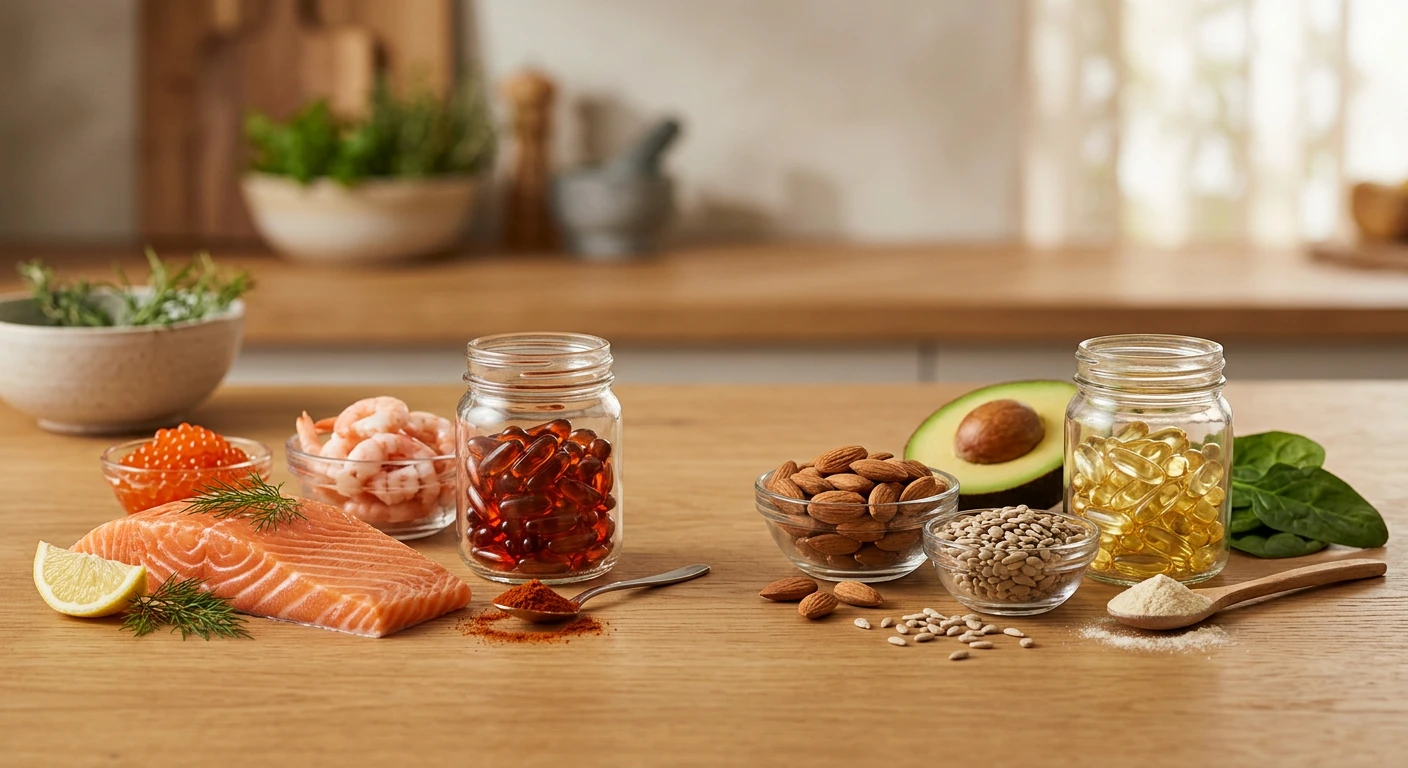
Astaxanthin and vitamin E are powerful antioxidants. Astaxanthin protects the entire cell, while vitamin E protects the membranes from the inside.
Short Answer: Astaxanthin is many times more potent an antioxidant than Vitamin E (up to 550 times), focusing on reducing exercise-induced oxidative stress and protecting the skin. Vitamin E is a key fat-soluble vitamin critical for protecting cell membranes. Practical advice: For athletes, combine 4–12 mg of astaxanthin daily with food and 15–20 mg of Vitamin E (as mixed tocopherols) for maximum synergistic effect.
Intense training causes oxidative stress, which is why antioxidants are so important in sports nutrition. Astaxanthin and Vitamin E top the list of the most potent cell protectors. Both substances fight free radicals, but they do so in different ways and with varying effectiveness.
Vitamin E is a tried-and-tested defender – it protects cell membranes from the inside. Well-researched and reliable, it serves as a primary line of defense. Astaxanthin is more specialized and offers a more modern approach with unique properties. It protects the cell entirely, acting as a shield that covers the entire cell membrane, both externally and internally.
Understanding the differences between these powerful antioxidants is crucial if you want to improve your recovery, reduce muscle damage, and perform better. Here, we examine their mechanisms, how to use them, and when to choose one over the other, or combine them for maximum effect.
This article is part of the Expert Supplement Hub — over 270 expertly verified articles by Petar Mitkov and the Sport Zona team.
Which Antioxidant is Stronger: Astaxanthin or Vitamin E?
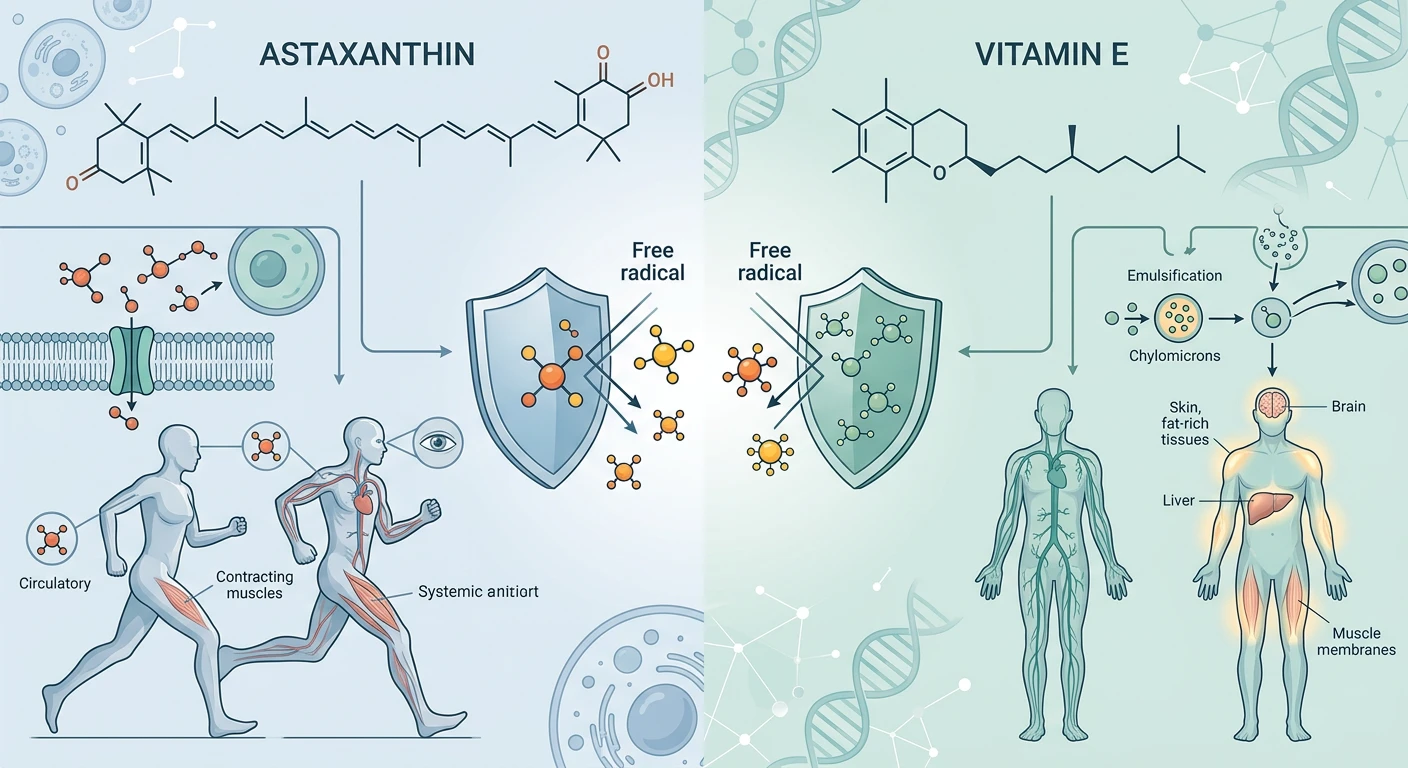
Astaxanthin is a keto-carotenoid (pigment), while Vitamin E is a fat-soluble vitamin (essential). Astaxanthin offers comprehensive cell membrane protection (outside and inside), whereas Vitamin E protects within the cell membrane.
| Criterion | Astaxanthin | Vitamin E |
|---|---|---|
| Biological Status | Keto-carotenoid (pigment) | Fat-soluble vitamin (essential) |
| Primary Focus | Comprehensive cell membrane protection (outside and inside) | Protection within the cell membrane |
| Mechanism of Action | Quenching singlet oxygen, neutralizing radicals | Interrupting lipid peroxidation chain reactions |
| Antioxidant Potency | Significantly higher (up to 6000 times vs. Vitamin C) | Strong, but lower than astaxanthin |
| Specific Benefits | Skin/eye protection, DOMS reduction, endurance | Immune function, neuroprotection, cardiovascular health |
| Intake | 4-12 mg daily, with fats | 15 mg (22.4 IU) daily recommended intake, with fats |
What are the Mechanisms of Action of Astaxanthin?
1. Astaxanthin: The Comprehensive Membrane Armor
Astaxanthin is a natural pigment from the carotenoid group with a unique molecular structure that allows it to penetrate the entire cell membrane, simultaneously protecting both the aqueous and lipid portions of the cell.
This positioning enables it to neutralize free radicals from both the outside and inside. It is effective in "quenching" singlet oxygen, a highly reactive form of oxygen that can cause serious damage. Studies show that astaxanthin is much more potent than Vitamin E in this regard. It's important to know that astaxanthin does not convert into a pro-oxidant, as can sometimes happen with other antioxidants under certain conditions.
Simply put: If the cell membrane were a sandwich, Vitamin E would be on only one slice. Astaxanthin goes through the entire sandwich, protecting both slices and the filling simultaneously.
2. Vitamin E: The Classic Chain Breaker
Vitamin E is not a single substance but a group of eight fat-soluble compounds, with alpha-tocopherol being the most active form in the human body. Its primary function is to protect the polyunsaturated fatty acids in cell membranes from oxidation. It acts as a "chain breaker" in the process of lipid peroxidation.
When a free radical attacks a fatty acid in the membrane, it initiates a chain reaction that can quickly damage the entire structure. Vitamin E, embedded in the membrane, reacts by donating a hydrogen atom to the radical, stopping the chain reaction. In this way, it "takes the hit" and protects the membrane. After fulfilling its function, Vitamin E becomes oxidized but can later be regenerated by other antioxidants, such as Vitamin C.
Scientific Sources
- Astaxanthin in Exercise Metabolism, Performance and Recovery: A Review, 2020
- Vitamin E, Linus Pauling Institute, Oregon State University
- Astaxanthin as a Potential Protector of Inverse Metabolic Syndrome, 2018
- Vitamin E Fact Sheet for Health Professionals, NIH Office of Dietary Supplements
- Examine.com - Astaxanthin Health Benefits, Dosage, Side Effects
- EFSA Journal - Scientific Opinion on Astaxanthin, 2011
The Synergistic Effect: Why Do They Work Better Together?
Astaxanthin and Vitamin E are not competitors; they work excellently as a team. Their combined effect comes from their different positions and mechanisms of action, which complement each other.
- Complementary Positioning: Vitamin E protects from the inside, while astaxanthin provides comprehensive coverage. This makes the cell membrane stronger and more resistant to attacks.
- Regeneration: Astaxanthin can help regenerate oxidized Vitamin E, returning it to its active form and extending its protective effect.
- Expanded Spectrum of Protection: Astaxanthin is effective against singlet oxygen. Vitamin E specializes in interrupting chain reactions. Together, they provide a broader range of antioxidant protection than either would alone.
Combined intake provides multi-layered protection, which is especially beneficial for athletes exposed to constant and significant oxidative stress.
Should I Combine Astaxanthin and Vitamin E?
Choose Astaxanthin if:
- You are looking for Faster recovery and reduced muscle soreness (DOMS).
- You train intensely and frequently, with a focus on strength and explosiveness.
- You spend a lot of time outdoors and want additional Skin and eye protection from UV rays.
- You seek high antioxidant potency and want to boost your nutritional regimen.
🔵 Choose Vitamin E if:
- You want Basic antioxidant protection.
- Your diet is low in nuts, seeds, and vegetable oils.
- Your focus is on endurance activities and overall health.
- You are looking for an accessible foundational solution for maintaining cellular health.
Recommended Combined Stack for Athletes
Combining astaxanthin and Vitamin E is a strategy to achieve maximum results by ensuring both foundational and specialized protection.
- Vitamin E: 15-30 mg (22-45 IU) daily as mixed tocopherols, taken with food.
- Astaxanthin: 8-12 mg daily, taken with a fat-containing meal (e.g., with your afternoon or evening meal).
What is the Recommended Strategy for Combining Vitamin E and Astaxanthin?
The recommended strategy for 2026 is to take Vitamin E as the foundation for cellular protection, and add astaxanthin as a specialized tool to manage peak loads and intense physical exertion.
- Daily (Foundation): 15 mg Vitamin E (as mixed tocopherols) with your first meal of the day that contains fat. This maintains basic protection of cell membranes.
- Post-Workout (Performance): 8-12 mg Astaxanthin, taken with your post-workout meal. This helps rapidly neutralize the large amount of free radicals generated during exertion and speeds up recovery.
- On Non-Training Days: Take astaxanthin with your evening meal to maintain high plasma levels.
Expert Note
Accumulation is important for astaxanthin. Do not expect instant results. It typically takes 2-4 weeks of daily intake to reach effective tissue concentration. Be consistent.
🧭 When to Choose Which?
- Choose Astaxanthin if you are an advanced athlete aiming for peak performance, rapid recovery, and specific skin benefits.
- Choose Vitamin E if you are looking for basic, daily antioxidant support and want to correct potential dietary deficiencies.
- Combine Both for the most stable and multi-layered protection, especially during heavy training cycles or competition periods.
📖 What are Astaxanthin and Vitamin E?
Astaxanthin: A potent carotenoid pigment found in microalgae (Haematococcus pluvialis) and marine organisms. It is one of the most powerful known natural antioxidants with the unique ability to protect the entire cell membrane.
Vitamin E: An essential fat-soluble vitamin composed of a group of tocopherols and tocotrienols. Its primary function is to protect the fats in cell membranes from oxidative damage by interrupting chain reactions.
⚖ Pros and Cons
| Astaxanthin | Vitamin E |
|---|---|
| Pros: High antioxidant potency, protects the entire membrane, benefits for skin, eyes, and joints, does not become pro-oxidant. | Pros: Important for immune function and nervous system, well-researched, more affordable, available in foods. |
| Cons: Higher cost, requires intake with fats for absorption, requires accumulation for full effect. | Cons: Lower antioxidant potency, acts only within the membrane, very high doses of synthetic alpha-tocopherol can be risky. |
🗣 Explained Simply
If we had to explain the difference in a few words:
| Criterion | Astaxanthin | Vitamin E |
| Type of Soldier | Special Forces | Infantry |
| Strength | Surgical precision, immense power | Reliable, foundational strength |
| Primary Goal | Neutralizes everything, everywhere | Stops the chain reaction from within |
Vitamin E is the mandatory body armor. Astaxanthin is the extra titanium plate you add before a tough battle.
Choose the right product for your goal:
- For basic protection and health: You can find the foundation in the Vitamins and Minerals category.
- For recovery and performance: Combine with specialized amino acids from Amino Acids.
- For combined absorption effect: Take with quality fats from the Omega and Oils category.
Combined Protocol for Maximum Effect:
1. Foundation: Start with daily intake of Vitamin E and Omega-3.
2. Before/During Heavy Cycles: Add Astaxanthin 8-12 mg daily.
3. Post-Workout: Speed up recovery with fast-acting whey protein.
⚖ When to Choose Astaxanthin
- You want the strongest antioxidant protection.
- You aim to reduce muscle soreness.
- You seek benefits for skin, eyes, and joints.
- Budget is not a limiting factor.
⚖ When to Choose Vitamin E
- You want basic antioxidant protection.
- You are looking for an important nutrient that might be lacking in your diet.
- Your focus is on overall health, immunity, and heart function.
- You are looking for a proven and more affordable solution.
Expert Note from Sport Zona
In my practice, I observe that many athletes turn to "modern" supplements like astaxanthin without having secured the basics. This is a mistake. Astaxanthin is a fantastic tool, but it's the "tip of the spear," not the spear itself. I always advise first reviewing the diet for sufficient intake of Vitamin E from natural sources (nuts, seeds, spinach) and only then building upon it with astaxanthin, especially during heavy training periods. For the superstructure to work properly, the foundation must be solid.
Recommended products
Frequently asked questions
Can Astaxanthin and Vitamin E be taken together?
Yes, and it is even recommended. Vitamin E helps regenerate astaxanthin after it neutralizes a free radical, thereby enhancing overall antioxidant capacity. The combination provides a broader spectrum of protection – Vitamin E protects cell membranes, while astaxanthin acts both inside and outside them.
Which is better for beginners - Astaxanthin or Vitamin E?
For beginner athletes, ensuring adequate Vitamin E intake through food (nuts, seeds, spinach) or a basic supplement (15 mg daily) is the foundation. Astaxanthin is more of a specialized supplement for more advanced athletes who want to optimize recovery and reduce oxidative stress from heavy training.
When is the best time to take Astaxanthin and Vitamin E?
Both astaxanthin and Vitamin E are fat-soluble. For maximum absorption, it is best to take them with food that contains fat – for example, with breakfast or lunch. It doesn't matter if it's before or after training, as long as it's with food to ensure absorption.
Are there side effects from taking Astaxanthin or Vitamin E?
Astaxanthin is considered extremely safe, even in high doses. For Vitamin E, systemic intake of very high doses (over 400 IU or 268 mg daily), especially of the synthetic alpha-tocopherol form, can be risky in the long term. Stick to the recommended dosages.
What is the recommended dosage of Astaxanthin and Vitamin E?
For athletes, an effective dose of astaxanthin is between 4 and 12 mg per day. For Vitamin E, the recommended daily intake is 15 mg (22.4 IU). When used as a supplement, it is best to look for a product with mixed tocopherols and tocotrienols in such a dosage, rather than an isolated high dose of alpha-tocopherol.