Elderberry (Sambucus) vs. Vitamin C: Natural Floral Immune Defense vs. The Daily Antioxidant Shield
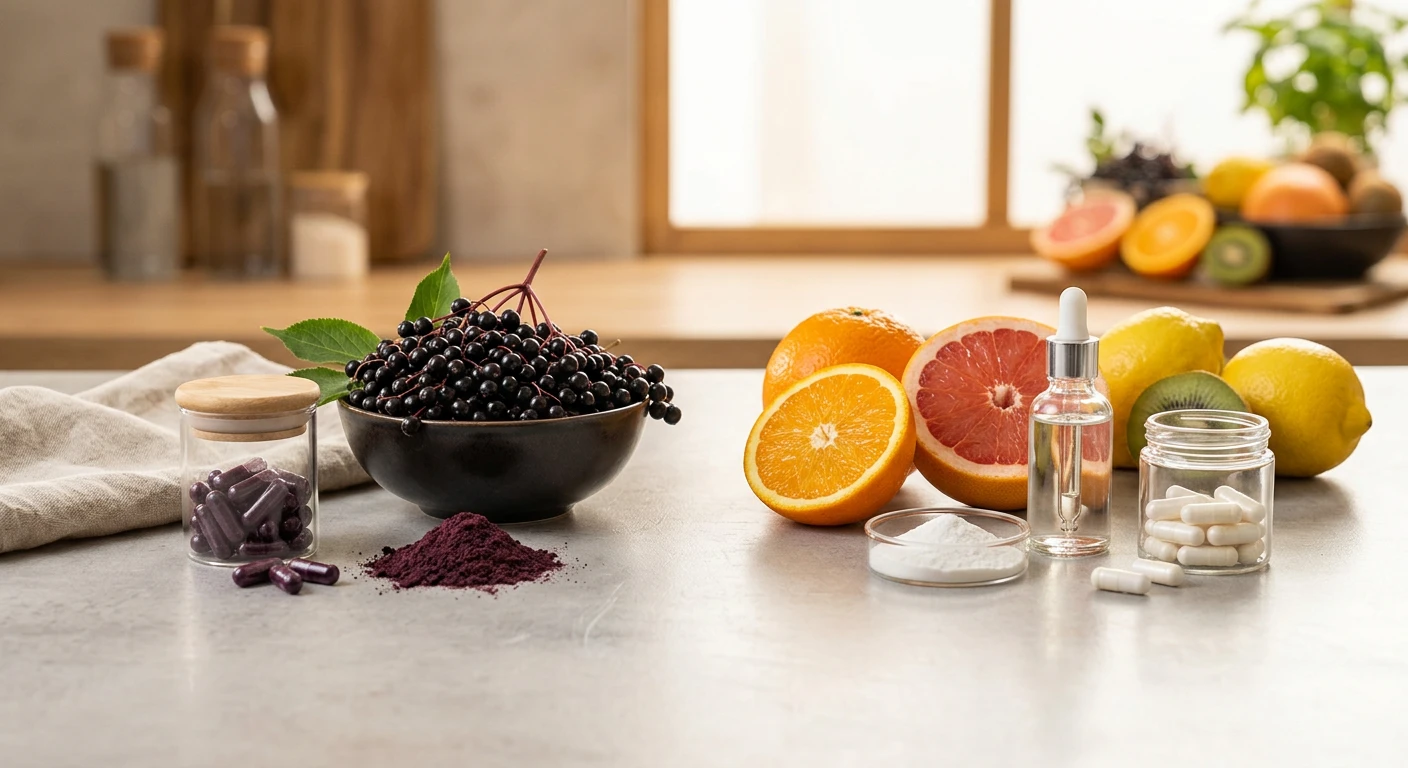
Elderberry and Vitamin C boost immunity in different ways. Vitamin C is daily protection, while elderberry is a rapid response when needed.
Short answer: Elderberry (Sambucus) is a powerful tool against viral infections, rich in anthocyanins, while Vitamin C is a fundamental antioxidant for daily immune support and recovery. Elderberry is a "specialist" for acute conditions, and Vitamin C is a "universal soldier." Practical advice: For prevention, take 500-1000 mg of Vitamin C daily. At the first symptoms of a cold or flu, add 150-300 mg of standardized elderberry extract for 3-5 days and increase Vitamin C to 2000 mg, divided into several doses.
In sports, where every workout tests physical limits and immunity, protection from illness is paramount. A missed week due to a cold or flu can negate months of progress. When seeking reliable immune support, elderberry extract (Sambucus) and Vitamin C often come to the forefront.
Many athletes confuse them and perceive them as interchangeable, but they have different functions. Your immune system is like a fortress. Vitamin C is the material it's built from, and the constant guard on the walls – it keeps structures healthy, provides daily protection, and watches for intruders. Elderberry, on the other hand, is the elite rapid response unit that activates in danger to neutralize the threat quickly and efficiently.
It's important to understand their roles and how they work to build an intelligent immune defense strategy. Here, we will analyze these two supplements based on scientific data and practical experience to help you decide when to rely on the daily support of Vitamin C, when to turn to elderberry, and when to combine the two.
This article is part of the Expert Hub for Food Supplements — over 270 expert-verified articles by Petar Mitkov and the Sport Zona team.
Which is More Effective: Elderberry (Sambucus) or Vitamin C, and What Are the Differences Between Them?
Systematic analysis shows that Elderberry (Sambucus) is a phytonutrient complex focused on intervening at the first symptoms of viral infection, while Vitamin C is an essential vitamin designed for daily prevention and immune system maintenance.
| Criterion | Elderberry (Sambucus) | Vitamin C |
|---|---|---|
| Biological Status | Phytonutrient complex (anthocyanins, flavonoids) | Essential vitamin (nutrient the body does not produce) |
| Primary Focus | Intervention at the first symptoms of viral infection | Daily prevention and support for the immune system |
| Mechanism of Action | Blocks virus entry into cells, modulates cytokine response | Antioxidant, cofactor for enzymes, supports immune cell function |
| Time Horizon | Short-term (3-7 days), as needed | Long-term (continuous intake) |
| Proven Effect in Athletes | Reduces the duration and severity of respiratory infections | Reduces the risk of colds after extreme exertion, reduces oxidative stress |
| Specific Bonus | High concentration of antioxidants (anthocyanins) | Involved in collagen synthesis, important for joints and connective tissue |
What is the Mechanism of Action?
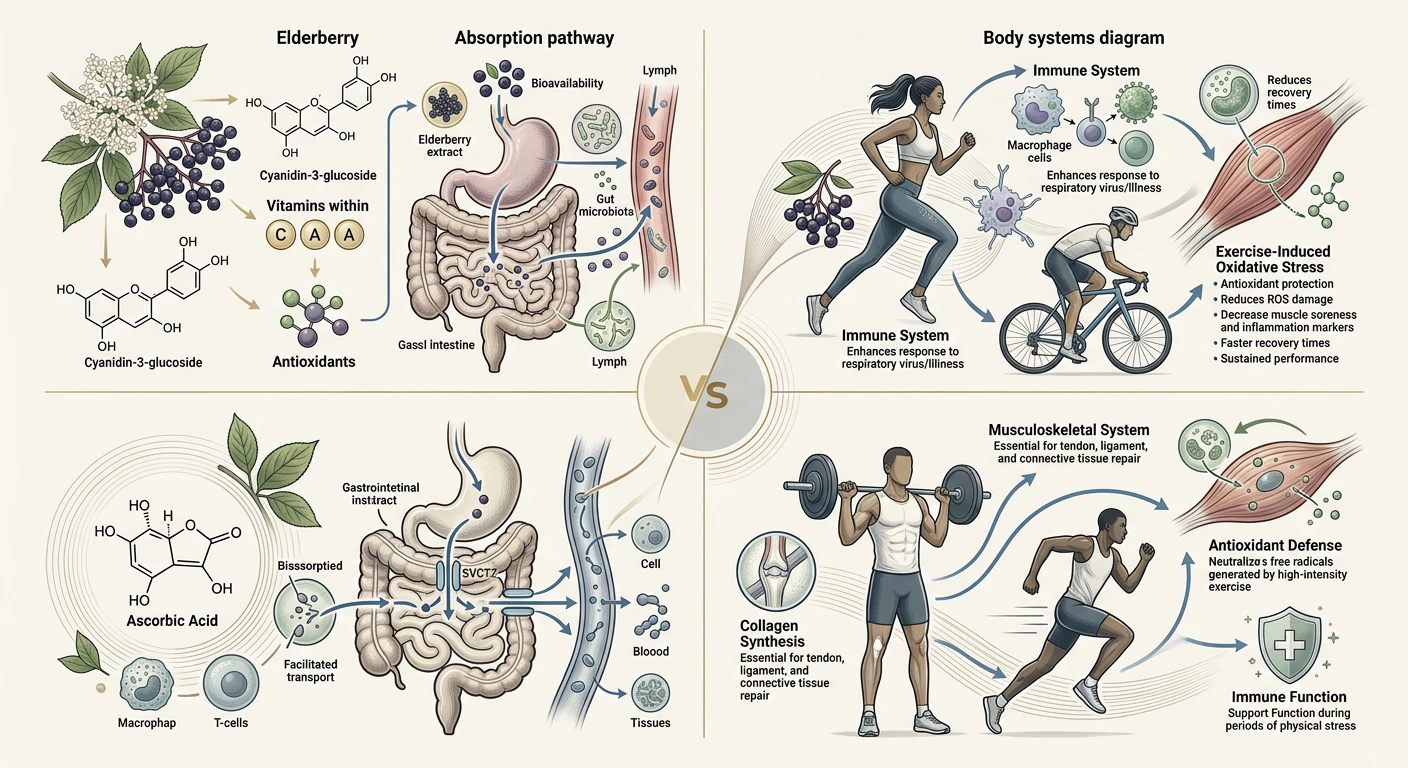
1. Elderberry (Sambucus nigra): Specific Antiviral Support
Black elderberry is a potent antiviral agent whose strength comes from its rich phytochemical composition, especially anthocyanins, which block the spread of viruses by binding to the hemagglutinin "spikes" of influenza viruses.
Elderberry extract can also alter the immune response by stimulating the production of certain cytokines (immune system signaling molecules) such as TNF-alpha, IL-6, and IL-8. This helps to more rapidly coordinate the body's defenses against the invading pathogen. It is important that intake begins within 24-48 hours of the first symptoms to be most effective.
Simply put: Elderberry blocks viruses from entering your cells. It prevents the infection from fully developing and helps the immune system quickly deal with the threat.
2. Vitamin C (Ascorbic Acid): The Foundation of Immune Defense
Vitamin C is a water-soluble vitamin that the human body cannot produce. Unlike the targeted intervention of elderberry, Vitamin C affects several key levels. First, it is a powerful antioxidant that neutralizes free radicals generated during intense training and immune response. This oxidative stress can damage cells, including immune cells.
Second, Vitamin C accumulates in high concentrations in immune cells (such as neutrophils and lymphocytes) and enhances their function – their ability to find, engulf, and destroy pathogens. Third, it is an important cofactor for collagen synthesis, a key protein for the strength of skin, gums, and blood vessels – the first barrier against infections. It also participates in the production of carnitine, important for energy metabolism in muscles.
Simply put: Vitamin C supports the immune system. It ensures healthy barriers (skin), provides immune cells with "fuel," and protects them from their own "waste products" (free radicals) during battle.
Scientific Sources
- Zakay-Rones, Z. et al. (2004). Randomized study of the efficacy and safety of oral elderberry extract in the treatment of influenza A and B virus infections.
- Carr, A. C., & Maggini, S. (2017). Vitamin C and Immune Function. Nutrients.
- Linus Pauling Institute at Oregon State University. Vitamin C.
- National Institutes of Health, Office of Dietary Supplements. Vitamin C Fact Sheet for Health Professionals.
- Hemilä, H., & Chalker, E. (2013). Vitamin C for preventing and treating the common cold. Cochrane Database of Systematic Reviews.
- Examine.com. Elderberry (Sambucus nigra) health benefits, dosage, and side effects.
The Synergistic Effect: Why Do They Work Better Together?
The most sensible approach is not to choose between elderberry or Vitamin C, but to use them together, in the right context. Here's an example: you are an athlete in a heavy training cycle.
- On a daily basis: You regularly take Vitamin C (e.g., 500-1000 mg daily). This keeps your immune system ready, improves antioxidant defense, and supports connective tissue recovery. Your immune "fortress" is strong.
- For acute intervention: You feel the first symptoms of a cold – a scratchy throat, fatigue. At this point, in addition to your usual Vitamin C dose, add black elderberry extract (e.g., 15 ml syrup, 4 times a day). Elderberry intervenes directly to block virus spread, while Vitamin C continues to support the overall function of immune cells fighting the infection.
This combination is more effective. Vitamin C provides the "army's" endurance, and elderberry is the specialized "weapon" that delivers the decisive blow. Without a strong foundation (Vitamin C), elderberry's effect may be weaker. Without elderberry's rapid intervention, even a well-prepared immune system may need more time to fight off the infection, leading to a longer period of illness and training interruption.
When and How to Choose Elderberry Extract and Vitamin C Supplements?
Choose Elderberry (Sambucus) if:
- You feel the first symptoms of a cold or flu (within the first 24-48 hours).
- You are about to travel by plane or be in a crowded environment.
- You want to shorten the duration and alleviate the symptoms of an already started viral infection.
- You are looking for short-term, intensive immune system support during a high-risk period.
🔵 Choose Vitamin C if:
- You are looking for constant, daily immune support and antioxidant protection.
- You are in a heavy training period with high physical stress.
- Your diet is low in fresh fruits and vegetables.
- You want to support the health of your joints, tendons, and skin through collagen synthesis.
Recommended Combined Intake
An effective algorithm for combining elderberry and Vitamin C is a daily intake of 500-1000 mg of Vitamin C, supplemented with black elderberry extract (standardized syrup or capsules) at the first signs of illness or high risk of infection, for a period of 3 to 5 days.
When to Use Elderberry and Vitamin C for Immunity?
- Daily (Foundation): 500-1000 mg of Vitamin C, divided into two doses (morning and evening) to maintain stable levels in the body. You can choose a form with high bioavailability, such as liposomal Vitamin C or a form with bioflavonoids.
- Post-Workout (Recovery): An additional 500 mg of Vitamin C immediately after a strenuous workout to combat oxidative stress.
- As Needed (Rapid Response): At the first signs of a cold or flu, start immediately with standardized black elderberry extract, equivalent to 10-15 g of fruit (often dosed as 15 ml syrup or 2-3 capsules), 3-4 times daily for 3 to 5 days. Continue with the basic Vitamin C intake.
Expert Note
The basis and stack for performance is the practice of maintaining Vitamin C as the "foundation" and applying Elderberry as the "reaction stack" for athletes, as this is most effective within the first few hours of primary symptoms to nip the illness in the bud.
🧭 When to Choose What?
- Choose Elderberry (Sambucus) only if you are looking for short-term, rapid response to existing symptoms, and your daily diet is rich in Vitamin C.
- Choose Vitamin C only if your goal is long-term prevention, reducing exercise-induced oxidative stress, and supporting connective tissue, without current symptoms.
- Combine both for the best strategy: Vitamin C as a daily foundation and Elderberry as a rapid response tool when needed.
📖 What are Elderberry (Sambucus) and Vitamin C?
- Elderberry (Sambucus nigra): A plant whose fruits and flowers are used to make extracts rich in anthocyanins and flavonoids. These extracts are known for their antiviral and immunomodulatory properties, especially for flu and colds.
- Vitamin C (Ascorbic Acid): A water-soluble vitamin that is a powerful antioxidant and is important for immune cell function, collagen synthesis, and energy production. It must be obtained daily through food or supplements.
⚖ Pros and Cons
| Product | Pros | Cons |
|---|---|---|
| Elderberry (Sambucus) |
|
|
| Vitamin C |
|
|
🗣 Explained Simply
Your immune system is your house:
- Vitamin C is the Foundation, walls, and roof. It keeps everything strong and protects from daily influences. Without it, the house would fall apart.
- Elderberry (Sambucus) is the Fire extinguisher. You don't use it every day, but when a fire breaks out (viral infection), it's an effective tool for quickly putting it out and preventing greater damage.
| Comparison | Elderberry (Sambucus) | Vitamin C |
|---|---|---|
| Role | Emergency response | Daily maintenance |
| When is it used? | When you are sick | Every day |
| Analogy | Elite squad | Constant guard |
Choose the Right Product for Your Goal:
- For basic immune support: Browse our
Recommended products
 Real Pharm Vitamin C Forte 90 tablets8.18 €
 Real Pharm Vitamin C 1000 100 tablets9.20 €
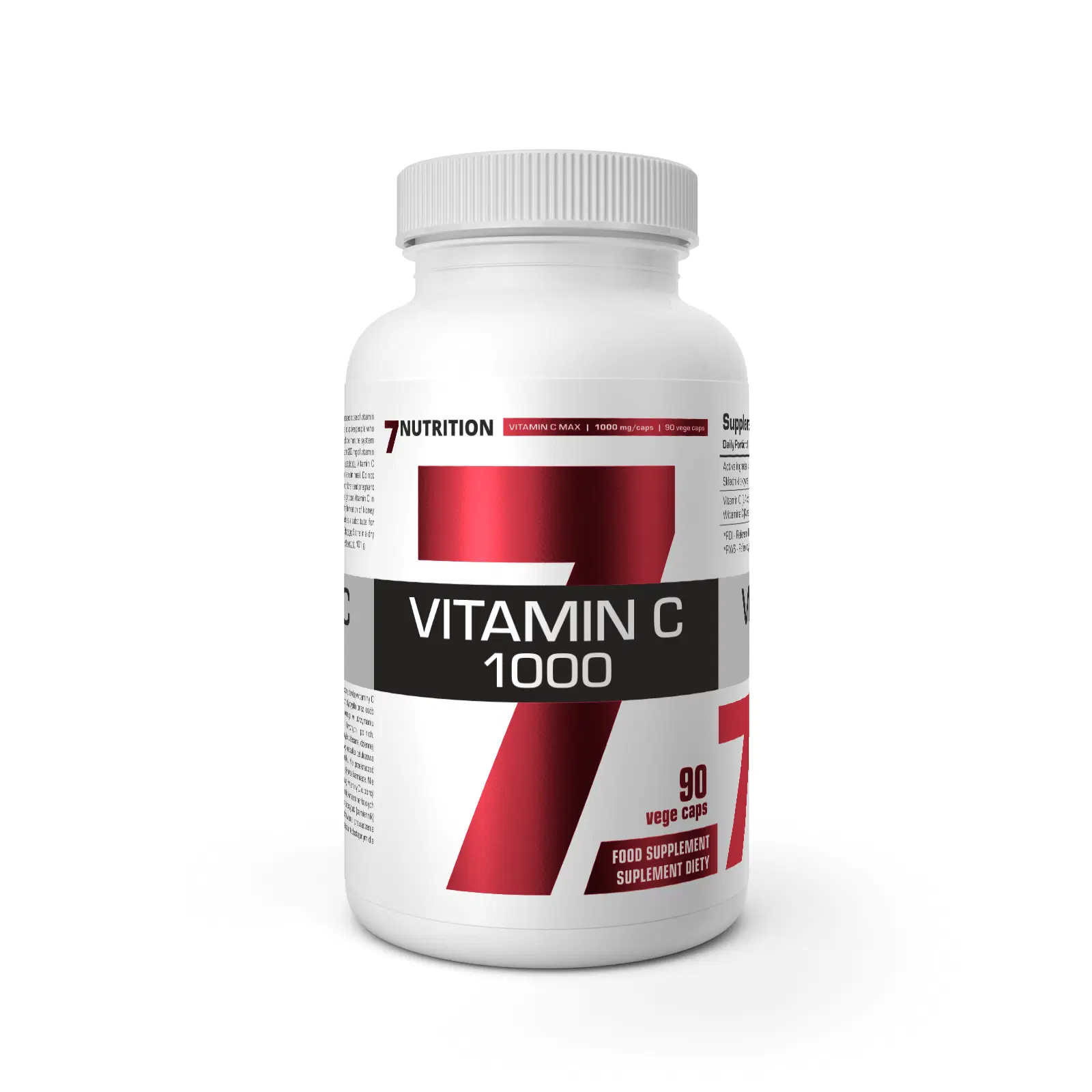 7Nutrition - Vitamin C 1000 90 caps9.20 €
Frequently asked questions
Can Elderberry (Sambucus) and Vitamin C be taken together?
Yes, and it is even recommended. They act synergistically. Vitamin C supports general immune function, while elderberry provides specific antiviral and anti-inflammatory compounds, especially useful during illness. There are no negative interactions between them when recommended doses are followed.
Which is better for beginners - Elderberry (Sambucus) or Vitamin C?
For beginner athletes, Vitamin C is the more fundamental supplement. It is an essential nutrient needed daily for the immune system, collagen production, and managing oxidative stress from training. Elderberry is more of a specific supplement that is taken as needed – for example, during flu season or at the first symptoms of illness.
When is the best time to take Elderberry (Sambucus) and Vitamin C?
Vitamin C can be taken at any time of the day, but for better absorption, it is advisable to divide higher doses (>1000 mg) into several intakes. Elderberry (Sambucus) is most effective when taken at the first signs of a cold or flu and continued for 3-5 days. For prevention, it can be used in lower doses during high-risk periods.
Are there any side effects from taking Elderberry (Sambucus) or Vitamin C?
Vitamin C is water-soluble and generally safe, but doses above 2000-3000 mg per day can cause stomach discomfort or diarrhea in some people. Elderberry should only be taken as a standardized extract from processed berries or flowers. The raw or unripe fruits, leaves, and bark of the plant are toxic and should not be consumed.
What is the recommended dosage for Elderberry (Sambucus) and Vitamin C?
For Vitamin C, the recommended daily dose for athletes is 500-2000 mg. For elderberry extract, effective doses for acute conditions are around 150-300 mg of standardized extract (for anthocyanins), taken 2-4 times daily for several days. Always follow the instructions on the product label.