Biotin (B7) vs. Folic Acid (B9): Cell Beauty vs. DNA Builder

Biotin (B7) supports energy metabolism, while folic acid (B9) is involved in cell building and repair. They are important for athletes.
Short Answer: Biotin (B7) is key for energy metabolism (fat and carbohydrate breakdown), while folic acid (B9) is essential for cell growth, DNA synthesis, and red blood cell production. B9 deficiency is more common and critical for athletes. Practical advice: For most athletes, a daily intake of 400-800 mcg of folic acid (as methylfolate) is a priority. Add biotin (30-100 mcg) only with a poor diet or specific symptoms like hair and skin problems.
B vitamins include a number of members, but Biotin (B7) and Folic Acid (B9) stand out with their specific roles. Both are water-soluble and important for cellular processes, but they operate differently. For athletes, whose bodies are under constant stress and require proper functioning, understanding these differences helps improve performance and recovery.
Biotin is important for energy management – it converts food into energy. Folic acid, on the other hand, helps build and repair cells. One provides energy, the other builds and repairs.
The article will examine both vitamins to help you decide when to use each and when a combination is best for your athletic goals.
This article is part of the Expert Hub for Nutritional Supplements — over 270 expert-verified articles by Petar Mitkov and the Sport Zona team.
What is a Comparative Matrix for System Analysis?
A comparative matrix for system analysis is a tool that presents detailed information about Biotin (B7) and Folic Acid (B9) across various criteria, including their biological status, primary focus, mechanism of action, and impact on training.
| Criterion | Biotin (B7) | Folic Acid (B9) |
|---|---|---|
| Biological Status | Coenzyme for five key carboxylase enzymes. | Coenzyme in one-carbon unit metabolism. |
| Primary Focus | Energy metabolism (carbohydrates, fats, amino acids). | DNA and RNA synthesis, cell division, methylation. |
| Mechanism | Activates enzymes involved in gluconeogenesis and fatty acid synthesis. | "Donates" methyl groups for nucleotide and amino acid synthesis. |
| Impact on Training | Supports energy production from nutrients. | Supports recovery, red blood cell synthesis, and DNA repair. |
| Specific Bonus | Hair, skin, and nail health. Gene expression regulation. | Regulates homocysteine levels, key for cardiovascular health. |
| Risk at High Doses | Can interfere with blood test results (e.g., Troponin). | Can mask vitamin B12 deficiency. |
What Mechanisms Underlie Biotin's Action?
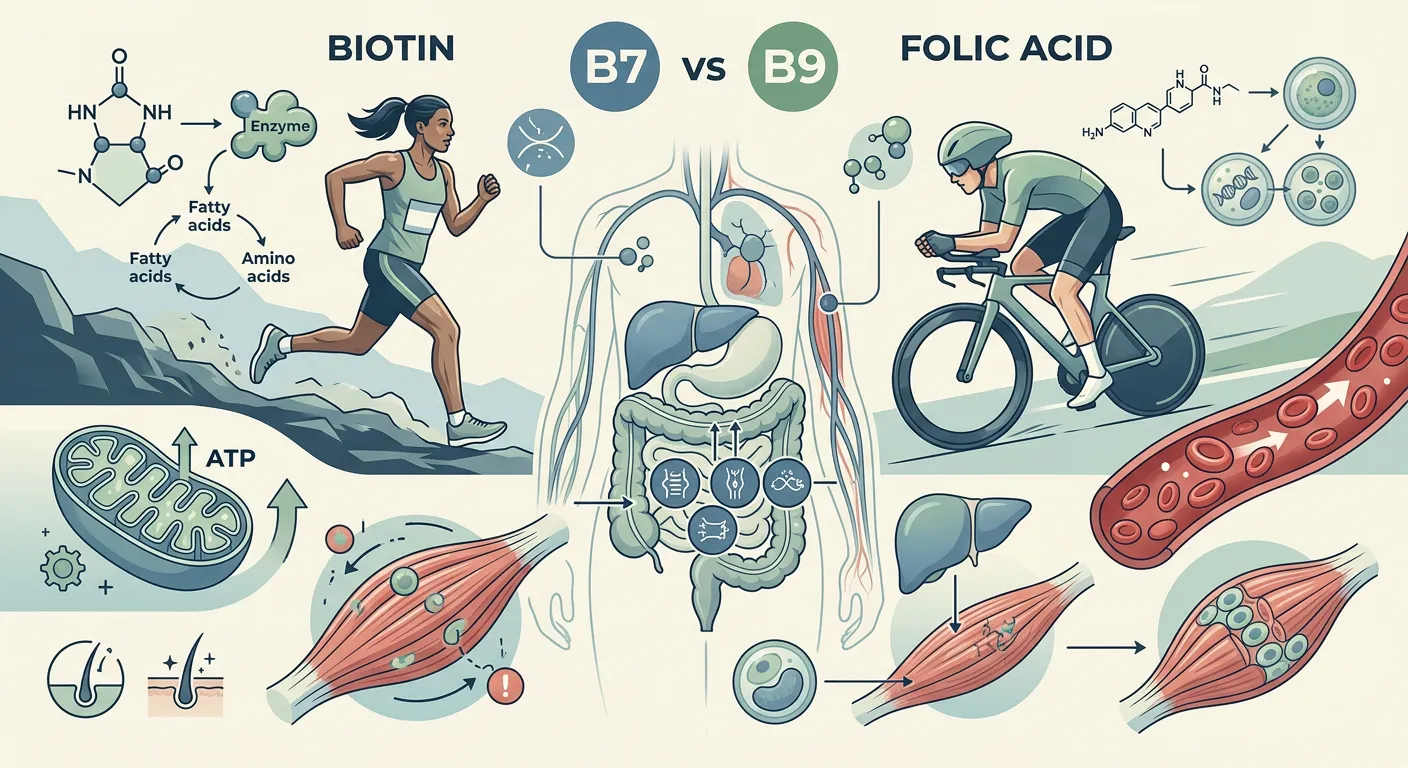
1. Biotin (B7): The Metabolic Engine
Biotin is a coenzyme for five human enzymes known as carboxylases, which are necessary for the body's central metabolic pathways.
- Gluconeogenesis: Creates glucose from non-carbohydrate sources (like amino acids and lactate) during fasting or intense exercise. The biotin-dependent enzyme pyruvate carboxylase is the first step in this process.
- Fatty Acid Synthesis: Acetyl-CoA carboxylase, another biotin-dependent enzyme, catalyzes a key step in fatty acid synthesis, which is important for energy reserves and cell membranes.
- Amino Acid Metabolism: Biotin is needed for the breakdown of branched-chain amino acids (BCAAs) like leucine, which is essential for muscle protein synthesis.
For an athlete, this means that a sufficient amount of biotin ensures efficient energy utilization from food and maintains energy levels during prolonged exertion.
Simply Put: Biotin is key to kick-starting several metabolic processes in the body. It helps produce energy from fats and amino acids and creates new glucose when stores are depleted. Without it, metabolism doesn't work efficiently.
Practical Observation
It is rare to see athletes with clinical biotin deficiency. It is more common to take high doses for hair and nail health. Although not toxic, high intake can seriously affect blood test results, including for cardiac markers and thyroid hormones. Always inform your doctor if you are taking high doses of biotin.
2. Folic Acid (B9): The Cell Repair Architect
Folic acid (and its natural form, folate) plays a central role in one-carbon unit metabolism. This process involves the transfer of methyl groups (-CH3) from one compound to another, and these reactions are the basis for:
- DNA and RNA Synthesis: The creation of new cells (muscle, blood, or immune) requires continuous DNA replication. Folate is essential for the synthesis of nucleotides (the building blocks of DNA). For athletes, this means more efficient repair of muscle micro-tears.
- Cell Division: Especially important for tissues with rapid turnover, such as red blood cells (erythrocytes). Adequate folate is needed for the production of healthy erythrocytes that transport oxygen to the muscles.
- Methylation: Folate participates in converting the amino acid homocysteine back to methionine. High homocysteine levels are a risk factor for cardiovascular disease. This process regulates gene expression and neurotransmitter production.
Simply Put: Folic acid is like an architect who creates "blueprints" (DNA) and "instructions" for building every new cell. Without it, cell construction stops or occurs with problems.
Scientific Sources
- Biotin and biotinidase deficiency, 2018
- Biotin, Linus Pauling Institute
- Folate, Fact Sheet for Health Professionals - NIH Office of Dietary Supplements
- Scientific Opinion on Dietary Reference Values for folate, EFSA Journal 2014
- Folic Acid (Folate), The Nutrition Source - Harvard T.H. Chan School of Public Health
- Biotin - Scientific review on usage, dosage, side effects | Examine.com
The Synergistic Effect: Why Do They Work Better Together?
Despite their different primary functions, Biotin and Folic Acid are B vitamins that work together to maintain metabolism and cellular health. Here's how they complement each other:
- Energy and Recovery: Biotin helps produce ATP, necessary for training. Folic acid uses this energy to repair damaged muscle fibers and build new, stronger structures.
- Shared Metabolic Pathway: The metabolism of certain amino acids requires the involvement of both vitamins at different stages. A deficiency in one can slow down the entire process.
- Cellular Fuel and Cellular Structure: Biotin ensures efficient burning of "fuel" (the macronutrients), while Folic Acid takes care of building and maintaining the "machines" themselves (the cells).
Taking a B-complex is a better approach than isolated supplementation, unless there is a diagnosed specific deficiency, as all B vitamins work as a team.
What is the Practical Selection Algorithm?
Choose Biotin (B7) if:
- Your goal is to improve energy metabolism and nutrient absorption of macronutrients.
- You have problems with brittle nails, hair loss, or skin irritation.
- You follow a ketogenic diet or a high-protein diet.
- You want to support metabolism without specific recovery needs.
🔵 Choose Folic Acid (B9) if:
- Your priority is to accelerate recovery after intense workouts.
- You participate in endurance sports and want to support red blood cell production.
- You have a high training volume, requiring improved DNA repair.
- You have an MTHFR gene mutation (in this case, choose the methylated form - methylfolate).
Recommended Stack for Comprehensive Support:
The practical algorithm for choosing Biotin and Folic Acid for athletes without a diagnosed deficiency is to take a quality B-complex, which provides basic doses of all B vitamins in a complementary ratio.
What is the 2026 Protocol: "Foundation and Performance Stack"?
The 2026 Protocol: "Foundation and Performance Stack" is aimed at athletes seeking comprehensive metabolic and recovery support.
- Daily Foundation: Take a quality multivitamin or B-complex in the morning with food. This provides a basic daily dose, including about 50-100 mcg of Biotin and 400 mcg of Folate.
- Specific Support (if needed):
- During periods of intense training and focus on recovery: Add a separate 400 mcg of Methylfolate (the bioactive form of B9) after training with your protein shake to support cellular repair.
- If suspecting metabolic issues or focusing on skin health: You can add a separate 300-1000 mcg of Biotin daily, but be aware it can interfere with blood tests.
Expert Note on the Protocol
Before starting supplementation with high doses of B vitamins, it is advisable to get a blood test. Check your Folate, Vitamin B12, and Homocysteine levels. This will give a clear picture of whether you have a real deficiency that requires higher doses, or if you simply need general support. More is not always better, especially with water-soluble vitamins.
🧭 When to Choose Which?
- Choose isolated Biotin (B7) if you specifically want to support the energy metabolism of fats and carbohydrates or have aesthetic goals related to hair and nails.
- Choose isolated Folic Acid (B9) if your priority is to accelerate recovery, support endurance through red blood cell production, or if you have a genetic predisposition to higher homocysteine.
- Combine them (or take a B-complex) if you are an athlete seeking comprehensive and balanced support for both energy production and recovery processes. This is the safest and most effective approach in 90% of cases.
📖 What are Biotin (B7) and Folic Acid (B9)?
Biotin (Vitamin B7): A water-soluble vitamin that acts as a coenzyme in the metabolism of fats, carbohydrates, and amino acids. It is sometimes called Vitamin H (from "Haut und Haar" - skin and hair in German).
Folic Acid (Vitamin B9): The synthetic, more stable form of folate. It is a water-soluble vitamin, crucial for DNA and RNA synthesis, cell division, and amino acid metabolism. The natural form found in foods is called folate.
⚖ Pros and Cons
| Vitamin | Pros | Cons |
|---|---|---|
| Biotin (B7) | Supports energy metabolism, beneficial for skin and hair, very low toxicity. | High doses interfere with blood tests, has little direct effect on athletic performance. |
| Folic Acid (B9) | Crucial for recovery and DNA synthesis, supports red blood cell production, reduces homocysteine. | Can mask B12 deficiency, synthetic form requires conversion (problem with MTHFR mutation). |
🗣 Explained Simply
If I had to explain the difference to a friend, here's how I'd compare it:
| Criterion | Biotin (B7) | Folic Acid (B9) |
|---|---|---|
| Main Role | Energy Manager | Cellular Builder |
| Metaphor | The Key to the Car's Engine | The Building's Architectural Plan |
| Key For... | Converting food into energy. | Repairing and building cells. |
Choose the Right Product for Your Goal:
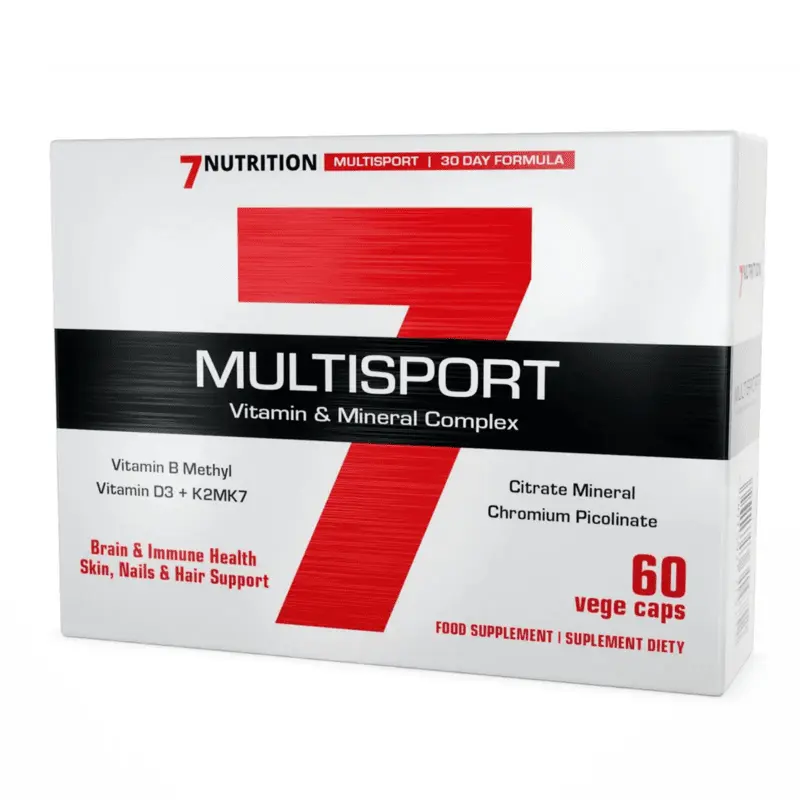
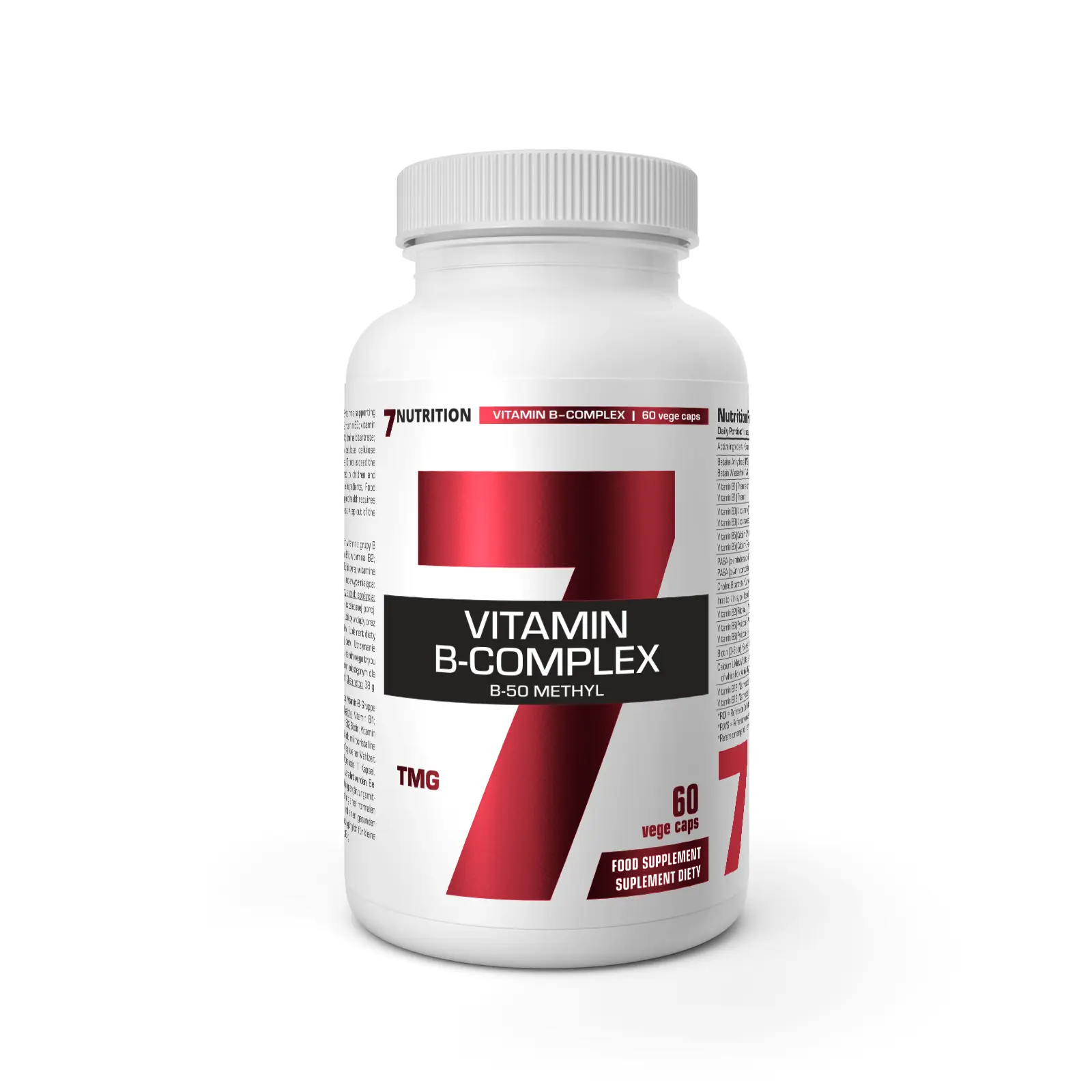
- For Comprehensive Support: Explore our vitamin and mineral complexes.
- To Optimize Amino Acid Metabolism: Combine with amino acids.
Combined Protocol for Maximum Effect:
1. Morning: Take a B-complex with food to provide the foundation.
2. Post-Workout: Add BCAAs to support muscle synthesis, a process in which biotin is involved.
3. Evening: Consider a mineral complex with magnesium and zinc to support the nervous system and recovery.
⚖ When to Choose Biotin (B7)
- When the focus is on energy and metabolism.
- For diets rich in raw egg whites (avidin blocks biotin).
- If you aim to improve the condition of your hair, skin, and nails.
- As a supportive supplement for high-protein diets.
⚖ When to Choose Folic Acid (B9)
- When recovery is the absolute priority.
- For endurance athletes (running, cycling, swimming).
- If you have a high training volume and muscle fatigue.
- When planning pregnancy (critical for fetal development).
Expert Note from Sport Zona
From experience, I see that athletes often focus on "star" supplements like creatine and protein, neglecting the basics. Biotin and Folic Acid are exactly that – the foundation. They are the silent workers in the background. Before investing in expensive, exotic products, make sure your "foundation" is solid. A quality B-complex and a varied diet rich in leafy greens (for folate) and eggs/nuts (for biotin) work wonders and often solve problems that people try to "patch up" with more aggressive supplements. Don't underestimate the power of the basic building blocks!
Recommended products
Frequently asked questions
Can Biotin (B7) and Folic Acid (B9) be taken together?
Yes, absolutely. They are water-soluble B vitamins and are often found together in B-complex formulas. There is no data on negative interactions between them. Taking them together is safe and even recommended for overall metabolic support.
Which is better for beginners - Biotin (B7) or Folic Acid (B9)?
For beginner athletes, folic acid (B9) is generally more important. It supports cell repair and the production of red blood cells, which are key to adapting to new loads. Biotin (B7) deficiency is much rarer and is usually easily obtained with a balanced diet.
When is the best time to take Biotin (B7) and Folic Acid (B9)?
Both vitamins are water-soluble, meaning they can be taken at any time of the day. However, for optimal absorption, it is best to take them with food, for example, with breakfast. This also reduces the minimal risk of stomach discomfort.
Are there any side effects from taking Biotin (B7) or Folic Acid (B9)?
At recommended doses, both vitamins are extremely safe. Very high doses of folic acid (>1000 mcg daily of synthetic form) can mask a vitamin B12 deficiency. High doses of biotin (>5000 mcg) can affect the results of some laboratory tests (such as thyroid tests), but they are not toxic.
What is the recommended dosage for Biotin (B7) and Folic Acid (B9)?
For biotin, the recommended daily intake is about 30-100 micrograms (mcg). For folic acid, it is 400 mcg, with the needs of athletes and pregnant women potentially reaching 600-800 mcg. It is always recommended to choose the bioactive form of folic acid - methylfolate, as it is more easily absorbed.