Cool-down after training
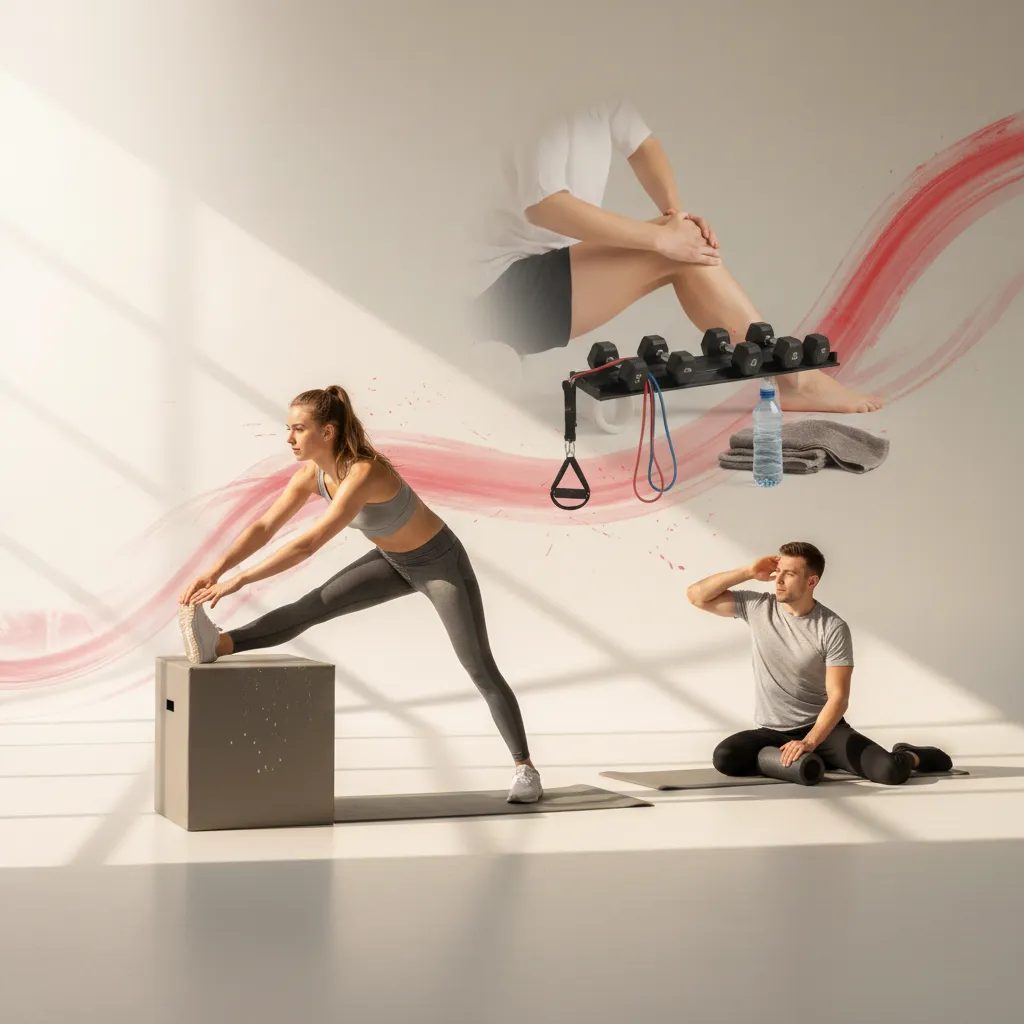
Why doesn't it reduce DOMS, but helps HRV recovery, 5-10 min LISS + light stretch
Cool-down is a transitional phase of low-intensity exercise and light stretching after a workout, aiming to smoothly return the body to a resting state and support autonomic recovery.
📌 3 Key Takeaways
- Contrary to popular belief, cool-down does NOT significantly reduce next-day muscle soreness (DOMS).
- Its main benefit is accelerating the recovery of heart rate and its variability (HRV), preparing the nervous system for rest and regeneration.
- Effective cool-down is short (5–10 minutes) and combines light cardio (LISS) with non-aggressive static stretching of the worked muscles.
What Exactly is a Cool-Down?
💬 Simply put: A cool-down is like a smooth ending to your workout, helping your body return to a normal and safe resting state, instead of stopping abruptly.
A cool-down is a targeted process that marks the end of intense physical activity. During exercise, the body is in a "fight or flight" state (sympathetic nervous system mode) – heart rate is elevated, blood pressure is high, and blood is concentrated in the working muscles. Abruptly stopping exertion can lead to physiological "shock" – for example, blood pooling in the lower extremities (venous pooling), which can cause dizziness or even fainting.
The goal of a cool-down is not to "fix" muscles or prevent the microscopic tears that cause muscle soreness. Instead, it acts as a bridge, smoothly transitioning the body from a state of high stress to a state of rest and recovery (parasympathetic mode). This transitional phase consists of two main parts:
- Active Part: Very low-intensity exercises that maintain a slightly elevated heart rate and circulation.
- Passive Part: Gentle static stretching to restore normal resting muscle length.
From an orthopedic and injury prevention perspective, a cool-down is an important ritual to "close" the training session, signaling to the body that intense work is over and the regeneration process can begin.
🔬 From Practice
I often have patients, mostly from strength sports, complain of "anxiety" or difficulty sleeping on days they have a heavy workout. My first question is always: "What do you do in the last 10 minutes in the gym?". 9 out of 10 times the answer is "Nothing, I pack my bag and leave." I had a case with a young weightlifter who regularly experienced dizziness after heavy squats. We measured his heart rate 20 minutes after his last set – it was still over 110 bpm. After introducing a 10-minute cool-down (5 min. treadmill walk and 5 min. stretching), the symptoms completely disappeared, and he shared that his HRV metrics (measured with a fitness tracker) recovered significantly faster.
How It Works in Practice (and Why It Doesn't Affect Muscle Soreness)
The effectiveness of a cool-down is measured not by reduced muscle soreness, but by faster normalization of physiological indicators. processes with specific numbers.
Heart Activity and HRV: After a heavy set, heart rate can reach 150-180 bpm. Without a cool-down, it may remain unusually high (over 100 bpm) for more than 30-40 minutes. A 5-10 minute cool-down with light cardio (LISS) helps to gradually lower it below 100-110 bpm before you stop moving completely. More importantly, it impacts Heart Rate Variability (HRV) – a key indicator of the autonomic nervous system's state. High HRV indicates good adaptability and readiness for recovery. Intense training crashes HRV. A cool-down facilitates the transition to the parasympathetic mode, allowing HRV to begin recovering earlier and faster.
Muscle Soreness (DOMS): Muscle soreness is the result of an inflammatory process caused by micro-injuries in muscle fibers. Studies consistently show that cool-down, including light stretching, has no statistically significant effect on the intensity of DOMS 24 to 48 hours after exercise. The reason is simple: 10 minutes of light movement cannot repair structural damage in muscle cells. Recovery from DOMS depends on nutrition, sleep, and time.
Stretching: The goal of stretching at the end of a workout is NOT to increase your flexibility. That requires separate, specialized sessions. The goal is to counteract muscle shortening that occurred during concentric contractions. Gentle static stretching for 20-30 seconds per muscle group is sufficient to restore their normal resting length and reduce the feeling of stiffness immediately after exercise.
When and How to Use It
A cool-down should begin immediately after the last heavy exercise of your workout. Do not postpone it until after you've put away weights or chatted with friends. Here is a sample protocol:
- Phase 1: Active Recovery (5-7 minutes). The main goal is a gradual decrease in intensity.
- After Strength Training: Get on a stationary bike with minimal resistance or a treadmill at 4-5 km/h. Monitor your heart rate as it gradually drops.
- After Interval Cardio (HIIT): Instead of stopping abruptly, transition to a light jog for 2-3 minutes, followed by 3-4 minutes of brisk walking.
- Phase 2: Gentle Static Stretching (3-5 minutes). Focus on the major muscle groups you worked.
- Hold each stretch for 20-30 seconds. You should feel a mild tension, not pain.
- Do not perform "bouncing" or ballistic movements. Breathe deeply and relax into the stretch.
- Example after an upper body workout: Chest stretch on a doorframe, latissimus dorsi stretch, overhead triceps stretch.
The entire process should not take more than 10-12 minutes. This is a small time investment with a large return for the nervous system.
⚠️ Common Mistakes
- Skipping: The most common mistake is completely skipping the cool-down due to lack of time or understanding of its benefits.
- Aggressive Stretching: Stretching to severe pain after exercise can increase muscle micro-tears and actually worsen muscle soreness.
- Expecting it to prevent DOMS: This misconception leads many people to become disappointed and stop doing it when they still experience muscle soreness the next day.
- Too Short or Too Long: Under 3-4 minutes is insufficient for a smooth transition, while over 15 minutes is unnecessary and enters the territory of a separate recovery session.
Comparison of Different Post-Workout Approaches
| Approach | Effect on DOMS | HRV/Heart Rate Recovery | Risk of Dizziness |
|---|---|---|---|
| Proper Cool-down (LISS + Stretch) | Minimal / Insignificant | Accelerated | Low |
| No Cool-down (Abrupt Stop) | Almost identical to cool-down | Significantly Delayed | Increased |
| Aggressive Stretching Only | May Worsen | Neutral / Slightly Delayed | Low |
- Should I cool down after lighter activities like yoga or a walk?
- No, it's usually not necessary. These activities are low-intensity and do not cause the sharp physiological changes that require a transitional phase. Their very nature includes elements of gradual load reduction.
- What's more important: stretching before or after a workout?
- They serve different purposes. Before a workout, dynamic stretching (as part of the warm-up) is done to prepare muscles and joints for work. After a workout, gentle static stretching (as part of the cool-down) is done to restore muscle length and aid relaxation. Both are important for their respective goals.
- If I'm short on time, what should I cut – the warm-up or the cool-down?
- Always prioritize the warm-up. Skipping it drastically increases the risk of injury during the workout. If time is tight, it's better to do a shortened, 5-minute cool-down (e.g., just 5 min. of walking) than to skip the warm-up.
- Can I just sit on the bench immediately after my last set?
- It is not recommended. Abruptly stopping movement after intense exertion can lead to "venous pooling" – blood collects in the dilated blood vessels of the legs and doesn't return effectively to the heart. This can cause a drop in blood pressure, dizziness, and nausea.
See more in the fitness guides of Sport Zona Academy.
📚 Scientific Sources
- Do We Need a Cool-Down After Exercise? A Narrative Review of the Psychophysiological Effects and the Effects on Performance, Injuries and the Long-Term Adaptive Response (Van Hooren B, et al., 2018)
- Is an Active Cool-Down After Exercise Important? A Systematic Review and Meta-analysis of the Effects of a Cool-Down on Recovery (Peña-Alcaraz M, et al., 2024)
- The Effectiveness of Post-exercise Cooling to Reduce Kinaesthetic and Neuromuscular Fatigability and Improve Athletic Performance, Recovery, and Soreness: A Systematic Review and Meta-analysis (Afonso J, et al., 2021)
🔬 Expert Note from Sport Zona
From my years of work, I notice that many athletes neglect their cool-down, rushing to finish. This is a mistake that often leads to muscle stiffness and delayed recovery. A short, targeted stretch after a workout makes a huge difference in the long run and helps the body prepare for the next load.
See more in the fitness guides of Sport Zona Academy.
Recommended products
Frequently asked questions
Does cooling down reduce muscle soreness (DOMS)?
No, studies show that cooling down has no statistically significant effect on reducing muscle soreness. Its main benefit is elsewhere.
What is the main benefit of cooling down after a workout?
The main benefit is accelerating heart rate recovery and its variability (HRV), which aids the nervous system's transition to rest and regeneration.
How long should an effective cool-down last?
Effective cooling down should be brief, between 5 and 10 minutes. It involves light, low-intensity exercises and gentle static stretching.
What does a good cool-down routine involve?
A good cool-down routine combines 5-10 minutes of Low-Intensity Steady State (LISS) cardio with light static stretches on the major muscle groups that were worked during the training session.