Phosphatidylserine vs. Omega-3: Brain Focus vs. System Lubrication

Phosphatidylserine reduces post-workout cortisol, aiding recovery. Omega-3s are building blocks for cells and regulate inflammation.
Short Answer: Phosphatidylserine is a specialized supplement for rapidly reducing post-workout cortisol (up to 30%) and improving cognitive function under stress. Omega-3s are foundational for long-term health, reducing overall inflammation and supporting cardiovascular and brain function. Practical Advice: For cortisol control, take 400-600 mg of phosphatidylserine daily (especially post-workout). For general anti-inflammatory action and health, aim for 2-3 grams of combined EPA and DHA from Omega-3s daily. They can be combined for a synergistic effect.
Everyone who exercises looks for ways to recover better and achieve more. The brain controls everything, including how the body responds to stress and how it deals with inflammation. This is where phosphatidylserine and Omega-3 fatty acids come in. Both supplements support brain function and recovery, but they do it in different ways.
Phosphatidylserine reduces the stress hormone cortisol, which rises after intense workouts. This helps the body transition to recovery faster. Omega-3 fatty acids are like building blocks for cells (including brain cells) and regulate inflammatory processes that accumulate with regular training.
The choice of which one to take depends on your goals, training type, and preparation phase. Here's an analysis of both supplements to help you decide which is more suitable for you and when it's best to combine them for the best effect.
This article is part of the Expert Hub for Nutritional Supplements — over 270 expertly verified articles by Petar Mitkov and the Sport Zona team.
Which is Better: Phosphatidylserine or Omega-3?
The comparative matrix represents a systematic analysis of Phosphatidylserine and Omega-3, examining their biological status, primary focus, mechanism of action, speed of effect, and areas of impact on the body's systems.
| Criterion | Phosphatidylserine | Omega-3 (EPA/DHA) |
|---|---|---|
| Biological Status | Phospholipid | Essential Fatty Acids |
| Primary Focus | Reduces cortisol, improves brain function | Reduces inflammation, supports cell structure |
| How it Works | Regulates stress response (HPA axis) | Reduces pro-inflammatory substances, produces anti-inflammatory ones |
| Speed of Effect | Fast effect (hours) | Cumulative effect (weeks/months) |
| Where it Acts | Endocrine and nervous systems | Immune, cardiovascular, nervous systems |
| Benefits for Athletes | Better focus during training; less muscle soreness | Supports joint health; improves heart function |
How Do the Supplements Work?
1. Phosphatidylserine (PS): Hormone Regulator
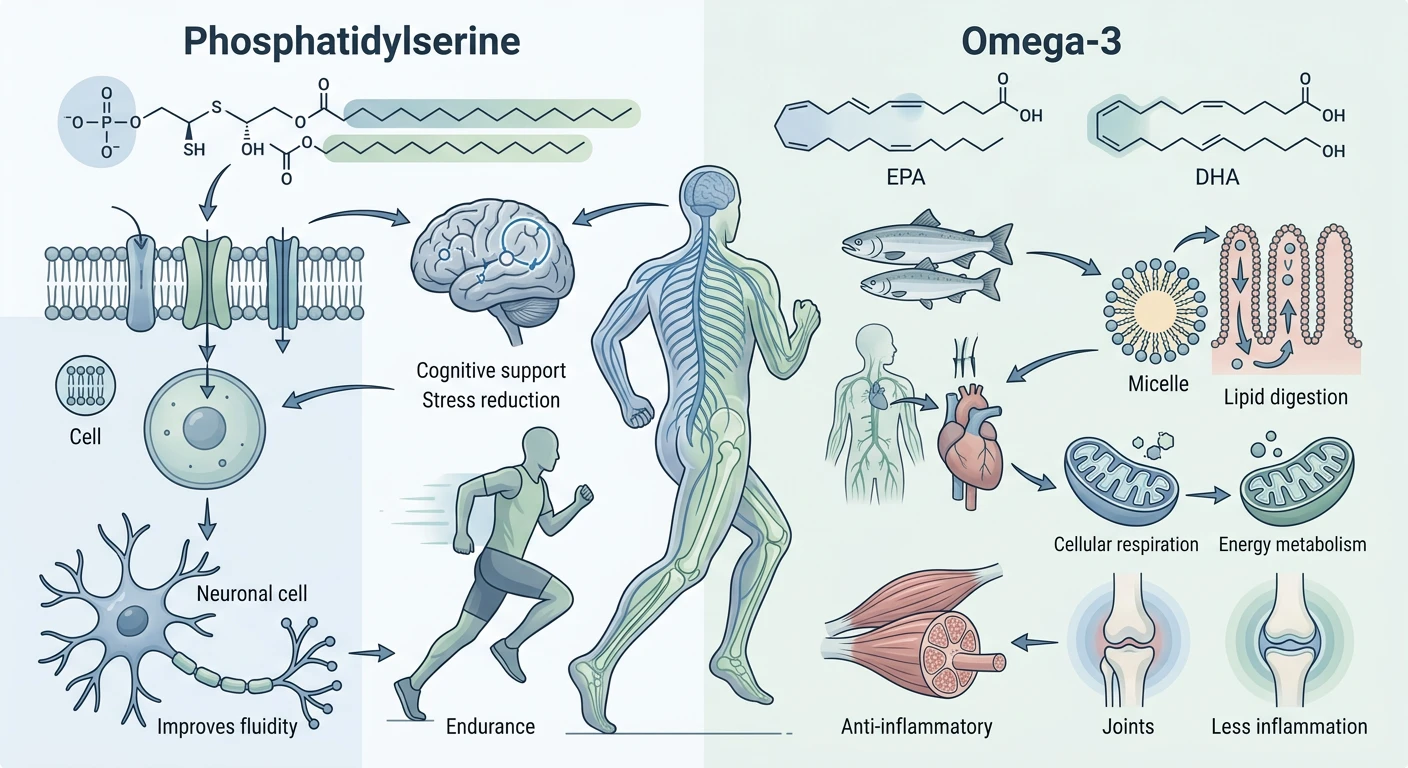
Phosphatidylserine is a phospholipid – a fatty compound that is crucial for cell membranes, especially those in the brain. Its primary function for athletes is to reduce the body's excessive reaction to physical and mental stress.
During intense workouts, the body releases cortisol – a hormone that breaks down tissues for energy. While necessary in small amounts, high cortisol levels hinder muscle growth, slow down recovery, and can lead to overtraining. Phosphatidylserine directly influences the hypothalamus-pituitary-adrenal (HPA) axis. It reduces the sensitivity of this system to stress signals, leading to less ACTH (adrenocorticotropic hormone) release from the pituitary gland, and consequently, less cortisol production by the adrenal glands.
Simply put: Phosphatidylserine reduces the action of the stress hormone. When you train hard and your body wants to produce a lot of cortisol, PS intervenes and "turns down the volume," allowing your muscles to recover more effectively.
Studies show that PS can reduce cortisol levels after intense exercise, improve the testosterone/cortisol ratio, and even decrease muscle soreness.
Scientific Sources
- Starks, M. A., et al. (2008). The effects of phosphatidylserine on endocrine response to moderate intensity exercise. JISS
- Examine.com. (2023). Phosphatidylserine Health Benefits, Dosage, and Side Effects.
- Monteleone, P., et al. (1992). Effects of phosphatidylserine on the neuroendocrine response to physical stress in humans. Neuroendocrinology.
2. Omega-3: Body-Wide Anti-Inflammatory Effect
Omega-3 fatty acids, especially EPA and DHA, are important because the body cannot produce them in sufficient quantities and must obtain them through diet or supplements. They have two key roles: structural and functional.
As structural components, they integrate into cell membranes, making them more flexible and improving communication between cells. This is particularly important for brain cells. However, their functional role is what makes them highly valuable for athletes. Omega-3s compete with omega-6 fatty acids (like arachidonic acid) for the same enzymatic pathways. While omega-6 metabolism leads to highly pro-inflammatory molecules (prostaglandins and leukotrienes), omega-3 metabolism produces much less inflammatory or even actively anti-inflammatory compounds (resolvins and protectins).
Simply put: Omega-3s are like a team that controls inflammation in the body. Every workout creates minor inflammation in the muscles. Omega-3s help prevent these inflammations from becoming too severe by promoting the production of anti-inflammatory substances.
Due to this effect, adequate omega-3 intake reduces chronic, low-grade inflammation, which is common in heavy training regimens. The result is less muscle and joint pain, faster recovery between workouts, and long-term maintenance of good cardiovascular health.
Scientific Sources
- National Institutes of Health (NIH). (2023). Omega-3 Fatty Acids Fact Sheet for Health Professionals.
- Linus Pauling Institute. (2024). Essential Fatty Acids.
- Jouris, K. B., et al. (2018). The Effect of Omega-3 Fatty Acid Supplementation on the Inflammatory Response to eccentric strength exercise. JSSM.
Why Do They Work Better Together?
Although they work in different ways, phosphatidylserine and omega-3 complement each other. Their combination provides dual support and optimizes recovery.
- Fast and Long-Term Control: Phosphatidylserine offers a Fast response, controlling stress during and immediately after training. Omega-3 provides Long-Term support by regulating inflammation between workouts.
- Hormonal Balance and Cell Structure: PS improves the hormonal environment for growth (reduces cortisol), while omega-3 (especially DHA) integrates into cell membranes, including those of muscle cells and neurons, enhancing their function and sensitivity to anabolic signals.
Together, they create conditions where the body is less hormonally stressed, has lower inflammation levels, and is better able to recover and adapt to training stimuli.
How to Choose?
Choose Phosphatidylserine if:
- Your workouts are very stressful, intense, or long.
- You are in a heavy training period or preparing for a competition.
- You have difficulty concentrating during training or feel "burnt out" afterward.
- You want to regulate your hormonal response to stress in the short term.
🔵 Choose Omega-3 if:
- You are looking for a foundational supplement for long-term health and recovery.
- You experience chronic muscle or joint pain.
- You want to support your overall health (heart, brain, immunity).
- You don't eat fatty fish regularly.
Recommendation for Best Effect:
For athletes seeking the best, a combined intake is suitable. Take Omega-3 (2-3 g EPA+DHA) daily with a meal for foundational anti-inflammatory support, and add Phosphatidylserine (400-600 mg) about 60 minutes before your most intense workouts for cortisol control.
What is the Protocol for 2026?
The 2026 "Foundation and Performance Stack" protocol represents a dual approach for optimal results and long-term health, where foundational supplements support systemic health, and performance-enhancing ones are added strategically when needed.
- Every Day: 2-3 grams of combined EPA/DHA (Omega-3) with one of your main meals (e.g., lunch). This ensures a constant anti-inflammatory environment.
- Before Intense Workout: 400-600 mg of Phosphatidylserine (soy-derived), taken about 60 minutes before the start. This is a way to manage acute stress. Use it on days with the most intense training loads.
- During Very High Stress (Competition Prep): You can split the PS dose – 300 mg before training and 300 mg before bed to enhance recovery.
From Us:
Do not rely on PS as a substitute for a poor program or insufficient recovery. It is a tool for optimization, not compensation. If you find yourself needing to use it before every workout, it might be time to re-evaluate your volume and intensity.
🧭 When to Choose Which?
- Choose Phosphatidylserine if your main goal is to manage acute training stress, reduce cortisol, and improve focus during exertion.
- Choose Omega-3 if your goal is long-term systemic health, reducing overall inflammation, and supporting joint and brain function.
- Combine both if you are a serious athlete seeking comprehensive recovery optimization – both hormonally and at the cellular level.
📖 What are Phosphatidylserine and Omega-3?
Phosphatidylserine (PS): A phospholipid and an essential component of cell membranes, particularly in the brain, that helps regulate the hormonal response to stress.
Omega-3: Essential fatty acids (mainly EPA and DHA) that are building blocks of cells and play a significant role in controlling inflammatory processes in the body.
⚖ Pros and Cons
| Pros | Cons |
|---|---|
| Phosphatidylserine | |
|
|
| Omega-3 | |
|
|
🗣 Explained Simply
If your body were a race car, Omega-3 is the high-quality oil – needed constantly for everything to run smoothly and not overheat. Phosphatidylserine is the nitrous oxide system – you use it strategically during the most critical moments of the race for a temporary but powerful boost.
| Criterion | Phosphatidylserine | Omega-3 |
|---|---|---|
| Role | Protects against stress | Regulates inflammation |
| Speed of Action | Fast effect | Cumulative effect |
| Primary Task | Reduces cortisol immediately | Reduces inflammation constantly |
Choose the Right Product for Your Goal:
- For cognitive support and stress management: Explore our nutritional supplements and adaptogens.
- ❤ For foundational care and anti-inflammatory effect: Check out our selection of Omega and Oils.
- For comprehensive recovery: Combine with quality protein post-workout.
Combined Protocol for Powerful Recovery:
- Every day: 2-3 g of Omega-3 with food.
- Before intense workout: 400-600 mg of Phosphatidylserine from the Nutritional Supplements category.
- Post-workout: 30-40 g of Whey Protein to stimulate muscle synthesis.
⚖ When to Choose Phosphatidylserine
- During pre-competition preparation periods.
- For double-session workouts.
- When combining heavy strength training with intense cardio.
- If you are under significant mental stress outside the gym.
⚖ When to Choose Omega-3
- As an everyday, year-round foundational supplement.
- If you have joint pain or stiffness.
- If you do not consume fatty fish at least twice a week.
- To maintain cardiovascular and brain health.
Expert Note from Sport Zona
In my work with athletes, Omega-3 is an absolute must-have foundation, like a good multivitamin. It's an investment in your long-term endurance as an athlete. Phosphatidylserine, on the other hand, is more of a specialized tool. I recommend it as a "turbo button" for the toughest 4-6 weeks of preparation, when volume and intensity are highest. Daily use year-round is not necessary and can mask the need for better training planning.
Recommended products
Frequently asked questions
Can Phosphatidylserine and Omega-3 be taken together?
Yes, and it is even recommended. The two supplements have a synergistic effect. Phosphatidylserine acts acutely against stress and cortisol from training, while Omega-3 provides long-term anti-inflammatory support. Their combination improves both the immediate state and overall recovery.
Which is better for beginners - Phosphatidylserine or Omega-3?
For absolutely every beginner, Omega-3 is the more important and foundational supplement. It addresses general health, inflammatory processes, and brain function. Phosphatidylserine is more of a specialized tool for advanced athletes who are subjected to high training stress and aim for specific cortisol control.
When is the best time to take Phosphatidylserine and Omega-3?
Omega-3 can be taken at any time of the day, but always with food containing fat for better absorption. Phosphatidylserine is most effective when taken around periods of high stress - for example, immediately after a heavy workout or in the evening before sleep, to reduce cortisol levels.
Are there any side effects from taking Phosphatidylserine or Omega-3?
Both supplements are considered very safe in recommended doses. At very high doses of phosphatidylserine (over 800 mg), mild stomach discomfort or insomnia may occur. High doses of Omega-3 can have a mild blood-thinning effect and cause fishy burps. Be sure to consult a doctor if you are taking anticoagulants.
What is the recommended dosage of Phosphatidylserine and Omega-3?
For athletes, the effective dose of Phosphatidylserine is between 400 and 600 mg per day, often divided into 2 doses (e.g., morning and after training). For Omega-3, the recommended intake for active people is 2-3 grams of combined EPA (eicosapentaenoic acid) and DHA (docosahexaenoic acid) daily.