Full Body Workout — for beginners and advanced
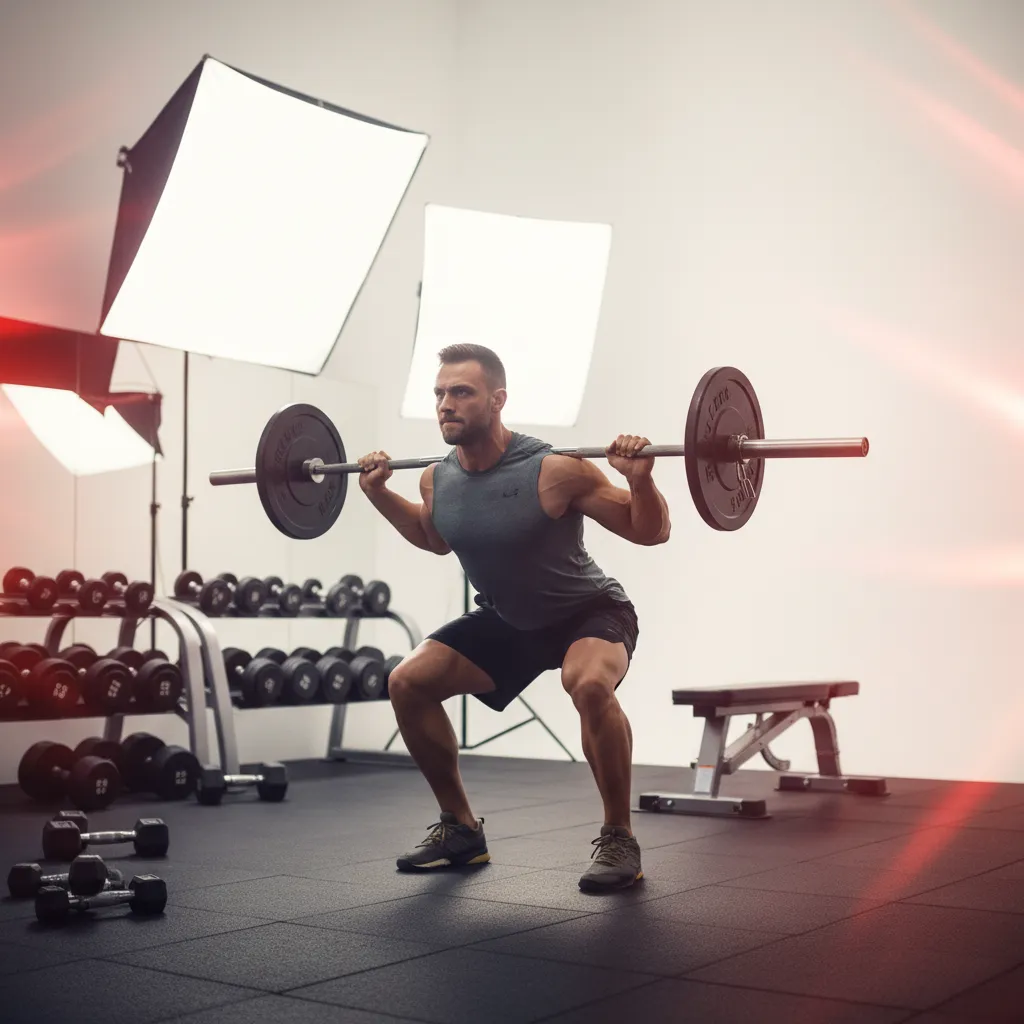
Why it works for beginners (3x per week), Starting Strength, StrongLifts
Short answer: Stimulates muscle growth 3 times a week, which is optimal for beginners as it allows for quick mastery of movements and more frequent stimulation. • It is effective over time and ensures balanced development of the whole body, relying mainly on large, multi-joint exercises. • Programs like Starting Strength and StrongLifts 5x5 use this principle for rapid strength gains through linear progression and focus on fundamental movements.
Full body workout is a method where all major muscle groups are trained within a single training session, usually performed several times a week.

3 key takeaways
- Stimulates muscle growth 3 times a week, which is suitable for beginners as it allows for quick mastery of movements and more frequent stimulation.
- It is effective over time and ensures balanced development of the whole body, relying mainly on large, multi-joint exercises.
- Programs like Starting Strength and StrongLifts 5x5 use this principle for rapid strength gains through linear progression and focus on fundamental movements.
What is a Full Body Workout?
A full body workout is a method where all muscles of the body are trained in one training session, which can be performed several times a week.
- Squat: Works quads, glutes, lower back, abs.
- Deadlift: Engages almost every muscle in the body – back, legs, glutes, arms, abs.
- Bench Press: Chest, shoulders, triceps.
- Overhead Press: Shoulders, triceps, upper chest.
- Barbell Row or Pull-ups: Back, biceps, forearms.
How Does a Full Body Workout Work?
Let's look at the structure of a classic beginner program based on StrongLifts 5x5 to see how the principle is applied. You train 3 times a week, for example, on Monday, Wednesday, and Friday, alternating between two different workouts (A and B). Workout A:- Barbell Squat: 5 sets of 5 reps
- Bench Press: 5 sets of 5 reps
- Barbell Row: 5 sets of 5 reps
- Barbell Squat: 5 sets of 5 reps
- Overhead Press: 5 sets of 5 reps
- Deadlift: 1 set of 5 reps
- Week 1: Monday (A), Wednesday (B), Friday (A)
- Week 2: Monday (B), Wednesday (A), Friday (B)
- For squats and presses: add 2.5 kg per workout.
- For deadlifts: add 5 kg per workout (as it's performed less frequently and with heavier weight).
A full body workout works by structuring a program where the entire body is trained several times a week, alternating between different workouts. For example, a classic beginner program based on StrongLifts 5x5 involves training 3 times a week (Monday, Wednesday, and Friday) with alternating two different workouts (A and B).
I have worked with many combat sports athletes who come to me with a classic "bro split" from the gym. One boxer in the lightweight category used to do 2-hour workouts, split by muscle groups. His legs were constantly tired, and his strength was stagnant. We switched to a 3-day full body workout program focused on squats, presses, and deadlifts. In 3 months, his squat increased by 30 kg, and he himself noted that he felt "more explosive and fresher" for sparring, as he didn't have localized muscle soreness for days.
When to Use a Full Body Workout and How to Implement It?
A full body workout is a flexible tool that can be used by both beginners and advanced trainees.
Although often marketed as a "beginner program," the full body workout is a versatile tool. For Beginners: This is the best choice. The high training frequency (3 times a week) accelerates the learning of proper technique for fundamental exercises. Neurological adaptation is rapid, leading to a significant jump in strength in the first few months. For Intermediate and Advanced Trainees:- When Time is Limited: If you can only train 2-3 times a week, a full body workout ensures that each muscle group receives adequate stimulus.
- As a "Deload" or Maintenance Phase: During a calorie deficit or active recovery, two full body workouts per week with reduced volume are excellent for preserving muscle mass and strength.
- For Athletes: As mentioned, fighters, runners, and other athletes benefit from it because it builds functional strength without causing extreme muscle soreness in one area that would interfere with their primary sport activity.
What Are Common Mistakes and Misconceptions?
The greatest advantages of a full body workout can become disadvantages if the approach is not understood correctly. Here are a few pitfalls that trainees often fall into.Common mistakes and misconceptions are pitfalls that trainees often fall into, turning the greatest advantages of a full body workout into disadvantages if the approach is not understood correctly. One of them is trying to "cram" 10-12 exercises into one session, which increases recovery time and reduces the intensity of key movements instead of focusing on 3 to 5 main exercises.
- Too Many Exercises: Trying to "cram" 10-12 exercises into one session is counterproductive. It turns the workout into a marathon, increases recovery time, and reduces the intensity of key movements. Focus on 3 to 5 main exercises.
- Excessive Volume Per Exercise: A full body workout is not the place for 4-5 chest exercises with 4 sets each. The idea is stimulation, not annihilation. Programs like 5x5 or 3x5 work because they manage fatigue while stimulating strength.
- Insufficient Recovery: Training a full body workout 5-6 times a week is a recipe for overtraining, unless you are an elite athlete with a strictly controlled regimen. 48 hours of rest between sessions is the minimum.
Comparison of Training Methods
| Characteristic | Full Body Workout | Upper/Lower Split | "Bro" Split (by muscle group) |
|---|---|---|---|
| Frequency of Training | 3x per week | 2x per week | 1x per week |
| Suitable for | Beginners, limited time | Intermediate | Advanced (bodybuilding) |
| Focus | Strength, frequency, technique | Volume, balance | Maximum hypertrophy, isolation |
| Risk of Muscle Soreness | Low to moderate (overall) | Moderate (localized) | High (highly localized) |
- Can I add isolation exercises for biceps/triceps?
- Yes, but they should be at the end of the workout, after the main movements. One to two exercises for 2-3 sets for the small muscle groups are sufficient. Your arms have already worked hard during presses and rows.
- What should I do if I stop progressing (hit a plateau)?
- First, analyze the main factors outside the gym: are you getting enough sleep (7-9 hours) and eating adequately? If these are in order, try reducing the weight by 10% and building it back up (deload), or switch the scheme from 5x5 to 3x5 to reduce volume and focus on intensity.
- Is a full body program suitable for weight loss?
- Absolutely. It is one of the most effective methods. Compound exercises like squats and deadlifts are metabolically "expensive" – they burn a lot of calories. More importantly, strength training helps preserve muscle mass during a calorie deficit, which keeps your metabolism high.
- How long should a workout last?
- An effective full body workout session, including the warm-up, should take between 45 and 75 minutes. If your workouts regularly exceed this range, you are likely doing too many exercises or resting too long between sets.
See more in the fitness guides of Sport Zona Academy.
Expert Note from Sport Zona
For over 12 years, I've observed that adaptation to full body workouts is highly individual. The key is the correct dosage of overall training volume and intensity to avoid overload and maximize recovery. A common mistake is too many sets and exercises for one muscle group.
See more in the fitness guides of Sport Zona Academy.
Recommended products

Frequently asked questions
Why is a Full Body workout particularly good for beginners?
Full Body programs stimulate muscle growth 3 times a week, which is optimal for beginners. This allows for faster assimilation of basic movements and more frequent stimulation for development.
What exercises are the foundation of a Full Body workout?
The foundation is multi-joint (compound) exercises that engage several muscle groups simultaneously. Examples include squats, deadlifts, bench press, overhead press, and rows.
What is the main progression in programs like StrongLifts 5x5?
The key is linear progression – aiming to add a little weight to the exercises performed at each workout. This forces the body to constantly adapt to a greater stimulus.
Can a Full Body workout also be used by advanced trainees?
Yes, Full Body is a flexible method. Besides beginners, it is also effective for intermediate and advanced trainees, especially when time for workouts is limited.