Rubber flooring for fitness gyms — thickness, types, installation
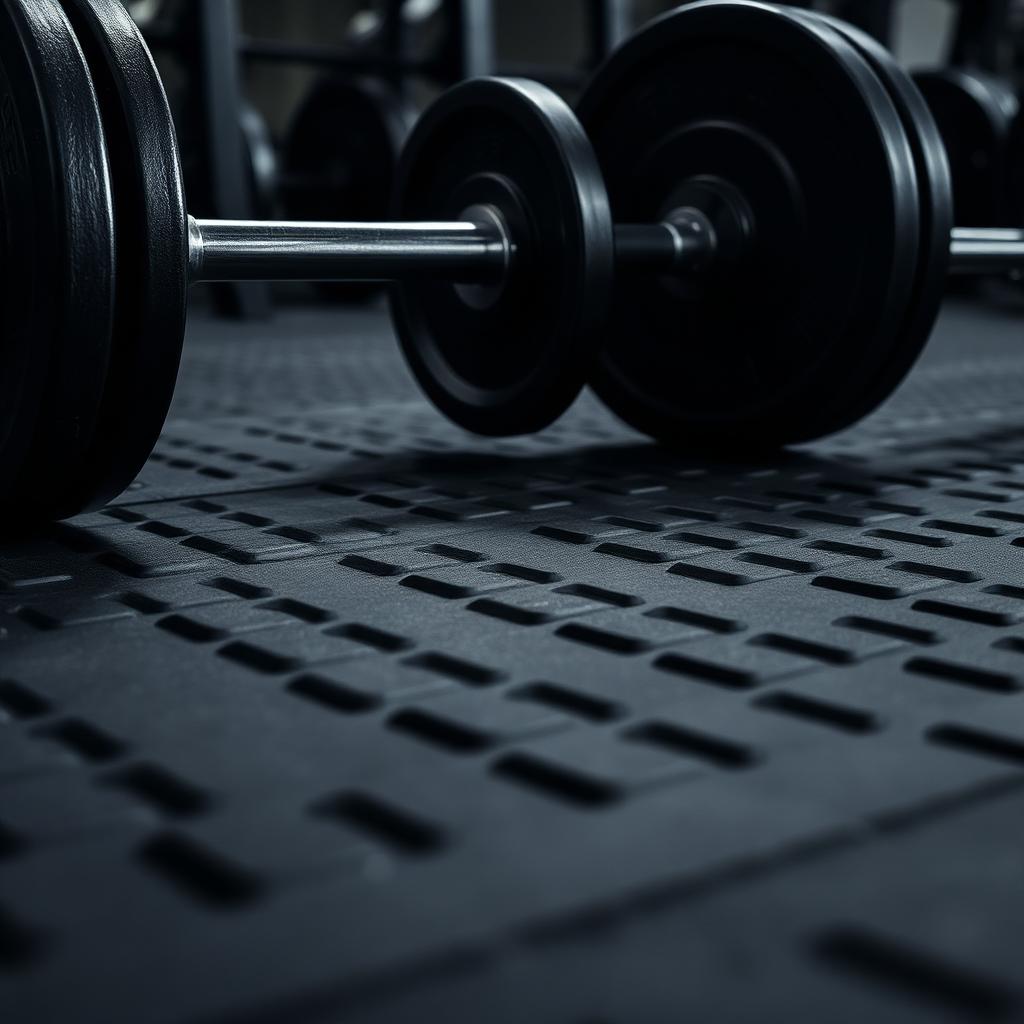
For the cardio zone, a 6–10 mm surface is sufficient. For the strength zone with dumbbells and barbells — 15–20 mm. For CrossFit and Olympic lifting — 30–40 mm or specialized lifting platforms. 1×1 m tiles are the most practical, rolls — for large areas without expansion joints.
Short answer: Cardio — 6–10 mm rolls. Strength — 15–20 mm EPDM tiles. CrossFit — 30–40 mm or 50 mm platforms. Free weights area — 20+ mm SBR with colored EPDM flakes.
Why is flooring an investment, not an expense?
Rubber flooring represents an investment that protects the floor, equipment, and trainees, as different areas in the gym require different thicknesses and types of rubber.
Rubber flooring protects three things: the floor (concrete cracks when 100+ kg barbell is dropped), equipment (dumbbells break on impact with concrete), and users (joint cushioning, anti-slip surface). Poor flooring costs 5 times more in the long run — replacement, repairs, warranties.
How thick should we choose rubber flooring depending on the area?
The thickness of the rubber flooring is determined by the area it is intended for, ranging from 4–6 mm for yoga/stretching to 30–50 mm for boxing/MMA and Olympic lifting.
| Area | Thickness | Type |
|---|---|---|
| Cardio (treadmills, cross-trainers) | 6–10 mm | SBR rolls |
| Strength (machines) | 10–15 mm | SBR tiles |
| Free weights (dumbbells) | 15–20 mm | SBR + EPDM tiles |
| Olympic lifting | 30–40 mm | Plates / platforms |
| Boxing/MMA | 30–50 mm | Tatami / special tiles |
| Yoga/stretching | 4–6 mm | Vinyl flooring or rolls |
What are the types of materials?
SBR (Styrene-Butadiene Rubber)
Recycled rubber from car tires is the most economical flooring option, which is black in color, with a possible odor during the first few weeks, suitable for all areas and lasting over 10 years.
EPDM (Ethylene Propylene Diene Monomer)
Premium synthetic rubber. Colored, odorless, UV-resistant. Often used as a 2–4 mm coating over an SBR base. Premium look and tactile qualities.
Nitrile rubber (NBR)
For areas with oil and grease (service rooms, heavy-duty CrossFit gyms). Resistant to solvents.
What are the delivery formats?
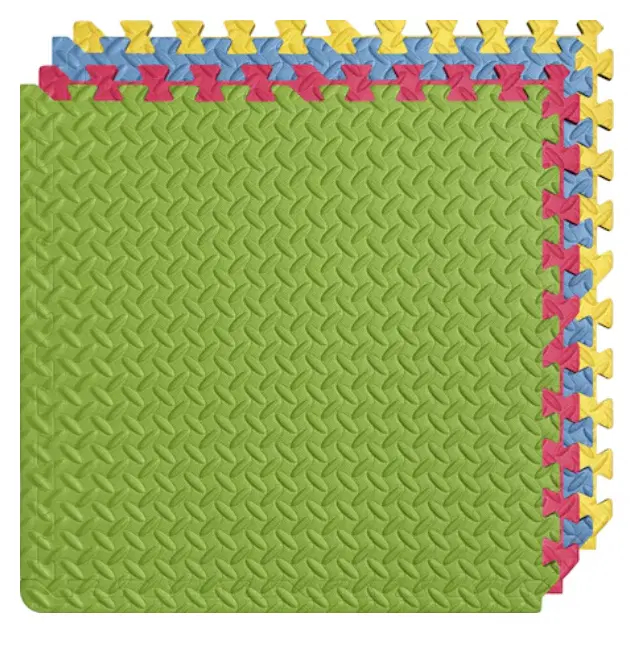
1x1 m or 0.5x0.5 m tiles
Tiles are the most practical, allowing for easy installation and replacement of a single damaged tile instead of an entire area, as this type has become the standard for gyms.
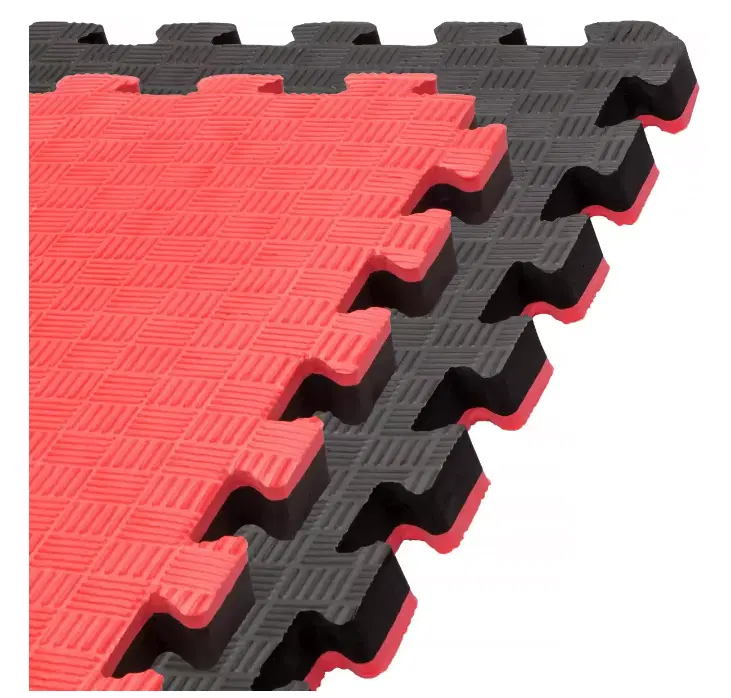
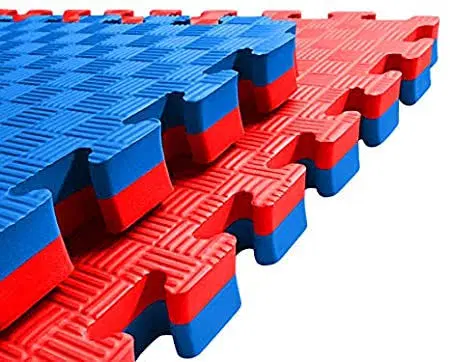
Puzzle tiles
Interlock with notches. Suitable for home use and temporary installations. Not for heavy loads — the notches tear.
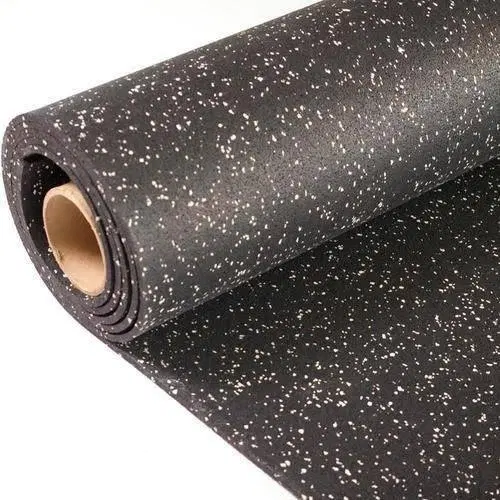
1.25 x 10 m rolls
For large areas (200+ m²) without visible expansion joints. Require professional installation with adhesive.
Lifting platforms
Specialized 2.5x3 m platforms for Olympic lifting: wooden center for barbells + rubber side plates for weights.
What should we know about installing rubber flooring?
The installation of rubber flooring for a gym requires a flat and dry base with a deviation of less than 3 mm/m, and it is important to leave 5–10 mm expansion joints around the perimeter.
- The base must be flat — deviation under 3 mm/m. Unevenness will be visible under the flooring.
- The floor base must be dry — moisture under the rubber creates mold.
- Expansion joints — leave 5–10 mm around the perimeter for expansion.
- Adhesive — only for rolls and with underfloor heating. Tiles are installed dry.
- Antistatic property — for rooms with electronic equipment (cardio area).
What are the common mistakes?
Common mistakes in choosing and installing rubber flooring include selecting one thickness for the entire gym, using puzzle tiles for gyms, saving on the base, and omitting anti-static coating for SBR flooring in cardio areas with electronics.
- One thickness for the entire gym — you lose money (too thick in the cardio area) or take risks (too thin in the free weights area).
- Puzzle tiles for gyms — the notches tear under heavy users.
- Saving on the base — leveling under 3 mm/m is mandatory.
- SBR in cardio area with electronics — without anti-static coating, you damage the equipment.
What does gym design service entail?
Gym design service involves assistance with planning, calculating square footage, and optimizing the mix of flooring. It covers B2B services for equipment and flooring necessary for the functioning of a gym.
🔬 Expert note from Sport Zona
When choosing flooring, I often see it being postponed or compromised. My advice is not to skimp on it — poor flooring leads to faster equipment wear and potential injuries. In the long run, quality rubber flooring pays for itself many times over.
Recommended products
Frequently asked questions
What thickness of flooring do I need for free weights?
Minimum 15–20 mm SBR. For Olympic lifting — 30–40 mm or a specialized lifting platform. Thinner flooring will crack the concrete when dropping 100+ kg.
Tiles or rolls — which is better?
1x1 m tiles are more practical: easy installation, if damaged, only 1 piece needs to be replaced. Rolls are suitable for large areas (200+ m²) without visible expansion joints.
Why does the rubber smell?
SBR (recycled rubber) emits an odor for the first 2–4 weeks. It dissipates completely. EPDM has no odor. For gyms, I recommend opening the packaging 48 hours before installation for ventilation.
Can it be placed on underfloor heating?
Yes, but only with adhesive and a maximum temperature of 28°C. We recommend rolls instead of tiles — better heat transfer.