Flexible Diet vs. Clean Eating: Quantity Control vs. Quality Satiety
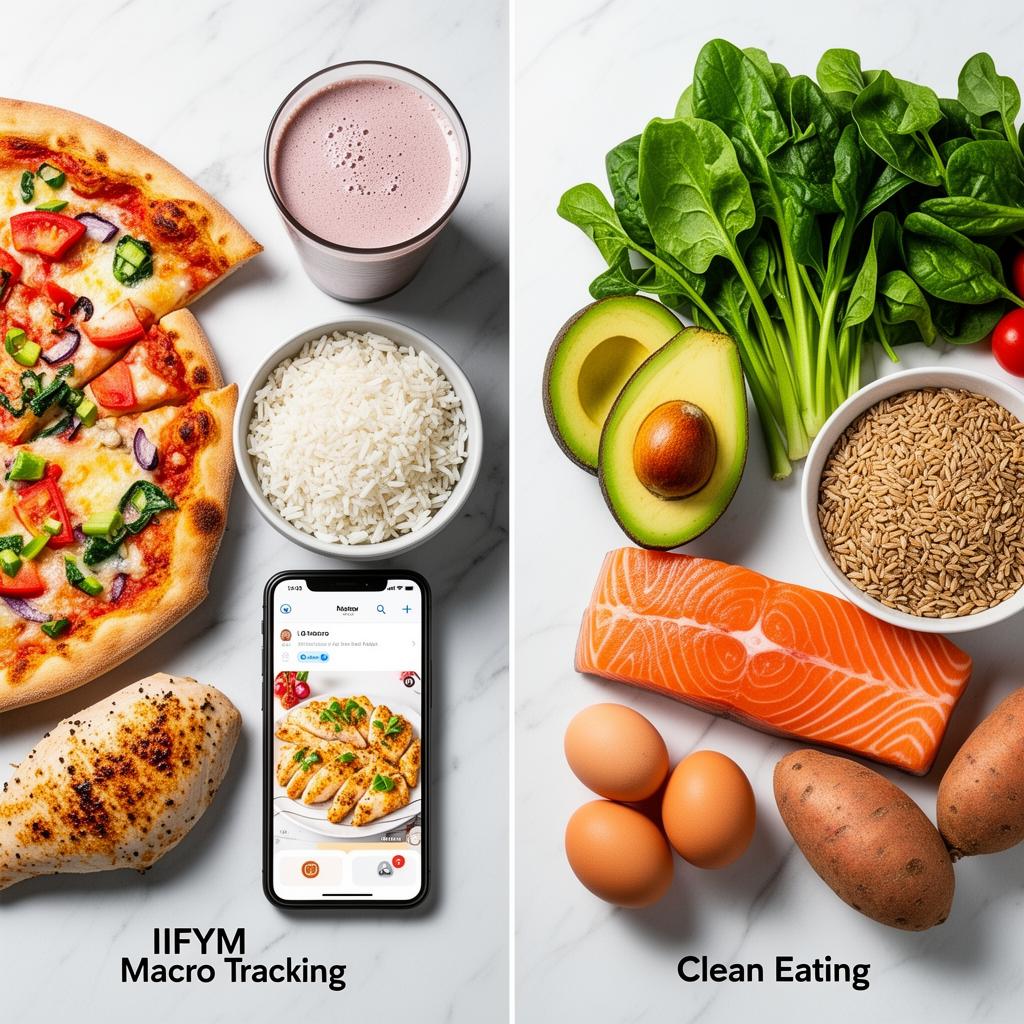
The conflict between these two philosophies is largely artificial. The challenge in 2026 is to use IIFYM to avoid eating disorders, and Clean Eating to prevent metabolic deficit.
Why the Body Understands Numbers, But the Cell Needs Nutrients
The conflict between these two philosophies is largely artificial. The challenge in 2026 is to use IIFYM to avoid eating disorders, and Clean Eating to prevent metabolic deficiency.
💬 Simply put: The body is like an accountant who counts calories, but cells are like chefs who need quality ingredients to prepare their food.
📊 Comparative Matrix: System Analysis
| Characteristic | Flexible Dieting (IIFYM) | Clean Eating |
|---|---|---|
| Primary Currency | Calories, Protein, Fat, Carbohydrates | Vitamins, Minerals, Antioxidants |
| Psychological Model | Inclusive | Exclusive |
| Biological Effect | Body Composition Change | Organ Function Optimization |
| Insulin Response | Varies by source selection | Stable and predictable |
| Social Factor | High adaptability | Risk of social isolation |
| Ultimate Goal | Aesthetics and sustainability | Longevity and vitality |
🧬 In-depth Analysis of Mechanisms
1. IIFYM: The Metabolic Calculator
The body doesn't recognize "pizza" as pizza, but as a combination of triglycerides and glucose chains.
💬 Simply put: It's like disassembling a car down to the last screw to understand exactly how each mechanism works and why it moves.
- The Law of Thermodynamics: If you are in a caloric deficit, you will lose weight, regardless of whether the source is broccoli or donuts. IIFYM uses this biological law to free the mind from the "food prison."
- The "Empty Macros" Risk: The problem is that 50g of carbohydrates from candy cause a fundamentally different hormonal (insulin) response than 50g of carbohydrates from oatmeal. Chronically high insulin with poor selection in IIFYM can block fat burning, even with a deficit.
2. Clean Eating: The Biochemical Laboratory
Clean eating is not just a diet, but a strategy for "charging" the enzyme systems.
💬 Simply put: It's like being a chemist in a lab, studying how food is converted into energy and building blocks in your body.
- Micronutrient Density: Whole foods contain co-factors (magnesium, zinc, B vitamins) that are the "keys" unlocking fat burning and energy production (ATP) in the mitochondria.
- Thermic Effect of Food (TEF): The body expends up to 20-30% more energy
Recommended products
Frequently asked questions
Does IIFYM mean I can eat only junk food and still lose weight?
Technically yes, a calorie deficit leads to weight loss. But in practice, if you constantly choose processed foods, you will have chronic insulin spikes, micronutrient deficiencies, and a worsened microbiome. IIFYM works best when 80% of macros come from whole foods.
What is orthorexia and how do I recognize it?
Orthorexia is an obsessive fixation on food purity that causes anxiety and social isolation. If you refuse dinner invitations due to fear of impure food, or if an accidental processed food causes you intense guilt, these are signs of orthorexia.
What is the 80/20 protocol?
The 80/20 protocol combines 80% whole, minimally processed foods (meat, eggs, vegetables, rice) with 20% flexibility for favorite foods. The goal is metabolic efficiency without psychological stress, leading to long-term sustainability.
Why is the thermic effect of food important in the comparison?
The body expends 20-30% more energy to break down whole foods (meat, vegetables) compared to processed ones. This means 500 calories from chicken and broccoli net less digestible energy than 500 calories from fast food, giving whole foods an advantage.