Inositol vs. Folic Acid: Cellular Signaling vs. DNA Replication

Inositol manages cell communication and insulin response, folic acid is key for DNA and repair. The choice depends on goals – energy, focus, or regeneration.
Short answer: Inositol is a pseudovitamin, key for insulin sensitivity and hormonal balance (especially in PCOS), while Folic acid (Vitamin B9) is vital for DNA synthesis and cellular repair. Practical advice: For insulin resistance or hormonal issues, take 2-4 grams of inositol daily (in a 40:1 myo:chiro ratio). For general cellular health and recovery, ensure 400-800 mcg of methylfolate daily.
Inositol and folic acid are two nutrients often discussed in relation to women's health and cellular function. Both are associated with B vitamins, but their roles in an athlete's body differ significantly. Understanding these differences is important to choose the right supplement to meet specific needs – from improving energy metabolism to hormonal balance.
Folic acid is like an architect working with DNA, ensuring the proper construction of every new cell. It provides the foundation for cellular structures. Inositol, on the other hand, is like a dispatcher for internal communication. It manages information and resources, for example, how cells respond to insulin or how neurotransmitters signal in the brain. Without an architect, there are no healthy structures, but without a dispatcher, they won't work efficiently.
For athletes, this means folic acid is essential for tissue recovery and the production of red blood cells that carry oxygen. Inositol can provide an advantage for energy efficiency and mental endurance. Here, we will examine each of the two substances, when to choose one over the other, and when their combination yields the best results.
This article is part of the Expert Hub for Supplements — over 270 expertly verified articles by Petar Mitkov and the Sport Zona team.
What is a Comparative Matrix for System Analysis?
A comparative matrix for system analysis is a tabular overview of criteria such as biological status, main focus, key mechanism, and impact on athletes for Inositol and Folic Acid (Vitamin B9).
| Criterion | Inositol | Folic Acid (Vitamin B9) |
|---|---|---|
| Biological Status | Pseudovitamin (B-vitamin-like), produced in the body | Essential vitamin, must be obtained from external sources |
| Main Focus | Cellular signaling, insulin sensitivity, neurotransmitters | DNA and RNA synthesis, cell division, methylation |
| Key Mechanism | Acts as a secondary messenger in signaling pathways (e.g., IP3) | Methyl group donor for biochemical reactions |
| Impact on Athletes | Improves glucose metabolism, supports mental focus | Supports red blood cell production and tissue repair |
| Specific Application | Support for Polycystic Ovary Syndrome (PCOS), insulin resistance | Prevention of neural tube defects, homocysteine control |
| Suitable Form | Myo-inositol (often in a 40:1 ratio with D-chiro-inositol) | Methylfolate (5-MTHF) – bioactive form |
How Exactly Does Inositol Improve Cellular Response?
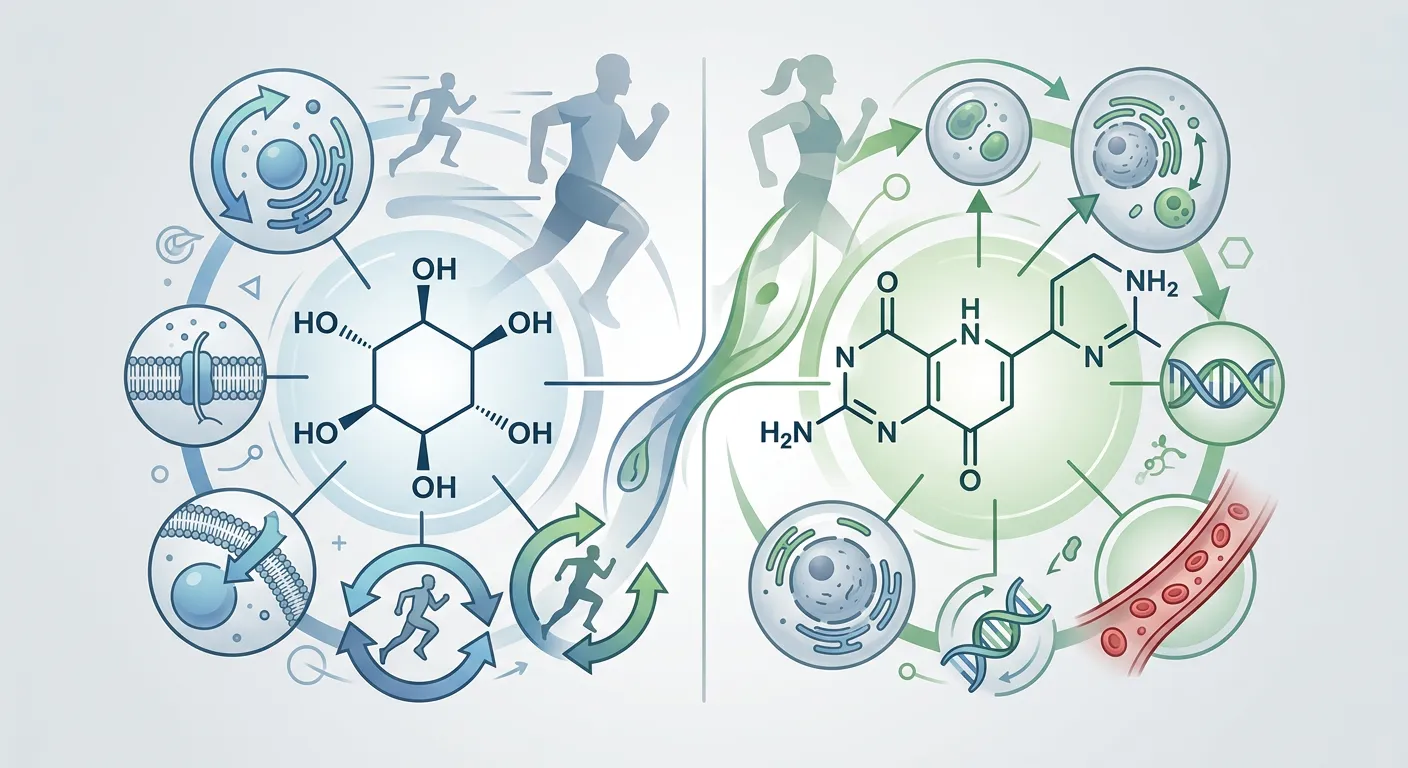
1. Inositol: The Cellular Communication Director
Inositol is a carbohydrate that plays a key structural role in cell membranes and is a fundamental component of the "second messenger" system, enhancing cellular response to hormones like insulin by converting into inositol triphosphate (IP3), which mobilizes calcium and activates enzymes.
The most studied forms are myo-inositol and D-chiro-inositol. Myo-inositol is the most prevalent and activates glucose transporters, while D-chiro-inositol is involved in glycogen synthesis. Therefore, for conditions like PCOS and insulin resistance, a combination of both forms in a specific ratio (usually 40:1) is recommended.
Simply put: Inositol is like an amplifier for the insulin signal. When insulin "knocks" on the cell's door, inositol helps the "door to open wide," allowing glucose to enter quickly and fuel the muscles.
2. Folic Acid: The Architect of Cellular Renewal
Folic acid is the synthetic version of folate (vitamin B9), an essential nutrient that the body cannot produce on its own. Its primary task is to participate in the methylation cycle – a biochemical process fundamental to life. Through methylation, folate aids in the synthesis, repair, and methylation of DNA and RNA. This is particularly important for rapidly dividing cells, such as bone marrow (where red blood cells are produced) and muscle tissue after intense training.
One of the important aspects is the conversion of the amino acid homocysteine to methionine. High homocysteine levels are a risk factor for cardiovascular disease. Folate, along with vitamins B6 and B12, helps maintain normal homocysteine levels. For athletes, this means better vascular health and more efficient transport of oxygen and nutrients. The difference between folic acid and its active form – methylfolate (5-MTHF). Individuals with a genetic variation of the MTHFR enzyme have a reduced ability to convert folic acid into its active form, making 5-MTHF intake more effective for them.
Simply put: Folic acid is like a foreman on a construction site. It provides the right materials (methyl groups) and follows the blueprints (DNA) to build and repair cells in the body – from muscle fibers to red blood cells.
Scientific Sources
- Genazzani, A. D., et al. (2017). Myo-inositol as a key supporter of reproduction.
- Office of Dietary Supplements - NIH. Folate: Fact Sheet for Health Professionals.
- Linus Pauling Institute. Inositol.
- Scaglione, F., & Panzavolta, G. (2014). Folate, folic acid and 5-methyltetrahydrofolate are not the same thing.
- Examine.com. Inositol Health Benefits, Dosage, and Side Effects.
The Synergistic Effect: Why Do They Work Better Together?
Inositol and folic acid, despite performing different functions, are often combined. This is especially true in relation to women's health and fertility. The reason is that they support cellular health from two different but complementary aspects.
Folic acid (in its active form) provides the foundation for quality DNA replication, which is essential for creating a healthy egg cell. At the same time, inositol improves the environment in which this egg cell matures by regulating hormonal signals (like FSH) and improving the insulin sensitivity of the ovaries. The combination leads to higher quality eggs and a more regular menstrual cycle – something important for female athletes whose cycles are often disrupted by intense training and diets.
For athletes without hormonal issues, synergy also makes sense. Folate supports the repair of micro-tears in muscles by aiding the synthesis of new protein and cells. Inositol ensures these new cells are well-supplied with glucose. The result is faster and more effective recovery.
What is the Practical Algorithm for Selection?
Choose Inositol if:
- You have symptoms of insulin resistance (high blood sugar, post-meal fatigue).
- You are a woman with Polycystic Ovary Syndrome (PCOS) or irregular cycles.
- You are seeking support for mental focus, mood, and anxiety reduction.
- Your goal is to improve body composition through better carbohydrate utilization.
🔵 Choose Folic Acid if:
- You are planning a pregnancy or are in the early stages of pregnancy.
- You have a diagnosed folate deficiency or anemia.
- You have high homocysteine levels or an MTHFR genetic variation.
- Your goal is to support overall recovery and red blood cell production.
Recommended Combined Stack for Optimal Cellular Health:
The practical algorithm for selection for athletes, especially women, involves a combination of 2 grams of Myo-inositol and 400-800 micrograms of Methylfolate (5-MTHF) daily, taken with inositol divided into two doses and folate taken once daily with food.
How to Combine Inositol and Folic Acid for Maximum Effect?
The 2026 Protocol: "Foundation and Performance Stack" is designed for athletes who wish to combine these two supplements to optimize their performance and recovery.
- Daily Foundation: In the morning with food – 600 mcg Methylfolate (5-MTHF) + 1000 mg Myo-inositol. This dose supports basic cellular processes and methylation.
- Pre-Workout (30 min): An additional 1000 mg Myo-inositol. This will support insulin sensitivity and prepare muscles for more efficient glucose uptake during exercise.
- Post-Workout (within 1 hour): An additional 2000 mg Myo-inositol, taken with a carbohydrate-protein shake. This maximizes glycogen replenishment and accelerates recovery.
Expert Note on Dosage
Inositol doses sound high (up to 4 grams daily), but they are standard in scientific research and completely safe. Start with a lower dose (2 grams total) to assess digestive tolerance and gradually increase. For folate, do not exceed 1000 mcg daily without medical advice, as high doses can mask a vitamin B12 deficiency.
🧭 When to Choose Which?
- Choose Inositol if your primary concern is related to carbohydrate metabolism, insulin sensitivity, or hormonal imbalance like PCOS.
- Choose Folic Acid (Methylfolate) if you want to support cellular repair, blood production, or have specific needs related to pregnancy or MTHFR.
- Combine the two for synergistic effects on cellular health, hormonal balance, and energy metabolism, especially if you are a female athlete.
📖 What are Inositol and Folic Acid?
Inositol: A vitamin-like substance (pseudovitamin) that acts as a "second messenger" in cells, regulating their response to hormones like insulin and neurotransmitters.
Folic Acid / Folate (Vitamin B9): An essential vitamin that is key for DNA and RNA synthesis, cell division, and methylation processes in the body.
Is Inositol vs. Folic Acid Worth It?
Inositol is a supplement that improves insulin sensitivity, supports hormonal balance, mood, and focus, while folic acid is essential for cell division, blood production, and reduces the risk of neural tube defects.
| Inositol | Folic Acid | |
|---|---|---|
| Pros | Improves insulin sensitivity Supports hormonal balance Enhances mood and focus Very safe, even at high doses |
Essential for cell division Supports blood production Reduces risk of neural tube defects Low cost and widely available |
| Cons | Requires high doses (grams) May cause mild digestive discomfort Higher cost per gram |
Synthetic form is not ideal for everyone (MTHFR) High doses can mask B12 deficiency Narrower spectrum of action |
Which is Better: Inositol or Folic Acid?
Inositol is a cellular signaler, while folic acid is responsible for DNA replication.
- Inositol is the optimization software. It doesn't change the hardware (cells), but it tunes the operating system to run faster and more efficiently, better managing resources like energy (glucose) and communication (neurotransmitters).
- Folic acid is the hardware engineer. It takes care of the physical construction and repair of components – creating new chips (cells) and fixing damaged circuits (DNA).
Which Product to Choose for Our Goal?
- For general cellular health and recovery: Vitamins and Minerals
- For specific amino acid support: Amino Acids
- 🧘♀ For mental focus and stress management: Adaptogens
Combined Protocol for Maximum Effectiveness:
- Morning: Multivitamin complex with the active form of folate (5-MTHF).
- Pre/Post-Workout: Pure Myo-inositol powder, mixed with water or a protein shake.
- Evening: Combined relaxation supplement containing inositol and magnesium.
When to Choose Inositol
- You want to improve carbohydrate utilization.
- You need hormonal support (especially with PCOS).
- You aim for better mental focus and stable mood.
- You are looking for a supplement for long-term metabolic health.
⛔ When to Choose Folic Acid
- You have a diagnosed folate deficiency or anemia.
- Your main goal is pregnancy support.
- You need to control high homocysteine levels.
- You are looking for a basic, essential supplement for cellular recovery.
Expert Note from Sport Zona
For female athletes, the combination of myo-inositol and methylfolate has proven very effective for regulating cycles and improving energy levels.
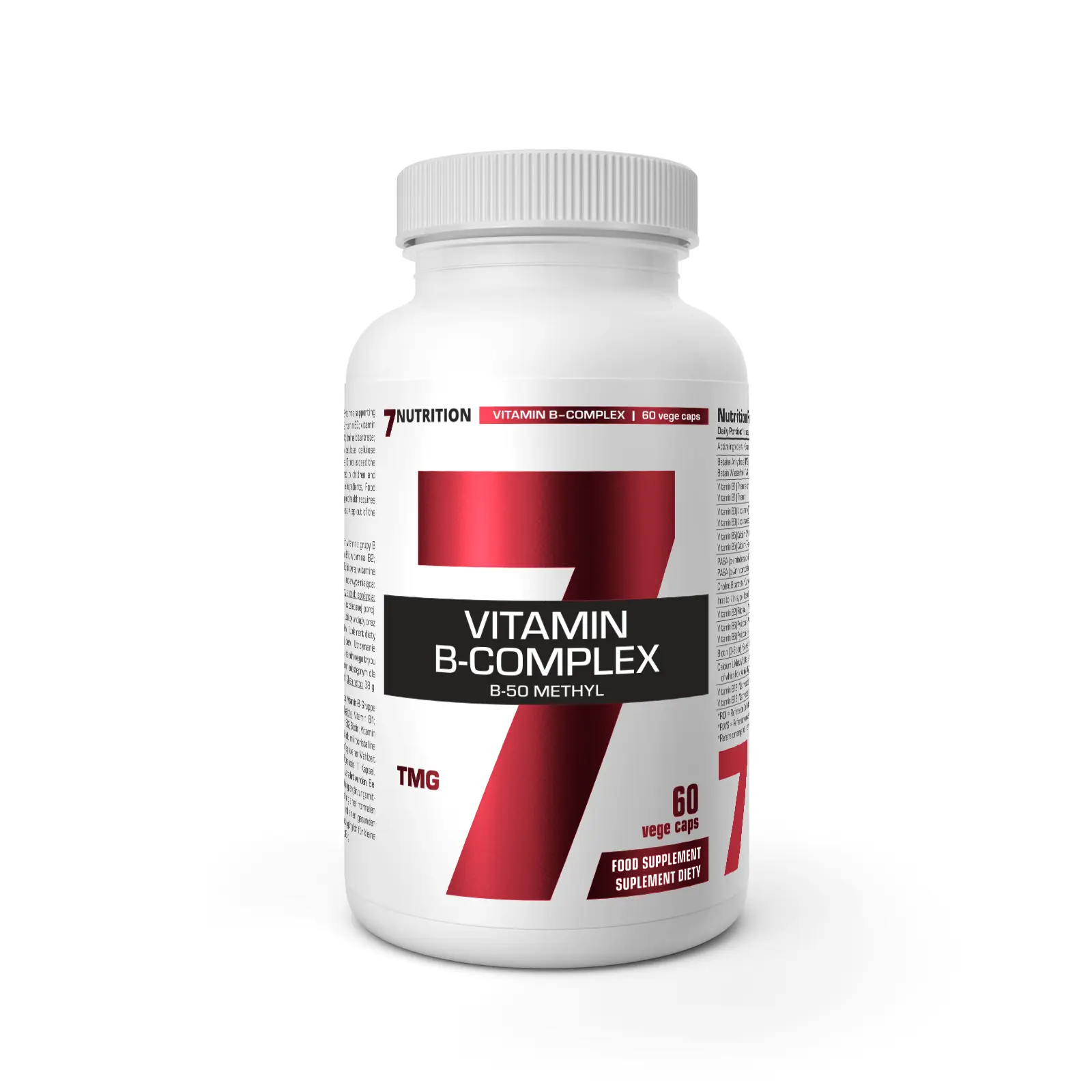
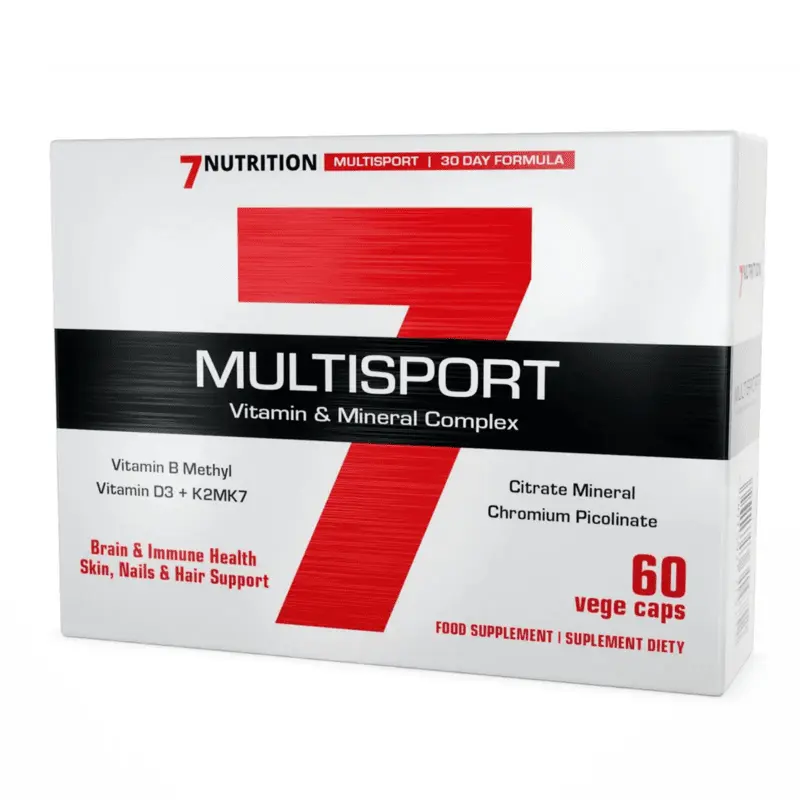
Recommended products
Frequently asked questions
Can Inositol and Folic Acid be taken together?
Yes, absolutely. They are often combined in supplements, especially for support with Polycystic Ovary Syndrome (PCOS). They do not have negative interactions and may even have a synergistic effect on metabolic and reproductive health.
Which is better for beginners - Inositol or Folic Acid?
Folic acid (Vitamin B9) is an essential vitamin required by everyone, making it a fundamental supplement. Inositol is a more targeted supplement for specific conditions like insulin resistance. Beginner athletes should first ensure their folate intake is adequate.
When is the best time to take Inositol and Folic Acid?
Both can be taken at any time of day, with or without food. At higher doses of Inositol (over 2 grams), it's a good idea to split the intake into two (e.g., morning and evening) to minimize the risk of mild stomach discomfort.
Are there side effects from taking Inositol or Folic Acid?
Both are considered very safe. Folic acid is water-soluble, and excess is excreted in urine. Taking very high doses of synthetic folic acid (over 1000 mcg) can mask a Vitamin B12 deficiency. Inositol, at doses over 12 grams per day, can cause mild digestive issues like gas or diarrhea.
What is the recommended dosage for Inositol and Folic Acid?
For Folic Acid, the recommended daily intake is 400 mcg for adults. For athletes, the dose can go up to 800 mcg, with the bioactive form (methylfolate) being preferred. For Inositol, the clinically effective dose for insulin resistance and PCOS is 2-4 grams of myo-inositol, often combined with 50-100 mg of D-chiro-inositol (40:1 ratio).