Intermittent fasting and training: what really happens
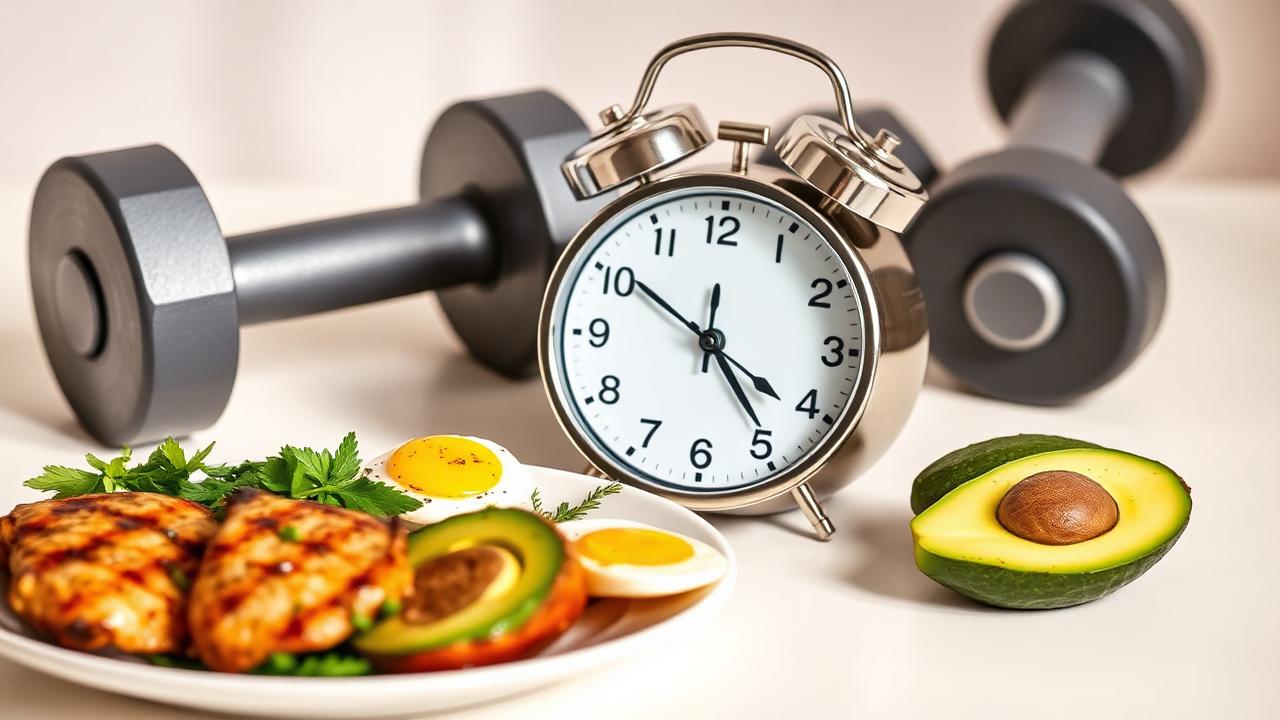
Intermittent fasting (16:8) successfully preserves muscle protein synthesis during resistance training, provided daily caloric intake remains adequate. Research indicates that the method optimizes fat oxidation without impairing strength performance, but may limit muscle hypertrophy by 10-15% in the absence of precise protein timing. The strategy is highly effective for fat loss but requires high intensity of exertion within the "eating window" to avoid catabolic effects.
Intermittent Fasting and Training: What Really Happens
Intermittent fasting, especially the popular 16:8 protocol, is no longer just a niche strategy for biohackers. It has become a mainstream phenomenon. Everyone knows someone who "skips breakfast" and swears they've never felt better. The promises are enticing: effortless fat burning, more energy, "autophagy" that rejuvenates us at a cellular level. But what happens when we add serious, targeted training to this scenario? Suddenly, the picture becomes much more complex. It's not just about skipping breakfast, but navigating the delicate balance between catabolism (breakdown) and anabolism (building), between energy deficit and peak performance. When your goal isn't just to lose a few pounds, but to build strength, improve your 10k time, or preserve hard-earned muscle mass, the rules of the game change.
What the Data Shows
Before diving into personal experiences and case studies, let's look at the hard numbers. One of the main concerns for trainees is muscle loss (catabolism) during fasting periods. The popular theory is that without a constant influx of amino acids, the body starts "eating" its muscles for energy. The reality, however, is more nuanced.
The rise in growth hormone (GH) during fasting, sometimes by up to 5 times, is often cited. Sounds great, right? Growth hormone is highly anabolic. However, here's the catch that marketing articles miss: these GH spikes are short-lived and occur in an environment lacking "building blocks" (amino acids) and with elevated cortisol. In other words, they don't lead to muscle growth on their own. Their primary role at this point is more likely to protect existing muscle tissue and mobilize fat for energy.
The key factor for muscle preservation turns out to be not so much *when* you eat, but *what and how much* you eat within a 24-hour period. A meta-analysis by Grant Tinsley and colleagues, examining studies on strength-training athletes, reached an interesting conclusion. When total daily calorie and protein intake are the same, there is no significant difference in muscle mass and strength between the intermittent fasting group and the standard eating group.
Here's what the data from a typical 8-week study with male trainees (n=34) looks like:
| Metric | Normal Regimen Group (NR) | 16:8 IF Group (IF) |
|---|---|---|
| Protein Intake/Day | ~1.9 g/kg body weight | ~1.9 g/kg body weight |
| Change in Body Fat | -0.5 kg (not statistically significant) | -1.6 kg (statistically significant) |
| Change in Lean Muscle Mass | +0.2 kg (no change) | -0.1 kg (no change) |
| Strength (Leg Press 1RM) | +14% | +12.5% |
What does this table tell us? With equal calories and high protein intake, IF helps burn fat more effectively without leading to significant muscle mass or strength loss within 8 weeks. But notice that the normal regimen group still has a slight advantage in strength metrics. Small, but present.
When It Works / When It Doesn't Work
Intermittent fasting is not a universal solution. It's simply a tool for controlling calorie intake and nutrient timing. Its success depends entirely on the individual's context, goals, and daily routine.
Scenarios where 16:8 IF is often successful:
- The busy professional in a "cutting" phase. Someone who strength trains 3-4 times a week, but their main goal is to reduce body fat percentage while preserving muscle. It's much easier for them to control their calories by eating only within an 8-hour window. Skipping breakfast saves time in the morning, and two larger, more satiating meals (e.g., at 1 PM and 7 PM) are psychologically more satisfying than 4-5 small ones. In my opinion, this is the most common successful case I see in practice – people for whom fitness is an important part of life, but not a competitive career.
- Endurance athletes in their base phase. When a runner or cyclist is in a period of base, low-intensity, and long training sessions, fasted cardio can improve the body's metabolic efficiency – it learns to use fat for fuel better. This can be beneficial for marathoners looking to avoid "hitting the wall" at the 30k mark. I emphasize – at low to moderate intensity.
- People who are naturally not hungry in the morning. Some people simply don't have an appetite after waking up. Forcing themselves to eat breakfast "by the book" is torture and leads to discomfort. For them, 16:8 is a natural state, and they are simply labeling it. They feel great because the regimen follows their own physiology.
Failure Scenarios: When IF Will Almost Certainly Sabotage You
Here, it's important to be completely honest. There are situations where intermittent fasting not only doesn't work but is actively counterproductive.
- Goal: Maximum muscle hypertrophy ("bulking"). If you are 22 years old, weigh 75 kg, and your goal is to gain up to 85 kg of lean mass, you need a caloric surplus. Consuming 3500-4000+ calories within an 8-hour window is a logistical and digestive nightmare. This means eating two or three giant meals that will leave you bloated, lethargic, and unable to train effectively. Muscle protein synthesis (MPS) is optimally stimulated with several doses of protein spread throughout the day (every 3-5 hours). Cramming them into 8 hours is not optimal for maximum growth.
- Elite athletes and training twice a day. Imagine a CrossFit competitor. In the morning, there's a heavy strength session, and in the afternoon, a conditioning complex (metcon). Doing the second workout completely or partially fasted because your eating window hasn't opened yet or closed too early is a recipe for performance collapse, poor recovery, and increased risk of injury. Glycogen stores simply won't be adequately replenished.
- Women with hormonal imbalances or at risk of them. The female endocrine system is significantly more sensitive to energy deficit and stressors than the male system. Prolonged fasting, especially combined with heavy training and low body fat percentage, can send a "danger" signal to the hypothalamus. This can disrupt GnRH (gonadotropin-releasing hormone) pulsatility, which in turn affects other hormones down the chain and can lead to irregular cycles or even functional hypothalamic amenorrhea (loss of menstruation). This is not just a "side effect," but a serious health problem.
- Individuals with a history of eating disorders. The strict rules of IF ("you can't eat before 12 PM," "you must stop by 8 PM") can trigger obsessive thoughts about food and revive unhealthy behavioral patterns like cycles of restriction and subsequent overeating.
Specific Protocol: Stefan's Case Study
Let's look at a real example. Stefan, a 34-year-old software engineer, 92 kg, around 22% body fat. He trains strength 4 times a week, but his job is desk-bound, and he doesn't have time for 5-6 meals a day. His goal is to lose down to ~85 kg while maintaining his strength.
He decides to try the 16:8 protocol. His training is after work, around 6 PM. Here's what a day optimized for his goals looks like (maintenance calories ~2800 kcal, in a slight deficit of ~2400 kcal):
Daily Nutrition and Training Plan (16:8 IF)
- 7:00 AM - 12:00 PM (Fasting Period): Wake up, 2 large glasses of water. Until 12 PM, he drinks only black coffee (no sugar or milk) and more water. The morning is the most productive part of his workday, and not having to digest helps him concentrate.
- 1:00 PM (First Meal - Breaking the Fast): This is a large, satiating meal, rich in protein and complex carbohydrates.
- Grilled chicken breast: 250 g (raw weight)
- Brown rice: 80 g (raw weight)
- Large salad of tomatoes, cucumbers, lettuce, dressed with olive oil (10 g) and vinegar.
- Approximate macros: ~750 kcal, 60 g protein, 70 g carbs, 25 g fat.
- 5:00 PM (Pre-workout Meal): Light and easily digestible so it doesn't feel heavy during training, but provides energy.
- One medium banana (~120 g)
- A scoop of whey protein isolate (30 g), mixed with water.
- Approximate macros: ~250 kcal, 25 g protein, 30 g carbs, 2 g fat.
- 6:00 PM - 7:30 PM (Training): Heavy strength training, focusing on major compound movements (squats, deadlifts, presses, pull-ups).
- 8:00 PM (Second Large Meal - Post-workout): The largest meal of the day, aimed at replenishing glycogen and maximizing muscle protein synthesis.
- Baked beef sirloin: 250 g (raw weight)
- Baked potatoes: 400 g (raw weight)
- Steamed broccoli: 200 g
- Low-fat cottage cheese: 200 g
- Approximate macros: ~1400 kcal, 105 g protein, 150 g carbs, 40 g fat.
- 9:00 PM - 1:00 PM (Start of next fasting period): The eating window closes. Until noon the next day – only water, tea, or calorie-free coffee.
This protocol gives Stefan a total of about 2400 kcal, with an impressive 190 g of protein (~2.1 g/kg), which is crucial for preserving muscle mass in a deficit. Over 12 weeks, he manages to lose 7.5 kg, with his strength on major lifts remaining almost the same. For him, this regimen works.
Side Effects Nobody Mentions
Besides initial hunger, there are a few "dirty" details that are rarely discussed.
- Social isolation: Your regimen dictates your social life. No more spontaneous coffee breaks with colleagues, family Sunday lunches, or late-night dinners with friends. This can be a surprisingly significant psychological burden. In my practice, I've seen this be the main reason people give up – not the hunger, but the feeling of being "outside" the social circle.
- Masking poor eating habits: Many people use IF as an excuse to eat whatever they want within their 8-hour window. "I can eat this pizza and ice cream because I fasted for 16 hours." This, of course, doesn't work and only leads to fat gain and poor health, despite the "fasting."
- Sleep problems: While some people sleep better on an empty stomach, others wake up at night from hunger or have trouble falling asleep. Poor sleep is a direct saboteur of recovery, hormonal balance (increases cortisol, decreases testosterone), and athletic performance.
- "Food obsession": Paradoxically, limiting eating time can make some people think about food constantly. They count the hours and minutes until the window opens and plan their next meal with obsessive precision. This is not a healthy relationship with food.
Expert Note: Intermittent fasting is not a metabolic miracle, but simply an effective tool for calorie control with some potential side benefits. For me, its success is almost never due to "autophagy" or "hormonal optimization," but rather because it helps people adhere to a calorie deficit more easily.
Recommended products
Frequently asked questions
How does 16:8 intermittent fasting affect strength training for muscle mass?
With a 16:8 window, it is challenging to consume the necessary 1.6-2.2g of protein per kg of body weight, which is critical for hypertrophy. If a caloric surplus is not reached within the 8-hour eating window, the risk of nitrogen balance loss and muscle tissue loss increases by up to 10-15%.
When is it most effective to do cardio during a fast?
Low-intensity steady-state (LISS) cardio is most effective in the morning on an empty stomach, as low insulin levels optimize fat oxidation by 20% more compared to training after a meal. However, with high-intensity interval training (HIIT), glycogen depletion can lead to premature exhaustion and muscle catabolism.
Can you train heavy at the end of a 16-hour fast?
Training at the end of the fasting phase increases growth hormone but may reduce workout volume by 10-20% due to low blood sugar levels. For optimal results, it is recommended that strength training concludes immediately before the first meal to ensure an anabolic window.
What is the risk of sabotaging metabolism when combining IF and overtraining?
With a systemic energy deficit exceeding 25% and intense training, the body enters a conservation mode, slowing down the basal metabolic rate (BMR). This often leads to elevated cortisol levels, which block abdominal fat burning and can reduce testosterone levels.