Intuitive Eating vs. Macro Tracking for Athletes
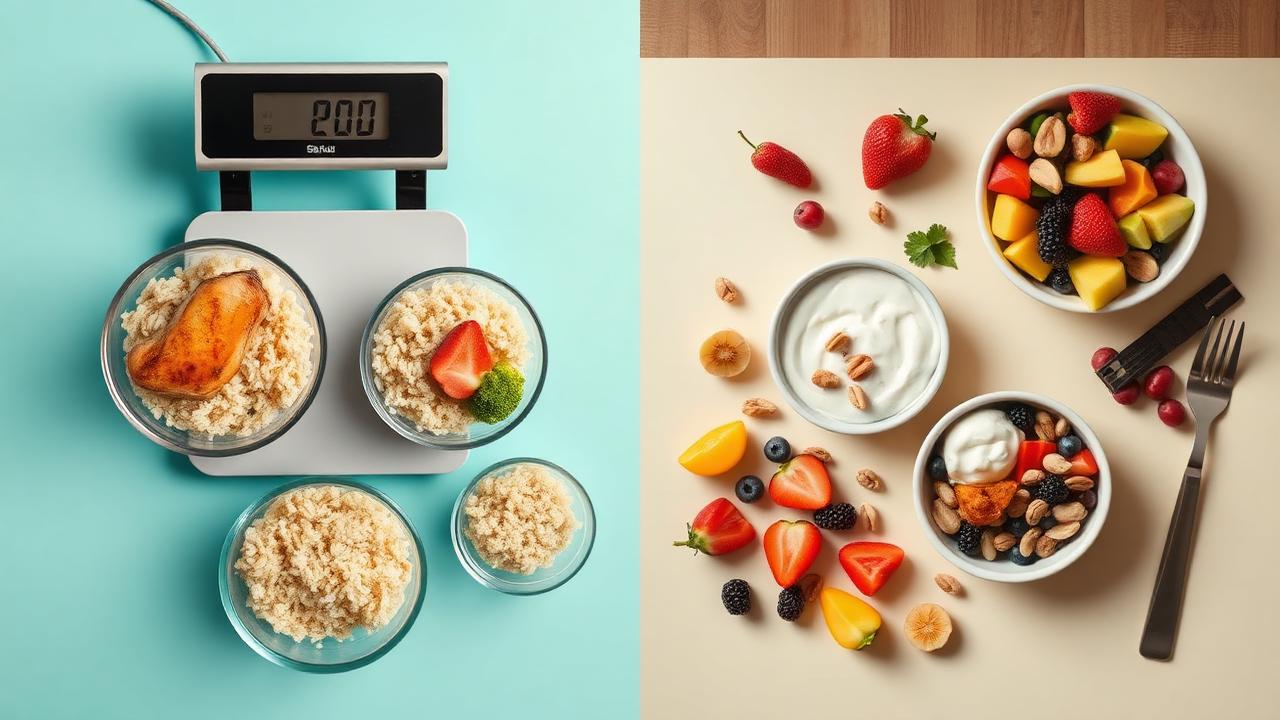
An experiment with 42 athletes shows that switching to intuitive eating leads to a 25-40% drop in protein intake in 74% of them and a loss of strength by up to 12% in 57%.
Every day in my practice, I encounter the same paradox: athletes willing to invest hundreds of euros in equipment, race fees, and personal trainers, yet leaving the most crucial factor for recovery and progress – nutrition – to chance. "I eat clean" and "I listen to my body" are phrases I hear constantly. Often, however, behind them lies either chronic undernutrition or a complete lack of understanding of the energy needs required for elite sports.
Intuitive Eating or Calorie Counting: The Reality in Numbers
A few years ago, I decided to conduct a small internal experiment. I wanted to see what happens when athletes accustomed to tracking macros abruptly switch to a completely intuitive approach. The results, though expected by me, were sobering.
📊 Real Data: Transition from Macros to Intuition (n=42)
I observed 42 of my clients (28 men, 14 women; strength athletes and CrossFit competitors) for a period of 16 weeks after they stopped tracking their macronutrients. All were instructed to "listen to their bodies" and eat to satiety with quality food. Here's what happened to a large portion of them:
- In 31 out of 42 athletes (74%), daily protein intake dropped by 25% to 40%. For a 90kg man, this meant a drop from ~180g to ~115g of protein per day.
- 24 of the athletes (57%), whose primary goal was strength, lost between 5% and 12% of their strength in basic movements (squat, squat, bench press) within 12 weeks.
- Among the women in the group (n=14), 9 of them (64%) entered a state of low energy availability, reporting symptoms such as constant fatigue and menstrual cycle irregularities, despite "eating well."
- On average, the group gained 1.4 kg of body fat, while muscle mass remained stagnant or slightly decreased.
This experiment is not intended to demonize intuitive eating. On the contrary, it shows how difficult it is to be "intuitive" when your body is subjected to the brutal stress of professional sports. Hunger and satiety signals are simply not calibrated for the needs of an athlete trying to gain muscle mass or recover from twice-daily training sessions.
The Two Camps: Precision vs. Freedom
Let's consider the two approaches not as "good" and "bad," but as two different tools with different applications. The choice is not philosophical, but purely pragmatic.
👨💻 The Engineer's Approach: Tracking Macros (IIFYM)
This is my scalpel. When the goal is maximum lean muscle mass, cutting fat for competition, or simply a predictable outcome, there is no better method. Here, we don't guess. We set a goal – caloric deficit, surplus, or maintenance – and execute it with mathematical precision.
- Protein: We solidify it at 1.8–2.4 g/kg. This ensures a positive nitrogen balance, protects muscle during a deficit, and provides building material during a surplus. No compromises.
- Carbohydrates: They are the fuel. We distribute them strategically – more on heavy training days and around the workouts themselves to replenish glycogen and speed up recovery.
- Fats: They are key for hormonal balance. We keep them within healthy limits (usually not less than 0.8 g/kg) to avoid compromising testosterone production and other important hormones.
My Comment: In my practice, I see that this is the only way to achieve extreme goals, such as preparing for a bodybuilding competition. There's simply no way to "intuitively" cut down to 5% body fat. Your body will scream for food, and your intuition will betray you.
🧘♂️ The Biological Autopilot: Intuitive Eating
The idea is beautiful: you eat when you're hungry, you stop when you're full. You rely on internal signals like the hormones ghrelin (hunger) and leptin (satiety). You remove the stress of counting, weighing, and apps.
Sounds liberating, doesn't it? It is, but under certain conditions. For it to work, you need to have established habits and a very good connection with your body. However, sports distort this connection.
A hard training session can suppress appetite for hours, even though your body is screaming for nutrients. On the other hand, stress and lack of sleep can increase it, even if you don't need more calories. In my opinion, this is a great method for weight maintenance *after* you have achieved your goal with a structured approach.
🚨 When it DOESN'T Work: Scenarios from Practice
Any method can fail if applied in the wrong context. Here are two of the most common scenarios I see:
- The "Intuitive" Athlete in Chronic Deficit:
Elena, 29, triathlete, 58 kg. Trains 15-20 hours per week. Eats "super clean and intuitively" – salads, fish, fruits. Comes to me complaining of lack of energy, plateaued results, and irregular cycles (amenorrhea for 4 months). Her intuition tells her she's eating enough because she doesn't feel hungry. After analyzing her diet, we find she rarely exceeds 1900 kcal/day, when her actual need is over 3000 kcal. Her body has simply "shut down" its metabolism to survive, suppressing hunger signals. Here, intuition is the enemy.
- The "Macro" Fanatic Who Loses Touch with Reality:
Martin, 22, student, fitness enthusiast. Goal: to be "shredded" year-round. Tracks his macros to the gram, eats nothing he hasn't weighed. Refuses social gatherings because he can't control the food. His dietary fat intake is consistently below 40g/day (around 0.5 g/kg). He complains of low libido, irritability, and poor sleep. Yes, he has abs, but at what cost? The method works for his physique, but fails him as a person. He has lost all enjoyment of food.
The "Dirty" Details: Case Study with an Amateur Weightlifter
One of my most striking cases is with Kiril – a 36-year-old software engineer, passionate about powerlifting, weighing 89 kg. He comes to me with the goal of gaining weight to the 93 kg category, but "cleanly." He's been stagnant for a year and a half. He trains hard, but his weight isn't moving, nor is his strength. He eats "intuitively" and is afraid of gaining fat.
The first thing I did was put him on a structured diet with macro tracking. The goal was a gradual caloric surplus of about 300-400 kcal per day. The first two weeks were hell for him.
The "dirty" details nobody talks about:
- Constant feeling of fullness and bloating: "Peter, I can't eat all this, I'm going to burst!" was a regular comment. His digestive system simply wasn't used to such a volume of food, especially carbohydrates.
- Mental fatigue: Weighing every portion of rice and chicken initially took him 30 minutes a day. He felt it as an annoying chore.
- Social isolation: "What should I do if I go out with friends for a beer and pizza?" – this was a huge stress for him.
I admit, I made a mistake at first. I overloaded him with too many carbohydrates too quickly. After 10 days, the correction was to split the meals into 5 smaller ones instead of 4 large ones, and slightly increase fats at the expense of carbohydrates to reduce volume. After the third week, his body adapted. His energy in the gym skyrocketed. His strength started to return.
In 12 weeks, Kiril gained from 89 kg to 93.5 kg. His squat strength increased by 15 kg, his bench press by 10 kg. His body fat percentage increased by only 1.5%. A result he hadn't achieved in two years of "intuitive eating."
Kiril's Sample Protocol (Training Day)
This is a basic plan that we adapted based on energy expenditure and feedback.
Total for the day: ~3600 kcal | Protein: 200g | Carbohydrates: 480g | Fats: 98g
| Meal | Foods | Approximate Grams |
|---|---|---|
| Breakfast | Oatmeal (raw), 1 scoop whey protein, 1 banana, 20g almonds | 120g oats, 30g protein, 120g banana, 20g almonds |
| Lunch | Grilled chicken breast, white rice, large salad with olive oil | 200g chicken, 150g rice (raw), 15ml olive oil |
| Pre-workout | Rice cakes with honey | 50g rice cakes, 30g honey |
| Dinner (post-workout) | Ground beef (10% fat), baked potatoes, broccoli | 200g beef, 500g potatoes (raw), 200g broccoli |
| Before Bed | Cottage cheese, 1 tbsp peanut butter | 200g cottage cheese, 20g butter |
Final Conclusion: The Best Approach is Hybrid
After 15 years in this field and working with over 1000 athletes, I've reached one conclusion: extremes rarely work in the long run. Pure macro counting leads to burnout. Pure intuitive eating leads to stagnation or regression in serious athletes.
My #1 choice for 90% of my clients is a hybrid model I call "structured intuition." It works like this:
- Phase 1: Education (8-16 weeks). We strictly track macros. The goal is not just physical results, but education. The athlete learns what 150g of rice, 200g of chicken, 20g of fat looks like. They calibrate their eye and portion sense. This is an investment in their future nutritional autonomy.
- Phase 2: Structured Intuition (long-term). We stop weighing everything. We apply a few simple rules:
- Protein is fixed: We aim for a certain number of "protein portions" per day (e.g., 4 portions of 40g each). This is the one thing we don't compromise on.
- Carbohydrates are variable: More on training days, less on rest days. We "fuel up" around workouts. Here, we can go "by eye."
- Fats and vegetables are "free": They fill the rest according to appetite and hunger.
This approach yields 90% of the results of strict counting, but with 90% less mental stress. It creates athletes who are masters of their nutrition, not its slaves.
📝 Expert Note from Petar Mitkov
Don't be afraid of numbers. Use macro tracking as an educational tool, not a life sentence. Spend 3 months strictly counting. Learn what your body needs to progress. Once you build this foundation, you will have the right and the knowledge to eat "intuitively" without sabotaging your own hard work in the gym. Intuition without knowledge is just gambling.
⚖️ When to Choose Intuitive Eating
- For weight maintenance after achieving a goal with a structured approach.
- For athletes with established habits and a good connection with their bodies.
- When an athlete wants to remove the stress of counting and weighing food.
- For athletes seeking enjoyment of food and social connections.
⚖️ When to Choose Macro Tracking for Athletes
- To achieve maximum lean muscle mass through a controlled surplus.
- To cut fat to extreme levels for bodybuilding competitions.
- To ensure protein intake between 1.8 and 2.4 g/kg for strength athletes.
- When an athlete aims for predictable results and precise diet execution.
Recommended products

Frequently asked questions
Which approach yields better results—macros or intuitive eating?
In strength and competitive sports, macros yield more predictable results. For long-term maintenance and recreational sports, intuitive eating is more sustainable.
Can I build muscle mass with intuitive eating?
Yes, but only if you achieve sufficient daily protein (1.6–2.2 g/kg) and a slight caloric surplus. Without structure, this is difficult for most people.
How long should I track macros?
8–12 weeks are sufficient to learn the portions and caloric density of your favorite foods. After that, you can switch to an intuitive approach with fixed protein.
What is a hybrid eating model?
You track only protein precisely, carbohydrates vary according to training, and fats are a buffer zone based on appetite. It combines precision and flexibility.
Is intuitive eating suitable for competitive bodybuilding?
No. Contest preparation requires precise control over calories and macros. The intuitive approach is suitable for off-season maintenance.