How to train safely with back pain
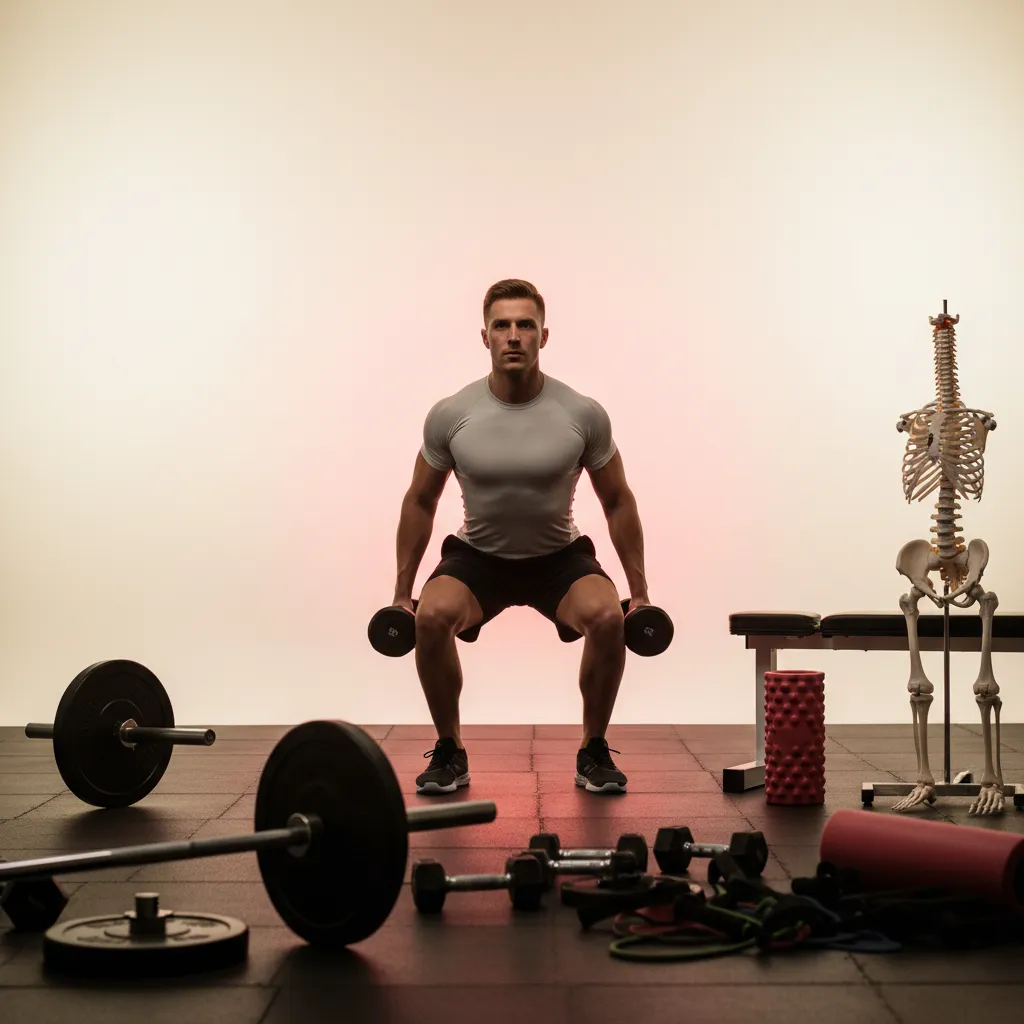
Learn how to train safely with back pain. Understand when to stop, which exercises to avoid, and implement effective strategies like the McGill Big 3 for recovery and prevention.
How to train safely with back pain is a complex approach that requires understanding the causes of the pain, modifying training habits, and carefully introducing exercises that aid recovery without further straining the spine. The goal is to maintain physical activity while minimizing the risk of more serious injuries and promoting long-term back health.
Understanding Back Pain: When to Stop and When to Continue?
💬 Simply put: Train with back pain by listening to your body, modifying exercises, and consulting a specialist to move healthily.
Back pain is one of the most common complaints among people engaged in physical activity, as well as among those with a more sedentary lifestyle. Understanding the signals our body sends is crucial for safely continuing training or stopping it. Not all pain is a danger signal, but distinguishing it is vital.
When to Stop Training Immediately:
- Sharp, stabbing pain: If you experience sudden, sharp pain, especially with certain movements or positions, stop immediately. This could indicate a serious injury, such as a herniated disc or muscle tear.
- Pain radiating to the limbs: Pain that spreads down the leg or arm, accompanied by numbness, tingling, or weakness (radiculopathy), is a sign of nerve compression and requires immediate consultation with a doctor or physical therapist.
- Pain accompanied by other symptoms: Fever, unexplained weight loss, problems with bladder or bowel control – these symptoms, combined with back pain, are emergencies and require medical attention.
- Constant pain at rest: Pain that does not subside even when at rest may be a sign of inflammation or a more serious problem.
When We Can Continue with Modifications:
- Mild, moderate pain: If the pain is dull, vague, and more of a discomfort than sharp pain, and does not worsen with movement, you can try to continue, but with modified exercises.
- Muscle soreness: Often mistaken for back pain. Muscle soreness is a normal bodily response to new or intense exertion and is usually felt as general muscle discomfort. It subsides after a few days.
- Pain that decreases with movement: If the pain is worse in the morning or after a long period of rest and decreases after moving or light exercise, it is often related to stiffness or mild degenerative changes.
When in doubt, it is always better to consult a specialist. Self-diagnosis can lead to more serious problems.
Exercises to Avoid and Modifications for Back Pain
When suffering from back pain, some exercises can worsen the condition or provoke re-injury. It is important to know which movements to avoid and how to modify your training program.
Exercises That Often Provoke Back Pain:
- Deadlift: Although excellent for building strength, deadlifts, especially with heavy weights and improper form, put immense pressure on the lumbar spine. Research shows that even small deviations in technique can drastically increase the risk.
- Barbell Squat: Similar to deadlifts, heavy squats can strain the spine if the core and back are not well braced.
- Good Mornings: Require strong control of the lower back and hips. With pain, the risk of excessive strain is high.
- Crunches: Traditional crunches can compress the vertebrae and put pressure on the discs, especially if performed aggressively.
- Torso Twists with Weights: These exercises can create harmful twisting forces on the lumbar spine.
- Back Extensions: If not performed with control and you hyperextend the lower back, you can increase compression.
Modifications and Alternatives:
- Deadlifts and Squats: Drastically reduce the weight or use lighter alternatives like Romanian deadlifts with light weight, bodyweight squats, or box squats. Focus on glute and core activation.
- Crunches: Replace them with core stabilization exercises like plank, side plank, bird-dog, and dead bug. These activate the deep stabilizing muscles without harmful spinal flexion.
- Torso Twists: Avoid altogether. Instead, work on rotational core stability with exercises like the Pallof Press.
- Weight Training: Use lighter loads, increase repetitions. Choose machines that provide better back support (e.g., leg press instead of heavy squats).
McGill's Big 3: The Path to Recovery and Prevention
Dr. Stuart McGill, one of the world's leading experts in spine biomechanics, has developed a set of three key exercises known as "McGill's Big 3." These exercises are proven effective for building core muscle endurance and reducing back pain, as they stabilize the spine without unnecessary strain.
- Build endurance in the deep stabilizing muscles of the back and abdomen.
- Reduce compression and harmful shear forces on the spine.
- Can be performed with minimal risk even with existing pain (when performed correctly).
- Require strict form and awareness to activate the correct muscles.
- May seem "too easy," leading to underestimation and incorrect execution.
- Not a panacea – do not solve all types of back problems, especially structural or neurological ones.
- Results are not immediate; consistency is required.
How to Perform McGill's Big 3:
1. The Curl-up (Modified Crunch)
Goal: Build abdominal muscle endurance without straining the lumbar spine.
- Lie on your back on the floor. One leg is extended, the other is bent at the knee with the foot flat on the floor.
- Place your hands under your lower back to support its natural curve – this will help you feel if you start pressing your spine into the floor.
- Brace your abdominal muscles as if preparing for a punch. Lift your head and shoulders off the floor, keeping your neck straight and looking at the ceiling. Keep your lower back stable.
- Hold for 10 seconds, then slowly return to the starting position. Repeat 5-10 times.
2. The Bird-Dog
Goal: Improve pelvic and spinal stability, as well as limb-core coordination.
- Start on all fours, with hands directly under shoulders and knees under hips. Your back should be in a neutral position.
- Engage your core to stabilize your spine.
- Simultaneously extend one arm forward and the opposite leg backward, keeping them level with your body without lifting your hips or changing your back's curve.
- Hold for 10 seconds, then slowly return to the starting position. Alternate sides. Repeat 5-10 times per side.
3. The Side Plank
Goal: Strengthen the oblique abdominal muscles and spine stabilizers.
- Lie on your side, supporting yourself on your elbow, which is directly under your shoulder. Your legs should be straight and stacked.
- Lift your hips off the floor so your body forms a straight line from head to heels. Engage your core and glutes.
- Hold for 10 seconds. Slowly return to the starting position. Repeat 5-10 times per side.
Progression: Start with shorter holds (a few seconds) and gradually increase the duration up to 10 seconds. When 10 seconds becomes easy, you can increase the number of sets or repetitions, but do not hold for longer than 10 seconds in these exercises. McGill recommends a scheme of 3 sets of 5-10 repetitions or holds, where assuming the position, holding, and returning count as one cycle. Frequency can be daily or every other day, depending on your pain and recovery.
Other Safety and Recovery Strategies
Besides the right exercises, there are other key factors for successfully managing back pain and recovering:
1. Optimizing Lifestyle:
- Postural Hygiene: Pay attention to your posture throughout the day – while sitting, standing, lifting objects. Avoid long periods of sitting in the same position. Use an ergonomic chair and desk if you work in an office.
- Lifting Weights: Always squat to pick something up from the floor, keeping your back straight and the load close to your body. Do not twist your torso while lifting.
- Sleep Quality: Adequate and quality sleep is essential for tissue repair and reducing inflammation.
- Hydration and Nutrition: Maintaining good hydration and a balanced diet rich in anti-inflammatory foods can aid recovery.
2. Stretching and Mobility (Carefully):
While excessive lumbar spine stretching can be harmful, improving hip and upper back (thoracic spine) mobility can relieve pressure on the lower back.
| Muscle Group | Example Stretches for Back Pain | Frequency/Duration |
|---|---|---|
| Hip Flexors | Kneeling Hip Flexor Stretch | 3x30 sec per side, 2-3 times daily |
| Glutes | Figure-4 Stretch (supine position) | 3x30 sec per side, 2-3 times daily |
| Hamstrings | Supine Hamstring Stretch | 3x30 sec per leg, 2-3 times daily |
| Chest Muscles and Thoracic Spine | Thoracic Rotation Stretch | 10-15 repetitions, 2-3 times daily |
Important: If a stretch causes pain, stop immediately. The goal is a gentle stretch, not a painful one. Avoid aggressive stretching with lumbar spine flexion.
3. Professional Help:
Do not hesitate to seek help from a qualified physical therapist, kinesiotherapist, or doctor. They can provide an accurate diagnosis and create an individualized treatment and recovery plan. A good specialist can show you the correct exercise form and guide you on how to safely integrate training back into your daily life.
Psychological Aspects of Back Pain
Back pain is not just a physical condition; it has significant psychological aspects. Fear of movement (kinesiophobia) is common in people with chronic back pain and can delay recovery. Avoiding all physical activity can lead to muscle deconditioning, which in turn worsens the problem.
- Awareness and Patience: Be patient with yourself and the recovery process. Pain reduction takes time and consistency.
- Gradual Loading: Avoid aiming for quick results. Gradual and controlled increases in load are crucial.
- Positive Mindset: Focus on what you can do, not on what you cannot. Small victories contribute to greater confidence.
- Stress Management: Stress can increase muscle tension and contribute to back pain. Relaxation techniques like deep breathing, meditation, or yoga can be beneficial.
See more in the fitness guides of Sport Zona Academy.
📚 Scientific Sources
- Which specific types of exercise are most effective for the management of low back pain? A network meta-analysis (Owen P. J., et al., 2020)
- Interventions for the Management of Acute and Chronic Low Back Pain: 2021 Guideline Update: Clinical Practice Guidelines Linked to the International Classification of Functioning, Disability and Health From the Orthopaedic Physical Therapy Academy of the American Physical Therapy Association (George S. Z., et al., 2021)
- Noninvasive treatments for acute, subacute, and chronic low back pain: A clinical practice guideline from the American College of Physicians (Qaseem A, et al., 2017)
- Exercise for the prevention of low back pain: an updated systematic review and meta-analysis of randomized controlled trials (Belavy D. L., et al., 2018)
🔬 Expert Note from Sport Zona
From my work with athletes over the past 12+ years, I've found that the most common mistake with back pain is a lack of patience. People rush back to their normal training too soon, ignoring their body's signals. Even a slightly longer rest and gradual reintroduction of movement is key for lasting recovery that prevents the problem from becoming chronic.
See more in the fitness guides of Sport Zona Academy.
Recommended products



Frequently asked questions
How long does it take to recover from back pain with these exercises?
Recovery time varies significantly depending on the cause and severity of the pain. Typically, with strict adherence to the McGill Big 3 program and avoidance of provocative movements, improvement can be felt within 2-4 weeks. Full recovery and strengthening may take several months. Consistency is key.
Can I continue weightlifting if I have mild back pain?
With mild pain, modified weightlifting may be acceptable, but with extreme caution. Reduce the weight, focus on perfect form, and avoid any exercises that provoke pain. Include a core-focused warm-up and perform the McGill Big 3 before your main workout. If the pain intensifies or does not subside, stop and consult a specialist.
Should I avoid back stretching when experiencing pain?
Excessive and aggressive stretching of the lumbar spine (e.g., Pilates 'Roll Up' or deep forward bends) can be harmful for certain types of pain, especially disc issues. Focus on stretching the hips (flexors, glutes, hamstrings) and improving thoracic spine mobility. Always stop if you feel pain.
When is it time to see a doctor or physical therapist?
Seek professional help immediately if you experience sharp, stabbing pain, pain radiating to the legs or arms (numbness, tingling, weakness), pain at rest, unexplained weight loss, fever, or bladder/bowel issues. Even with mild but persistent pain that does not improve within a few days with rest and minor modifications, it is advisable to consult a specialist.