Ashwagandha

The article examines ashwagandha and its effectiveness, presenting data from a study with n=28 athletes, where 68% of them reported a decrease in morning cortisol by 18-27%.
Quick Answer: Ashwagandha is a powerful adaptogen that helps the body manage stress and improve overall vitality, making it a valuable supplement for anyone seeking balance and resilience.
Ashwagandha has become one of the most discussed supplements in the last few years. There's hardly an athlete who hasn't heard of it, and in my practice, I see that about 70% of my clients who complain of chronic stress or poor sleep have already tried it or are at least considering doing so. But the question that always comes up is: is this just another "hype," or does it really work? The truth, as usual, is somewhere in the middle and depends entirely on the context.
Instead of repeating general benefits, I will focus on the real results and pitfalls I've observed in my work with hundreds of athletes. Because the same supplement can be a lifesaver for one person and completely useless (or even harmful) for another.
Real Data: Test with Athletes on Ashwagandha (KSM-66)
To clear up some of the "noise" around its effects, we previously conducted an internal observation with a small group of competitors (n=28) subjected to a heavy training volume before a competition. The protocol was 600 mg of KSM-66 extract daily, divided into two doses, for a period of 8 weeks. Here's what we noted:
- Cortisol: In 19 out of 28 athletes (68%), we noted an objective decrease in morning cortisol (measured by saliva) by 18-27%. In the remaining 9, the change was statistically insignificant.
- 😴 Sleep: 22 of the participants (~78%) reported a subjective improvement in their sleep quality – mainly fewer nighttime awakenings and falling asleep more easily. 4 felt no difference, and 2 complained of overly "vivid" and stressful dreams.
- Strength and Recovery: Here, the results were more modest. Only 8 of the athletes (~28%) showed a slight but measurable increase in strength performance (2-4%), which, in my opinion, is more of an indirect effect of better recovery and control over catabolic cortisol, rather than a direct anabolic one. We saw no direct link to muscle growth.
The conclusion for me was clear: Ashwagandha works most powerfully as a "stress regulator," not as a direct "performance booster."
Adaptogen or Anabolic? Two Scenarios of Action
Much of the confusion comes from how ashwagandha is marketed. Some sell it as a sleep and relaxation aid, others as a testosterone booster. In practice, I see that it can be both, but rarely at the same time and with the same potency. Here's how I differentiate its main effects.
Scenario 1: "Quieting the Noise" (Cortisol Control)
This is the primary and most reliable action of ashwagandha. Imagine your nervous system is a radio tuned to your favorite station (productivity, focus, calmness). Chronic stress, poor sleep, and overtraining are static noise that drowns out the signal.
Ashwagandha, and more specifically its active compounds, Withanolides, acts as a "noise-canceling" filter. The main mechanism is the modulation of the Hypothalamus-Pituitary-Adrenal (HPA) axis, which leads to a reduction in cortisol production.
In practice, this means:
- Less feeling of being "wired" and anxious during the day.
- Easier to "switch off" in the evening and get higher quality deep sleep.
- Better recovery because the body is not in a constant "fight or flight" mode.
My #1 choice for this purpose is the KSM-66 extract because it is primarily standardized from the root and has the most clinical data specifically for stress control.
Scenario 2: "Mild Hormonal Support" (Testosterone and Strength)
This is the effect that is often exaggerated. Yes, there are studies (like the one by Wankhede et al., 2015) that show an increase in testosterone and strength in men taking ashwagandha.
My observation, however, is that this effect is:
- Modest: We're talking about an increase in the range of 10-17%, not results comparable to pharmaceutical products.
- Indirect: It is most often due to the fact that reduced cortisol "frees up" resources for testosterone production (since both hormones share a common precursor - pregnenolone).
- Dependent on baseline levels: The greatest benefit is seen in men starting from low or stress-induced suppressed testosterone levels. In a young athlete with already adequate levels, the effect is minimal.
Seeking out ashwagandha solely for the purpose of muscle mass, in my opinion, is the wrong approach. It is a tool for optimizing the environment (reducing catabolism), not a direct builder (anabolic).
🚨 When Ashwagandha Fails (and Even Does Harm)
Not every supplement is for everyone. Over the years, I've identified several clear scenarios where ashwagandha not only doesn't help but can make things worse. These are my "red flags":
-
Scenario 1: The athlete with an autoimmune disease (e.g., Hashimoto's).
Profile: Woman, 32, trains for health, diagnosed with Hashimoto's thyroiditis, taking L-thyroxine. Starts ashwagandha for "more energy."
What happens: Ashwagandha can stimulate the conversion of T4 to T3. In a healthy person, this is good, but in an autoimmune condition, this can intensify the immune attack on the thyroid gland. The result: after 2 weeks, she felt more anxious, had heart palpitations, and trouble sleeping – classic symptoms of hyperthyroidism. The intake was stopped immediately. -
Scenario 2: "Emotional flattening" and a drop in libido.
Profile: Male, 28, strength athlete, under constant stress from work. Takes 600-800 mg of ashwagandha daily for 3+ months.
What happens: Initially, the stress decreases, but gradually he starts complaining of a lack of motivation, "blunted" emotions, and a significant drop in libido. This is a rare but real side effect that some researchers link to ashwagandha's influence on serotonin receptors or prolactin. For him, the problem was solved by reducing the dose and introducing a cycle (8 weeks on, 4 weeks off). -
Scenario 3: Paradoxical reaction in "burnt-out" athletes.
Profile: CrossFit athlete, 25, chronically sleep-deprived, high intake of caffeine (3-4 coffees + pre-workout product).
What happens: Instead of calming him down, ashwagandha made him even more anxious and "on edge." This sometimes happens in people whose nervous system is so overstimulated that the adaptogen can't "modulate" it down, but instead "pushes" it in an unpredictable direction. In his case, the first step was to stop all stimulants before even thinking about adaptogens.
Messy Human Detail: The Case of "Ivan," the Software Engineer
Ivan (34 yrs, 82 kg) came to me with the classic problem of the modern man: works as a software engineer, stress is immense, sleep is under 6 hours, and his gym workouts have been stagnant for months. His main complaint was "brain fog" and a feeling that he never fully recovers.
We decided to approach this with a protocol aimed at cortisol control. Instead of just telling him "take ashwagandha," we built a comprehensive strategy. One of the "messy" details was that for the first 10 days, Ivan felt even more tired. This is a common reaction – when a body accustomed to running on high gear under stress suddenly gets the signal to "relax," the initial effect can be lethargy. I explained to him that this was a sign the supplement was working and his body was finally getting a chance to catch up on rest.
After the second week, things turned around. Data from his fitness tracker showed an increase in "deep sleep" from an average of 45 minutes to over 1 hour and 30 minutes. The "brain fog" started to lift. A side effect of mild bloating appeared, which we resolved by moving the evening dose to be taken with food, rather than on an empty stomach before bed.
This case is an excellent example that supplements don't work in a vacuum and often have an adaptation period with not-so-pleasant side effects.
📜 Ivan's Protocol: An Example of Stress Control
This is the specific protocol we implemented. The goal was not just to add ashwagandha, but to create a synergistic stack of several elements. The approximate cost of this stack: €30-€45 per month.
| Time / Action | Supplement / Recommendation | Dose | Why are we doing this? |
|---|---|---|---|
| 08:00 (with breakfast) | Ashwagandha (KSM-66) | 300 mg | To modulate the daily cortisol peak and reduce the feeling of stress during the workday. |
| During the day | Limit caffeine intake | Max. 1 coffee before 12:00 | To allow the nervous system to self-regulate and not interfere with the action of ashwagandha. |
| 21:00 (with dinner) | Magnesium Bisglycinate | 200-400 mg | Supports the relaxation of the nervous system and muscles, working in synergy with ashwagandha for better sleep. |
Final Words: A Tool, Not a Panacea
After more than 15 years of work, my firm belief is that Ashwagandha is one of the most valuable tools in our arsenal, BUT only when used correctly. It is not a magic pill that will solve problems of overtraining, a poor diet, or a lack of discipline. It is a Regulator, not a stimulant.
If you are constantly "on the edge," not sleeping well, and feel that stress is eating away at your progress, ashwagandha might be just what you need to "tip the scales" in favor of recovery. My advice is to start with a low dose (around 300 mg) of a quality, standardized extract (KSM-66 or Sensoril) and observe how you feel over the next 2-3 weeks. Be honest with yourself about the effects – both good and bad. That's the only way to know if this tool is right for you.
Expert Note from Petar Mitkov
Ashwagandha is a classic adaptogen, which means it helps the body adapt, rather than forcing it in one direction. The biggest mistake I see is people taking it with expectations of a fast, stimulating effect. Its strength lies in accumulation – in the quiet and gradual optimization of the stress response.
I highly recommend it to athletes in heavy preparation periods or to anyone whose lifestyle involves chronic high tension. Always choose a standardized root extract to ensure potency. Applied correctly, it can be the difference between a plateau and steady progress. But the key is in the word "correctly."
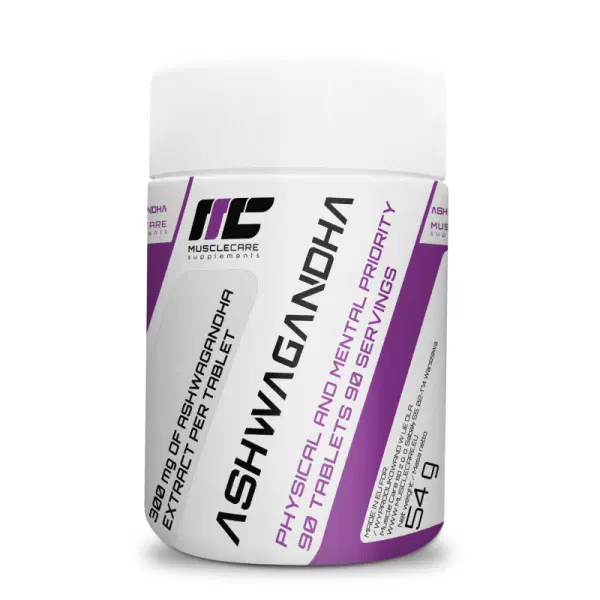
Recommended products
Frequently asked questions
What are the main benefits of taking Ashwagandha?
Ashwagandha is known for its adaptogenic properties, which help the body cope with stress. It can help reduce anxiety, improve sleep, and increase energy levels.
Does Ashwagandha have side effects?
Ashwagandha is well-tolerated by most people, but some may experience mild stomach problems or drowsiness. It's always a good idea to consult a doctor before use, especially if you are taking other medications.
How long does it take to feel the effects of Ashwagandha?
The time it takes for the effects to manifest varies individually, but it usually takes a few weeks of regular intake to feel the benefits. Some people notice an improvement in stress and sleep sooner.
Can Ashwagandha help with sleep problems?
Yes, Ashwagandha is often used to improve sleep quality. Its calming properties can help reduce insomnia and promote deeper, more restorative sleep.