Beta-alanine
Learn what Beta-Alanine is, how it works, what its benefits are, and how to take it correctly. Expert analysis from SportZone.
What Exactly Is Beta-Alanine and What Are Its Main Applications in Sports Nutrition?
Beta-alanine is a naturally occurring non-essential amino acid that plays a key role in the synthesis of carnosine in muscles. It is widely known for its potential to improve athletic performance, especially during high-intensity exercise. Unlike other amino acids, beta-alanine is not incorporated into proteins.⚡ Beta-Alanine in Brief
- Type: Amino acid
- Best for: Increasing endurance during high-intensity training
- Timing: Pre-workout (30-60 minutes) or spread throughout the day
- Daily dose: 2-5 grams
- Main benefit: Increases muscle carnosine levels, which helps buffer lactic acid and delay fatigue.
Simple Explanation
Imagine you're at the gym doing heavy sets. At some point, your muscles start to burn, feel heavy, and you have to stop. This feeling is largely due to the buildup of acidity. Well, beta-alanine is like a "fire extinguisher" for this acidity. It helps your muscles neutralize these acidic byproducts, allowing you to do a few more reps or run a little longer. It simply gives you a bit more "fuel" before you get tired.
What is Beta-Alanine?
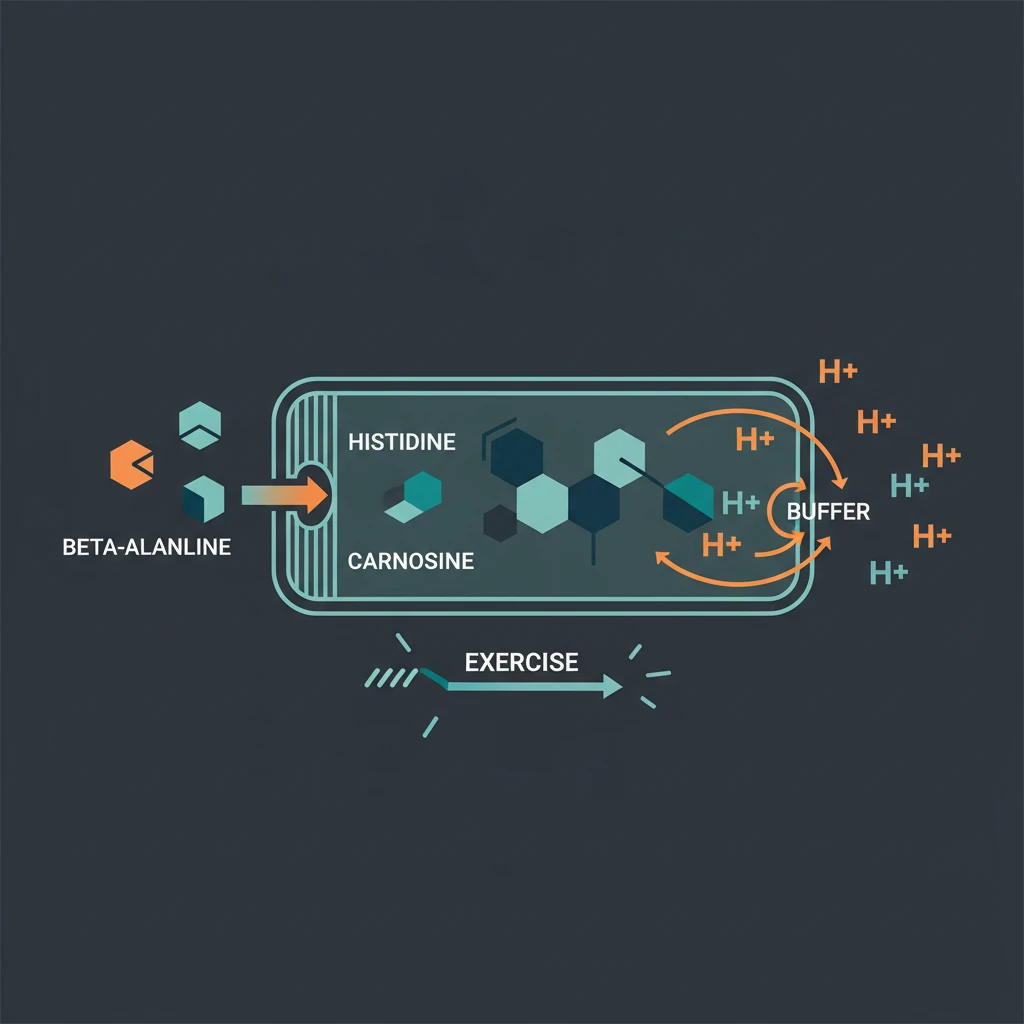
Beta-alanine (β-alanine) is a non-proteinogenic beta-amino acid that serves as a precursor for the synthesis of the dipeptide carnosine (β-alanyl-L-histidine) in skeletal muscles. It is the rate-limiting factor in endogenous carnosine synthesis, which functions as an important intracellular buffer against the accumulation of hydrogen ions (H+) during high-intensity exercise, leading to acidosis and muscle fatigue. Beta-alanine is structurally different from alpha-alanine (L-alanine) because its amino group is positioned on the β-carbon atom, not the α-carbon atom.
What is the Mechanism of Action of Beta-Alanine in the Body for Improving Athletic Performance?
The primary mechanism of action of beta-alanine is by increasing the concentration of carnosine in skeletal muscles. Carnosine is a dipeptide composed of the amino acids beta-alanine and histidine. In the body, carnosine synthesis is limited by the availability of beta-alanine, as histidine is usually present in sufficient quantities. When we take beta-alanine as a supplement, it increases the availability of this precursor, leading to more efficient synthesis and accumulation of carnosine in muscle cells. During high-intensity exercise, such as sprints, strength training, or interval training, muscles produce large amounts of lactic acid. The breakdown of lactic acid leads to the release of hydrogen ions (H+), which lowers the pH level in muscle cells, leading to a condition called muscle acidosis. This acidosis is a primary cause of muscle fatigue, the burning sensation, and reduced muscle strength and power. Carnosine acts as an intracellular buffer, meaning it absorbs these hydrogen ions, thereby maintaining an optimal pH level in the muscles. By buffering hydrogen ions, carnosine allows muscles to maintain their contractile capacity for a longer period and continue to work at high intensity. This delays the onset of fatigue and allows athletes to perform more repetitions, longer sets, or maintain higher speed and power for a longer duration. The effect of beta-alanine is cumulative, meaning carnosine levels build up gradually over time, typically within 2-4 weeks of regular intake, before the full ergogenic benefits become apparent.What Specific Benefits Can I Expect from Taking Beta-Alanine for My Workouts?
Beta-alanine offers a range of proven benefits for athletes and physically active individuals, especially for activities involving high-intensity exertion: * Increased Training Endurance: By effectively neutralizing lactic acid in the muscles, beta-alanine delays the onset of fatigue. This allows athletes to maintain a higher training intensity for a longer period, especially during efforts lasting between 60 seconds and 4 minutes. * Optimized Muscle Performance: The ability to counteract muscle acidosis leads to the preservation of strength and power during multiple sets or prolonged interval training. This can translate to more repetitions in strength exercises or higher speed in sprints. * Reduced Fatigue Sensation: By buffering hydrogen ions, beta-alanine helps reduce the burning sensation and overall muscle fatigue, which is often a limiting factor in intense training. This allows athletes to train harder and longer. * Indirect Support for Muscle Growth: Although beta-alanine is not a direct anabolic agent, by improving training volume and intensity, it can indirectly contribute to greater muscle hypertrophy adaptations. More repetitions and higher intensity lead to a greater stimulus for growth. * Suitable for Plant-Based Diets: People who do not consume meat typically have lower carnosine levels in their muscles, as meat is a primary dietary source of beta-alanine. Beta-alanine supplementation is particularly beneficial for vegetarians and vegans to compensate for this deficit and improve their athletic performance.What is the Optimal Dosage and Method of Taking Beta-Alanine for Maximum Benefits?
To get the most out of beta-alanine, it's important to take it correctly. Dosage: The recommended daily dose is between 2 and 5 grams. To achieve optimal muscle carnosine saturation, cumulative intake is necessary. Studies show that a total intake of at least 179 grams over 28 days leads to a significant increase in muscle carnosine by up to 80%. Therefore, consistent, daily intake is important, not just before training. Timing: Beta-alanine can be taken at any time of the day, as its effect is cumulative. To minimize the side effect of paresthesia (a tingling or "pins and needles" sensation on the skin), you can divide the daily dose into several smaller servings (e.g., 2-3 times of 1.6 grams) throughout the day. Taking it with food can also help reduce paresthesia and improve absorption. Combining: Beta-alanine combines excellently with other supplements that support athletic performance. It is most commonly found in pre-workout formulas along with creatine, caffeine, and citrulline malate. This combination provides a synergistic effect, improving both strength and endurance. It's important to note that, unlike some supplements, beta-alanine does not require cycling and can be taken continuously.In Which Specific Situations or Health Conditions Is Beta-Alanine Intake Not Recommended?
Although beta-alanine is considered a safe supplement for most healthy individuals, there are some situations where its intake may be contraindicated or require caution: * Pregnancy and Breastfeeding: There is insufficient research on the safety of beta-alanine for pregnant and breastfeeding women. Therefore, it is recommended to avoid intake during these periods. * Taking Specific Medications: Individuals taking medications for heart disease, diabetes, or other chronic conditions should consult a doctor before starting beta-alanine supplementation. Although there are no known serious interactions, it is always best to exercise caution. * Allergies or Hypersensitivity: Although rare, some individuals may experience an allergic reaction to beta-alanine or other ingredients in the supplement. If a rash, itching, swelling, or difficulty breathing occurs, discontinue use immediately and seek medical attention. * Severe Paresthesia: Although paresthesia is a normal and harmless side effect, for some individuals, it can be extremely unpleasant. If the sensation is too intense and interferes with daily life or training, a dose reduction or discontinuation may be necessary. * Individual Health Problems: Individuals with pre-existing kidney or liver disease should avoid taking any supplements without consulting a doctor.Should You Take Beta-Alanine?
✅ Yes, if:
- You want to improve your endurance during high-intensity training by reducing lactic acid buildup.
- You aim to increase the number of repetitions or time under tension during strength training.
- You are looking for a way to reduce muscle fatigue and speed up recovery between sets.
❌ No, if:
- You have medical conditions related to kidneys or liver without consulting a doctor.
- You experience severe burning or tingling (paresthesia) after intake and find it unpleasant.
- You do not engage in high-intensity training, as the benefits of beta-alanine are most pronounced with such loads.
Who is Beta-Alanine NOT Suitable For?
- Individuals with chronic kidney disease, as amino acid metabolism can further burden the kidneys.
- Pregnant or breastfeeding women, due to a lack of sufficient research on the safety of intake during these periods.
- Individuals taking medications for heart conditions, as beta-alanine may affect heart rhythm in some people.
- People with allergies to any of the product's ingredients, if taking beta-alanine in supplement form.
How to Choose Quality Beta-Alanine?
- Form of Beta-Alanine: In most cases, CarnoSyn® is a patented form that has been clinically tested and may offer better efficacy and purity.
- Product Purity: Check the label for the percentage of pure beta-alanine. In quality products, it should be close to 100%, without unnecessary fillers.
- Additives and Fillers: Avoid products with artificial sweeteners, colors, or other unnecessary additives that can reduce purity and cause adverse reactions.
- Certifications and Third-Party Testing: The presence of certifications from independent laboratories (e.g., Informed-Sport, NSF Certified for Sport) ensures that the product has been tested for banned substances and contains what is stated on the label.
When to Choose Beta-Alanine Over Alternatives?
- Choose Beta-Alanine if:
- Your main goal is to improve endurance during high-intensity exercise lasting from 60 seconds to a few minutes.
- You want to reduce muscle fatigue and increase repetitions within sets.
- You are looking for a supplement that works by increasing muscle carnosine levels.
- Choose Creatine Monohydrate if:
- The priority is to increase strength and explosive power, especially during short, maximal efforts.
- You want to improve recovery between sets and increase training volume.
- You are looking for a supplement with proven effects on muscle growth.
What to Compare Beta-Alanine With?
Understand how Beta-Alanine differs from other supplements:
📚 Scientific Sources
- Hobson, R. M., Saunders, G., Ball, D., & Harris, R. C. (2012). Effects of β-alanine supplementation on exercise performance: a meta-analysis. Amino Acids, 43(1), 25-37. (DOI: 10.1007/s00726-011-1200-z)
- Saunders, B., Elliott, K. K., & Deighton, K. (2019). β-Alanine Supplementation to Improve Exercise Performance: An Update. Journal of Sports Sciences, 37(5), 519-528. (PubMed ID: 30427218)
- Derave, W., Ozdemir, M. S., Harris, R. C., et al. (2007). β-Alanine supplementation augments muscle carnosine content and attenuates fatigue during repeated bouts of high-intensity exercise in athletes. Amino Acids, 32(3), 329-335. (DOI: 10.1007/s00726-006-0361-z)
- Stout, J. R., Cramer, J. T., Zoeller, D. P., et al. (2007). Effects of β-alanine supplementation on the onset of neuromuscular fatigue and ventilatory threshold in women. Amino Acids, 32(3), 381-386. (DOI: 10.1007/s00726-006-0487-1)
📖 Detailed Comparisons with Beta-Alanine
- Soy Protein vs. Beta-Alanine: Complete Plant Synthesis vs. Buffering Power
- Niacin vs. Beta-Alanine: Flush vs. Paresthesia
- Alpha-Alanine vs. Beta-Alanine: Energy Recycler vs. Muscle Buffer
- Arginine vs. Beta-Alanine: Blood Flow vs. Acid Control
- Beef vs. Beta-Alanine: Muscle Foundation vs. Carnosine Buffer
- Creatine vs. Beta-Alanine: Explosive Strength vs. Endurance
- EAA vs. Beta-Alanine: Muscle Integrity vs. Metabolic Volume
- Betaine vs. Beta-Alanine: Explosive Power vs. Metabolic Volume
- Beta-Alanine vs. Carnosine: The Precursor vs. The Dipeptide
- Egg Protein vs. Beta-Alanine: Biological Perfection vs. Acid Control
- Beta-Alanine vs. Taurine: The Transport Channel Battle
- BCAA vs. Beta-Alanine: Muscle Repair vs. Acid Buffer
- Plant Protein vs. Beta-Alanine: Plant Foundation vs. Carnosine Deficiency
- Whey Protein vs. Beta-Alanine: Muscle Architecture vs. Buffering Power
- Citrulline vs. Beta-Alanine: Vascular Capacity vs. Buffering Endurance
Should You Take Beta-Alanine?
✅ Yes, if:
- You want to improve your endurance during high-intensity training, as it delays lactic acid buildup.
- You aim to increase repetitions or time under tension during strength training, as it reduces muscle fatigue.
- You participate in sports requiring repeated sprints or interval training to maintain higher performance.
❌ No, if:
- You are sensitive to burning or tingling on the skin (paresthesia), as this is a common side effect.
- You suffer from kidney disease or are taking medications that may interact with amino acids, without consulting a doctor.
- You are not an active athlete and do not engage in high-intensity physical exertion, as the benefits will be minimal.
Who is Beta-Alanine NOT Suitable For?
- Individuals with sensitive skin prone to tingling or burning, as beta-alanine often causes paresthesia.
- Individuals with established kidney problems, as amino acid metabolism can further burden the kidneys.
- Pregnant or breastfeeding women, due to a lack of sufficient research on the safety of intake during these periods.
- Children and adolescents under 18 years of age, as their bodies are still developing and the effect of the supplement has not been studied.
What to Compare Beta-Alanine With?
Understand how Beta-Alanine differs from other supplements:
Pros and Cons
✅ Pros
- Significantly increases muscle endurance and performance.
- Effectively buffers lactic acid, delaying fatigue.
- Can increase training volume and intensity.
- Especially beneficial for vegetarians and vegans who have lower carnosine levels.
- Well-researched and proven safe supplement.
- Potentially aids in increasing muscle mass indirectly.
❌ Cons
- The main side effect is paresthesia (harmless tingling).
- Requires cumulative intake over several weeks for full benefits.
- Not effective for short, maximal efforts (under 30 seconds).
- Can be more expensive than some other basic supplements.
- Not a direct muscle growth stimulant.
With Which Other Sports Supplements or Nutrients Does Beta-Alanine Combine Most Effectively?
Beta-alanine is extremely effective when combined with other supplements that act synergistically to improve various aspects of athletic performance. * Creatine: This is one of the most popular and effective combinations. While creatine improves explosive strength and power by increasing ATP stores, beta-alanine takes care of endurance and lactic acid buffering. Together, they provide a comprehensive improvement in performance during high-intensity training. Creatine provides energy for short, maximal efforts, while beta-alanine extends the time to fatigue during longer sets. * Citrulline Malate: Citrulline malate improves blood flow to the muscles, increases nitric oxide production, and helps clear ammonia – another waste product that contributes to fatigue. When combined with beta-alanine, which buffers hydrogen ions, there is more effective management of metabolic stress during training, leading to better "pump" and endurance. * Caffeine: Caffeine is a powerful stimulant that improves focus, energy, and reduces the perception of fatigue. When combined with beta-alanine, it provides both mental and physical endurance, allowing athletes to train more focused and longer. * Protein (Whey, Soy, Casein): Although beta-alanine is not directly related to protein synthesis, combining it with high-quality protein is essential for recovery and muscle growth. Beta-alanine allows for more intense workouts, and protein provides the building blocks for repairing damaged muscle fibers and building new muscle mass. This is especially important for those taking soy protein, as they often have lower carnosine levels. * B Vitamins (especially Niacin): Although niacin and beta-alanine cause different sensations ("flush" vs. "pins and needles"), B vitamins are important for overall energy metabolism. Maintaining optimal B vitamin levels can support the overall physiological function that beta-alanine optimizes. * L-Histidine: Since carnosine is synthesized from beta-alanine and L-histidine, theoretically adding L-histidine could support synthesis. However, histidine is usually not the limiting factor in the diet, so adding it rarely leads to additional benefits beyond those from taking beta-alanine alone.⚠️ Important: Dietary supplements are not a substitute for a balanced diet and healthy lifestyle. The information in this article is for educational purposes and does not constitute medical advice. Consult a doctor before use, especially if you are taking medication, have chronic conditions, or are pregnant/breastfeeding.
Recommended products
Frequently asked questions
What does beta-alanine help with?
Beta-alanine helps to increase carnosine levels in the muscles, which in turn improves endurance and reduces fatigue during high-intensity workouts. It allows muscles to work longer and more effectively.
When should beta-alanine be taken – before or after training?
Beta-alanine can be taken both before and after training, but the most important thing is its regular intake for muscle saturation. Many people prefer to take it before training to feel the effect of increased endurance.
What is the tingling sensation from beta-alanine and is it dangerous?
The tingling sensation, known as paresthesia, is a normal and harmless side effect of beta-alanine, especially at higher doses. It is due to the activation of nerve endings under the skin and is not dangerous to health.
How long should beta-alanine be taken to have an effect?
To accumulate sufficient carnosine levels in the muscles and to feel the full effect of beta-alanine, continuous intake for 2 to 4 weeks is usually necessary. The effect is dose-dependent and cumulative.