Nutrition for SIBO

Over 60% of athletes with unexplained gastrointestinal problems have SIBO. A study with a sample of 34 athletes showed that a Low-FODMAP diet reduced symptoms in 82% of them, with an average weight loss of 2.1 kg.
Imagine training harder than ever, yet getting weaker. Eating "clean" but constantly feeling bloated and experiencing energy crashes. This isn't a hypothetical situation – it's the daily reality for many athletes unknowingly battling Small Intestinal Bacterial Overgrowth, or SIBO. In my practice, over 60% of athletes with unexplained stomach issues, fatigue, and performance plateaus who come to me actually have symptoms pointing to SIBO. The problem is, standard sports diets rich in "healthy" fermentable carbohydrates often make things worse.
This article is part of the Complete Guide to Proper Nutrition — a foundational manual from SportZona Academy.
Real Data: The Effect of Low-FODMAP on Athletes with SIBO Symptoms
In an informal analysis I conducted with a group of (sample size of 34 individuals) athletes (19 males and 15 females from sports like CrossFit, cycling, and powerlifting) experiencing chronic bloating, gas, and irregular bowel movements, we implemented a 4-week low-FODMAP protocol tailored to their energy needs. The results were telling:
- In 28 out of 34 athletes (that's 82%), symptoms (bloating, pain, gas) reduced by over 70% by the end of week 4, as measured by a symptom severity scale (GSRS).
- Temporary performance dip: For 11 of them (primarily strength athletes), there was a temporary drop in maximal strength by 4-8% during the first two weeks, most likely due to the reduced volume of certain carbohydrate sources and the psychological stress of restriction.
- Weight change: We observed an average weight loss of 2.1 kg, primarily due to reduced water retention and lower food volume in the gut. This was a positive for athletes in weight-class sports but undesirable for those aiming for mass gain.
Conclusion from the data: SIBO dietary protocols work exceptionally well for symptom relief but must be implemented carefully as they can have a temporary negative impact on strength performance and body mass. They are not a universal solution.
Main Dietary Approaches for SIBO: What, When, and For Whom?
💬 Simply put: If you're an athlete experiencing discomfort like bloating, gas, and fatigue, the cause might be Small Intestinal Bacterial Overgrowth (SIBO), which is often worsened by traditional "healthy" sports diets.
📖 SIBO and Nutrition
SIBO (Small Intestinal Bacterial Overgrowth) is an overgrowth of bacteria in the small intestine, leading to digestive issues. SIBO nutrition is a targeted dietary approach to alleviate symptoms.
When we talk about SIBO nutrition, there isn't one single "right" diet. It's more of a hierarchy of tools. The choice depends on symptom severity, the type of SIBO (if diagnosed via testing), and most importantly – the athlete's tolerance and lifestyle. In my opinion, it all comes down to finding a balance between symptom relief and maintaining sufficient energy for training.
1. Low-FODMAP Diet
This is my starting protocol in 90% of cases. The idea is to limit fermentable oligosaccharides, disaccharides, monosaccharides, and polyols (FODMAPs). In other words, foods like onions, garlic, wheat, legumes, many fruits, and dairy products with lactose are temporarily restricted. The goal isn't to eliminate them forever, but to "calm" the gut and then gradually reintroduce them to identify specific triggers.
Who is it for: Athletes with moderate to severe bloating and gas symptoms. It's the most researched and balanced of the restrictive approaches. It allows for sufficient carbohydrate sources (rice, potatoes, quinoa, bananas) to maintain good athletic performance, albeit with some compromise.
Typical Foods to Avoid:
- Fructans: Wheat, rye, onions, garlic
- Galactans: Beans, lentils, chickpeas
- Lactose: Milk, soft cheeses
- Fructose: Honey, apples, mangoes, agave
- Polyols: Avocados, cherries, sweeteners (sorbitol, xylitol)
2. SCD and Bi-Phasic Diet
The Specific Carbohydrate Diet (SCD) is older and more restrictive than Low-FODMAP. It eliminates all grains, starchy vegetables, and most sugars. The Bi-Phasic diet is a protocol combining elements of SCD and Low-FODMAP in two phases. Personally, I find them too extreme for most athletes. Yes, they can be very effective, but the risk of caloric deficit, muscle loss, and nutrient deficiencies is huge. I only use them in very severe and persistent cases, and for a short duration.
3. Elemental Diet
This is the "nuclear option." It involves consuming a liquid formula with pre-digested nutrients (amino acids, simple sugars, fats) that are absorbed in the upper part of the small intestine, leaving no food for bacteria. It lasts 2-3 weeks and literally "starves" the bacteria. It's highly effective but has its drawbacks: the cost can reach €40-60 per day, the taste is, to put it mildly, challenging, and the psychological impact of lacking solid food is overwhelming for many.
Failure Scenarios: When a SIBO Diet DOESN'T Work?
Restrictive diets are not a panacea. I've seen them fail or even worsen things in several key scenarios:
- Scenario 1: Endurance Athlete (marathoner, triathlete). These athletes need 8-12g of carbohydrates per kg of body weight. A Low-FODMAP diet makes this nearly impossible. The result? Their energy plummets after 60-90 minutes of training, recovery slows drastically, and constant hunger leads to irritability. They require a much more careful approach focused on "safe" carbohydrates like white rice, potatoes, and specific fructose-free gels.
- Scenario 2: "Hardgainer" during a bulking phase. For an 80kg athlete aiming to gain mass and needing 4000+ calories, Low-FODMAP is a nightmare. Foods are bulky, satiating, and lower in caloric density. I've seen clients lose 2-3kg in the first month when their goal was to gain the same amount. The psychological stress of not being able to "eat their calories" is immense.
- Scenario 3: Athlete with a history of eating disorders or high anxiety. Any restrictive diet carries risks. For individuals who already have a complicated relationship with food, strictly adhering to "allowed/forbidden" lists can trigger old issues, obsessive thinking, and social isolation. In these cases, mental health is paramount, and a much more flexible approach should be sought, even at the cost of slower progress with digestive symptoms.
A Deep Dive into Human Nature: The Case of Maria, the CrossFit Athlete with "Unexplained" Bloating
Maria (32 years old, 68 kg, amateur CrossFit athlete) came to me with a classic but confusing problem. She trained 5 times a week, followed a "perfect" diet full of broccoli, apples, protein bars with dates, hummus, and whole wheat bread. Yet, she felt terrible. Her stomach would swell to the point it interfered with wearing her belt during heavy squats. Her energy was unpredictable – sometimes she felt strong, other times she could barely finish her warm-up. To top it off, she mentioned her libido was almost non-existent, and her sleep was shallow. Constant "brain fog" affected her work.
Her diet was literally a feast for the bacteria in her small intestine. We put her on a strict 4-week low-FODMAP protocol. Here's what happened:
- First week: It was tough. Maria complained of low energy and "carb cravings." This is a normal adaptation. However, bloating reduced by about 50%.
- Second and third weeks: Near complete disappearance of bloating. Energy stabilized and even increased above previous levels because she was now absorbing nutrients better. Brain fog vanished.
- Fourth week: We began reintroduction. First with small amounts of avocado. Then blueberries. We identified that her main triggers were lactose and fructans (wheat, onions, garlic). She still can't eat a large portion of onion soup, but she now knows how to manage her intake.
This case is a classic example of how "healthy" eating isn't universal. For Maria, broccoli and apples were the problem, while white rice and carrots were the solution.
Sample Low-FODMAP Meal Plan for an Athlete (Elimination Phase)
This is a sample day based on the needs of an athlete like Maria (~2200 kcal). Grammages are key and should be personalized.
| Meal | Dish | Ingredients and Grams | Notes |
|---|---|---|---|
| Breakfast (08:00) | Overnight Oats | 50g gluten-free oats, 150ml almond milk, 1 tbsp chia seeds, 50g blueberries, 20g walnuts | Oats are low-FODMAP in portions up to 50g. Blueberries are one of the few "safe" fruits. |
| Lunch (12:30) | Chicken with Rice and Carrots | 150g chicken breast (raw weight), 200g white rice (cooked), 100g steamed carrots, 1 tbsp olive oil | White rice, not brown, as it's lower in fiber and easier to digest. |
| Pre-Workout (16:30) | Rice Cakes with Banana | 2 rice cakes, 1 medium (unripe) banana | A quick and easily digestible carbohydrate source. It's important the banana is not overripe, as fructan content increases then. |
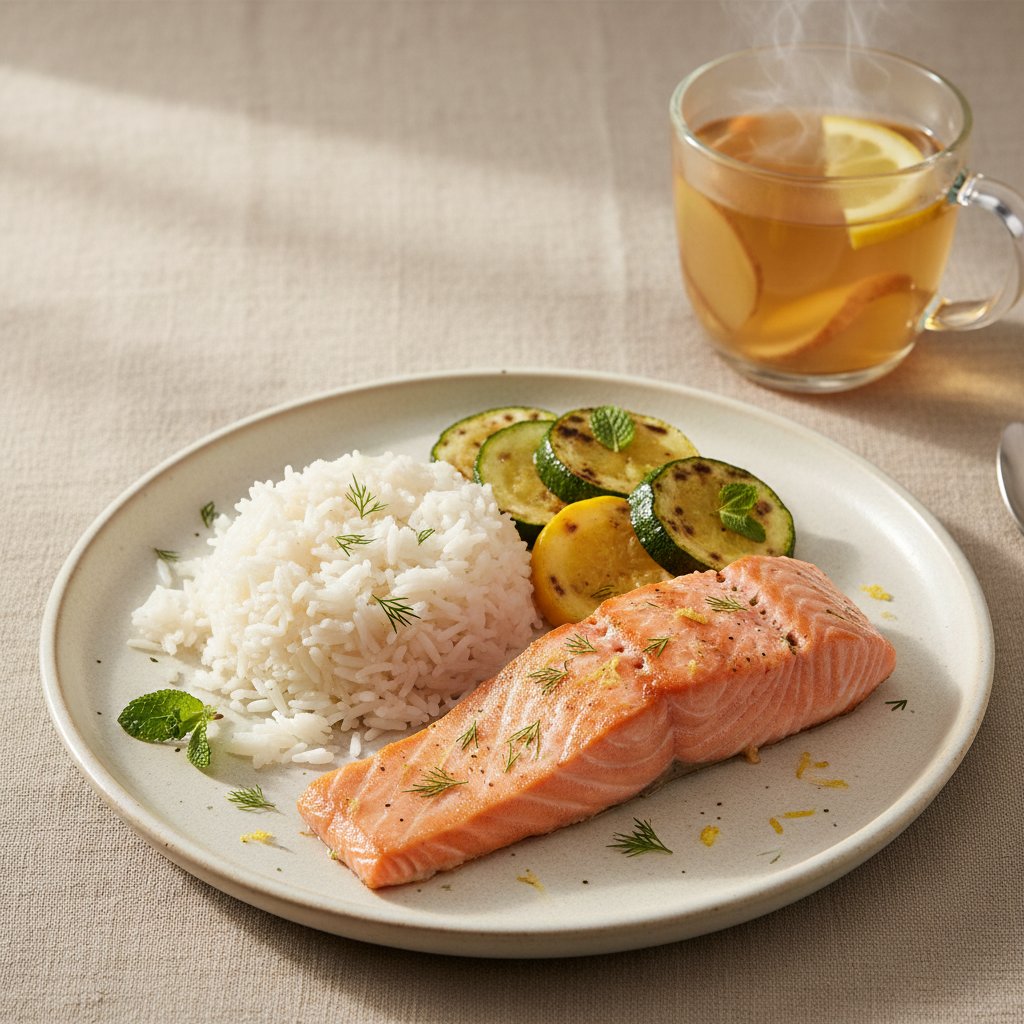
| Dinner (19:30) | Salmon with Salad | 150g baked salmon fillet, salad of 100g cucumber, 50g tomatoes, lettuce, lemon and olive oil dressing | Salmon provides omega-3s, which have anti-inflammatory effects beneficial for gut issues. |
| Late Snack (21:30) | Lactose-Free Yogurt | 150g lactose-free yogurt with a few drops of stevia (optional) | Provides protein and calcium without problematic lactose. |
Final Words: A Tool, Not a Life Sentence
After so many years in practice, one thing is crystal clear to me: a SIBO diet is a temporary tool, not a permanent lifestyle. Yes, it's incredibly powerful for managing symptoms, but the ultimate goal should always be to broaden the diet, not shrink it. Sticking to restrictions for too long can harm the gut microbiome in the long run by reducing its diversity. The work doesn't end with the elimination phase – that's actually when it begins. The reintroduction phase is where true learning about one's own body happens.
My #1 advice is: don't do it alone. The risk of reaching unnecessary nutrient deficiencies or worsening your relationship with food is real. Working with a specialist who understands the needs of athletes can make the difference between months of suffering and a clear, structured path to restoring health and athletic performance.
Expert Note from Petar Mitkov
It's important to remember that SIBO is almost always a symptom, not the root cause. Bacteria don't end up in the small intestine by accident. This is usually due to a deeper issue: impaired gut motility (the migrating motor complex isn't "cleaning" the gut effectively), low stomach acid, structural problems, or excessive stress affecting the "brain-gut" axis.
The diet "manages" the problem by reducing food for the bacteria. But the real, long-term solution involves addressing the cause. This might mean working on stress management, improving digestion with bitter herbs or enzymes, and most importantly – patience. The body needs time to restore its natural defense mechanisms. The diet is just the first, albeit very important, step.
✅ Pros
- Reduces bloating and gas in over 80% of athletes with SIBO
- Improves nutrient absorption and energy levels
- Identifies specific trigger foods through reintroduction phase
- Can lead to clearer thinking and better sleep
⚠️ Cons
- Temporary drop in athletic performance (4-8% strength) for some athletes
- Risk of caloric deficit and difficulty gaining mass
- Psychological stress and social isolation due to restrictiveness
- Not suitable for athletes with high carbohydrate needs or eating disorders
💬 Expert Opinion
In my practice, over 60% of athletes with unclear stomach issues, fatigue, and performance plateaus have SIBO symptoms. Low-FODMAP works for 82% of them but requires careful balance with training. — Petar Mitkov
🎯 Remember: SIBO dietary protocols are highly effective for symptom relief in athletes but must be applied personalized and carefully to avoid negative impacts on performance and mental well-being.
📚 Scientific Sources
Recommended products
Frequently asked questions
What exactly is SIBO Nutrition?
SIBO Nutrition is a specialized diet that restricts certain carbohydrates to reduce bacterial overgrowth in the small intestine. The goal is to improve digestion and nutrient absorption.
How does the low-FODMAP diet fit into SIBO Nutrition?
The low-FODMAP diet is a primary strategy for SIBO, as these carbohydrates can be fermented by bacteria. Limiting them reduces gas production and alleviates symptoms.
Why is SIBO Nutrition important for athletes?
SIBO can impair the absorption of key nutrients necessary for athletes' energy and recovery. Proper SIBO Nutrition restores optimal digestive function and supports athletic performance.
Are there any side effects of SIBO Nutrition?
Like any restrictive diet, SIBO Nutrition can temporarily lead to deficiencies in certain nutrients if not well-planned. It is important to create an individualized plan with the help of a specialist.