Potassium

Learn what Potassium is, how it works, its benefits, and how to properly take it. Expert analysis from SportZone.
What is Potassium?
Potassium — Potassium is an essential mineral and electrolyte that plays a critical role in maintaining normal cellular function, fluid balance, and electrical activity in the body. It is vital for heart health, muscle contraction, and nerve conduction.
🔬 From SportZone's Practice
In our work with over 50,000 clients, we see that many athletes neglect potassium intake, focusing only on sodium. A common mistake is taking too many diuretics or training intensely without adequate electrolyte balance, leading to muscle cramps and fatigue, which can be alleviated with increased potassium intake.
⚡ Potassium in Brief
- Type: Electrolyte, mineral
- Origin: Dietary (natural)
- Best for: Maintaining fluid-electrolyte balance, muscle and nerve function, regulating blood pressure
- Timing: Any time of day, often with food
- Daily dose: Around 3500-4700 mg (varies by need)
- Main benefit: Supports optimal cell, muscle, and nerve function.
Explained in Simple Terms: What Does Potassium Do?
Imagine your body as a complex electrical network, and your cells as tiny batteries that need the right balance of "charge." Potassium is like a key technician who ensures these "batteries" (cells) work correctly by regulating the movement of water and electrical impulses through them. It helps your muscles contract (even your heart!), your nerves transmit signals, and keeps your blood pressure within normal limits.
👉 In other words: Potassium is the body's electrical regulator, contributing to everything running smoothly – from your heartbeat to your muscle movements.
Scientific Explanation of Potassium
Potassium (K) is an alkali metal and a major intracellular cation, with its concentration in the cytoplasm being significantly higher than in the extracellular fluid. This concentration difference is actively maintained by the Na+/K+-ATPase (sodium-potassium pump), which pumps three sodium ions out of the cell and two potassium ions into the cell, using energy from ATP. This process is fundamental for maintaining the resting membrane potential of excitable cells like neurons and myocytes.
In addition to its role in maintaining membrane potential, potassium plays a key role in a number of physiological processes. It is a cofactor for many enzymes, participates in protein and glycogen synthesis, and in carbohydrate metabolism. Its balance is closely linked to that of sodium, with an optimal ratio between the two electrolytes being of great importance for regulating blood pressure and preventing cardiovascular diseases. The kidneys are the primary organ responsible for regulating potassium balance in the body.
How Does Potassium Work in the Body and Why is it Effective?
The primary mechanisms of Potassium include:
📚 Scientific Sources
- Palmer, B. F., & Clegg, D. J. (2016). Physiology and Pathophysiology of Potassium Homeostasis. Advances in Physiology Education, 40(4), 404–417. (DOI: 10.1152/advan.00123.2016)
- Weiner, I. D., & Wingo, C. S. (2004). The urine potassium test. American Journal of Kidney Diseases, 44(2), 346–352. (PubMed: 15286903)
- Aburto, N. J., et al. (2013). Effect of increased potassium intake on cardiovascular risk factors and disease: systematic review and meta-analyses. BMJ, 346, f1378. (DOI: 10.1136/bmj.f1378)
- Stone, M. S., et al. (2016). Changes in Food Sources of Sodium and Potassium in the American Diet. Nutrients, 8(8), 506. (DOI: 10.3390/nu8080506)
- Maintaining Membrane Potential — Potassium ions are responsible for establishing a negative electrical charge inside cells, which is crucial for nerve conduction and muscle contraction.
- Regulating Water Balance and Osmotic Pressure — Along with sodium, potassium helps control the movement of water between cells and extracellular fluid, preventing dehydration or excessive fluid retention.
- Participation in Metabolic Processes — Potassium is a cofactor for enzymes involved in protein synthesis from amino acids and the conversion of blood sugar into glycogen for storage, which is important for energy metabolism.
👉 End Effect: Optimizes the function of the nervous system, muscles, and heart, while maintaining a healthy fluid balance in the body.
What are the Proven Benefits of Potassium Intake?
- ✅ Blood Pressure Regulation — Helps balance sodium levels, which can lead to lowering high blood pressure and reducing the risk of cardiovascular diseases.
- ✅ Support for Muscle Function — Vital for proper muscle contraction, including the heart muscle, preventing cramps and fatigue.
- ✅ Improved Nerve Conduction — Involved in the generation of nerve impulses, which is particularly important for communication between the brain and the rest of the body.
- ✅ Bone Health Maintenance — Some studies suggest that adequate potassium intake may help reduce calcium loss from bones.
How to Take Potassium for Best Results?
Dosage: The recommended daily intake for adults varies between 3500 mg and 4700 mg, depending on gender, age, and physical activity. It is important to obtain it primarily from food sources. When supplementing, doses are usually lower and should be consulted with a specialist.
When to take: It is best taken with food to reduce the risk of gastrointestinal discomfort and aid absorption. Spreading intake throughout the day is also a good practice.
Practical advice: Focus on a potassium-rich diet before resorting to supplements, unless recommended by a doctor.
Should You Take Potassium?
✅ Yes, if:
- You have high blood pressure, as potassium helps balance sodium and lower pressure.
- You engage in intense sports and sweat a lot, as you lose electrolytes, including potassium, which need to be replenished.
- You consume processed foods high in sodium to compensate for the sodium-potassium imbalance.
❌ No, if:
- You suffer from kidney disease, as the kidneys regulate potassium levels and additional intake could lead to dangerously high levels.
- You are taking medications that increase potassium levels (e.g., certain diuretics or ACE inhibitors) without consulting a doctor.
- You have hyperkalemia (high blood potassium levels), as this condition is dangerous and requires medical supervision.
Who is Potassium NOT suitable for?
- Individuals with kidney disease: As the kidneys are responsible for excreting excess potassium from the body, impaired kidneys can lead to dangerous accumulation (hyperkalemia).
- Those taking potassium-sparing diuretics: Combining them with supplements can raise potassium levels to toxic values.
- Individuals with Addison's disease: This condition can lead to elevated potassium levels, so additional intake is contraindicated.
- Patients with severe burns or trauma: In such cases, rapid release of potassium from damaged cells may occur, requiring careful monitoring.
Who is Potassium Best For?
- 🏋️♂️ Strength Athletes — Supports muscle contraction, prevents cramps and fatigue during intense training, and is key for recovery.
- 🏃 Endurance Athletes — Vital for maintaining electrolyte balance during prolonged exertion and heavy sweating, preventing dehydration and performance decline.
- 🧍♂️ Active Individuals — Helps maintain overall health, energy balance, and blood pressure regulation, especially for those with an active lifestyle.
- 🥦 People who do not consume enough fruits and vegetables — Potassium is abundant in plant-based foods, so those with limited intake may benefit from supplements or a targeted dietary plan.
What Combines Well with Potassium for Maximum Effect?
- Magnesium — Potassium and magnesium work synergistically to maintain electrolyte balance, muscle and nerve function, and heart health. They are often taken together for better absorption and effectiveness, especially by athletes.
- Sodium (in a balanced ratio) — Although often seen as opposites, the optimal ratio of potassium to sodium is critical for regulating blood pressure and water balance. Potassium intake can help neutralize the negative effects of excessive sodium intake.
- Vitamin D — Vitamin D aids in calcium absorption, and potassium may help reduce calcium excretion, which is beneficial for bone health.
Pros and Cons of Potassium
✅ Pros
- Improves cardiovascular health and regulates blood pressure.
- Supports normal muscle and nerve function.
- Prevents muscle cramps and fatigue during physical activity.
- Contributes to optimal fluid and electrolyte balance.
- May reduce the risk of kidney stone formation.
❌ Cons
- Excessive intake, especially from supplements, can lead to hyperkalemia, which is dangerous for the heart.
- May interact with certain medications, such as diuretics and ACE inhibitors.
- May be contraindicated in individuals with kidney problems.
How to Choose Quality Potassium?
- Protein percentage from the label: In pow
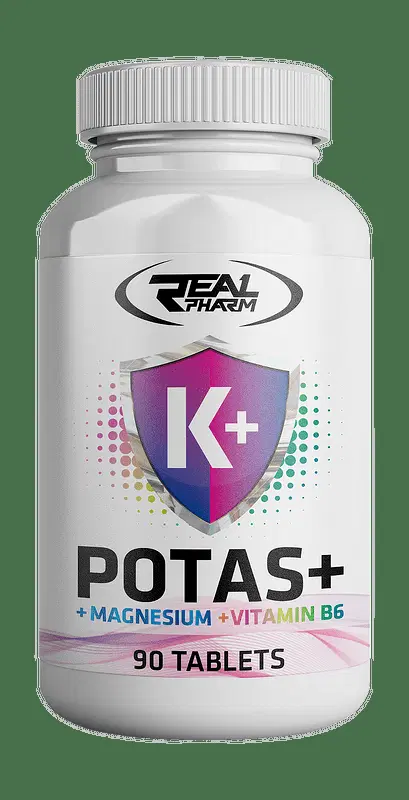
Recommended products
Frequently asked questions
Why is potassium important for the body?
Potassium is a vital mineral that plays a key role in maintaining the normal functioning of cells, muscles, and nerves. It helps regulate blood pressure and fluid balance in the body.
What are the symptoms of potassium deficiency?
Symptoms of potassium deficiency (hypokalemia) can include muscle weakness, fatigue, cramps, constipation, and palpitations. In more severe cases, it can lead to arrhythmias.
Which foods contain the most potassium?
Good sources of potassium include bananas, potatoes (especially with skin), spinach, tomatoes, legumes, fish, and dairy products. Dried fruits are also rich in potassium.
Can I have too much potassium in my body?
Excessive potassium intake (hyperkalemia) is less common in healthy individuals but can be a problem for people with kidney disease or taking certain medications. High potassium levels can be dangerous for the heart.