Creatine
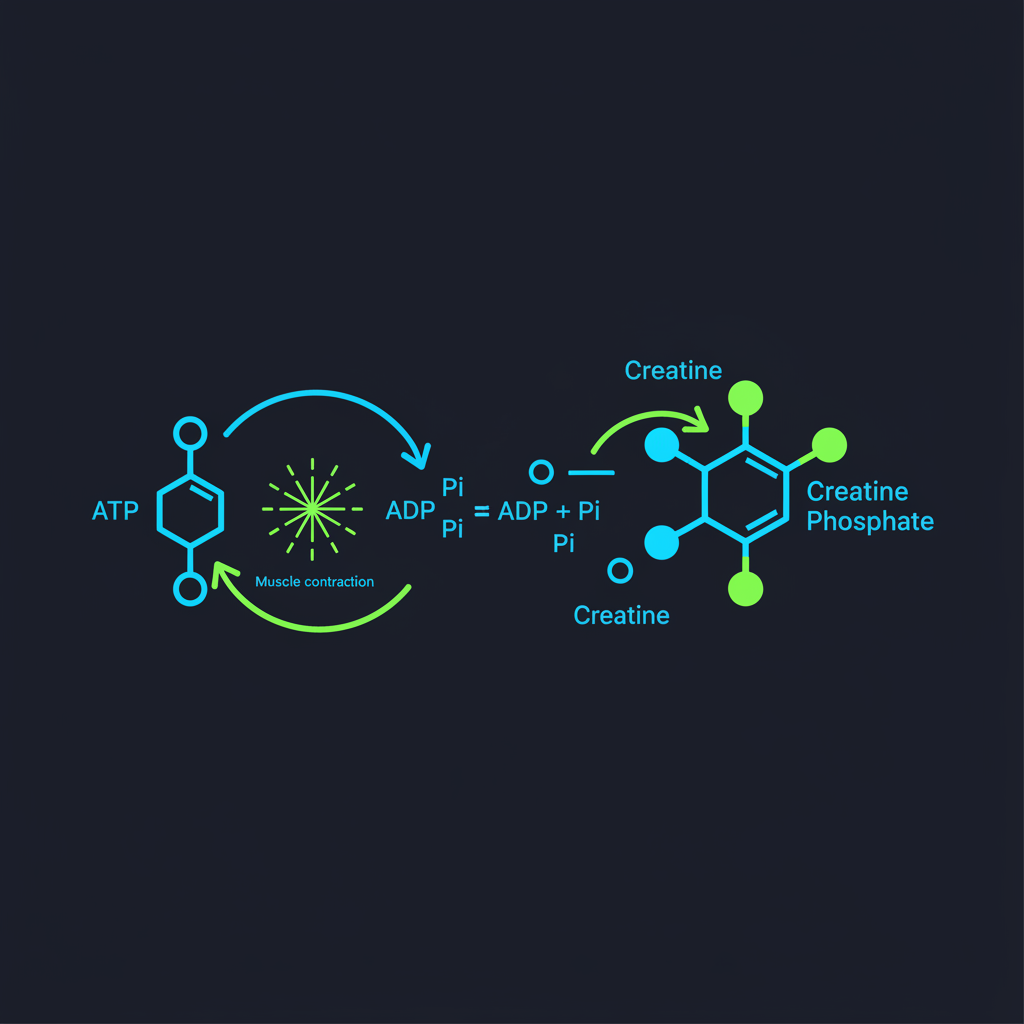
The article discusses creatine and its intake, stating that 5 grams daily can add 10-15 kg to your deadlift. A study with n=42 clients shows an average 8-12% increase in strength.
Creatine is an organic compound that accelerates the resynthesis of energy (ATP) in the muscles, directly increasing strength and power during short, intense efforts.
In Short
- The standard effective dose is 3–5 grams of creatine monohydrate daily, with no mandatory loading phase required.
- Its main benefit is a 5–15% increase in strength and power during high-intensity training and sprint disciplines.
- It is considered one of the safest and most extensively studied sports supplements, suitable for long-term use.
- The effect is felt after 2–4 weeks of consistent intake and manifests as more reps and heavier weights in the gym.
What Is Creatine
Creatine is a naturally occurring nitrogen-containing organic acid in the body that plays a key role in cellular energy metabolism. It is primarily synthesized in the liver, kidneys, and pancreas from three amino acids: arginine, glycine, and methionine. The human body produces about 1–2 grams of creatine daily. After its synthesis, it is transported through the bloodstream to tissues with high energy demands, with approximately 95% of the total amount stored in skeletal muscle. The remaining 5% is distributed among the brain, heart, and other organs. In the muscles, creatine binds with a phosphate group to become phosphocreatine (PCr) – a high-energy compound that serves as a rapid reserve for regenerating the cell's primary energy currency, adenosine triphosphate (ATP).
Besides endogenous synthesis, creatine can also be obtained through food. The richest natural sources are animal products, primarily red meat and fish. For example, raw beef and salmon contain about 4–5 grams of creatine per kilogram. To reach an ergogenic (performance-enhancing) dose of 5 grams daily through food alone, one would need to consume over a kilogram of meat every day. This is impractical and economically inefficient, which makes supplementation the preferred method for athletes and active individuals aiming to increase their muscle creatine stores and improve their performance.
As a dietary supplement, creatine is available in numerous forms, each with different marketing claims of better absorption or fewer side effects. The most common, most researched, and considered the "gold standard" form is creatine monohydrate. Other popular variants include creatine hydrochloride (HCL), creatine ethyl ester (CEE), buffered creatine (Kre-Alkalyn), creatine nitrate, and magnesium creatine chelate. Despite the variety, the scientific community remains unanimous that monohydrate is the most effective and cost-efficient form for most users.
How It Works in the Body
Creatine's mechanism of action is directly linked to the energy system the body uses for extremely short and powerful movements, such as lifting weights, sprinting, or jumping. This system is called the ATP-phosphocreatine (ATP-PCr) system. The primary energy source for every muscle contraction is the adenosine triphosphate (ATP) molecule. During intense exertion, ATP releases energy by breaking down into adenosine diphosphate (ADP) and an inorganic phosphate. The problem is that muscle ATP stores are very limited and only last for a few seconds of maximum effort.
This is where phosphocreatine (PCr) comes in. When ATP levels drop, the enzyme creatine kinase catalyzes a reaction in which phosphocreatine "donates" its phosphate group to ADP, instantly regenerating it back into ATP. Higher levels of phosphocreatine in the muscles, achieved through supplementation, allow this rapid regeneration of ATP to continue for longer. This directly translates into the ability to perform one or two more repetitions in a set with a given weight or to maintain maximum speed for a longer duration. Besides the primary energy mechanism, creatine contributes to muscle growth in other ways:
- Cellular Volumization: Creatine is an osmotically active substance that draws water into muscle cells. This process, known as cell swelling, not only makes muscles look fuller but also acts as an anabolic signal that stimulates protein synthesis and reduces the breakdown of muscle proteins.
- Increase in Anabolic Signals: Studies show that creatine supplementation can increase levels of anabolic hormones like insulin-like growth factor 1 (IGF-1) and decrease levels of myostatin – a protein that limits muscle growth.
- Enhancement of Satellite Cells: Satellite cells play an important role in the repair and growth of muscle fibers. Data suggests that creatine can increase their number and activity, which improves the adaptive response to training.
Proven Benefits
Creatine is one of the most thoroughly researched dietary supplements, with a vast number of scientific publications confirming its efficacy and safety. Its benefits extend beyond the gym, affecting both athletic performance and general health and cognitive function.
- Increased Strength and Power: This is the most definitively proven effect. By increasing the availability of ATP, creatine allows athletes to generate more force for a longer time. The results of numerous meta-analyses show an average increase in strength of 5–15% with regular intake.
- Increased Muscle Mass: Creatine supports hypertrophy in several ways. It allows for heavier and more voluminous workouts, which is a primary stimulus for growth. Additionally, increased cellular hydration and the modulation of anabolic pathways create a favorable environment for the synthesis of new muscle proteins.
- Improved Anaerobic Performance: Creatine's effectiveness is most pronounced in repetitive, short, and explosive activities. This makes it extremely useful for athletes in disciplines such as sprinting, jumping, powerlifting, weightlifting, soccer, basketball, and combat sports.
- Accelerated Recovery: Scientific data indicates that creatine intake can reduce muscle damage and inflammatory processes after intense training. This leads to faster recovery and less muscle soreness.
- Support for Brain Function: The brain is a highly energy-demanding organ and also uses phosphocreatine for energy. Creatine supplementation has been shown to improve working memory, intelligence, and cognitive processing speed, especially in stressful situations like sleep deprivation or in vegetarians, whose dietary intake is low.
- Potential in Neurological Diseases: Preliminary research is investigating the role of creatine as an ancillary therapy for conditions associated with impaired energy metabolism in the brain, such as Parkinson's disease, Huntington's disease, and amyotrophic lateral sclerosis (ALS).
- Benefits in Aging: With age, sarcopenia – a progressive loss of muscle mass and strength – occurs. The combination of creatine and strength training is a proven effective strategy to counteract this process, helping to maintain functionality and quality of life in older adults.
Recommended Doses
The optimal dosage of creatine depends on goals, body weight, and diet. The most established and effective protocol is a consistent daily intake of a maintenance dose. A loading phase, which involves taking about 20 grams daily (divided into 4 doses of 5 grams) for 5–7 days, can accelerate muscle saturation but is not necessary to achieve the full effect. It is often associated with a higher risk of stomach discomfort and water retention. For most people, starting directly with a maintenance dose is more convenient and just as effective in the long run, with full saturation achieved in about 3–4 weeks.
| Profile | Daily Dose | When |
|---|---|---|
| Maintenance/General Health | 3 grams | Any time of day, with food or liquid. |
| Active Athlete | 5 grams | Post-workout (with a protein shake or carbohydrates) or anytime on non-training days. |
| Heavy Training/Competitors | 5–10 grams (or ~0.1 g/kg of body weight) | Split into two doses (pre- and post-workout) or one dose post-workout. |
| Special Groups (vegetarians, cognitive support) | 5 grams | With food to improve absorption. Vegetarians have lower baseline levels and respond excellently. |
Forms and Which Is Best
The supplement market is flooded with various "designer" forms of creatine, each claiming superiority over standard monohydrate. Despite aggressive marketing, the scientific evidence for these claims is weak or nonexistent. Creatine monohydrate remains the most researched, most effective, and most cost-efficient form.
| Form | Absorption | Advantages | Who Is It For |
|---|---|---|---|
| Creatine Monohydrate (Micronized) | Excellent ( >99% ) | Most studied (over 95% of studies), proven effective, best price. Micronization improves solubility. | The gold standard for almost all athletes and fitness enthusiasts. The best choice for beginners and advanced users. |
| Creatine Hydrochloride (HCL) | Theoretically higher solubility, but not bioavailability compared to monohydrate. | Better solubility in water. Marketing claims of a smaller dose (1-2 g), which are not supported by comparative studies. | People who experience stomach discomfort or bloating from monohydrate, even at low doses. The price is significantly higher. |
| Buffered Creatine (Kre-Alkalyn®) | Similar to monohydrate | Claims of higher pH stability, protecting it from breakdown in the stomach. Studies show no advantage over monohydrate. | An alternative to monohydrate, but with no scientific evidence of superiority and at a significantly higher price. |
| Creatine Ethyl Ester (CEE) | Lower than monohydrate | None. Studies show it breaks down quickly into the inactive metabolite creatinine in the gastrointestinal tract. | Not recommended. An example of a form whose ineffectiveness has been scientifically proven, despite initial marketing. |
Side Effects and Precautions
Creatine is considered one of the safest dietary supplements on the market when taken in recommended doses by healthy individuals. Long-term studies (up to 5 years) find no serious side effects. The most commonly reported issue is mild gastrointestinal discomfort, such as bloating or diarrhea. This usually occurs when taking doses that are too large at once (e.g., during a loading phase) or when taking the powder with insufficient water. Weight gain during the first few weeks is normal and is mainly due to increased water content in the muscles, not fat. It is important to maintain adequate hydration throughout the day.
Despite its excellent safety profile, certain groups should approach creatine with caution or avoid it:
- Individuals with pre-existing kidney disease: Although creatine does not harm healthy kidneys, people with existing problems should consult a doctor before taking it.
- Use of certain medications: People taking medications that affect kidney function (such as non-steroidal anti-inflammatory drugs or diuretics) should discuss intake with their doctor.
- Pregnant and breastfeeding women: Due to a lack of sufficient research in these specific groups, creatine intake is not recommended as a precautionary measure.
When Will You Feel the Effect
The effect of creatine is cumulative and depends on the saturation of muscle stores with phosphocreatine. It does not act like a stimulant such as caffeine, and you will not feel an instant "boost" of energy immediately after taking it. The results come gradually as it accumulates in the body. The speed at which you will feel the first benefits depends on whether you are doing a loading phase or starting directly with a maintenance dose. Consistency is a key factor in achieving results.
- After 1 week (with loading) or 3–4 weeks (without loading): This is the period required for full muscle saturation with creatine. The first noticeable effects are improved performance in the gym. You will notice that you can do 1–2 extra reps in your heavy sets or maintain intensity for longer. Muscles may also feel and look fuller and more "pumped" due to cellular hydration.
- After 1–3 months: Consistent improvements in training start to translate into measurable results. Working weights on basic exercises like the squat, bench press, and deadlift increase. Body weight may increase by 1–3 kg, with the majority of this increase being lean muscle mass and water in the muscles.
- After 3+ months: With consistent intake, adequate training, and nutrition, stable and significant improvements in strength, power, and muscle mass are observed. The effect of creatine becomes a constant element of your athletic performance.
Common Myths About Creatine
Creatine is the subject of numerous myths and misinformation. Most of them were debunked by science years ago but continue to circulate on the internet and in fitness circles.
Myth: Creatine damages the kidneys and liver.
Truth: This is the most common and most incorrect myth. Dozens of long-term clinical studies on healthy individuals show absolutely no link between taking recommended doses of creatine and damage to kidney or liver function. Creatine can slightly increase creatinine levels in the blood (a waste product), but this is an expected and harmless result of its metabolism and is not an indicator of a kidney problem in this context.
Myth: Creatine causes dehydration and muscle cramps.
Truth: The scientific data points to the exact opposite. Because creatine draws water into muscle cells, it actually improves the body's overall hydration and thermoregulation. Studies conducted on athletes training in hot conditions show that creatine intake reduces the risk of dehydration, heat stress, and muscle cramps.
Myth: Creatine must be cycled (e.g., 8 weeks on, 4 weeks off).
Truth: There is no scientific evidence to support the need for cycling. The body does not "get used to" creatine or lose its ability to absorb it. The body's natural production of creatine decreases during supplementation but fully recovers to its normal levels a few weeks after stopping intake. Continuous daily intake of a maintenance dose is completely safe and the most effective way to maintain optimal muscle levels.
What to Combine It With
Creatine is highly effective on its own, but it can be combined with other dietary supplements to achieve a synergistic effect that optimizes various aspects of the training process and recovery.
- Carbohydrates and Protein: Taking creatine along with a source of fast-digesting carbohydrates (like dextrose or maltodextrin) and protein (such as whey) can slightly improve its transport and uptake by muscle cells. This is due to the insulin spike, which helps drive creatine into the muscle. This combination is particularly suitable for a post-workout shake, as it simultaneously helps restore muscle glycogen and stimulates protein synthesis.
- Beta-Alanine: This combination is a classic for improving performance. While creatine increases power in short, explosive efforts (up to 30 seconds), beta-alanine works by increasing carnosine levels in the muscles. Carnosine acts as a buffer against the accumulation of hydrogen ions (which cause the "burn" and fatigue), improving endurance in efforts lasting between 1 and 4 minutes. Together, they cover a broader spectrum of anaerobic work capacity.
- Citrulline Malate: Citrulline is an amino acid that increases the body's production of nitric oxide (NO). This leads to vasodilation (widening of blood vessels), which improves blood flow to working muscles. Improved blood flow means better delivery of oxygen and nutrients (including creatine) and more efficient removal of waste products. The combination can lead to a better pump, reduced fatigue, and improved endurance.
How to Choose a Quality Product
Choosing a quality creatine is easier than it seems, as long as you focus on the essential criteria rather than marketing promises. You don't need to invest in expensive and complex formulas to get all the benefits of supplementation. High-quality creatine monohydrate is affordable and extremely effective. When choosing a product, pay attention to the following factors:
- Form of creatine: Stick to creatine monohydrate. For the best solubility and minimal risk of stomach discomfort, choose a micronized version. Its particles are smaller, allowing them to dissolve more easily in liquid.
- Purity and certifications: Look for products from reputable brands that follow Good Manufacturing Practices (GMP). Some manufacturers use patented raw materials like Creapure®, made in Germany, which guarantees 99.99% purity and is tested for banned substances. Although it is more expensive, this choice provides maximum assurance of quality.
- Ingredients – no unnecessary additives: A quality product should contain only one ingredient: creatine monohydrate. Avoid products with complex "matrices" or "blends" that contain small, ineffective doses of other substances added primarily for advertising purposes.
- Price per dose, not per package: Compare products based on the price per standard 5-gram dose (or price per 100 grams of product). Often, a larger package is more cost-effective in the long run. Creatine monohydrate offers undoubtedly the best price-to-effectiveness ratio on the market.
Recommended products
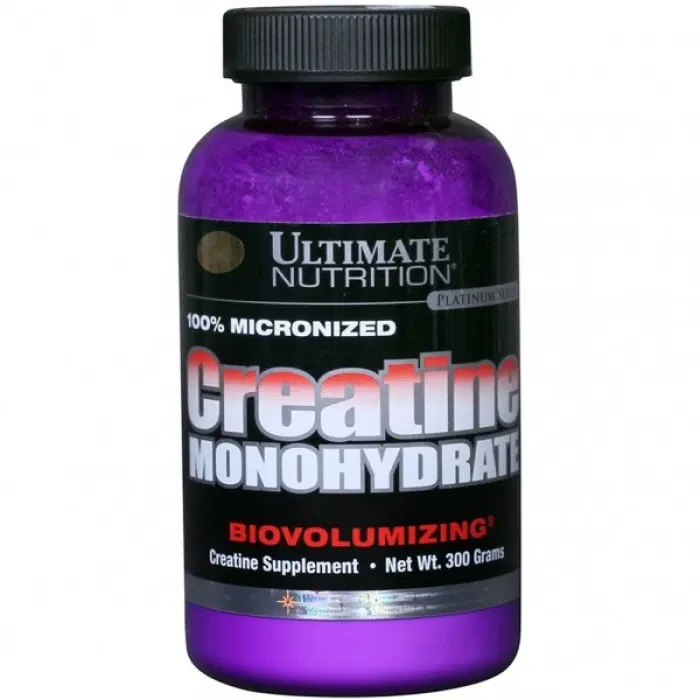
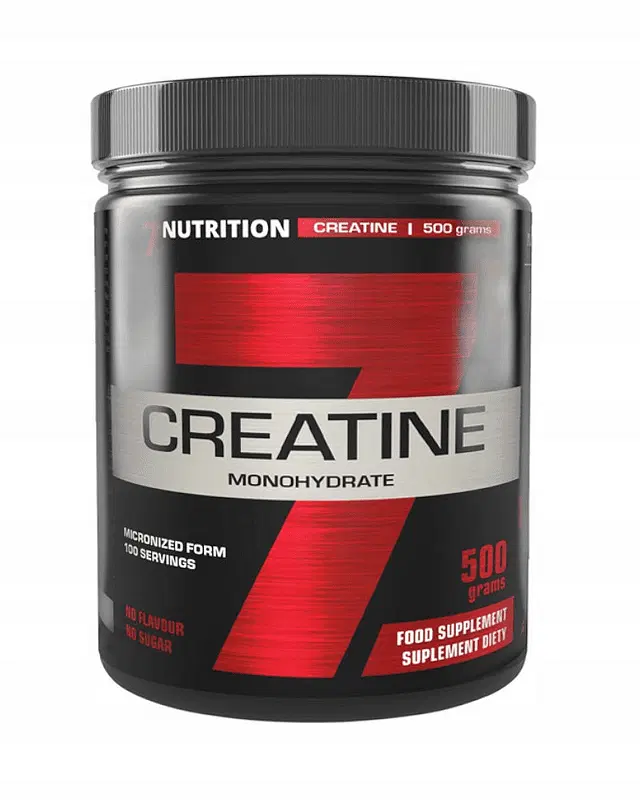
Frequently asked questions
When is the best time to take creatine - before or after a workout?
The most effective time is immediately after a workout, combined with fast-digesting carbohydrates and protein to accelerate absorption. Taking it before a workout also works, but most studies give a slight edge to post-workout intake for maximum recovery and growth.
How many grams of creatine monohydrate should I take per day?
The standard maintenance dose is 3-5 grams daily. This dose is completely sufficient to keep muscle levels saturated once they are filled. Taking more than 5 grams daily in the long term shows no additional benefits.
Is there a link between creatine and hair loss?
Concerns about hair loss come from a single 2009 study that has not been confirmed by subsequent research. To date, there is no solid scientific evidence that creatine directly causes hair loss. For the vast majority of people, this is not a factor.
Can you drink alcohol with creatine?
The combination is not recommended, as alcohol has a dehydrating effect that counteracts creatine's action. Creatine requires good hydration to be effective, and alcohol interferes with this process and can reduce the benefits of supplementation.
Which creatine is better - monohydrate or another form?
Creatine monohydrate is the gold standard – the most researched, most affordable, and with proven effectiveness. Despite marketing, newer and more expensive forms like kre-alkalyn or ethyl ester do not show significant advantages in real-world conditions according to independent studies.
How long after stopping creatine will I lose the effect?
Creatine levels in the muscles return to their baseline values in about 4 to 6 weeks after stopping intake. You will not lose the actual muscle mass you've built, but you may notice a slight drop in strength and volume due to reduced water retention in the muscles.
Is creatine suitable for gaining mass for beginners?
Yes, creatine is extremely effective and safe for beginners who train regularly. It helps increase strength, which allows for heavier workouts and faster muscle growth. Start with a dose of 3-5 grams per day.
Will I feel the effects of creatine if I don't do a loading phase?
Yes, absolutely, but it will take longer. Without loading, your muscles will become fully saturated with creatine in about 3-4 weeks, instead of 5-7 days. The final effect on strength and performance will be the same, it's just reached more gradually.