L-Arginine
Learn what L-Arginine is, how it works, what its benefits are, and how to take it correctly. Expert analysis from SportZone.
What is L-Arginine and why is it so important for sports nutrition?
L-Arginine is a semi-essential amino acid that plays a key role in the synthesis of nitric oxide (NO) in the body. It is important for numerous physiological processes, including blood circulation, immune function, and hormonal regulation.⚡ L-Arginine in brief
- Type: Amino acid
- Best for: Improving blood circulation and athletic performance
- Timing: 30-60 minutes before training or in the evening before bed
- Daily dose: 3-6 grams
- Main benefit: Supports nitric oxide production, which dilates blood vessels and improves oxygen delivery to muscles.
Explanation in simple terms
Imagine L-Arginine as a "highway builder" in your body. It helps to widen your blood vessels, which is like adding more lanes to a highway. This allows more blood (with oxygen and nutrients) to reach your muscles faster, and waste products to be removed more efficiently. This leads to better "pumping" during workouts and faster recovery.
What is L-Arginine?
L-Arginine is an alpha-amino acid with the chemical formula C6H14N4O2, classified as a semi-essential amino acid because it can be synthesized endogenously, but under certain physiological conditions (e.g., stress, growth, illness), endogenous synthesis is insufficient to meet the body's needs. It serves as the primary substrate for the enzyme nitric oxide synthase (NOS), which catalyzes the production of nitric oxide (NO) – a potent endogenous vasodilator and signaling mediator. It is also involved in protein synthesis, ammonia detoxification via the urea cycle, and modulation of the immune response.
What are the main mechanisms of action of L-Arginine in an athlete's body for performance enhancement?
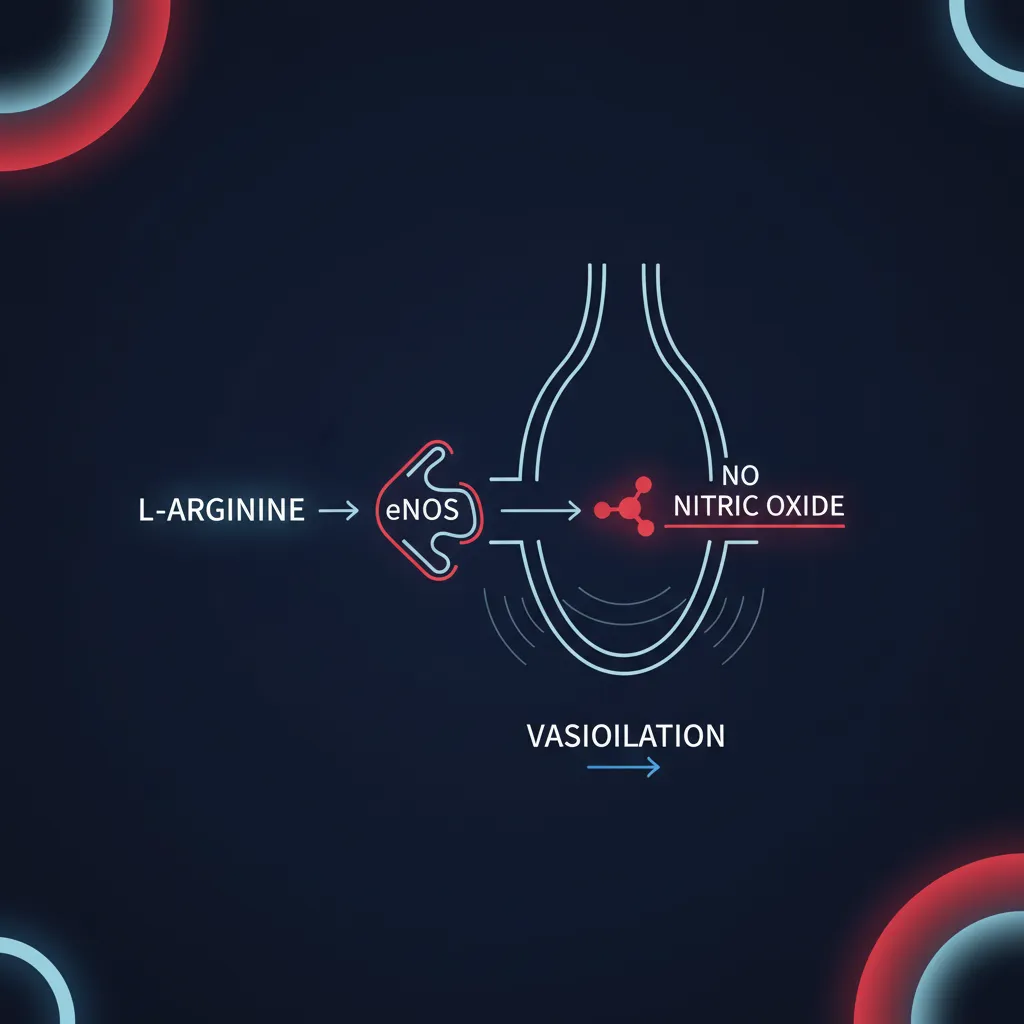
The primary mechanism of action of L-Arginine lies in its role as a precursor to nitric oxide (NO). In the body, the enzyme nitric oxide synthase (NOS) converts L-Arginine into NO. Nitric oxide is a potent endogenous vasodilator, meaning it causes relaxation of the smooth muscles in the walls of blood vessels. This leads to the dilation of arteries and capillaries, improving blood flow to various tissues and organs, including muscles during physical activity. Increased blood supply ensures more efficient transport of oxygen, nutrients (such as glucose and amino acids), and hormones, while simultaneously facilitating the removal of metabolic waste products like lactate and ammonia. In addition to its role in NO synthesis, L-Arginine participates in other key metabolic pathways. It is an integral part of the urea cycle, where it helps in the detoxification of ammonia – a toxic byproduct of protein metabolism. This process is particularly important for athletes, as intense training increases protein breakdown and consequently ammonia production. By supporting the urea cycle, L-Arginine can reduce fatigue and improve recovery. Furthermore, L-Arginine is a precursor to other important biomolecules such as creatine and polyamines (spermine, spermidine, putrescine), which are essential for cell growth, differentiation, and repair. It also has a modulating effect on the immune system and can influence the release of certain hormones, including growth hormone and insulin. This multifaceted functionality makes it a valuable supplement not only for athletic performance but also for overall health and well-being.What specific benefits does regular L-Arginine intake bring to athletic performance?
L-Arginine intake can offer a range of benefits, especially for actively training individuals and those aiming to optimize their health: * Improved "pumping" and vascularity: As a precursor to nitric oxide (NO), L-Arginine induces vasodilation (widening of blood vessels). This leads to increased blood flow to the muscles during training, which is often felt as a "pump" and enhances visual vascularity. * Optimized nutrient transport: Better blood circulation means more oxygen, glucose, amino acids, and other nutrients reach the working muscles. This can improve endurance, reduce fatigue, and support energy production during intense physical exertion. * Accelerated recovery: By facilitating the removal of metabolic waste products like ammonia and lactate, and through more efficient delivery of recovery nutrients, L-Arginine can shorten post-workout recovery time and reduce muscle soreness. * Immune system support: L-Arginine plays an important role in immune function by supporting the production of T-cells and other immune components. This can be particularly beneficial for athletes whose immune systems may be compromised by heavy training. * Growth hormone potential: Studies suggest that L-Arginine may stimulate the secretion of growth hormone (GH), especially when taken before sleep. GH plays a key role in muscle growth, repair, and fat metabolism. * Cardiovascular health support: By improving endothelial function and regulating blood pressure through NO production, L-Arginine can contribute to maintaining a healthy cardiovascular system.What is the most correct way to take L-Arginine to achieve maximum benefits?
The optimal dosage and method of taking L-Arginine depend on individual goals and the supplement's form. Generally, recommended doses range from 3 to 10 grams per day. For athletic purposes, it is most commonly recommended to take 3-5 grams about 30-60 minutes before training to maximize the effects of "pumping" and improved blood flow. Some athletes prefer to take an additional dose before bed to support recovery and potential growth hormone stimulation. When combined with other supplements, L-Arginine is often included in pre-workout formulas along with creatine, beta-alanine, and citrulline. It is important to pay attention to the form of Arginine – while pure L-Arginine is effective, forms like AAKG (Arginine Alpha-Ketoglutarate) are often better absorbed and offer synergistic benefits with the keto acid, which is involved in energy metabolism. Always start with a lower dose to assess tolerance, and consult a healthcare professional if you have pre-existing conditions or are taking medications.In which cases and under what health conditions is it not recommended to take L-Arginine?
Despite its numerous benefits, there are certain conditions and circumstances where L-Arginine intake is not recommended or should be done under strict medical supervision: * Herpes simplex viruses: L-Arginine can stimulate the replication of herpes simplex viruses (causing cold sores and genital herpes) as the virus requires arginine for its multiplication. Individuals prone to frequent herpes outbreaks should avoid or use L-Arginine with caution. * Low blood pressure (hypotension): Since L-Arginine causes vasodilation and can lower blood pressure, individuals with chronic low blood pressure should take it with caution to avoid undesirable drops. * Asthma: In some cases, L-Arginine may worsen asthma symptoms in sensitive individuals. * Recent heart attack: Studies suggest that high doses of L-Arginine after a recent heart attack may be associated with an increased risk of mortality. Its use in such cases is contraindicated. * Medications: L-Arginine can interact with blood pressure medications, heart medications (nitrates), and anticoagulants (potentially increasing bleeding risk). Individuals taking such medications should consult a doctor. * Pregnancy and breastfeeding: There is insufficient research on the safety of L-Arginine during pregnancy and breastfeeding, so avoidance is recommended. * Surgical procedures: Due to its potential influence on blood pressure and coagulation, L-Arginine intake should be discontinued at least two weeks before scheduled surgery.Should you take L-Arginine?
✅ Yes, if:
- You want to improve your gym performance, as it can increase blood flow to your muscles.
- You are looking for a way to support post-workout recovery, as it can speed up the removal of metabolic waste products.
- You need support for your cardiovascular system, as it is a precursor to nitric oxide, which relaxes blood vessels.
❌ No, if:
- You suffer from herpes simplex, as it can stimulate the recurrence of the virus.
- You have low blood pressure, as it can lower it further and cause dizziness.
- You are taking medications for heart conditions or erectile dysfunction, as it can enhance their effects and lead to adverse reactions.
Who is L-Arginine NOT suitable for?
- Individuals with a history of herpes: L-Arginine can stimulate the replication of the herpes virus, leading to frequent flare-ups.
- Pregnant and breastfeeding women: There is insufficient research on the safety of L-Arginine in this group, so avoidance is recommended.
- Patients with severe cardiovascular diseases (e.g., recent heart attack): It can interact with medications and alter blood pressure undesirably.
- Individuals taking blood pressure-lowering medications or nitrates: L-Arginine also lowers blood pressure, and the combination can lead to dangerously low levels.
How to choose quality L-Arginine?
- Percentage of L-Arginine: In most cases, look for products with a high percentage of pure L-Arginine, usually at
Recommended products
Frequently asked questions
What does L-Arginine help with and why is it important for the body?
L-Arginine is an amino acid that plays a key role in the production of nitric oxide – a compound that helps to dilate blood vessels and improve blood circulation. It is important for cardiovascular health, immune function, and protein production.
Are there any side effects from taking L-Arginine?
At high doses, L-Arginine can cause mild side effects such as gastrointestinal upset (nausea, diarrhea), headache, or low blood pressure. It is important to consult a doctor before taking it, especially if you have existing health problems.
What is the recommended dose of L-Arginine and when is the best time to take it?
The recommended dose of L-Arginine varies depending on individual needs and the purpose of intake, but it is usually between 2 and 6 grams per day. It is best taken on an empty stomach or between meals for better absorption.
Can L-Arginine help with erectile dysfunction?
Yes, L-Arginine can be beneficial for erectile dysfunction as it improves nitric oxide production, leading to dilation of blood vessels in the penis and better blood flow. However, the effect may vary among individuals and it is advisable to consult a doctor.