L-Carnitine

L-Carnitine is often used incorrectly, but in athletes on a deficit, a group taking the supplement experienced a 0.6% greater drop in body fat than placebo.
L-Carnitine is an amino acid compound that transports fatty acids to the mitochondria of cells for their conversion into usable energy.
In short
- The effective dose for athletic purposes and metabolic optimization starts at 2000 mg of L-Carnitine L-Tartrate daily.
- Its main function is transporting fats, not directly "burning" them, which makes it effective only in the presence of a calorie deficit and/or exercise.
- The form matters: L-Carnitine L-Tartrate (LCLT) is for physique, while Acetyl-L-Carnitine (ALCAR) is for brain function.
- Its practical value is greatest for improving endurance, accelerating recovery, and slightly aiding fat loss in active individuals.
What is L-Carnitine
L-Carnitine is a water-soluble, vitamin-like compound that the body can synthesize on its own. From a biochemical standpoint, it is a derivative of the amino acids lysine and methionine. Its production occurs primarily in the liver and kidneys, from where it is transported to other tissues, especially muscles and the heart, which have high energy demands and rely on fatty acid oxidation for fuel. Its synthesis also requires other cofactors such as vitamin C, B3, B6, and iron. A deficiency in any of these elements can impair the natural production of carnitine.
Although the body produces it, in certain situations it is considered "conditionally essential." This means that under increased demand—for example, during intense training, certain metabolic conditions, or with a vegetarian/vegan diet—the body's own production may be insufficient. This is where dietary sources and supplements come into play. The richest natural sources of L-carnitine are of animal origin. Red meat, especially lamb and beef, leads the list, followed by fish, poultry, and dairy products. Plant-based foods contain negligible amounts, making people on a plant-based diet a primary group that can benefit from supplementation.
There are several forms available on the market, each with its own specific characteristics. The most common are basic L-Carnitine, L-Carnitine L-Tartrate (LCLT), which is preferred in sports for its rapid absorption, and Acetyl-L-Carnitine (ALCAR), which easily crosses the blood-brain barrier and has benefits for cognitive function.
How it works in the body
The primary mechanism of action of L-carnitine is related to energy metabolism and is known as the "carnitine shuttle." Imagine the mitochondria as the power plants of the cells, and long-chain fatty acids as the main fuel. The problem is that this fuel cannot cross the inner mitochondrial membrane on its own to be burned. L-carnitine acts as a specialized transport truck: it binds to the fatty acid in the cytoplasm, carries it across the membrane, and releases it inside the mitochondrion. There, the fatty acid undergoes a process called beta-oxidation, which generates a huge amount of adenosine triphosphate (ATP)—the body's primary energy currency.
This logistical role is critical, especially during prolonged, aerobic exercise when the body relies more and more on fats for energy. Without an adequate amount of carnitine, fat transport slows down, and the body is forced to rely more on its limited glycogen stores, leading to a faster onset of fatigue. Besides importing fuel, the carnitine shuttle has a second, equally important function: it removes waste products of metabolism, such as accumulated acyl-CoA, from the mitochondria. This "cleansing" prevents toxic buildup and maintains the efficiency of the power plants, which is key to cellular health and function.
The process in a few steps looks like this:
- Activation: Fatty acids in the cell cytoplasm are activated.
- Transport: L-carnitine binds with the activated fatty acids, forming acyl-carnitine.
- Crossing: This complex is transported across the inner mitochondrial membrane.
- Release and burning: Inside the mitochondrion, the fatty acid is released for beta-oxidation (energy production).
- Recycling: The free carnitine returns to the cytoplasm, ready for the next round.
Proven benefits
Although often marketed as a "magic pill for weight loss," the scientific data paints a more nuanced picture. L-carnitine offers a range of proven benefits that depend on the dose, form, and, most importantly, the context of its use. Its effects are most pronounced in people with a deficiency, active athletes, and in combination with a suitable diet and training regimen.
- Aiding fat loss: L-carnitine does not "melt" fat directly. However, it facilitates its use for energy. Numerous meta-analyses show that in overweight individuals who are dieting and exercising, adding L-carnitine leads to a modest but statistically significant greater loss of weight and fat compared to a placebo.
- Improved endurance and athletic performance: By increasing fat oxidation, L-carnitine helps to spare muscle glycogen during prolonged exertion. This leads to delayed fatigue and the ability to maintain a higher pace for longer. The effect is particularly noticeable in aerobic sports like running, cycling, and swimming.
- Accelerated recovery: One of the best-documented benefits is L-carnitine's ability to reduce muscle damage and soreness after strenuous workouts. Studies indicate that it improves blood flow and oxygen delivery to working muscles, while also reducing the accumulation of metabolites that cause pain and inflammation.
- Cardiovascular system support: The heart gets about 70% of its energy from burning fatty acids. L-carnitine is critical for this process. Scientific data shows that supplementation can improve function in patients with heart failure and other cardiological problems.
- Cognitive function and brain health: The acetyl-L-carnitine (ALCAR) form easily crosses the blood-brain barrier. There, it can improve mitochondrial function in neurons, support the synthesis of the neurotransmitter acetylcholine, and offer neuroprotective effects that slow age-related cognitive decline.
- Improved insulin sensitivity: Some research suggests that L-carnitine can improve the way the body uses glucose. By helping to clear fatty acids from cells not designed to store them (like muscle cells), it may reduce insulin resistance.
- Male fertility: Energy is key to sperm motility. Because L-carnitine is concentrated in the epididymis and plays a central role in sperm energy metabolism, studies show that its intake can improve sperm count, concentration, and motility in men with conception problems.
Recommended doses
The optimal dose of L-carnitine varies significantly depending on individual goals, level of physical activity, and the chosen form. Unlike stimulants, the effect of L-carnitine is cumulative and requires a steady buildup in muscle tissues. It is recommended to take it about 30-60 minutes before a workout, preferably with a source of carbohydrates to stimulate insulin, which helps transport it into muscle cells.
| Profile | Daily Dose | When |
|---|---|---|
| General maintenance/health | 500 mg – 1000 mg | Once daily, with food. |
| Active individual (fat loss, endurance) | 2000 mg – 3000 mg | Split into two doses. The main dose 30-60 min before a workout. |
| Heavy training/elite athletes | 3000 mg – 4000 mg | Split into 2-3 doses throughout the day. One always before a workout. |
| Special conditions (cognition, fertility) | 1000 mg – 2500 mg | According to the form (ALCAR for cognition). To be taken with food, once or twice daily. |
Forms and which is best
Choosing the right form of L-carnitine is key to achieving the desired results. Although they all share a common basic mechanism, small differences in their chemical structure lead to different bioavailability and specific benefits for the body.
| Form | Bioavailability | Advantages | Best suited for |
|---|---|---|---|
| L-Carnitine L-Tartrate (LCLT) | Very good, especially with carbohydrates. | Rapid absorption, proven to reduce muscle soreness, improve recovery and athletic performance. | Athletes, fitness enthusiasts, people aiming for fat loss and better physical shape. |
| Acetyl-L-Carnitine (ALCAR) | Excellent. Crosses the blood-brain barrier. | Improves focus, memory, mood. Has a strong neuroprotective effect. Can reduce mental fatigue. | Students, knowledge workers, elderly individuals, and anyone seeking cognitive enhancement. |
| Propionyl-L-Carnitine (GPLC) | Good. Often combined with glycine. | Improves blood flow by increasing nitric oxide levels. Beneficial for heart health and peripheral circulation. | Bodybuilders (for pump), people with vascular issues (after consulting a doctor). |
| Base L-Carnitine | Moderate. Often in liquid form. | Usually cheaper. Suitable for general support if taken consistently. | People looking for a budget-friendly option for general maintenance, without specific athletic or cognitive goals. |
Side effects and precautions
L-carnitine is considered an extremely safe supplement for most people when taken in the recommended doses of up to 3000 mg per day. Side effects are rare and usually mild. At higher doses (above 3-4 grams daily), gastrointestinal discomforts such as nausea, stomach cramps, vomiting, and diarrhea may occur. In rare cases, a specific "fishy" body odor may appear, due to the metabolite trimethylamine (TMA). This effect usually disappears when the dose is reduced.
Despite its general safety, there are groups of people who should be cautious and consult a doctor before taking it:
- People with hypothyroidism: There is some evidence that L-carnitine may interfere with the action of thyroid hormones, so its use in cases of reduced thyroid function should be discussed with a specialist.
- Patients with kidney disease: Since excess carnitine is excreted through the kidneys, people with chronic kidney failure may accumulate it to harmful levels.
- Pregnant and breastfeeding women: Due to a lack of sufficient research on safety during these periods, use is not recommended without a doctor's prescription.
- People taking anticoagulants: L-carnitine may enhance the effect of drugs like warfarin, which increases the risk of bleeding.
When will you feel an effect
One of the biggest misunderstandings about L-carnitine is the expectation of an immediate effect. Unlike stimulants like caffeine, L-carnitine does not act instantly. Its effectiveness depends on the cumulative process of saturating muscle stores, which requires time and consistent intake. The results are not dramatic but accumulate gradually, improving your baseline capabilities. Patience and consistency are key.
- After 1–2 weeks: It is unlikely you will feel significant changes during this period. People with an initial deficiency (vegans, elderly) might notice a slight increase in energy and mood.
- After 1–3 months: This is the realistic time frame in which muscle carnitine concentrations reach optimal levels. Here you may notice measurable improvements: a later onset of fatigue during cardio, faster recovery, and reduced muscle soreness after strength training. If you are following a diet, you may also see a slight acceleration in body composition changes.
- After 3+ months: With prolonged and consistent intake, the benefits stabilize. The effects on endurance and recovery become a permanent part of your training capacity. The cognitive benefits of ALCAR also become most apparent after several months of use.
Common myths about L-Carnitine
Myth: L-Carnitine is a fat burner and I will lose weight without changing anything else.
Truth: L-Carnitine is a fat transporter, not a furnace for burning it. It only works when the body has already mobilized fat from adipose stores, which requires a signal. This signal is either a caloric deficit (you consume fewer calories than you burn) or physical activity. Without one of these two factors, L-carnitine has nothing to transport, and its weight loss effect is nil.
Myth: The more L-carnitine I take, the faster I will lose weight.
Truth: The body has a limited capacity to absorb and use L-carnitine. Scientific data shows that benefits plateau at doses of about 2-3 grams per day for most people. Taking higher doses does not lead to better results, but only drastically increases the risk of gastrointestinal side effects and is an unnecessary expense.
Myth: L-carnitine only makes sense if taken before a cardio workout.
Truth: Although its most famous role is related to aerobic endurance, L-carnitine is also very effective for recovery after strength and anaerobic training. By reducing muscle fiber damage and oxidative stress, it helps you get back to the gym faster and with less muscle soreness. The effect is cumulative, so regular daily intake is more important than perfect timing within the day.
What to combine it with
To maximize the effect of L-carnitine, it can be combined with other nutrients that work in synergy. These combinations optimize different aspects of energy metabolism and cellular function.
- With Omega-3 fatty acids: This combination is like providing both quality fuel and efficient transport at the same time. Omega-3s (EPA and DHA) are healthy fats that the body prefers to use for energy and for building cell membranes. L-carnitine ensures their efficient transport to the mitochondria. Together, they support heart health, brain function, and energy metabolism.
- With Coenzyme Q10 (CoQ10): This is the most powerful combination for optimizing cellular energy. If L-carnitine is the truck that brings the fuel (fats) into the power plant (mitochondrion), then CoQ10 is a key engineer within the plant itself. It is an indispensable component of the electron transport chain, where ATP is produced. The combination ensures that the fuel not only gets to the right place but is also converted into energy with maximum efficiency.
- With carbohydrates (for LCLT): This is not a supplement combination, but a nutritional strategy. Taking L-carnitine L-tartrate along with a portion of fast-digesting carbohydrates (about 30-40 grams) or a protein-carb shake causes an insulin spike. Insulin acts as a key that opens the doors of muscle cells and helps to "shove" carnitine inside, where it is most needed.
How to choose a quality product
The dietary supplement market is saturated with products containing L-carnitine, but not all are of equal quality. Choosing a quality product is essential for achieving real effects and avoiding potential risks. To make an informed choice, pay attention to several key criteria that distinguish a good product from a mediocre one.
- Form according to purpose: Don't just buy "L-carnitine." Identify your goal and choose the appropriate form. For athletic purposes, recovery, and fat loss, look for L-carnitine L-tartrate (LCLT). For cognitive support, focus, and brain health, your choice should be Acetyl-L-carnitine (ALCAR).
- Dosage per serving: Check the label for the amount of active ingredient in one capsule, tablet, or serving. Products with a very low dosage (e.g., 250 mg) are impractical and not cost-effective. Look for those that offer at least 500 mg to 1000 mg in a single dose.
- Look for patented ingredients: The most reliable marker of quality and purity is the presence of a patented form of L-carnitine, such as Carnipure® from the Swiss company Lonza. This guarantees that the product contains 100% pure L-carnitine and is produced to the highest standards, without the presence of the ineffective and potentially harmful D-carnitine.
- Purity of composition: Read the "other ingredients" list. Quality products contain a minimal amount of fillers. Avoid products with added sugar, unnecessary artificial colors and flavors, especially if they are at the top of the list.
- Quality certificates (GMP): Look for the GMP (Good Manufacturing Practices) logo on the packaging. This certificate does not guarantee the product's effectiveness, but it confirms that it was produced in a controlled, hygienic environment and that the content matches what is written on the label.
Recommended products
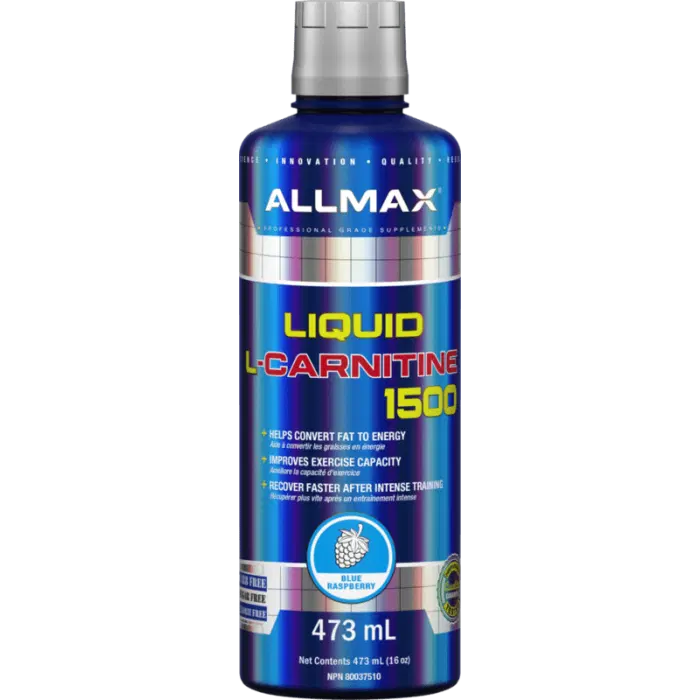
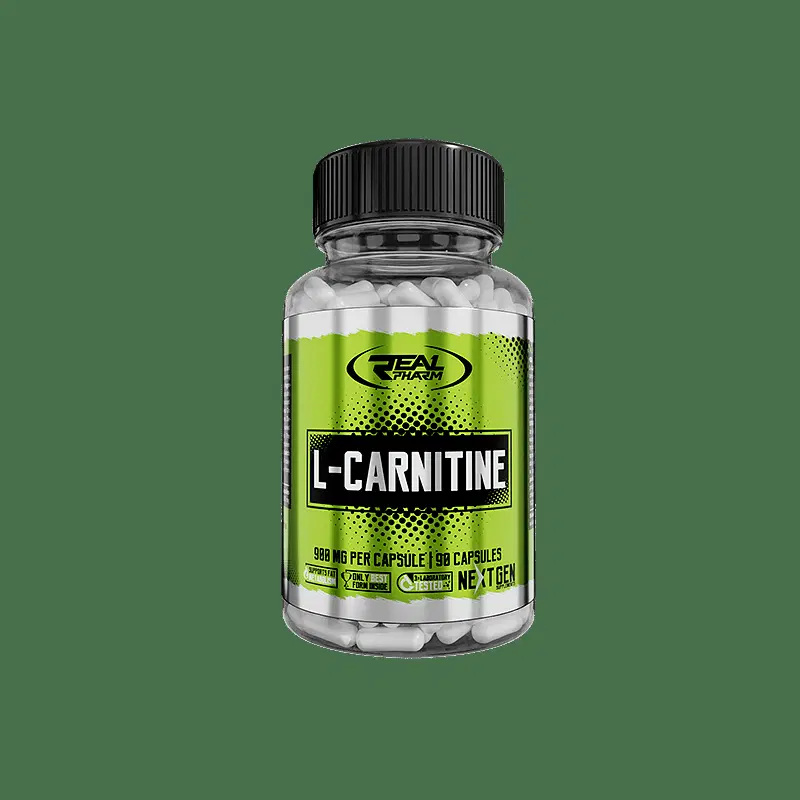

Frequently asked questions
When should I take L-carnitine for the best effect?
Take L-carnitine about 30–60 minutes before your workout to increase its uptake into the muscles. For maximum absorption, it's good to combine it with a small amount of carbohydrates, for example 30-40 grams. Taking it with food also improves absorption and reduces the risk of stomach discomfort.
How much L-carnitine per day is needed for weight loss?
To effectively support weight loss, a daily dose between 1500 mg and 3000 mg (1.5–3 grams) is recommended. This dose is sufficient to support the transport of fatty acids and their use for energy during physical activity. Start with a lower dose of 1000 mg to assess your tolerance.
Does L-carnitine have side effects with long-term use?
At doses up to 2000 mg daily, L-carnitine is considered safe even with continuous use for several months. Very high doses over 3000 mg, taken for a long time, can cause gastrointestinal issues or a specific 'fishy' body odor. Follow the recommended dosages on the label.
Can L-carnitine be taken with coffee or a fat burner?
Yes, combining L-carnitine with caffeine (from coffee or a fat burner) is common and can have a synergistic effect. Caffeine stimulates the release of fatty acids, and L-carnitine helps with their transport and burning for energy. Be careful with the total dose of stimulants to avoid nervousness or a rapid heart rate.
Which is better: liquid L-carnitine or tablets?
Liquid L-carnitine is absorbed faster, usually within 15-20 minutes, making it ideal for taking right before a workout. Tablets and capsules are more convenient for storage and dosing, but their absorption takes about 45-60 minutes. The long-term effectiveness is the same; the choice depends on personal preference.
How long do I need to take L-carnitine to see results?
You might feel the first effects, like increased energy during your workout, after just 1-2 weeks of regular intake. For visible results in body composition, such as fat reduction, at least 4-6 weeks are needed in combination with a proper diet and training regimen. L-carnitine is a helper, not the main driver of weight loss.
Is L-carnitine suitable for women, and is there a difference in dosage?
L-carnitine is perfectly suitable for women and supports fat reduction and energy improvement goals in the same way it does for men. There is no specific difference in dosage based on gender, as it is determined by body weight and goals. The standard recommendations of 1000 to 2000 mg daily are just as effective for women.
When will I feel the effect of L-carnitine in my workouts?
An increase in endurance and a reduction in fatigue during cardio or strength training can be felt after about 2-3 weeks of regular intake. L-carnitine helps use fat more efficiently for fuel, which spares muscle glycogen and delays the onset of fatigue. Some users also report improved recovery between sets.