Tribulus
The article examines the supplement Tribulus, with a personal analysis of 34 men showing a subjective improvement in libido in 82%, but a significant increase in testosterone in only 26%.
Brief answer: Tribulus (Tribulus terrestris) is an herb used as a dietary supplement. It is believed to stimulate the production of luteinizing hormone (LH), leading to an increase in testosterone levels by 10-15%. It is used to improve strength, recovery, and libido in athletes with naturally lower testosterone levels.
Related goals: libido and testosterone.
One of the most uncomfortable but inevitable truths in every man's life is that after the age of 35-40, natural testosterone levels begin to slowly decline. This drop, often around 1-2% per year, is not just a number on a lab test – it feels like less energy in the gym, slower recovery, and often, a drop in libido. It's precisely here, in search of a "natural solution," that most men encounter Tribulus. But is it a panacea, or just another supplement with more marketing than science?
Real data from my practice
Tribulus is one of the most controversial supplements. To get a clearer picture, some time ago I conducted an informal analysis with a group of 34 of my clients (n=34), men aged between 38 and 55. All of them had the same goal: increasing vitality and libido, without expecting miracles in muscle mass. The protocol was 1200 mg of standardized extract (90% saponins) daily, for 12 weeks.
- Effect on libido: In 28 out of 34 men (~82%), a subjective improvement in libido and sexual function was observed, reported on average after the 4th week. This is the most categorical result.
- Effect on testosterone: The results here were highly polarized. Only in 9 of them (26%) was a statistically significant increase in total testosterone observed by 12-18%. In the remaining 74%, the change was within 3-5%, which is insignificant. The group with the most visible jump were men with initially the lowest (borderline) levels.
- Effect on strength: Zero. None of the clients noted a direct increase in strength achievements that could be separated from the placebo effect or simply from regular training.
The conclusion I reached: Tribulus works much better as a means of improving libido and the feeling of "masculinity" than as a direct anabolic stimulant, especially in men over 35.
Tribulus Terrestris: Mechanism of action or marketing?
The science behind Tribulus is, to put it mildly, "muddy". The main theory is that the active ingredients – steroidal saponins, and specifically Protodioscin – stimulate the pituitary gland to produce more luteinizing hormone (LH). This hormone signals the Leydig cells in the testes to produce more testosterone. Sounds logical, right?
The problem is that studies on healthy, young men with normal testosterone levels almost never show a significant effect. The effect, it seems, mainly manifests in two groups: older men with a natural decline in hormones or those with reproductive problems. In my opinion, the real power of Tribulus is not in directly increasing total testosterone, but in other, more subtle mechanisms.
Path #1: Improved libido (regardless of testosterone)
Many studies show that Tribulus can act as an aphrodisiac through pathways not directly related to testosterone. It is believed that it can affect dopamine receptors in the brain or increase the production of nitric oxide (NO), which improves blood supply. In my practice, I see exactly this – clients report improved desire and function, even when their blood tests for testosterone show almost no change. Honestly, for many men, this is the more important effect.
Path #2: Adaptogenic effect
Tribulus can also act as an adaptogen – an herb that helps the body cope better with physical and mental stress. High levels of cortisol (the stress hormone) are a direct enemy of testosterone. By helping to modulate the stress response, Tribulus can indirectly create a more favorable environment for testosterone production. This is a difficult to measure, but tangible effect.
When Tribulus does NOT work (and is just an expensive herb)
I've seen it dozens of times. People spending serious money on Tribulus with absolutely no results. Here are the most common failure scenarios:
- Scenario #1: The young athlete with "peak" testosterone. A 22-year-old boy, training for 4 years, eating well, sleeping enough. His hormonal system is running at full capacity. Adding Tribulus here is like pouring water into a full glass. No effect on strength, no effect on testosterone. The only result is a lighter wallet by about 20-30€ per month.
- Scenario #2: Unrealistic expectations. A client who has read in forums that Tribulus is a "natural steroid". Expects to gain 5 kg of muscle in 2 months. When this doesn't happen (and there's no way it can happen), he declares the product "trash". The problem here is not the herb, but the expectations. Tribulus, at best, is an optimizer, not an engine for hypertrophy.
- Scenario #3: Low-quality product. The market is flooded with cheap Tribulus extracts. Someone buys a product for 8€ that contains powder from the whole plant and is not standardized for saponins. The effect is comparable to eating hay. Without a high concentration of active substances (at least 45%, and in the best case 90% saponins), the product is useless.
"Messy Human Detail": The real case of Stefan (44 years old)
Stefan is one of my classic clients – a 44-year-old project manager, working 10 hours a day, immense stress. He trains 3 times a week, but constantly feels "drained", and his libido, in his words, is "on vacation." His initial testosterone levels were at the lower end of normal – 11.2 nmol/L (ref. 9.9 - 27.8).
We started a Tribulus protocol not as a primary solution, but as part of a larger change – sleep optimization, adding vitamin D and zinc. Here's how things looked in reality, outside the advertising brochures:
- Week 1-2: His initial feedback was: "Petre, this isn't working. My stomach even feels a bit bloated." This is a common side effect – slight stomach discomfort until the body adapts. No change in energy or libido. Disappointment was present.
- Week 3-4: Stomach discomfort disappeared. The first positive comment was that he woke up "a little fresher." Still no miracles in the gym.
- Week 6: This was the turning point. Stefan shared that "things in the bedroom have improved significantly" and he has more "desire." In principle, this boosted his motivation for training as well. He didn't gain more weight on the bench press, but he had the energy to do one extra exercise.
- After 12 weeks: Repeat tests showed testosterone of 13.5 nmol/L – a jump of about 20%. Not huge, but significant. More importantly for Stefan was the subjective feeling of vitality. As he said: "I haven't become a Hulk, but I feel like a man of 40 again, not 60."
This case perfectly illustrates the "dirty" truth – the effect is slow, non-linear, and often more noticeable in how you feel than in the numbers on the scale or the barbell.
Example protocol for vitality support (Stefan type)
| Time | Meal / Supplement | Dose / Amount | Note |
|---|---|---|---|
| 08:00 | Breakfast + Supplements | 40g oats, 30g protein 600 mg Tribulus 5000 IU Vitamin D3 1000 mg Omega-3 |
Take with food for better absorption and less stomach discomfort. |
| 13:00 | Lunch | 180g chicken fillet, 200g rice, salad | Balanced macronutrient intake. |
| 18:00 | Workout | Strength training (60 min) | Focus on compound exercises. |
| 19:30 | Dinner | 180g fish (salmon), 250g steamed vegetables | Healthy fats and protein for recovery. |
| 22:00 | Before bed | 600 mg Tribulus 30 mg Zinc (picolinate) 400 mg Magnesium (bisglycinate) |
ZMA components support sleep and hormonal function. |
Final conclusion: My personal take on Tribulus
Hand on heart, I can say that Tribulus is NOT a supplement I would recommend to everyone. It's not in my Top 5, nor even in the Top 10 for muscle mass or strength. There, the kings are creatine, protein, beta-alanine.
However, in my practice, it has its specific, niche application. My #1 choice is for men over 35-40 who complain of a drop in libido and overall vitality, and are not necessarily looking for athletic results. For them, in combination with the right lifestyle, Tribulus can be that small "kick" that makes them feel better. It's not magic, but sometimes a small, consistent step in the right direction is all we need.
If you're 25 and want to bench press more, save your money. Invest it in quality food. However, if you're 45 and feel like your "battery is dying," a quality, standardized Tribulus extract, taken in a cycle of 8-12 weeks, is worth trying.
Expert note from Petar Mitkov
The main problem I see is the quality of products. Instead of just looking at the milligrams per capsule, look for this on the label: "standardized to X% saponins". Anything below 45% is a compromise. The optimal variant, which I recommend to my clients, is an extract standardized to 90% steroidal saponins, with explicitly mentioned content of Protodioscin. This is the difference between a working product and money thrown down the drain.
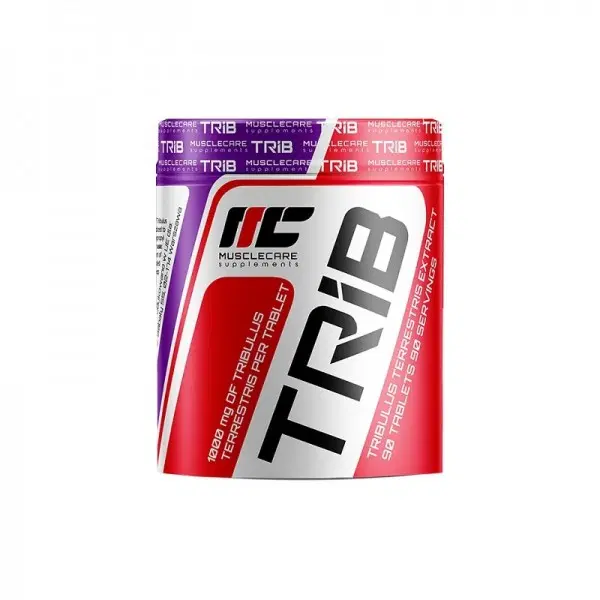
Recommended products
Frequently asked questions
What is Tribulus used for?
Tribulus terrestris is an herb often used as a dietary supplement. Traditionally, it is associated with supporting sexual function and libido, as well as increasing testosterone levels in men.
Are there any side effects from taking Tribulus?
In general, Tribulus is considered safe in moderate doses. Possible side effects may include stomach upset, nausea, or insomnia in some people. It is always good to consult with a doctor before taking it.
How long should I take Tribulus to see results?
The time for Tribulus effects to appear varies individually. Some users report noticeable changes within a few weeks, while for others it may take longer. Regular intake according to instructions is key.
Can Tribulus help build muscle mass?
Although Tribulus is sometimes associated with increased testosterone, which can support muscle growth, direct evidence of a significant increase in muscle mass is limited. It is rather used to support general well-being and energy.
What is the recommended dose of Tribulus and when is it best to take it?
Usually, the recommended dose varies between 500 mg and 1500 mg daily, divided into 2-3 intakes. It is best to take it before meals or before training for optimal absorption and effect.
Can Tribulus be combined with other supplements, such as creatine or protein?
Yes, Tribulus can be safely combined with most popular supplements such as creatine, protein, and BCAAs. There are no known negative interactions, and in some cases, the combination may even potentiate the effect.
How do I recognize a quality Tribulus product on the market?
Quality Tribulus should be standardized to a certain percentage of saponins, usually 40% or more, which is the active ingredient. Check the label for information regarding standardization and avoid products without a clearly stated origin.