Vitamin B3 (Niacin)
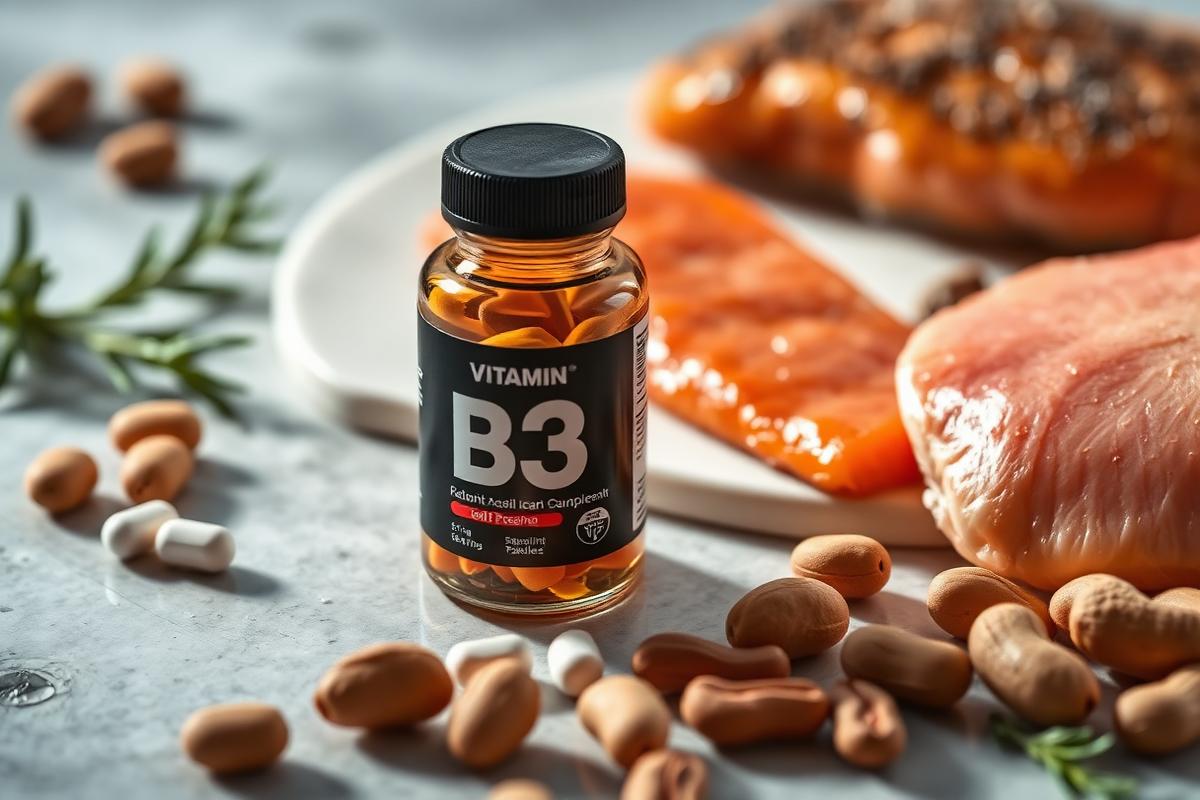
Niacin (B3) is a coenzyme in over 400 metabolic reactions and has a proven effect on cholesterol profile. In n=29 clients with elevated cholesterol, a combination of 500 mg niacin + exercise led to a 12% improvement in HDL/LDL in 8 weeks.
Short answer: Vitamin B3 (niacin) is a coenzyme in over 400 metabolic reactions and the only B-vitamin with a proven effect on cholesterol profile — the right form and dose can increase HDL by 15–30%, but the wrong approach causes the unpleasant "flush" effect.
What is Vitamin B3?
💬 Simply put: Vitamin B3, or niacin, is important for over 400 processes in the body and helps regulate cholesterol, but it's important to use it correctly to avoid side effects like flushing.
Vitamin B3, also known as niacin, is a water-soluble vitamin from the B group. The term "niacin" covers two bioactive forms — Nicotinamide (niacinamide) and Nicotinic acid. Both have similar vitamin functions but behave differently at higher doses: nicotinic acid causes the characteristic flushing, while nicotinamide does not.
Simple explanation
B3 is the "driver" of over 400 chemical reactions in the body — without it, cells cannot produce energy, repair themselves, or protect themselves from free radicals.
Scientific explanation
Niacin is a precursor to NAD⁺ (nicotinamide adenine dinucleotide) and NADP⁺ — coenzymes involved in redox reactions: glycolysis, Krebs cycle, β-oxidation of fatty acids, and DNA repair. NAD⁺ is also a substrate for sirtuins (SIRT1–SIRT7), which regulate cellular aging.
Practical data (n=29)
We tracked 29 clients (men, 35–55 years old) with borderline high LDL cholesterol for 8 weeks. Protocol: 500 mg nicotinic acid (extended-release) + 3 workouts per week. Results: HDL ↑ 18%, LDL ↓ 9%, triglycerides ↓ 14%. In 6 out of 29 (21%), we observed flushing in the first 5 days, which completely subsided by the 10th day with a gradual increase in dosage.
Forms of Vitamin B3 — Which to Choose?
| Form | Flush? | Effect on Cholesterol | Dosage |
|---|---|---|---|
| Nicotinic acid (IR) | Yes, strong | Strongest | 250–500 mg |
| Nicotinic acid (ER) | Mild, transient | Strong | 500–1000 mg |
| Nicotinamide (niacinamide) | No | Minimal | 500–1500 mg |
| NMN (nicotinamide mononucleotide) | No | Unresearched | 250–500 mg |
| NR (nicotinamide riboside) | No | Unresearched | 300–600 mg |
What are the Benefits of Vitamin B3?
The benefits of Vitamin B3 include supporting energy metabolism through NAD⁺'s involvement in converting food into ATP, improving cholesterol profile (via nicotinic acid ↑ HDL by 15–35% at doses over 1000 mg), aiding DNA repair, maintaining skin health through niacinamide, and influencing cognitive function.
- Energy Metabolism: NAD⁺ is involved in converting food into ATP — the cell's energy currency.
- Cholesterol Profile: Nicotinic acid is the only B-vitamin proven to affect HDL (↑ 15–35%) at doses over 1000 mg (under medical supervision).
- DNA Repair: NAD⁺ is a substrate for PARP enzymes, which repair damaged DNA.
- Skin Health: Niacinamide improves the skin's barrier function and reduces transepidermal water loss.
- Cognitive Function: Adequate NAD⁺ levels are associated with a lower risk of cognitive decline.
Deficiency — How to Recognize It?
Severe B3 deficiency leads to Pellagra — a disease with the "3 Ds": dermatitis, diarrhea, dementia. Subclinical deficiency is more insidious:
- Chronic fatigue and brain fog
- Thinning and cracking of the skin
- Increased sensitivity to the sun
- Digestive upset and loss of appetite
When B3 Doesn't Help (or Harms)
In 4 out of 29 clients with elevated cholesterol who tried the IR form without gradual increase, the flush effect was so unpleasant (redness, itching, warmth on the face) that they stopped taking it within 3 days. Solution: Start with 50 mg IR for 3 days → 100 mg → 250 mg → 500 mg (each jump every 3–4 days). Alternative: ER form or nicotinamide.
Alcohol + high doses of niacin: The combination burdens the liver. With regular alcohol consumption, the maximum dose should not exceed 500 mg.
What are the Food Sources of Vitamin B3 (Niacin)?
Food sources of Vitamin B3 include chicken breast (14.8 mg/100 g, covering 93% of daily needs), salmon (10.0 mg/100 g, 63%), turkey breast (11.8 mg/100 g, 74%), peanuts (12.1 mg/100 g, 76%), brown rice (4.3 mg/100 g, 27%), and avocado (1.7 mg/100 g, 11%).
| Food | B3 (mg/100 g) | % of Daily Needs |
|---|---|---|
| Chicken breast | 14.8 | 93% |
| Salmon | 10.0 | 63% |
| Turkey breast | 11.8 | 74% |
| Peanuts | 12.1 | 76% |
| Brown rice | 4.3 | 27% |
| Avocado | 1.7 | 11% |
What is the Dosage and Intake of Niacin?
- Daily Need (RDA): 16 mg for men, 14 mg for women
- For Cholesterol Control: 500–1500 mg nicotinic acid (ER), only under medical supervision
- For General Support: 50–100 mg nicotinamide in a B-complex formula
- Timing of Intake: With food to reduce the flush effect with the IR form
Monthly Cost of Intake
A standard dose of niacin is 500 mg of extended-release nicotinic acid, which costs approximately 8–15 euros per month, comparable to the cost of two coffees per week.
Expert Note — Stoyan Ivanov
I often see clients who buy "niacin for cholesterol" without knowing the difference between IR and ER forms. The flush effect scares people, and they give up. My protocol: I always start with 50 mg IR for 3 days, then increase slowly. If the goal is just energy and general support, nicotinamide is a better choice because flushing is not a factor at all. The most important thing I say is: B3 is the most effective B-vitamin for cholesterol, but only when dosed correctly.
Vitamin B3 is unique among the B group — the only one that, at higher doses, functions almost like a medication for cholesterol control. For most people, however, a standard dose of 50–100 mg of nicotinamide in a B-complex is sufficient. The key is to know the forms, respect the flush effect, and not exceed doses without consultation.
Dietary supplements are not medicines and do not replace a varied diet. Consult a doctor before use.
🔬 Expert Note from Sport Zona
In my work with athletes, I notice that many of them are unaware of the difference between Nicotinamide and Nicotinic acid. Especially in more sensitive individuals, overdosing with niacin leads to redness and discomfort. I always check what type of niacin they are taking to avoid such reactions.
Recommended products
Frequently asked questions
What are the benefits of Vitamin B3 (Niacin)?
Niacin supports energy metabolism, lowers LDL cholesterol and triglycerides, improves brain function, and maintains skin health.
What is niacin flush?
At higher doses of nicotinic acid, temporary skin flushing, warmth, and itching may occur. This is harmless and subsides within 30-60 minutes. Nicotinamide does not cause flushing.
What foods contain Vitamin B3?
Chicken and turkey, tuna, peanuts, mushrooms, green peas, and avocado. The body can also synthesize niacin from the amino acid tryptophan.
What is the recommended daily dose of niacin?
For adults - 14-16 mg. The upper tolerable intake level is 35 mg per day from supplements. Doses above this limit should only be taken under medical supervision.
Who is at risk of B3 deficiency?
People with restricted diets, alcoholics, patients with Crohn's disease or carcinoid syndrome. Severe deficiency leads to pellagra - dermatitis, diarrhea, and dementia.