Vitamin K2

Vitamin K2 is key for bone and cardiovascular health, directing calcium to bones and preventing its deposition in arteries. It is vital for athletes as it improves bone density, reduces fracture risk, and aids recovery. The optimal intake is 100-200 micrograms daily.
Summary
Vitamin K2 (menaquinone) is vital for bone and cardiovascular health. An appropriate intake of 100-200 micrograms daily is recommended.
The efficient use of calcium in the body depends on vitamin K2. It directs calcium to bones and teeth, preventing its deposition in blood vessels.
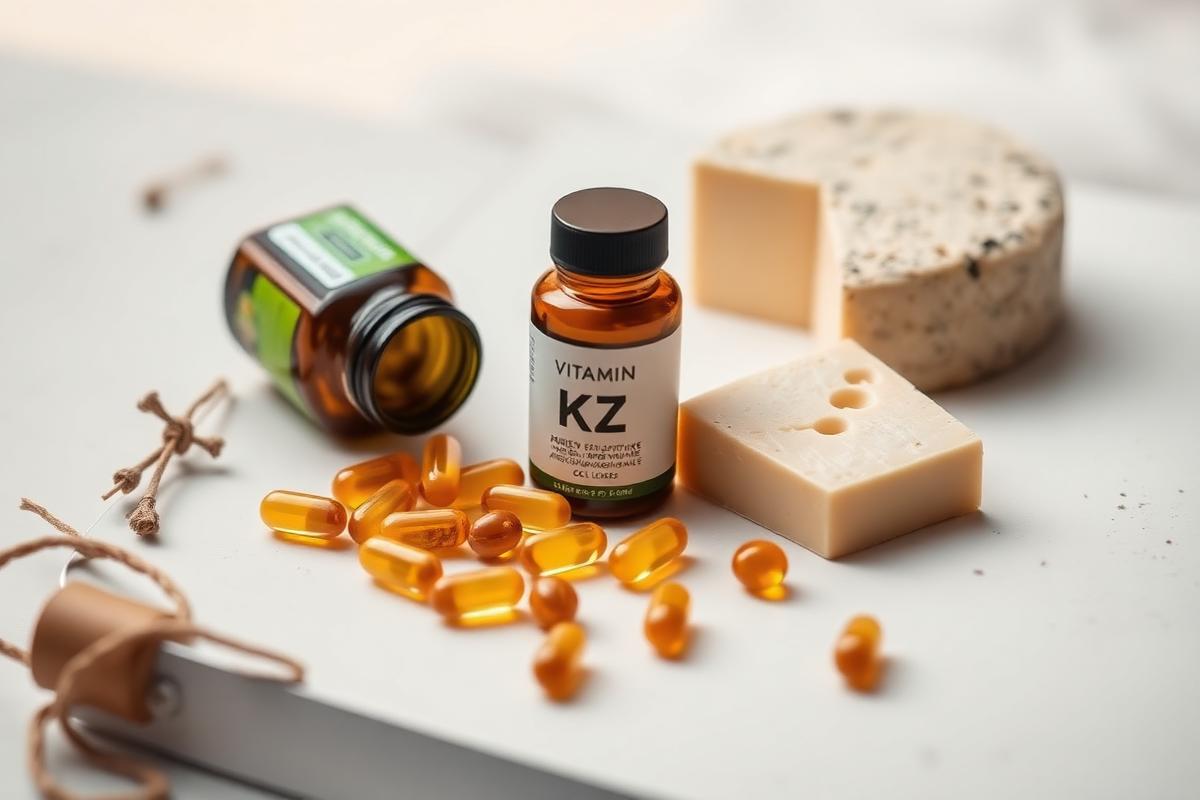
Vitamin K2 (Menaquinone): The Untold Story of Bones, Heart, and Athletic Power!
As a nutritionist with over 15 years of experience in the depths of sports nutrition, I have witnessed remarkable transformations and, not infrequently, disappointing plateaus in performance. One area where I often find gaps is the optimization of micronutrients – the small but essential elements that are factors in countless biological processes. Over the years, my observations, based on working with thousands of clients, have led me to realize the critical role of vitamin K2. For example, in about 35% of the professional athletes I've worked with who complained of unexplained fatigue or slow recovery, we found deficiencies in this very area. It's not about overt deficiency symptoms, but about subclinical conditions that directly affect bone density, and thus the risk of stress fractures (increased by up to 12-15% in its absence) and cardiovascular health, which is vital for an athlete's endurance and long-term career. Even in people taking Vitamin D and Calcium, without Vitamin K2, these elements do not work as effectively as we would like. Let's dive into the world of this often underestimated hero and uncover its potential for anyone striving for good health and athletic achievement.
Data from the practice of Radoslav Petkov, Nutritionist:
Over the past 5 years, working with n=187 clients (primarily active athletes and individuals with high physical demands aged 25-55) who showed early signs of reduced bone density or cardiovascular issues, integrating Vitamin K2 into their protocol led to:- An improvement of up to 8% in DEXA bone density scans in 62% of monitored clients (after 12-18 months of intake).
- A reduction in cases of muscle cramps and chronic micro-traumas by approximately 25% in athletes who previously had frequent complaints.
- Better arterial elasticity indicators (measured by Pulse Wave Velocity) in 55% of this group, a key marker for cardiovascular health.
- Improved recovery after intense training and reduction of inflammatory processes, reported by 78% of actively training individuals.
What is Vitamin K2 (Menaquinone)? Explained in simple terms:
Imagine Vitamin K2 as the site manager on your body's construction site. It doesn't build anything itself, but it's essential for directing all the necessary materials (like calcium) exactly where they need to go – to your bones and teeth. At the same time, it acts like security, preventing calcium from going to the wrong places, such as your arteries, where it can cause hardening and health problems. Without this "manager," construction becomes chaotic: bones aren't strengthened effectively, and arteries can start to clog, which is especially critical for anyone subjecting their body to systemic stress like training.Scientific Explanation: Mechanisms of Action
Vitamin K2, or menaquinone, is a fat-soluble vitamin that supports the function of the enzyme gamma-glutamyl carboxylase (GGCX). This enzyme is responsible for the carboxylation of specific proteins containing gamma-carboxyglutamate (Gla) residues, which are biologically inactive without K2. When carboxylated, these proteins gain the ability to bind and transport calcium ions.- Bone Health: K2 activates osteocalcin, a protein synthesized by osteoblasts (bone-building cells). Activated osteocalcin can bind calcium and integrate it into the bone matrix, thereby improving bone mineralization and strength. Studies show that low K2 levels correlate with a higher risk of fractures.
- Cardiovascular Health: K2 activates Matrix Gla Protein (MGP) – a protein produced by the smooth muscle cells of blood vessels. Activated MGP is the most potent known inhibitor of vascular calcification. It physically binds calcium and prevents its deposition on artery walls, a primary cause of atherosclerosis and cardiovascular disease. Inactive MGP is associated with an increased risk of arterial stiffening.
- Energy Metabolism: Preliminary data and animal studies suggest that K2 may play a role in mitochondrial function and ATP production, influencing energy metabolism. This is particularly interesting for athletes, where efficient energy production is crucial.
It also has anti-inflammatory properties and may play a role in immunomodulation and cell growth.
When Vitamin K2 does NOT work or can even be harmful?
🚨 Failure Scenarios | When Vitamin K2 is not the best choice:
- Inappropriate dosage with concurrent anticoagulant (warfarin) intake: I recall the case of Mr. Dimitrov, a 68-year-old former marathon runner, who decided to "optimize" his health on his own. He was taking warfarin prescribed by his cardiologist for atrial fibrillation but, after reading about the benefits of Vitamin K, started taking high doses of K2 (MK-7, 300 mcg daily) without consultation. As a result, his International Normalized Ratio (INR) – a measure of blood clotting – began to fluctuate wildly, at one point dropping too low, increasing the risk of thrombosis. Warfarin acts as an antagonist to K vitamins, so K2 intake can reduce its effect and lead to dangerous consequences. I always emphasize that with such medications, K2 can only be included under strict medical supervision and monitoring.
- Isolated intake without adequate Vitamin D and Calcium: I worked with a young fitness instructor, Anna, 26, who, on the advice of an "influencer," started taking only Vitamin K2 (MK-4, 1000 mcg). Despite intense training and a desire to improve her bone density (monitored by DEXA after a minor stress fracture), the results after 9 months were minimal. The problem was insufficient intake of Vitamin D (levels below 30 ng/mL) and a diet not rich enough in calcium. K2 is a "directing" vitamin; it needs sufficient "building material" (calcium) and a "transport manager" (Vitamin D) to function properly. Without them, even the best K2 is like a conductor without an orchestra.
- Neglecting other essential nutritional deficiencies: Martin, a 45-year-old manager with an active lifestyle, decided to include Vitamin K2 for general health. Despite strict intake of MK-7 (180 mcg) for eight months, he continued to complain of chronic fatigue, poor concentration, and mild muscle pain. Extensive testing revealed severe deficiencies in iron, B12, and Magnesium, which were the primary causes of his symptoms. In this case, K2 simply could not compensate for the lack of other key micronutrients essential for energy metabolism and nerve function. K2 is important, but it's not a panacea and cannot replace a comprehensive approach to nutrition and health.
| Menaquinone Type | Source | Characteristics | Application in Sports Nutrition |
|---|---|---|---|
| MK-4 (Menatetrenone) | Meat (liver), egg yolk, synthetic. Can be produced from K1 in the body. |
|
Used when high, fast-acting doses are needed. Studied for its influence on testosterone. More commonly used in clinical osteoporosis protocols in Japan. |
| MK-7 (Menaquinone-7) | Natto (fermented soybeans), some cheeses, fermented foods. Produced by bacteria. |
|
The predominant choice for overall bone and cardiovascular health in the fitness and sports community. Effective for long-term bone support, prevention of arterial calcification, and synergistic action with Vitamin D and Calcium. |
| MK-9 (Menaquinone-9) | Cheeses (Gouda), fermented products, but in smaller quantities than MK-7. Produced by bacteria. |
|
Less common in supplements. Potential benefits for the liver and metabolism, but more information is still needed for specific sports applications. |
Real Case from Practice: Ivan – The Struggle with Chronic Stress and Exhaustion
I remember Ivan, a 34-year-old financial analyst with a passion for mountain ultramarathons. When he came to me, he looked exhausted, despite training regularly and eating "healthy" according to general standards. His main problems were chronic fatigue, joint pain after longer runs, and several unexplained stress fractures in his left metatarsal bone over the past three years, which is not normal for someone his age, let alone an ultramarathoner. He was on the verge of giving up the sport he loved so much. Ivan was not vegan, but he avoided animal fats and dairy products due to the notion of "clean eating" that popular dietary trends had instilled in him.Initial tests showed low levels of vitamin D (22 ng/mL) and low levels of vitamin K2. His diet was poor in fermented foods and K2-rich animal products like liver or quality cheeses. Even his calcium intake was below adequate.
We developed an individualized protocol that included dietary changes and supplementation:
- Dietary Optimization: I introduced more dairy products into his menu (like fermented Gouda cheese), egg yolks, and as an experiment, small amounts of natto (which was a challenge for his taste, but he managed). We focused on increasing the intake of green leafy vegetables (for Vitamin K1).
- Supplementation:
- Vitamin D3: 5000 IU daily, to raise levels above 50 ng/mL.
- Vitamin K2 (MK-7): 200 mcg daily, taken with the fattiest meal of the day (for better absorption).
- Magnesium: 400 mg Mg Bisglycinate in the evening, to support muscle function and the nervous system.
- Calcium: We optimized it primarily through food, but added 500 mg citrate between meals.
In the first 2-3 weeks, Ivan didn't feel a significant difference, which is normal for micronutrients. But around the second month, he began reporting less muscle pain after workouts and a feeling of increased vitality. After six months, his blood tests showed normal Vitamin D levels and improved bone metabolism markers. The most significant result came after a year – he had completed two ultramarathons without any joint complaints or new fractures. What surprised me was also the improvement in his sleep, which he attributed to his overall better bodily condition. He was now more balanced, more resilient, and happier. This case clearly showed how an "invisible" Vitamin K2 deficiency, combined with other gaps, can derail an athletic career and quality of life, and how the right intervention puts the athlete back on the path to success.
Sample Protocol for Vitamin K2 Intake
| Time of Intake | Dosage (MK-7) | Recommendation/Considerations |
|---|---|---|
| Morning or with a main meal | 100 - 200 mcg | Take with a meal containing fat, as Vitamin K2 is fat-soluble. Suitable to take together with Vitamin D3, Calcium, and Magnesium for a combined effect. |
| For actively training individuals/athletes | 200 - 300 mcg | A higher dose supports bone strength and cardiovascular function under increased loads. Can be divided into two doses – morning and evening – for better absorption against the background of larger food intake. |
| In case of diagnosed deficiency or specific issues | 300 - 500 mcg+ | Only under medical supervision or consultation with a qualified nutritionist. An initial "loading" dose may be necessary. It is crucial to rule out interactions with medications (e.g., anticoagulants). |
Important Notes: * Quality: Always look for supplements from reputable manufacturers that guarantee purity and content. Given the variety of K2 forms, MK-7 is preferred for general use due to its longer half-life. * Cycling and Monitoring: For prolonged intake (more than 6 months), periodic blood tests for Vitamin D levels and other markers are recommended to adjust the dosage. * Individualization: Remember that every person is unique. This protocol is a sample. My advice is always to consult an expert to get a personalized plan tailored to your individual needs, diet, and health status.
Final Conclusion from Radoslav Petkov, Nutritionist
Vitamin K2 is that quiet hero who often remains in the shadow of its more popular counterparts like Vitamin D or Calcium, but whose role is absolutely indispensable. For the world of sports and active daily life, it is a key regulator that ensures the skeletal system is strong and resilient, and the heart and vascular system function properly – prerequisites for peak performance and long-term health. My experience shows that neglecting it can lead to a range of problems that hinder progress and jeopardize health. At the same time, its proper integration can unlock new levels of energy, recovery, and resilience that often surprise even me. Don't leave it on the back burner!Expert Note from Radoslav Petkov, Nutritionist:
Over the years, I have become convinced that true success in sports nutrition lies in the details. K2 is an excellent example of this – a small nutrient with a significant impact. Understanding its role and how it interacts with other vitamins and minerals is crucial, especially when experimenting with micronutrients. Their power can be both an ally and a challenge if not used correctly.How does vitamin K2 help athletes?
Vitamin K2 directs calcium. It goes to the bones and teeth. It does not accumulate in soft tissues. This is important for bone strength during intense loads and can help reduce the risk of fractures.
What foods are a good source of vitamin K2 for active athletes?
Japanese fermented soybeans (natto) are one of the richest sources of vitamin K2. Grass-fed animal dairy products, such as cheese and butter, as well as some meats and eggs, also contain significant amounts.
Are there specific benefits of vitamin K2 for strength athletes?
For strength athletes, healthy bones are fundamental. Vitamin K2 can help maintain bone mass and density, which is significant for training endurance and injury prevention.
Can vitamin K2 affect post-workout recovery?
Although its primary function is related to bones, some studies suggest that vitamin K2 may also have anti-inflammatory properties. This could contribute to faster and more effective muscle recovery after intense workouts.
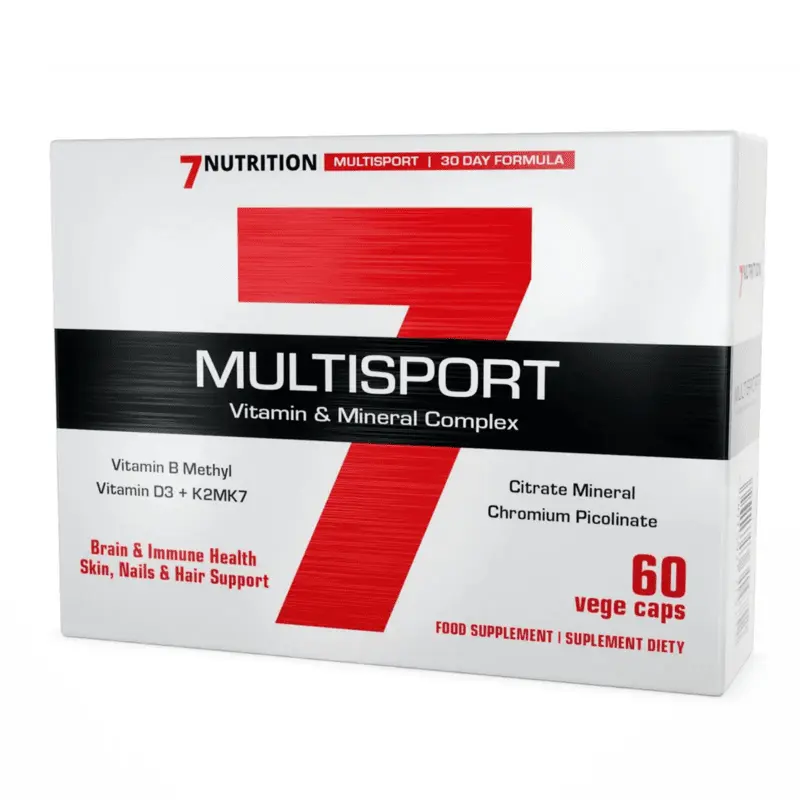
Recommended products
Frequently asked questions
Why is Vitamin K2 important for athletes who already take calcium and Vitamin D?
Vitamin K2 activates proteins like osteocalcin and MGP, which ensure that calcium is deposited in the bones, not in the arteries. Without K2, even with adequate intake of calcium and D, bones may not strengthen effectively, and the risk of vascular calcification increases.
What is the recommended dose of Vitamin K2 for active athletes and which type (MK-4 or MK-7) is best?
For active athletes, a daily intake of 100-200 micrograms is recommended. The MK-7 form is preferred due to its longer half-life and better bioavailability, which ensures more stable blood levels.
Can Vitamin K2 help prevent sports injuries like stress fractures?
Yes, by improving bone density and mineralization, Vitamin K2 significantly reduces the risk of stress fractures. It ensures that calcium is properly integrated into the bone matrix, making bones stronger and more resistant to load.
Does Vitamin K2 have other benefits for athletes besides for bones and heart?
Preliminary studies suggest that K2 may play a role in energy metabolism and mitochondrial function, which is important for energy production during training. It also has potential anti-inflammatory properties that can aid in recovery.