BCAA
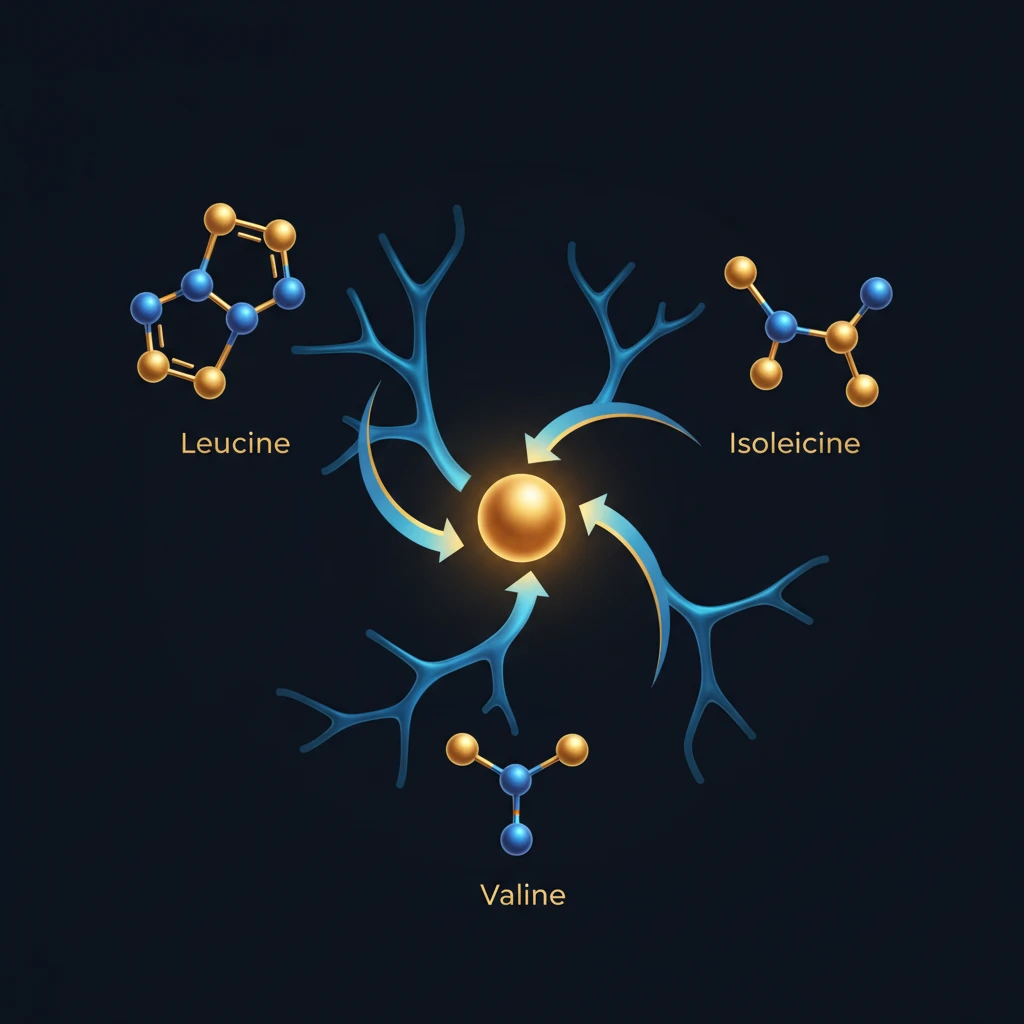
The article analyzes BCAA supplements, finding that for 17% of customers they are an unnecessary expense, but in N=68 athletes in a deficit, they help with 8.5% less muscle mass loss.
BCAA is a dietary supplement with three essential amino acids that are metabolized directly in the muscles to stimulate growth and reduce fatigue.
In Short (TL;DR)
- Key Dose: Taking 10-15 grams of BCAA, especially before or during a workout, has been proven to reduce muscle soreness and fatigue.
- Leucine is king: Leucine is the most important of the three amino acids, as it directly activates the signaling pathway (mTOR) responsible for building muscle.
- Context is everything: BCAAs are most effective in a calorie deficit, when training fasted, during very long workouts, or if your protein intake is insufficient.
- Practical value: They help you preserve hard-earned muscle mass during a diet and recover faster between heavy workouts.
What are BCAAs
BCAA is an acronym for Branched-Chain Amino Acids. This is a group of three specific essential amino acids: leucine, isoleucine, and valine. They are called "essential" because the human body cannot produce them on its own and must obtain them through food or supplements. Their unique chemical structure with a "branched chain" allows them to follow a different metabolic pathway in the body. Unlike most other amino acids, which are first processed in the liver, BCAAs are primarily metabolized directly in the skeletal muscles. This makes them a readily available source of "fuel" and building blocks exactly where they are needed most – in the muscles.
These three amino acids are not exotic compounds, but a natural and important part of any complete protein. Foods rich in BCAAs are primarily those with high-quality protein content. Meat (beef, pork), poultry (chicken, turkey), fish (salmon, tuna), eggs, and dairy products (cheese, yogurt, whey protein) are excellent sources. For vegans and vegetarians, good sources are legumes like lentils and chickpeas, as well as soy products like tofu and tempeh, although with a slightly lower concentration compared to animal products. It is from these natural sources that BCAAs are extracted or synthesized for the production of dietary supplements.
On the market, BCAAs are available in several main forms, each with its own advantages. The most common form is powder, which dissolves in water and is often flavored. This form allows for quick absorption and easy dosing. Other popular forms are capsules or tablets, which offer convenience and no taste, but are usually absorbed a bit more slowly. There are also ready-to-consume liquid forms, which are extremely convenient but often come at a higher price per dose.
How It Works in the Body
The mechanism of action of BCAAs is twofold, affecting both muscle building and energy metabolism during exercise. The main role falls to leucine. It acts as a key signaling molecule that activates a process called mTOR (mammalian Target of Rapamycin). Activating mTOR is like pressing the start button for muscle protein synthesis (MPS) – the process by which the body builds new muscle tissue. Taking BCAAs, especially those rich in leucine, sends a powerful signal to muscle cells to start "repairing" and growing, which is especially important after a workout when microtears are present in the muscle fibers.
The second important aspect is their role in energy production and fatigue reduction. During prolonged and intense exercise, muscles can use BCAAs as a direct source of energy, protecting their own protein structures from breakdown (catabolism). Furthermore, BCAAs compete with another amino acid, called tryptophan, for passage through the blood-brain barrier. Tryptophan is a precursor to serotonin, a neurotransmitter that contributes to the feeling of fatigue and lethargy. Increased levels of BCAAs in the blood limit the entry of tryptophan into the brain, which in turn delays the onset of what is known as "central fatigue" and allows you to train longer and harder.
- Activation of muscle protein synthesis (MPS): Leucine triggers the mTOR pathway.
- Reduction of muscle breakdown (anti-catabolic effect): They serve as an alternative energy source.
- Reduction of central fatigue: They limit the entry of tryptophan into the brain.
- Fast source of energy: They are metabolized directly in the muscles.
Proven Benefits
Although BCAAs are not a magic supplement, scientific data supports several specific and measurable benefits, especially when used in the right context – in intensely training individuals, people on a weight loss diet, or those with a suboptimal nutritional regimen. Here are the most well-researched effects of BCAA supplementation:
- Stimulating muscle growth: By activating the mTOR pathway, the leucine in BCAAs provides a strong anabolic signal. It is important to note that for growth itself, all 9 essential amino acids are needed (found in complete protein), but BCAAs act as the "spark" that ignites the process.
- Reducing muscle soreness (DOMS): Studies show that taking BCAAs (especially before a workout) can significantly reduce the feeling of muscle pain and stiffness in the days following heavy exercise. This is due to their ability to reduce markers of muscle damage.
- Reducing fatigue during exercise: As mentioned, BCAAs reduce both central fatigue (through the tryptophan mechanism) and peripheral fatigue (by serving as energy). This can lead to better performance and longer endurance.
- Protecting against muscle breakdown (catabolism): This is one of the most valuable benefits, especially in a calorie deficit. When the body doesn't get enough energy from food, it begins to break down muscle tissue for fuel. BCAAs provide readily available amino acids and help preserve lean muscle mass.
- Supporting the immune system: Intense workouts can temporarily suppress immune function. BCAAs, especially glutamine with which they are often combined, serve as an important fuel source for immune cells (lymphocytes), helping to maintain the body's defenses.
- Improving cognitive function after exercise: By reducing central fatigue, some studies suggest that BCAAs can help to more quickly restore mental sharpness and concentration after exhaustive physical exertion.
Recommended Doses
The optimal daily dose of BCAAs strongly depends on individual factors such as body weight, level of physical activity, goals, and total protein intake from food. The standard ratio in most products is 2:1:1 (leucine:isoleucine:valine), which is well-researched and effective. For most people, the daily dose varies between 5 and 20 grams, and it is best to split it or take it at key times around the workout.
| Profile | Daily Dose | When |
|---|---|---|
| Maintenance/general health | 5–10 grams | With a carbohydrate-rich meal, or between meals, especially if protein intake is low. |
| Active athlete | 10–15 grams | Split into two servings: 5-7 grams 30 minutes before training and 5-7 grams during or immediately after. |
| Heavy training/competitors | 15–20+ grams | Before, during, and after training (5-7 grams each). A dose can also be added in the morning on an empty stomach for an anti-catabolic effect. |
| Calorie deficit/fasting | 10–15 grams | Distributed into 2-3 servings between meals or during the fasting period to minimize muscle loss. |
Forms and Which is Best
The choice of BCAA form depends mainly on personal preferences for convenience, absorption speed, and budget. Each form has its advantages and is suitable for different situations. There is no single "best" form for everyone, but rather the most suitable one for your needs.
| Form | Absorption | Advantages | Who it's suitable for |
|---|---|---|---|
| Powder (standard/flavored) | Fast | Most cost-effective price per dose, easy dosing, wide variety of flavors, rapid entry into the bloodstream. | For daily use, especially for preparing an intra-workout drink. For people who don't mind mixing shakes. |
| Instant/Micronized Powder | Very fast | Perfect solubility without clumps, faster absorption, less settling in the bottle. | For perfectionists who want the fastest possible absorption and a smooth drink without compromise. |
| Capsules/Tablets | Moderate to slow | Extremely convenient for carrying and taking on the go, tasteless, precisely dosed. | For people who travel, those who dislike flavored drinks, or for pre/post-workout intake when instant absorption is not necessary. |
| Liquid form (RTD - Ready-to-Drink) | Very fast | Maximum convenience - open and drink. Often enriched with other ingredients like vitamins or electrolytes. | For moments when speed and convenience are an absolute priority – for example, immediately after a workout before you get home. |
Side Effects and Precautions
BCAAs are considered one of the safest dietary supplements, as they are simply amino acids that are naturally present in food. In healthy individuals and when adhering to recommended doses, side effects are extremely rare. However, excessive intake (over 30-40 grams daily for a prolonged period) can lead to mild stomach discomfort, bloating, or nausea in some people. Theoretically, very high doses can disrupt the balance of amino acids in the body and strain the kidneys, but this is unlikely with standard use.
There are several groups of people who should be cautious or avoid taking BCAAs:
- Pregnant and breastfeeding women: Due to a lack of sufficient research in this group, intake is not recommended.
- People with kidney or liver diseases: They should consult their doctor before taking any amino acid supplements.
- People with the rare genetic disorder "Maple Syrup Urine Disease" (MSUD): For them, BCAA intake is absolutely contraindicated as their body cannot metabolize them.
- Before surgery: It is recommended to stop intake about 2 weeks before a planned surgery, as they can affect blood sugar levels.
When Will You Feel an Effect
The effects of taking BCAAs can be divided into acute (immediate) and cumulative (accumulating over time). It's important to have realistic expectations – BCAAs are not steroids and won't transform you overnight. Their effect is more optimizing and supportive, and is most noticeable when the diet and training regimen are on point.
- Immediately up to 30 minutes after intake: If taken before or during a workout, the main effect that can be felt is a reduction in the sensation of fatigue. This may allow you to do one more set or maintain intensity for longer.
- 24-48 hours after a workout: The most noticeable effect in this period is reduced muscle soreness (DOMS). Instead of severe pain and stiffness, you might feel only a slight tension, allowing for a quicker return to training.
- After 2-4 weeks of regular intake: This is when the cumulative effects begin to show. You will notice improved recovery between individual workouts. You may find that you are able to increase your training volume or frequency without feeling overtrained.
- After 1-3 months: With consistent use, combined with a proper regimen, BCAAs contribute to better preservation of muscle mass during a weight loss phase and can slightly support the gain of lean muscle mass in a hypertrophy phase.
Common Myths About BCAA
Myth: BCAAs build muscle on their own.
Truth: BCAAs, and leucine in particular, act as the "key" that starts the process of muscle protein synthesis. However, to build the wall, you need "bricks" – and those are all 9 essential amino acids. BCAAs can stimulate growth, but without the presence of a complete amino acid profile (from whey protein or whole food), the effect will be severely limited or nil.
Myth: If I drink enough protein powder, I have no need for BCAAs.
Truth: In most cases, this is true. Whey protein is rich in BCAAs. However, taking standalone BCAAs has advantages in specific situations. They are absorbed much faster than protein, do not require digestion, and do not contain calories from other macronutrients. This makes them ideal for intake during a workout (when you don't want to burden your stomach) or when training fasted for a rapid anti-catabolic effect.
Myth: The more BCAAs, the better. Ratios like 8:1:1 or 12:1:1 are more effective.
Truth: There is no convincing scientific evidence that drastically higher leucine ratios are better than the standard 2:1:1. Isoleucine and valine also have their own important roles in energy metabolism and fatigue reduction. An excessively high intake of leucine can even disrupt the balance and reduce the absorption of the other two amino acids. Sticking to the tested 2:1:1 ratio and recommended doses is the safest approach.
What to Combine It With
BCAAs work excellently on their own, but can be combined with other supplements for a synergistic effect, especially in the context of a heavy workout. Here are a few classic and effective combinations:
- Electrolytes (sodium, potassium, magnesium): The combination of BCAAs with electrolytes in an intra-workout drink is extremely effective for maintaining hydration, preventing cramps, and optimizing muscle function during long and sweaty workouts.
- Citrulline Malate: This supplement improves blood flow to the muscles ("the pump"), helps clear ammonia, and delays fatigue. Combined with BCAAs, citrulline malate can significantly improve your endurance and performance in the gym.
- Creatine Monohydrate: This is perhaps the most famous stack. Creatine increases strength and explosiveness, while BCAAs aid recovery and reduce muscle breakdown. Taken together (though not necessarily at the exact same time), they work via different pathways to achieve a common goal – better results.
How to Choose a Quality Product
The market is flooded with BCAA products, and the choice can be confusing. To ensure you're investing your money in a quality and effective product, pay attention to a few key criteria. They will help you distinguish good offers from those of low quality or with misleading marketing.
- Check the ratio: Look for products with the classic and scientifically supported 2:1:1 ratio (leucine:isoleucine:valine). Products with exotic ratios like 10:1:1 are often a marketing gimmick and offer no proven advantages.
- Analyze the composition for purity: Read the label. A good product contains mainly BCAAs. Beware of products with a long list of unnecessary fillers, large amounts of sugar, or low-quality artificial sweeteners. If choosing a powder form, look for terms like "Instantized" or "Micronized," which guarantee better solubility.
- Look for quality certifications: The presence of seals like GMP (Good Manufacturing Practices) or certificates from an independent third party (like NSF, Informed-Sport) is a strong indicator that the product is manufactured to high standards and the content matches what's on the label.
- Form and flavor according to your needs: Choose the form (powder, capsules, liquid) based on your lifestyle. If you're going to drink BCAAs every day during your workout, choosing a flavor you like is crucial for consistency. Read reviews about the taste and solubility.
- Calculate the price per dose: Don't be swayed just by the total price of the package. Calculate how much a standard 10-gram dose of BCAA costs you. Divide the product price by the total grams of BCAAs in it and multiply by 10. This will give you a real idea of the value and allow you to objectively compare different brands.
Recommended products
Frequently asked questions
How much BCAA should I take per day?
The standard recommended dose is between 10 and 20 grams of BCAA per day, split into two servings. For optimal recovery, take 5-10 grams around your workout. The dose may vary depending on your body weight and workout intensity.
Which is better: BCAA powder or tablets?
The difference is in the absorption speed and convenience. BCAA powder is absorbed faster and the dosage is more flexible. Tablets are convenient for taking on the go, but you often need to take 5-10 tablets to reach an effective dose.
Can I combine BCAA with creatine?
Yes, the combination is one of the most effective for strength and recovery. The two supplements work via different pathways and complement each other perfectly. You can take 5 grams of creatine along with 5-10 grams of BCAA before or after your workout.
Do BCAAs help with weight loss?
BCAAs are not a fat burner, but they indirectly support weight loss. In a calorie deficit, they help preserve muscle mass, which is key to maintaining metabolism. Taking 5-10 grams before fasted cardio can reduce muscle breakdown.
How long can I take BCAA without a break?
Since BCAAs are essential amino acids that are also found in food, a mandatory cycle of intake is not necessary. You can take them for a long time as long as you are training actively and following the recommended doses. There is no evidence for the need to take a break.
Are BCAAs suitable for women?
Absolutely, BCAAs are just as effective for women as they are for men. They support recovery, reduce muscle soreness, and help preserve lean mass during a diet. The recommended dose for women is around 5-10 grams per day.
When is the effect of taking BCAA felt?
The effect on energy and endurance during training can be felt almost immediately, within the first 1-2 intakes. The long-term benefits, such as faster recovery and less muscle soreness, become clear after about a week of regular use.
Is there any point in taking BCAA if I already drink protein?
Yes, it makes sense, especially around your workout. Whey protein contains BCAAs, but they are absorbed more slowly. Taking BCAAs on their own provides very rapid access of amino acids to the muscles exactly when they are needed most.