Calcium Citrate vs. Calcium Carbonate: The Easily Absorbed Calcium vs. The Standard Source
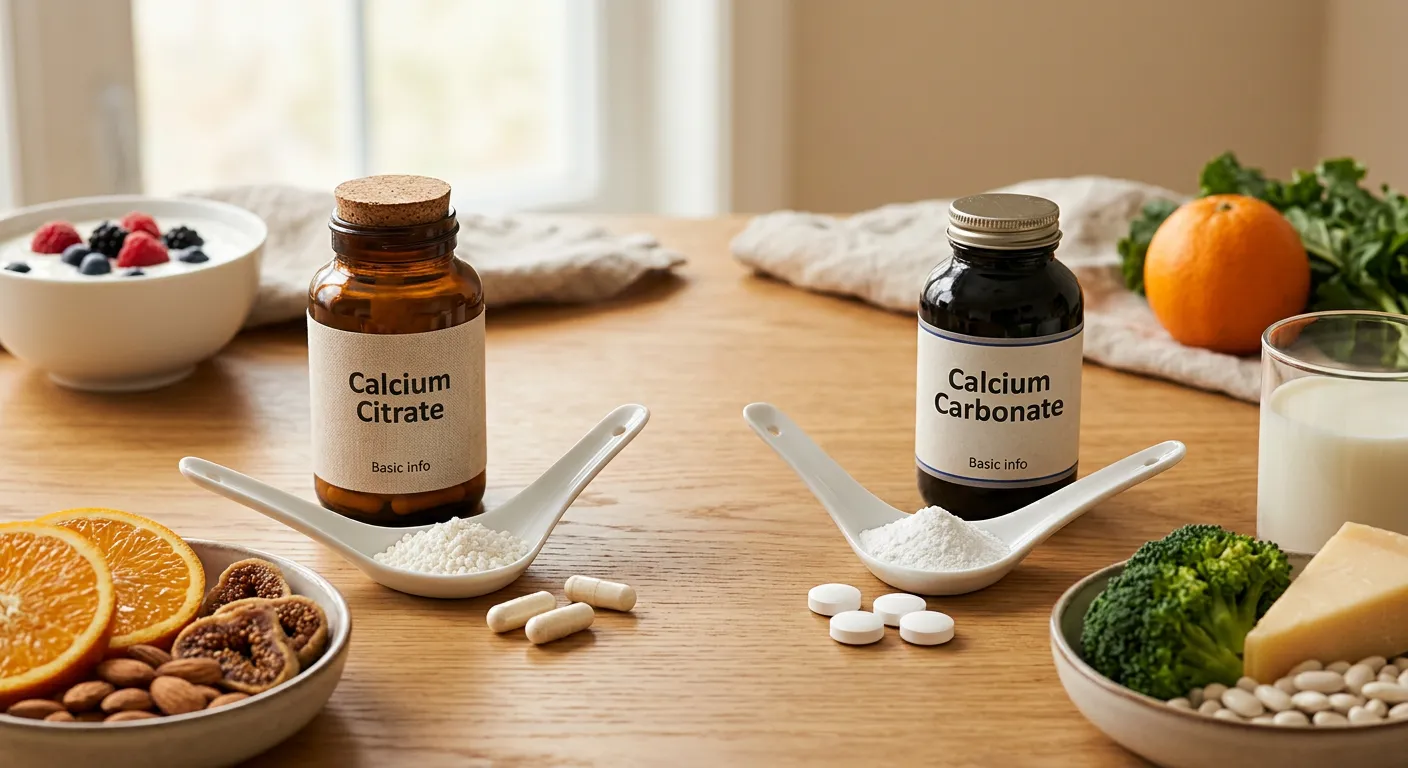
Calcium citrate is easily absorbed at any time and is gentle on the stomach, while carbonate is more concentrated but requires intake with food.
Short Answer: Calcium citrate is absorbed about 25% better without food and is gentler on the stomach, but contains only 21% elemental calcium. Carbonate is more concentrated (40%) but requires stomach acid (taken with food) for optimal absorption. Practical advice: For people over 50 or with low acidity, choose citrate. For young athletes without stomach problems, carbonate with food is the economical choice. Always split doses under 500 mg of elemental calcium for maximum absorption.
Calcium is a mineral most people associate with bone strength. But for an athlete, its role is much broader—from muscle contraction, which enables every movement, to the transmission of nerve impulses that control the body. When the body needs more calcium than it takes in, it begins to draw from its bone reserves, which in the long run leads to a higher risk of injuries and osteoporosis.
However, choosing a calcium supplement is not easy. There are two main forms on the market: calcium citrate and calcium carbonate. Calcium carbonate is concentrated and inexpensive, but requires being taken with food to be well absorbed. Calcium citrate is less concentrated, but is easily absorbed at any time and is gentler on the stomach.
Understanding the differences between these two forms is essential for any athlete striving to optimize their recovery, maintain bone density, and ensure proper functioning of their muscular system. Here's a comparison of the two types of calcium to help you make an informed choice tailored to your needs and goals.
This article is part of the Expert Hub for Nutritional Supplements—over 270 expert-verified articles by Petar Mitkov and the Sport Zona team.
Which is Better: Calcium Citrate or Calcium Carbonate?
Calcium citrate is a form of calcium that provides about 21% elemental calcium and is characterized by high bioavailability, while calcium carbonate provides about 40% elemental calcium but with lower bioavailability.
| Criterion | Calcium Citrate | Calcium Carbonate |
|---|---|---|
| Elemental Calcium | ~21% | ~40% |
| Bioavailability | High, independent of food | Lower, dependent on stomach acid |
| Intake Dependency | Can be taken anytime (with or without food) | Must be taken with food |
| Stomach Tolerance | Excellent, minimal risk of discomfort | More likely to cause gas and bloating |
| Suitable for | People with low acidity, sensitive stomachs, the elderly | People without stomach issues, seeking a budget-friendly option |
| Approximate Price | Higher | Lower |
What are the Absorption Mechanisms?
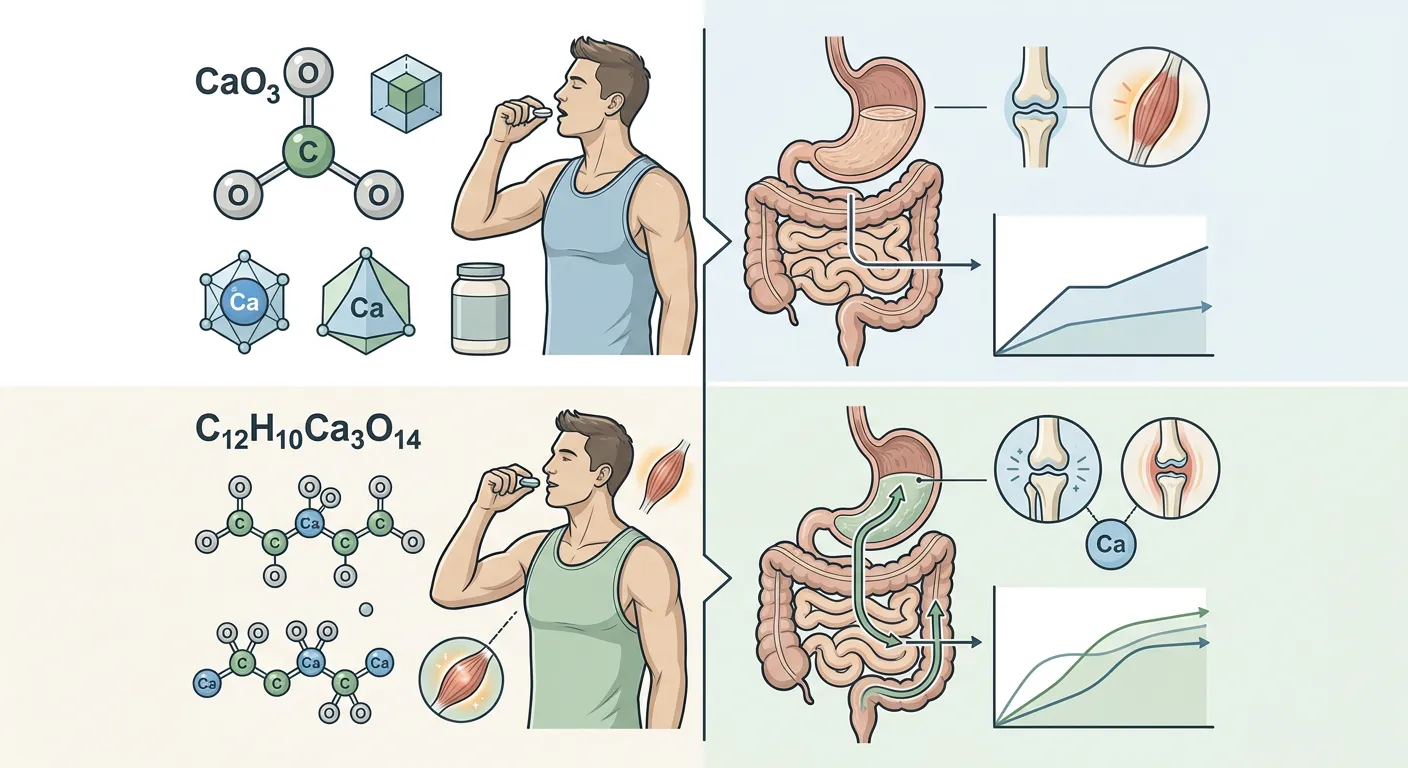
1. Calcium Citrate: The Highly Effective Choice
Calcium citrate is a salt formed by the binding of calcium with citric acid. Its main advantage is precisely this bond. For calcium to be absorbed, it must dissolve in the stomach and ionize. With calcium carbonate, this process is highly dependent on the presence of hydrochloric acid (HCl). Calcium citrate already has an acidic component (citrate), making it easily soluble even with low or neutral acidity. This means it is effectively absorbed whether you take it with food or on an empty stomach. This characteristic makes it a preferred choice for older individuals, whose stomach acid production decreases, as well as for those taking acid-reducing medications.Calcium citrate is a form of calcium that contains citric acid, which aids its absorption without the need for additional stomach acid.
2. Calcium Carbonate: The Concentrated and Economical Option
Calcium carbonate is the most common and economical form of calcium. It contains the highest percentage of elemental calcium—about 40% of its weight, meaning fewer tablets are needed to achieve the desired dose. However, its absorption mechanism is more specific. As an alkaline salt, it requires an acidic environment to dissolve and release calcium ions for absorption. When it enters the stomach, hydrochloric acid (HCl) reacts with calcium carbonate (CaCO₃), converting it into soluble calcium chloride (CaCl₂), water, and carbon dioxide (CO₂). The release of carbon dioxide is the cause of frequent side effects like gas and bloating. If taken on an empty stomach, when stomach acidity is low, a large portion of the carbonate passes through the digestive system unabsorbed.Scientific Sources
- Heaney, R. P., et al. (1990). Absorbability of calcium sources: the limited role of solubility. Calcified Tissue International.
- National Institutes of Health, Office of Dietary Supplements. (2022). Calcium: Fact Sheet for Health Professionals.
- Mayo Clinic Staff. (2023). Calcium and calcium supplements: Achieving the right balance.
- Linus Pauling Institute at Oregon State University. (2017). Calcium.
- Examine.com. (2023). Calcium Health Benefits, Dosage, Safety, Side-Effects, and More.
The Synergistic Effect: Why a Combination Might Be Better?
Calcium citrate and carbonate can work in a combined effect rather than being seen as competitors. A sensible approach is to use calcium carbonate with main meals (breakfast, lunch, dinner) when stomach acidity is naturally higher. This ensures an economical and concentrated intake of calcium throughout the day. At the same time, calcium citrate can be taken between meals or before bed—periods when the stomach is empty, but the body still needs a constant supply of minerals for overnight recovery. This combined approach ensures maximum absorption and constant calcium saturation throughout the day without burdening the digestive system.
Is Combining Calcium Citrate and Calcium Carbonate Safe?
Choose Calcium Citrate if:
- You have a sensitive stomach or previous gastrointestinal issues.
- You are taking medications that reduce stomach acid (e.g., for reflux).
- You are over 50 years old, when stomach acid production decreases.
- You want flexibility and the ability to take it at any time of day, without food.
🔵 Choose Calcium Carbonate if:
- You are looking for the most budget-friendly and cost-effective option.
- You have no digestive problems and your stomach is not sensitive.
- You want to take fewer or smaller tablets for the same dose.
- You can always take it during meals.
Recommended Combined Stack
A combined intake covering a 24-hour period is achieved by taking 500 mg of Calcium Carbonate with dinner and 250-500 mg of Calcium Citrate before bed, providing a concentrated dose with food and an easily absorbed dose for overnight without the need for additional food.
What is the 2026 Protocol: "Foundation and Performance Stack"?
The 2026 Protocol: "Foundation and Performance Stack" represents a modern approach to calcium supplementation, requiring consistency and combination with key co-factors, with the recommended daily allowance (RDA) for adults being 1000-1300 mg, with the possibility of higher needs for active athletes.
- Daily (Foundation): 1000-1200 mg of elemental calcium total per day, divided into 2-3 doses (doses over 500 mg at once are not well absorbed). Always combine with 2000-4000 IU of Vitamin D3 and 100-200 mcg of Vitamin K2 (MK-7 form) for better absorption and targeting to the bones.
- After Intense Training: An additional intake of 250-500 mg of calcium (citrate form is very suitable here) along with magnesium in a 2:1 ratio can aid muscle relaxation and reduce the risk of cramps.
Expert Note
From my many years working with athletes, I often see that attention to calcium is only paid after a problem arises—a stress fracture or persistent muscle cramps. A proactive approach is more effective. I recommend a combined intake: carbonate with food for "basic loading" and citrate before bed to maintain levels overnight. I always remind people that calcium without vitamin D3 and K2 is incomplete. This triple combination is the foundation of a healthy bone system for athletes undergoing constant stress.
🧭 When to Choose Which?
- Choose Calcium Citrate if: Maximum absorption and gentle stomach action are your priorities, even at the cost of higher expenses.
- Choose Calcium Carbonate if: Budget is the leading factor and you have no digestive issues when taking it with food.
- Combine Both if: You are looking for proper 24-hour coverage, utilizing the strengths of each form at different times of the day.
📖 What are Calcium Citrate and Calcium Carbonate?
Calcium Citrate: A calcium salt of citric acid, characterized by high bioavailability, independent of stomach acid.
Calcium Carbonate: An inorganic compound and the most concentrated form of calcium, whose absorption requires an acidic environment (taken with food).
⚖ Pros and Cons
| Pros | Cons |
|---|---|
Calcium Citrate
|
Calcium Citrate
|
🗣 Explained Simply
If you need to build a wall (your bones), you have two types of material:
- Calcium Citrate is like a ready-made, perfectly cast brick. It's easily placed (absorbed) at any time.
- Calcium Carbonate is like a large, unprocessed stone. It contains a lot of material (calcium), but you need a heavy hammer (stomach acid) to shape and embed it.
| Criterion | Calcium Citrate | Calcium Carbonate |
|---|---|---|
| Metaphor | Ready-made brick | Raw stone |
| When is it used? | Anytime | Only with "tools" (food) |
| Who is it for? | For everyone, especially with sensitive stomachs | For people with healthy stomachs and limited budgets |
Choose the Right Product for Your Goal:
- For Healthy Bones and Joints: See our selection of joint supplements, which often combine calcium with collagen and glucosamine.
- For General Health and Tone: Explore the best vitamins and minerals, including combinations with D3 and K2.
Combined Protocol for Athletes:
- Morning/Evening with Food: 500-600 mg Calcium Carbonate with Vitamin D3+K2.
- Post-Workout: Shake with protein and electrolytes, including calcium.
- Before Bed: 250-500 mg Calcium Citrate to support overnight recovery.
⚖ When to Choose Calcium Citrate
- When stomach comfort is your top priority.
- If you are taking antacids or have reflux.
- You prefer to take your supplements regardless of meals.
- Price is not a primary factor in your choice.
⚖ When to Choose Calcium Carbonate
- When you are looking for the maximum amount of calcium at the best price.
- Your stomach is healthy and you have no digestive issues.
- You are disciplined and will always take it with food.
- You want to take fewer tablets.
Expert Note from Sport Zona
From my many years of experience with athletes, I've noticed that attention to calcium often increases only after a problem arises—a stress fracture or persistent muscle cramps. A proactive approach is much more effective. I often recommend a combined intake: carbonate with food for "basic loading" and citrate before bed to maintain levels overnight. I always, absolutely always, remind people that calcium without vitamin D3 and K2 is incomplete. This triple combination is the foundation of a healthy bone system for athletes undergoing constant stress.
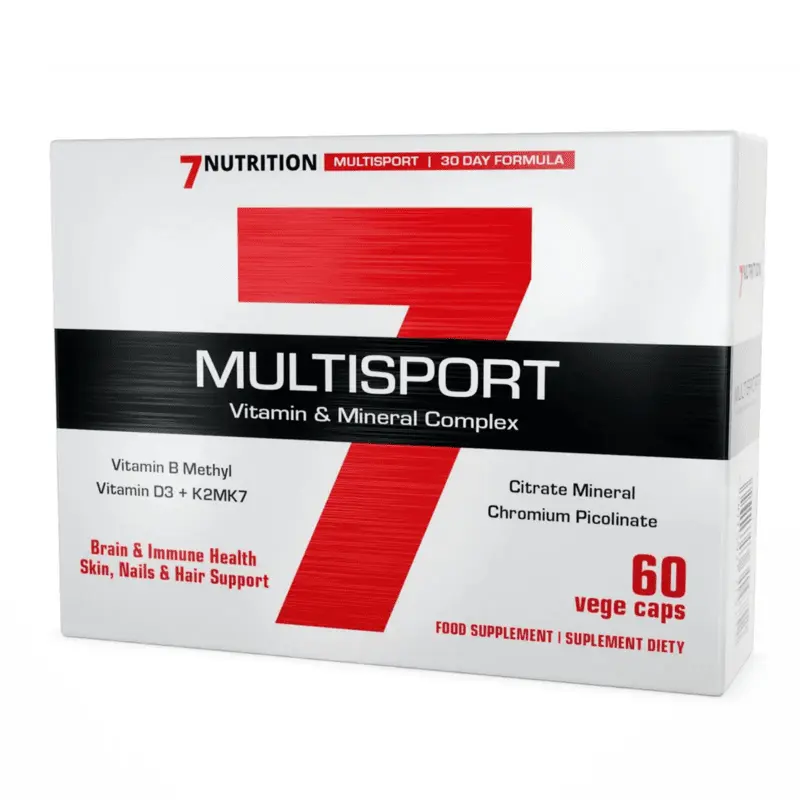
Recommended products

Frequently asked questions
Can Calcium Citrate and Calcium Carbonate be taken together?
Yes, it is technically possible, but it doesn't make much sense. It's better to choose one form according to your individual needs and take it correctly. Combining them does not bring additional benefits, but only complicates the protocol. If you do, take the carbonate with food, and the citrate at any time.
Which is better for beginners - Calcium Citrate or Calcium Carbonate?
For most beginners without stomach problems, calcium carbonate is a sufficient and more budget-friendly choice, as long as it is taken with food. However, if you have a sensitive stomach, bloating, or reflux, calcium citrate is a gentler and safer option, although more expensive.
When is the best time to take Calcium Citrate and Calcium Carbonate?
Calcium carbonate MUST be taken with food to be dissolved by stomach acid. Calcium citrate can be taken at any time – with or without food. For optimal absorption of both forms, divide the daily dose into servings of no more than 500 mg of elemental calcium at a time.
Are there side effects from taking Calcium Citrate or Calcium Carbonate?
Both forms can cause stomach discomfort, gas, or constipation, especially in high doses. Calcium carbonate is more commonly associated with these problems. Citrate is usually better tolerated. Exceeding the recommended daily intake can lead to hypercalcemia.
What is the recommended dosage for Calcium Citrate and Calcium Carbonate?
The dosage is determined by the amount of ELEMENTAL CALCIUM, not the total weight of the tablet. Carbonate contains ~40% elemental calcium, and citrate contains ~21%. The recommended daily intake for adults is 1000-1300 mg. As a supplement, the goal is usually 500-1000 mg daily, divided into two or more servings of 500 mg or less.