Calcium vs. Vitamin D: The Skeletal Stone vs. The Absorption Key

Calcium builds bones, and Vitamin D aids in its absorption. Together, they protect against fractures and maintain muscle function.
Short answer: Calcium is the building material for bones, and Vitamin D is the "master" that incorporates it. They don't compete, but work as a team — without enough Vitamin D, the body cannot effectively absorb calcium, no matter how much you take. Practical advice: For athletes, a daily intake of 2000–4000 IU of Vitamin D (especially during winter) with a fat-containing meal is recommended. Supplement with 500-600 mg of calcium (as citrate or bisglycinate) only if your diet is low in dairy products and leafy greens.
Calcium and Vitamin D are key to bone health. Calcium is the main building block that provides strength and density to the bone structure. Without enough calcium, bones are more susceptible to fractures, especially in sports with intense loads like running or weightlifting.
Vitamin D regulates calcium absorption from the digestive tract and directs calcium to the bones. If you have a Vitamin D deficiency, even if you take a lot of calcium, a large part of it will not be effectively absorbed. For athletes, this synergy is important for injury prevention, muscle function, and a strong immune system.
This article is part of the Expert Hub for Nutritional Supplements — over 270 expert-verified articles by Petar Mitkov and the Sport Zona team.
Which is more important: Calcium or Vitamin D?
The comparative matrix represents a systematic analysis of calcium and vitamin D, which are respectively a mineral, a primary structural element, and a fat-soluble vitamin functioning as a steroid hormone.
| Criterion | Calcium | Vitamin D |
|---|---|---|
| Biological Status | Mineral, primary structural element. | Fat-soluble vitamin, functioning as a steroid hormone. |
| Primary Focus | Structural: bone density, teeth, muscle contraction. | Regulatory: calcium absorption, immunity, gene expression. |
| Mechanism | Direct component of hydroxyapatite in bones, involved in the calcium cycle for muscle contraction. | Activates vitamin D receptors (VDR), which regulate hundreds of genes, including those for calcium absorption in the intestines. |
| Time Horizon | Chronic accumulation; effect on bone density is measured in months and years. | Faster effect on serum levels (weeks), but benefits for bones and immunity are long-term. |
| Specific Bonus for Athletes | Key for muscle contraction strength and nerve conductivity. | Supports immune function (fewer illnesses), recovery, and may influence testosterone levels. |
What is key for healthy bones – calcium or vitamin D?
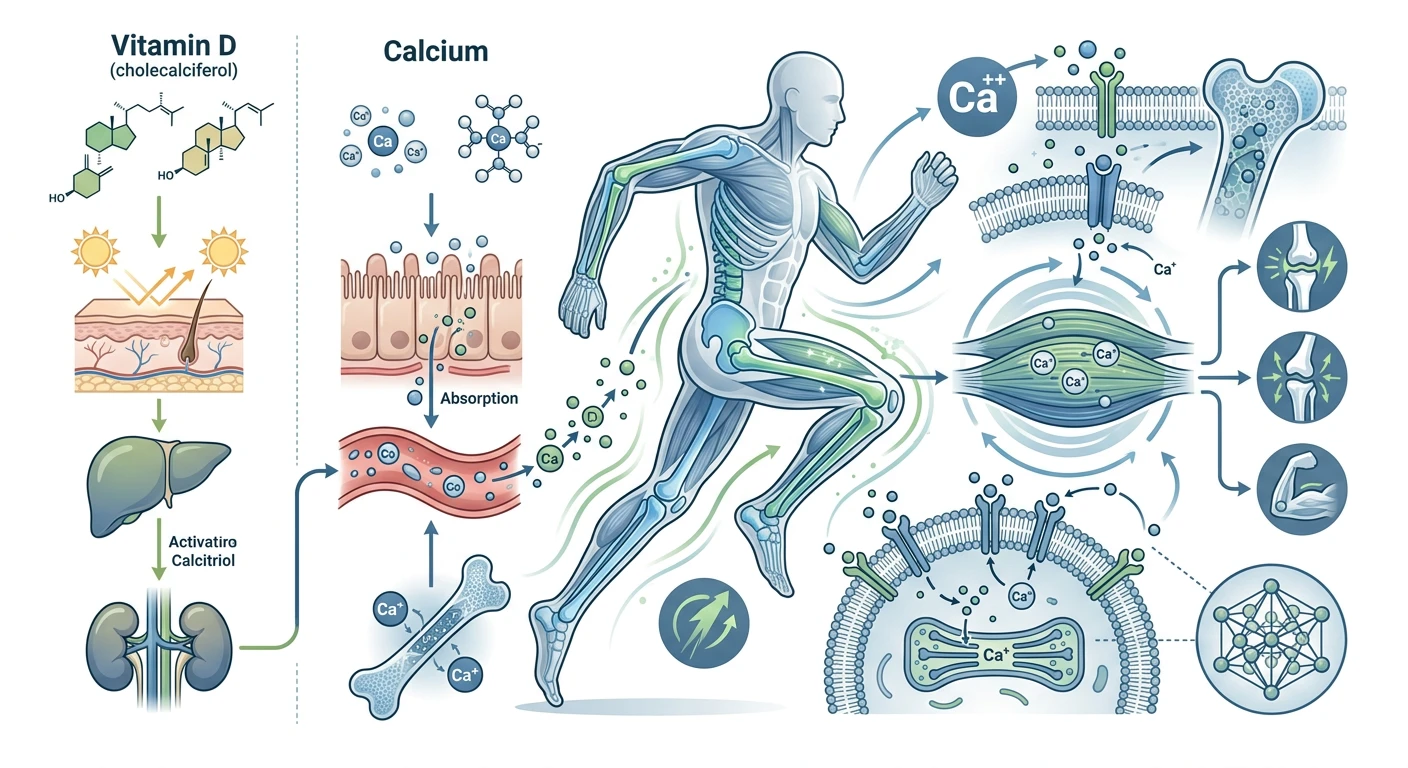
1. Calcium: The Body's Structural Foundation
Calcium is the most abundant mineral in the human body, with over 99% found in bones and teeth in the form of calcium hydroxyapatite, providing strength and hardness to the skeleton.
About 1% of calcium circulates in the blood and soft tissues and is important for several physiological processes. It is key for muscle contraction, as calcium ions bind to the protein troponin, allowing actin and myosin filaments to slide and the muscle to contract. Calcium is also involved in nerve impulse transmission and blood clotting.
Simply put: Calcium is the material your bones are made of. It's also the "spark" that makes muscles contract with every movement.
2. Vitamin D: The Hormonal Regulator
Vitamin D, the "sunshine vitamin," is unique because the body synthesizes it upon exposure to sunlight. Biologically, however, it functions as a steroid hormone. Its active form, calcitriol, binds to specific receptors (VDR) in the nuclei of cells in almost all tissues, including the intestines, bones, muscles, and immune cells.
Its primary function is to regulate calcium and phosphorus levels in the blood. It significantly increases the ability of the small intestine to absorb calcium from food. Without sufficient Vitamin D, the body can absorb only 10-15% of the calcium consumed. Furthermore, Vitamin D plays an important role in modulating the immune system, reducing the risk of infections, which is particularly important for athletes under constant training stress. Recent studies link it to improved muscle function and testosterone synthesis.
Simply put: Vitamin D is the "manager" that tells the body how much calcium to absorb from food and incorporate into bones. It also fine-tunes your immune system to work more effectively.
Scientific Sources
- Office of Dietary Supplements - NIH, Calcium Fact Sheet for Health Professionals
- Office of Dietary Supplements - NIH, Vitamin D Fact Sheet for Health Professionals
- Linus Pauling Institute, Vitamin D, 2023
- Vitamin D and Athletes: A Review of the Current Evidence, 2018
- EFSA, Dietary reference values for vitamin D, 2016
The Synergy Effect: Why They Work Better Together?
The relationship between calcium and vitamin D is an example of biological synergy – the combined effect is greater than the sum of individual parts. You can take the recommended dose of calcium, but if you have a vitamin D deficiency, your bones will suffer because the mineral won't be absorbed effectively. The reverse is also true – sufficient vitamin D cannot build bone if your diet is low in calcium.
For athletes, this interdependence is a priority. High training stress accelerates the bone remodeling process. Vitamin D ensures a constant supply of calcium to the blood, and the body uses this calcium to repair micro-fractures and adapt the skeleton to the load. The combination of both nutrients is the best insurance against stress fractures and osteoporosis later in life.
What is the selection algorithm?
Choose Calcium if:
- Your diet is low in dairy products or you are on a vegan diet.
- You have a history of bone fractures or diagnosed osteopenia/osteoporosis.
- You train for extended periods and sweat heavily, as calcium is lost through sweat.
- You consume large amounts of phosphorus (carbonated drinks) or sodium, which can disrupt calcium balance.
🔵 Choose Vitamin D if:
- You live in a region with little sun for most of the year (like Bulgaria in autumn and winter).
- You spend most of your time indoors (office work).
- You get sick often and want to boost your immune system.
- You have a documented deficiency after a blood test for 25-hydroxyvitamin D.
Recommended Combined Stack
The practical selection algorithm for good bone health and athletic performance involves a combination of taking 2000-4000 IU of Vitamin D3 daily (with a fat-rich meal) and supplementing with 500-800 mg of Calcium (in citrate or bisglycinate form) if the diet is low in this mineral, often with the addition of Vitamin K2 recommended.
What is the "Foundation and Performance Stack" according to Protocol 2026?
"Foundation and Performance Stack" according to Protocol 2026 represents a modern approach for maximum effectiveness, based on the timing of nutrients.
- Daily (morning): 2000-5000 IU of Vitamin D3, taken with breakfast containing healthy fats (avocado, nuts, eggs). This provides the foundation for calcium absorption throughout the day. For added assurance, especially for athletes, a supplement of 100-200 mcg of Vitamin K2 (MK-7 form) is also recommended.
- Post-workout: 500 mg of Calcium Citrate, along with 250 mg of Magnesium. This helps restore electrolyte balance, aids muscle relaxation, and provides building material for bone remodeling, which is most active after exertion.
Expert Note
This protocol separates intake to optimize different functions. Vitamin D in the morning prepares the system, while calcium/ magnesium post-workout directly addresses the needs arising from physical exertion. Remember that Vitamin D accumulates, so consistency is key. I recommend a blood test for 25(OH)D once a year to determine the exact dosage.
🧭 When to Choose What?
- Choose Calcium: if your diet is limited and does not include dairy products, fortified foods, or leafy green vegetables.
- Choose Vitamin D: if you live in northern latitudes, work indoors, or have symptoms of a weakened immune system. This is an almost mandatory supplement for most people in Bulgaria from October to April.
- Combine Both: if you are a serious athlete undergoing heavy training and want to optimize your bone health and recovery, after first ensuring your diet needs additional calcium.
📖 What are Calcium and Vitamin D?
Calcium is a chemical element and a major mineral that is the most abundant in the human body. It is a key structural component of bones and teeth and plays a vital role in muscle contraction, nerve function, and blood clotting.
Vitamin D is a group of fat-soluble secosteroids (prohormones) that promote the absorption of calcium, magnesium, and phosphate. The human body produces Vitamin D3 upon exposure to sunlight, and it can also be obtained through diet and supplements.
⚖ Pros and Cons
| Pros | Cons |
|---|---|
| Calcium: Builds bone mass, supports muscle strength, easily accessible in food. | Calcium: Excessive intake (especially without K2) can lead to arterial calcification. May cause stomach discomfort and interfere with the absorption of iron and zinc. |
| Vitamin D: Improves calcium absorption, boosts immunity, enhances mood and hormonal balance. | Vitamin D: Toxic in very high doses as it is fat-soluble. Requires fats for good absorption. Difficult to obtain from diet alone. |
🗣 Explained Simply
If we were building a house:
| Criterion | Calcium | Vitamin D |
|---|---|---|
| Role | Bricks and cement | Architect and foreman |
| Type | Raw material | Instruction, plan |
| How it works | Physically builds the walls (bones). | Tells the workers (body) to take the bricks and lay them correctly. |
| Result without it | Nothing to build with. | Bricks are piled up and not used. |
Choose the right product for your goal:
- For healthy bones and joints: See our joint products and multivitamins.
- For a strong immune system: Explore our selection of adaptogens and specialized vitamins and minerals.
Combined Protocol:
1. Foundation: Start with a quality Vitamin D3+K2.
2. If Needed: Add Calcium and Magnesium if your diet requires it.
3. Support: Don't forget the role of collagen for connective tissue health.
⚖ When to choose Calcium
- Your diet is low in dairy and fortified foods.
- You are vegan or have lactose intolerance.
- Your mineral losses through sweat are high.
- You have been diagnosed with reduced bone density.
⚖ When to choose Vitamin D
- You work in an office and are not exposed to the sun.
- Autumn-winter season is approaching.
- Your immune system is weakened and you get sick often.
- A blood test shows deficiency or insufficiency.
Expert Note from Sport Zona
From my years of working with athletes, I have noticed that Vitamin D deficiency is widespread, especially in Bulgaria during the cold months. Most athletes we test for the first time show low levels. My advice is: prioritize supplementing with Vitamin D3, preferably in combination with K2. Add calcium only after analyzing your diet and ensuring you have a deficiency. Excessive calcium intake without need offers no benefits and carries risks, while optimizing vitamin D levels almost always leads to improvements in immunity and recovery.
Recommended products

Frequently asked questions
Can Calcium and Vitamin D be taken together?
Yes, and it is highly recommended. Vitamin D significantly improves calcium absorption in the intestines. Many quality supplements combine them in one product precisely because of this synergy.
Which is better for beginners - Calcium or Vitamin D?
For most people, especially in Bulgaria, a Vitamin D supplement is the more sensible first step. Vitamin D deficiency is extremely common due to the lack of sufficient sunshine for a large part of the year. Calcium needs can often be met with a balanced diet, while this is almost impossible with Vitamin D.
When is the best time to take Calcium and Vitamin D?
Vitamin D is fat-soluble, so take it with food containing fat (avocado, nuts, olive oil, meat) for maximum absorption. Calcium is best taken in smaller doses (up to 500 mg at a time) during meals to reduce the risk of stomach discomfort. If you are taking them together, it is best to do so with a main meal.
Are there side effects from taking Calcium or Vitamin D?
Yes, with very high doses. Excessive calcium intake (over 2500 mg per day) can lead to constipation, kidney stones, and interfere with the absorption of iron and zinc. Vitamin D toxicity is rare, but it can cause hypercalcemia (dangerously high calcium levels in the blood). Always follow the recommended dosages.
What is the recommended dosage for Calcium and Vitamin D?
For adults, the recommended daily intake of calcium is 1000-1300 mg (from food and supplements). For active athletes, a dose of 2000 to 4000 IU of Vitamin D daily is a standard maintenance dose, but the most accurate approach is to have a blood test for 25(OH)D to determine individual needs.