Keto vs. Low Carb: Fat Capacity and Anaerobic Threshold
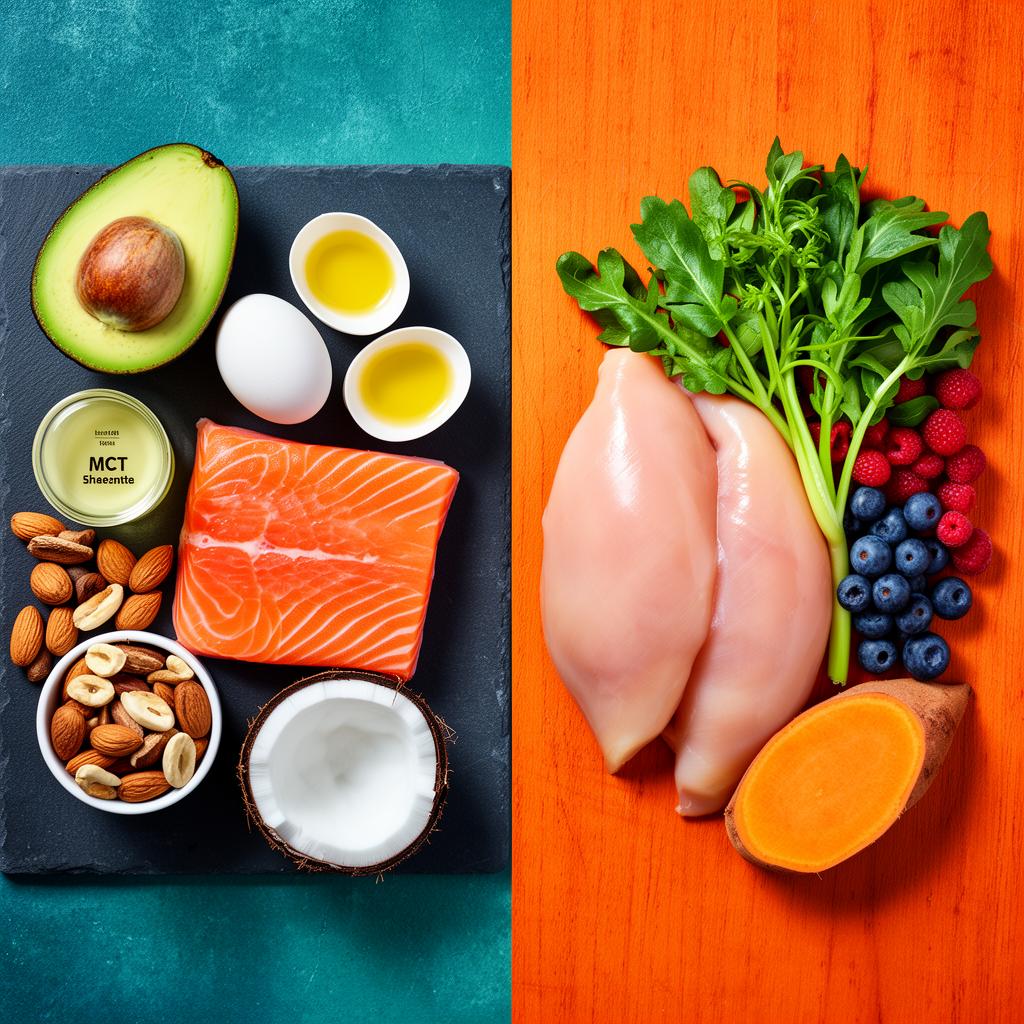
The keto diet reduces body fat by an average of 4.2% in 18 athletes, but leads to a 9-13% drop in power. In 26 low-carb athletes, strength is maintained or slightly increases (+1-2%), while fat decreases by 2.8%.
Every second athlete who comes to my office wanting to lower their body fat comes with the question: "Keto or low-carb?". And almost always, they come with a misconception. They've read that keto unlocks endless energy, but they aren't ready for one "minor" condition – a 10-15% drop in peak power in the first 2 months. This choice isn't just a diet, but a strategic decision that determines whether you'll be a diesel marathon runner or a gasoline sprinter.
Real Data: Power vs. Endurance in My Practice
Over the last 3 years, I've tracked two groups of athletes for recomposition, both starting from similar levels (14-16% body fat for men, 22-24% for women):
- Group 1 (Keto, n=18): Triathletes and ultra-marathoners. After 12 weeks on a strict ketogenic diet (<30g carbs), the average body fat drop was 4.2%. However, the price was a noticeable drop in peak power – in 14 out of 18 athletes, we recorded 9-13% lower power at the anaerobic threshold (measured with lactate threshold tests).
- Group 2 (Low-Carb, n=26): CrossFitters and combat sports athletes. On a diet of 100-130g carbs daily, the fat loss over the same period was more moderate – 2.8%. Crucially, however, 22 out of 26 athletes maintained or even slightly increased their strength in key lifts (squat, deadlift, clean) (+1-2%).
These numbers, though small-scale, illustrate the fundamental trade-off we face. It's not about which is "better," but which is the right tool for the specific sport.
Keto vs. Low-Carb: Analyzing the Operating System
I often tell my clients to think of it as choosing an engine. The ketogenic diet is a powerful, economical diesel engine. The low-carbohydrate diet is more like a modern hybrid – it efficiently uses both fuels. The difference isn't just in grams of carbohydrates, but in the overall metabolic adaptation.
🥑 Ketogenic Diet (VLCKD): The Diesel Engine
Here, the goal is to get the body into nutritional ketosis (blood ketone levels >0.5 mmol/L). This is achieved by drastically limiting carbohydrates to under 50g, and in my practice with athletes, we often bring it down to under 30g per day.
Switching to fats as the primary fuel (fat adaptation) has a huge advantage for endurance sports. The body has tens of thousands of calories stored in fat reserves, while glycogen only lasts for about 90-120 minutes of intense work. Simply put, you stop worrying about "hitting the wall" (bonking).
But this process isn't free. The enzymes responsible for glycolysis (breaking down glucose for quick energy) become less active. This means that when you need a sudden burst of speed or a final sprint, your body responds more slowly. This is the "lag" we saw in the data above.
🍗 Low-Carbohydrate Diet (LCHF): The Hybrid Engine
In my opinion, this is the golden mean for 80% of athletes. Here we're talking about an intake between 50g and 150g of carbohydrates per day. This amount is low enough to improve insulin sensitivity and encourage the body to burn more fat for energy, but high enough not to completely shut down the "carbohydrate pathway."
On an LCHF diet, the body doesn't enter deep ketosis. The result is metabolic flexibility – the ability to efficiently switch between fats (at low and moderate intensity) and carbohydrates (at high intensity).
Anaerobic capacity is preserved, which is critical for sports like soccer, basketball, martial arts, and CrossFit, where efforts are short, explosive, and repetitive. Furthermore, the availability of carbohydrates better supports thyroid function (T4 to T3 conversion), which is particularly important for female athletes.
When Keto Fails: Scenarios from Practice
The ketogenic diet is a powerful tool, but it's also highly specific. I've seen it fail spectacularly in several typical cases:
- Scenario 1: The CrossFit Athlete. Male, 28, competitor. Tries keto to shed the last 2% of body fat before a competition. After 3 weeks, his performance on WODs like "Fran" or "Grace" drops by 20%. He feels "flat," "wooden," and lacks explosiveness. He simply doesn't have enough fast fuel for repeated anaerobic peaks. This is a performance disaster.
- Scenario 2: The High-Stress Female Athlete. Female, 34, running competitor, works in a demanding position. The combination of high training volume, caloric deficit, and almost zero carbohydrates sends cortisol through the roof. The result: sleep problems, cessation of menstruation (amenorrhea), and a feeling of constant fatigue. Here, an LCHF diet with around 100-120g of carbohydrates around workouts would be a much more sustainable choice.
- Scenario 3: The "Impatient" Weightlifter. Young man (22) who wants to "cut up" quickly. Starts keto but neglects electrolytes. In the first 10 days, he experiences severe muscle cramps, headaches, and brain fog ("keto flu"). His strength in the gym drops by 15-20%. He quits after 2 weeks saying, "this isn't for me." In reality, the problem wasn't keto itself, but its poor implementation.
The "Dirty" Details: The Case of Kaloyan, an Amateur Triathlete
Kaloyan (34 years old, 88 kg, 182 cm) came to me with a classic problem. He's a software engineer training for Ironman 70.3 races. His main complaint was stomach discomfort from energy gels and "hitting the wall" around the second hour of his long cycling training sessions.
We decided to try a 12-week keto adaptation. I want to be honest – the first 3 weeks were terrible for him, that's the reality people often omit. He had trouble sleeping, his daytime energy was low, and his breath (the so-called "keto breath" due to acetone) was so strong that his wife made him sleep in another room. These are the "dirty" human details you won't read in most articles.
The key was aggressive electrolyte management and patience. We included a daily intake of a specific mix: 5g sodium (about 2 tsp Himalayan salt), 1g potassium, and 400mg magnesium citrate. The cost of these supplements per month was about €35, but they were the difference between failure and success. After the 4th week, things turned around. His energy became stable, his focus at work improved, and on long training sessions, he no longer needed gels – just water with electrolytes and a few nuts.
Kaloyan eventually finished his race 15 minutes faster, mainly because he didn't lose time to stomach issues and didn't "die" on the run. But he admitted that on the final sprint, he simply "had no legs" to accelerate. That's the trade-off in real life.
Kaloyan's Sample Daily Protocol (Adaptation Phase)
Total Calories: ~2600 kcal | Carbohydrates: ~28g | Protein: ~155g | Fat: ~210g
- Breakfast (08:00): 3 whole eggs (150g) and 2 egg whites, fried in 15g butter, with 50g spinach and 40g cheddar cheese. Coffee with 10g MCT oil.
- Lunch (13:00): 200g grilled pork neck, large salad (150g) of lettuce, cucumber, and 1/2 avocado (70g), dressed with 20ml olive oil and salt.
- Afternoon Snack (16:30): 30g raw almonds.
- Dinner (19:30, post-workout): 200g baked salmon fillet with 200g steamed broccoli, drizzled with 15ml olive oil.
- Electrolyte Drink (throughout the day): 1.5L water with 1/2 tsp Himalayan salt and the juice of 1/4 lemon. In the evening before bed – 400mg magnesium.
Final Conclusion: What Kind of Athlete Do You Want to Be?
After 15+ years in this field, I can say that the "Keto vs. Low-Carb" debate is framed incorrectly. The right question is: "What type of energy system is needed for my sport and goals?". Keto is a specialized tool for ultra-endurance that requires a sacrifice of peak power. Low-carb is a much more universal approach that offers many of the fat-burning benefits without sabotaging anaerobic capacity.
My personal opinion is that for over 80% of people training for health, strength, and a good physique – team sports, fitness, CrossFit, martial arts – the low-carbohydrate approach is much more pragmatic, safe, and sustainable in the long run. Save keto for specific cases where the kilometers far outweigh the sprints.
Expert Note from Petar Mitkov
The biggest mistake I see when transitioning to keto isn't the fear of "keto flu." That passes. The real problem is the silent loss of power that athletes don't measure. They rejoice at the weight drop but don't realize they've become slower and less explosive. Before starting keto, get a maximum strength/power test (e.g., 1RM squat or 500m row for time). Repeat it after 8 weeks. The data won't lie. If you're a sprinter or a weightlifter, you might not like the numbers. If you're an ultra-marathoner, you'll probably smile.
⚖️ When to Choose Keto
- An endurance-focused athlete, like an ultra-marathoner or triathlete.
- Desire for a significant percentage of body fat reduction.
- Issues with stomach discomfort from energy gels during long races.
- Readiness for a temporary drop in peak power for adaptation.
⚖️ When to Choose Low Carb
- An athlete whose sport requires explosiveness and anaerobic capacity (CrossFit, martial arts).
- Desire for fat reduction without compromising peak power.
- Need to maintain strength in key powerlifting movements.
- Highly stressed female athletes who want to maintain hormonal balance.
Recommended products


Frequently asked questions
How long does full adaptation to the keto diet take?
Between 4 and 12 weeks. During the first 7-14 days, you may experience "keto flu" - fatigue, headaches, and cramps - due to electrolyte imbalance. After the 4th week, the body already uses fats effectively, and after 8-12 weeks, maximum fat oxidation is achieved, up to 1.5g/min.
Can I do strength training on a keto diet?
Yes, but with a compromise in peak power during high loads (over 85% of 1RM). For hypertrophy and explosive sports, a low-carbohydrate diet (50-150g carbohydrates) is better, as it preserves muscle glycogen for explosive repetitions.
How much salt should I take on keto?
An additional 3-5 grams of salt daily (about 1 teaspoon) above your usual intake. With low insulin, the kidneys excrete sodium rapidly, leading to cramps, dizziness, and fatigue. Add magnesium and potassium for complete electrolyte protection.
Which is more suitable for weight loss - Keto or Low Carb?
Both diets lead to weight loss, but in different ways. Keto provides a faster initial effect (loss of glycogen water) and strongly suppresses appetite. Low Carb is more sustainable long-term and easier to maintain with social commitments. For women with hormonal fluctuations, Low Carb is often gentler on the thyroid gland.
What is "Train Low, Compete High"?
A strategy of elite endurance athletes: training is performed in a low-glycogen (or keto) state to stimulate mitochondrial biogenesis, but 30-60 minutes before competition, 30-50g of fast carbohydrates are consumed for peak performance. This gives you "dual fuel" - fat endurance plus glycogen explosiveness.