Creatine vs. HMB: The Power of Synthesis vs. The Muscle Shield
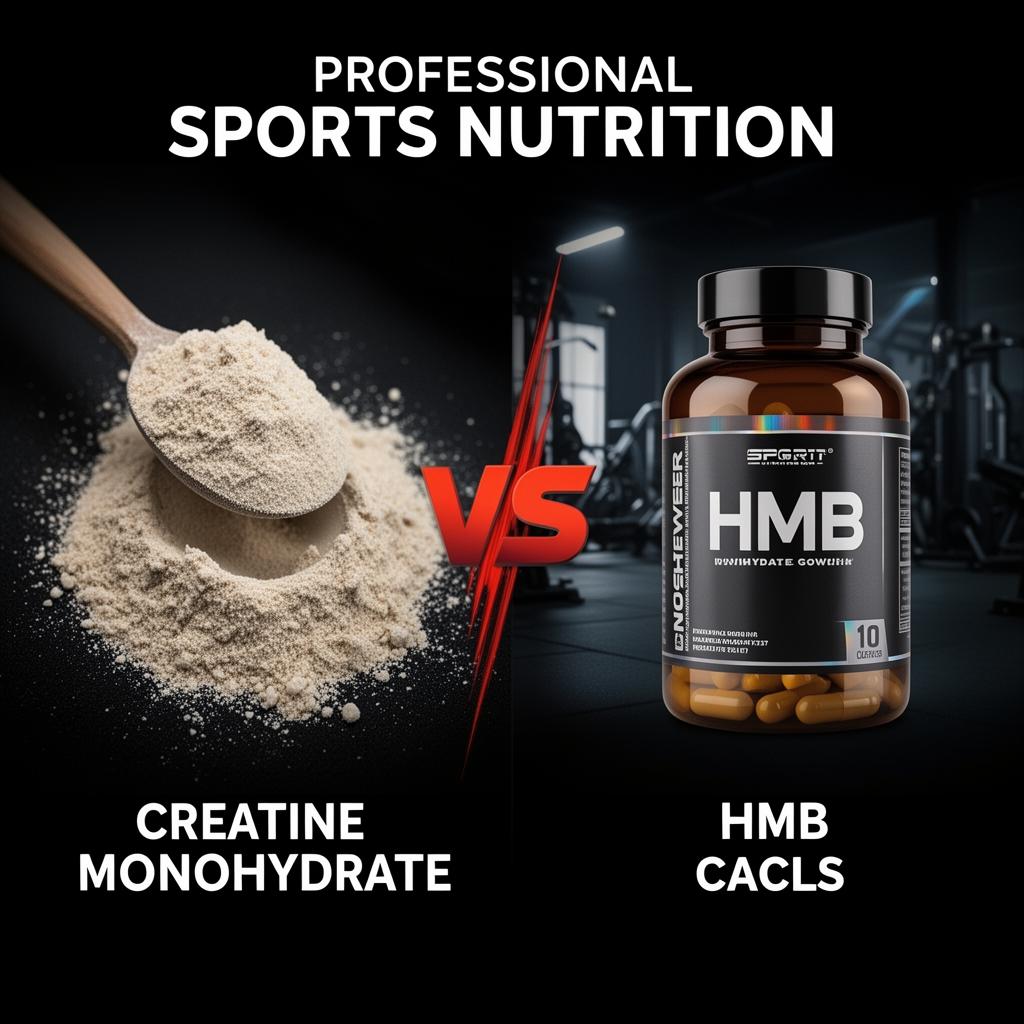
Creatine increases strength and power, HMB reduces muscle degradation and aids recovery. The choice depends on your goals, but they can be combined.
Creatine vs HMB: A Complete Comparison for Athletes
Introduction: In a world saturated with dietary supplements, creatine and HMB stand out as two of the most researched and effective compounds for enhancing athletic performance and muscle development. Both supplements offer unique mechanisms of action and benefits that can significantly impact your training regimen and recovery. This article, prepared by the experts at Sport Zona Academy, will provide an in-depth comparison between creatine and HMB to help you make an informed decision about which product is best suited for your goals. We will explore their properties, scientific evidence, advantages, disadvantages, and practical aspects of use.
What are Creatine and HMB?
Creatine is an organic acid naturally produced in the body from amino acids (arginine, glycine, and methionine) and stored primarily in the muscles. It is crucial for energy during short, intense bursts of activity. It aids in weightlifting and sprinting. Creatine supports the resynthesis of ATP (adenosine triphosphate), the primary energy currency of cells.
HMB (beta-hydroxy-beta-methylbutyrate) is a metabolite of the essential amino acid leucine. It is produced in small amounts in the human body and is thought to function as an anti-catabolic agent, meaning it helps prevent the breakdown of muscle protein. HMB is particularly beneficial during periods of intense training, caloric deficit, or recovery from injuries.
Comparison Table: Creatine vs HMB
| Characteristic | Creatine | HMB |
|---|---|---|
| Primary Mechanism | Increases ATP for energy, cell volumization | Reduces muscle catabolism, stimulates protein synthesis |
| Primary Benefit | Increases strength, power, performance in high-intensity exercise | Protects muscles from breakdown, aids recovery |
| Optimal Timing | Any time of day (post-workout for better absorption) | Pre, intra, or post-workout; spread throughout the day |
| Typical Dosage | 3-5g/day (after a loading phase of 20g/day for 5-7 days) | 3g/day (split into 3 x 1g doses) |
| Application Areas | Strength sports, sprinting, bodybuilding | Intensely training individuals, deficit periods, elderly |
| Side Effects | Slight weight gain (water retention), digestive discomfort (rare) | Very rare, generally safe |
| Cost (approximate) | Low (approx. €0.10-€0.20/dose) | Medium (approx. €0.60-€1.00/dose) |
In-depth Analysis of Creatine
Creatine is one of the most well-researched and effective ergogenic aids. Its primary function is to increase phosphocreatine stores in the muscles, allowing for faster ATP regeneration during short, intense physical activities. This leads to:
- Increased Strength and Power: Numerous studies show that creatine can increase maximal strength and explosive power, which is crucial for sports like weightlifting, sprinting, and martial arts.
- Improved Training Capacity: It allows for more repetitions or sets, which over time leads to greater training volume and muscle growth.
- Muscle Fullness: Creatine draws water into muscle cells, leading to cell "swelling." This not only gives muscles a fuller appearance but may also stimulate protein synthesis and reduce protein breakdown.
- Cognitive Benefits: Research suggesting creatine may benefit brain function, especially under stress or sleep deprivation, is gaining popularity.
Creatine Advantages: Proven effectiveness, affordable price, improves strength, power, muscle fullness, recovery.
Creatine Disadvantages: Possible water retention (which may be undesirable for some sports), stomach discomfort at high doses, needs to be taken regularly to maintain levels.
In-depth Analysis of HMB
HMB is primarily known for its anti-catabolic properties. It helps reduce muscle protein breakdown, which is especially important during intense training, periods of caloric deficit, or with aging.
- Reduced Muscle Damage: Studies indicate that HMB can reduce markers of muscle damage after intense exercise, leading to faster recovery.
- Muscle Mass Maintenance: It is particularly effective during periods when the body is under stress – such as during weight loss or overtraining – by helping to preserve lean muscle mass.
- Improved Body Composition: Some research suggests HMB may contribute to increased lean muscle mass and reduced body fat, especially in untrained individuals or beginners.
- Benefits for Aging: HMB shows promise in reducing age-related muscle loss (sarcopenia).
HMB Advantages: Reduces muscle catabolism, aids recovery, preserves muscle mass during caloric deficit, safe.
HMB Disadvantages: More expensive than creatine, benefits are more pronounced in highly trained individuals, beginners, or specific conditions, effectiveness may not be as dramatic as creatine in experienced individuals.
Synergy: Why Combine Them?
Although creatine and HMB have different primary mechanisms of action, they can work synergistically to offer greater benefits than either could alone.
- Creatine increases energy and strength, allowing you to train harder and achieve greater training volume.
- HMB reduces muscle breakdown, a natural result of intense training, and aids recovery.
Practical Protocol with Dosages
- Loading Phase (Optional): 20g/day (split into 4 doses of 5g) for 5-7 days. This helps saturate muscles quickly.
- Maintenance Phase: 3-5g/day. Can be taken anytime, but post-workout with carbohydrates may enhance absorption.
- Standard Dosage: 3g/day, split into 3 doses of 1g (e.g., morning, pre-workout, bedtime). To maximize the anti-catabolic effect, it's beneficial to have intake pre, intra, or immediately post-workout.
- Morning: 1g HMB
- Pre/Intra/Post-Workout: 1g HMB + 3-5g Creatine
- Evening: 1g HMB (optional, if feeling overtrained or for recovery)
When to Choose Which?
Choose Creatine if:
- You want to significantly increase strength, power, and performance in high-intensity exercises.
- You train with weights, do sprints, or participate in sports requiring short, explosive efforts.
- You have a limited budget – creatine is cost-effective.
- Your goal is rapid muscle fullness (due to cell hydration).
- You train intensely and frequently, and are concerned about overtraining or muscle breakdown.
- You are in a caloric deficit and your goal is to preserve muscle mass.
- You are a beginner or untrained – HMB benefits may be more pronounced in these groups.
- Recovery is a top priority, especially if you are an older athlete.
- You want to reduce muscle soreness and damage post-workout.
- You want maximum results in terms of strength, muscle growth, and recovery.
- You train at a high level and are looking for every possible edge.
- You have a budget that allows for investment in both supplements.
Simply Explained:
Imagine your muscles are a car, and training is the driving.
Creatine is like filling your tank with high-octane fuel, allowing you to push the pedal to the metal for short bursts, making more powerful and faster overtakes. It provides a direct energy boost for explosive movements.
HMB is like an intelligent engine protection system that prevents wear and tear, especially when you're driving aggressively or on long journeys. It helps the engine stay healthy and recover faster.
So, if you want to drive faster and more powerfully while also protecting your engine from damage, combining the two makes logical sense.
Choose the Right Product
When choosing creatine, always opt for Creatine Monohydrate. It is the most researched and proven effective form. Its price is low, and the quality is high from most reputable manufacturers. For HMB, look for products that clearly state the amount of CaHMB (calcium beta-hydroxy-beta-methylbutyrate), which is the most common and stable form. Avoid products with many "proprietary" blends without clear dosages of active ingredients. Always buy from trusted sources and manufacturers who provide quality and purity certifications.
Expert Note from Sport Zona Academy:
Both creatine and HMB are valuable tools in any serious athlete's arsenal. However, it's important to remember that supplements are just that – a supplement to a well-structured diet and training program. They are not magic pills. Start with one supplement, assess its effect before combining. Creatine is usually the more logical starting point due to its lower cost and broad benefits for strength and power. However, if you are in a period of intense training, caloric deficit, or recovery, HMB can be beneficial for protecting muscle mass. Consult a doctor or sports nutritionist if you have any health concerns. Our experts at Sport Zona Academy recommend careful planning and continuous learning to achieve maximum results.
Scientific Sources:
- Kreider, R. B., et al. (2017). International Society of Sports Nutrition position stand: safety and efficacy of creatine supplementation in exercise, sport, and medicine. Journal of the International Society of Sports Nutrition, 14(1), 18.
- Wilson, J. M., et al. (2013). International Society of Sports Nutrition position stand: beta-hydroxy-beta-methylbutyrate (HMB). Journal of the International Society of Sports Nutrition, 10(1), 6.
- Nissen, S. L., & Sharp, R. L. (2002). Effect of supplemental HMB on strength and body composition of resistance-trained males. Journal of Applied Physiology, 80(2), 528-534.
- Buford, T. W., et al. (2007). International Society of Sports Nutrition position stand: creatine supplementation and exercise. Journal of the International Society of Sports Nutrition, 4(1), 6.
- Slater, G. J., & Phillips, S. M. (2011). Nutrition for power and strength sports. European Journal of Sport Science, 11(3), 133-142.
- Ostojic, S. M., et al. (2018). Beta-hydroxy-beta-methylbutyrate (HMB) supplementation and training-induced changes in body composition and strength: A meta-analysis of randomized controlled trials. Journal of Strength and Conditioning Research, 32(9), 2636-2646.
Frequently asked questions
Can Creatine and HMB be taken together?
Yes, creatine and HMB can be safely taken together. They work through different mechanisms and complement each other's effects, with creatine improving performance and HMB reducing muscle breakdown and aiding recovery.
Which is better for beginners?
For beginners looking for a quick and tangible effect, creatine is often the better choice. It provides clear improvements in strength and energy that can be motivating. HMB is more suitable for high-intensity training or periods of caloric deficit to protect muscle mass.
When is the best time to take them?
Creatine can be taken at any time of the day, but it's good to take it around workouts (before or after). HMB is most effective when taken before and after training to take advantage of its anti-catabolic properties.
Are there any side effects?
Creatine is well-tolerated, the most common side effect being water retention and mild stomach discomfort at high doses. HMB is also safe, with very few side effects reported, which are generally extremely rare and usually related to individual sensitivity.
What is the dosage?
The standard dosage for creatine is 3-5 grams per day after a loading phase (20 grams for 5-7 days) or without a loading phase for a slower but equally effective result. For HMB, the usual dose is 3 grams per day, divided into 2-3 intakes, for optimal results.