Creatine Timing: Before or After Workout – What the Data Shows
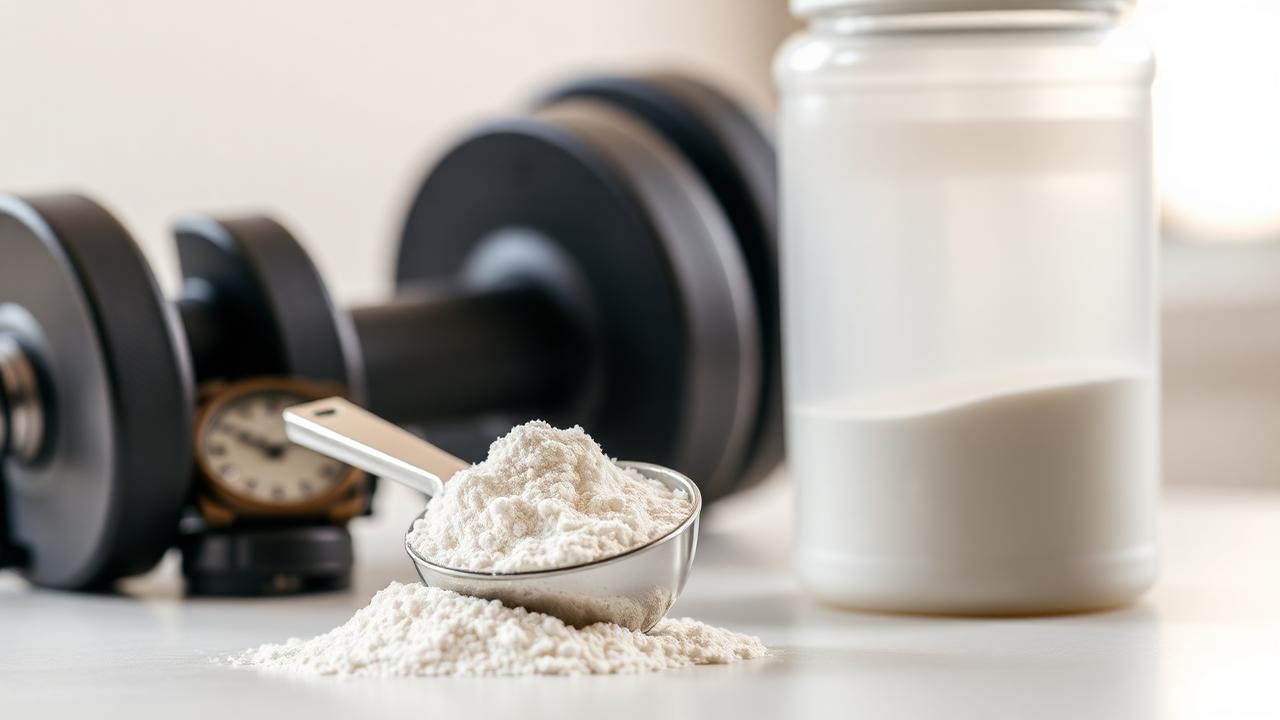
Studies show a slight advantage for post-workout creatine monohydrate intake, leading to an average of 1.1 kg greater lean muscle mass gain compared to pre-workout intake. A loading phase is optional, as a maintenance dose of 3-5 grams daily saturates stores completely within 28 days, and for 20-30% of users (non-responders), the effect is minimal due to high baseline levels. The most important factor for success remains consistent daily intake, not the precise timing of dosage.
Every one of us has been there. In the locker room, after a brutal leg workout, barely catching your breath. You're holding your shaker, and a single question is swirling in your head, fueled by dozens of articles and YouTube videos: "Is now the time? Should I have taken it before the workout? Or after? Or maybe during?". The question of creatine timing has become an almost mythical debate in bodybuilding circles, comparable only to the "more reps or heavier weight?" argument.
Let's be honest – obsessing over micro-optimizations often distracts us from the big, fundamental principles. But when you're already adhering to the basics – training hard and progressively, eating adequately, and sleeping enough – then these small details can make the difference between a good and a great result. The truth is, science already has a fairly clear, though not entirely definitive, answer. Let's break down the topic into its constituent parts, without unnecessary complications, and see what really matters.
What the Data Shows: Pre- vs. Post-Workout
Instead of wandering in a sea of anecdotal opinions, let's rely on a solid scientific foundation. The most cited and relevant study on the topic is by Antonio and Ciccone from 2013 (Journal of the International Society of Sports Nutrition). It's not large-scale, but it is extremely well-controlled and provides clear direction.
Here's how the experiment looked:
- Participants: 19 male amateur bodybuilders.
- Protocol: All participants followed the same 5-day split training program for 4 weeks.
- Dosage: All took 5 grams of creatine monohydrate.
- Division: Group 1 (PRE) took creatine immediately before training. Group 2 (POST) took it immediately after training.
After 4 weeks, the results were, to say the least, interesting. Although both groups showed significant improvements, the group that took creatine after training (POST) demonstrated a slight but statistically significant advantage.
| Indicator | "AFTER" Group (POST) | "BEFORE" Group (PRE) |
|---|---|---|
| Increase in Lean Body Mass (LBM) | +2.0 kg | +0.9 kg |
| Fat Mass Loss | -1.2 kg | -0.1 kg |
| Increase in 1RM Bench Press | +7.7 kg | +6.6 kg |
It's important to be objective – this is just one study with a small sample size (n=19). Later research, such as that by Darren Candow and his team, has not been able to replicate such clear differences, with some showing no significant difference between pre- or post-workout intake, as long as creatine is taken daily. However, the conclusions from the initial study point to a trend: if we have to choose, post-workout intake seems to have a slight advantage.
In my opinion, the explanation is related to the body's physiology immediately after exertion. Muscles are like a "hungry sponge" – blood flow to them is increased, and insulin sensitivity is at its peak. Taking creatine, especially in combination with fast carbohydrates and protein, utilizes this "window of opportunity" for more efficient transport and absorption into the muscle cell.
When It Works / When It Totally Doesn't Work
Here's where things get more practical. Because the effectiveness of creatine doesn't just depend on timing, but on the overall context.
When Post-Workout Intake is Most Effective:
Taking it immediately after training works best for athletes whose goal is maximal hypertrophy and recovery optimization. The logic is simple: after depleting some energy reserves (ATP and phosphocreatine) and causing micro-tears in muscle fibers, the body is in "repair and recharge" mode. By supplying it with creatine at this precise moment, you give it one of the key raw materials needed for supercompensation. Combining it with a protein shake and carbohydrates creates a synergistic effect where insulin "opens the doors" of muscle cells not only for glucose and amino acids but also for creatine itself.
Failure Scenarios: When Creatine Simply Won't Deliver Results
There are several scenarios where, no matter how precisely you measure your dose and timing, the effect will be zero or minimal. In my practice, I've seen hundreds of people complain that "creatine doesn't work for them." Here are the most common reasons:
- You are a "non-responder". Yes, this is a real phenomenon. About 20-30% of people are genetically "blessed" with naturally high levels of creatine in their muscles. For them, additional intake simply doesn't lead to a significant increase in intracellular stores and, consequently, to an ergogenic effect. Often, these are people with a dominance of type II muscle fibers (fast-twitch fibers), which are naturally stronger and more explosive. If after 4-6 weeks of consistent intake of 5 grams daily you don't feel any difference in strength, reps, or muscle size, it's very likely you belong to this group.
- Inconsistency. This is the number one killer of results. In practice, I constantly see people taking creatine 2-3 times a week, only on training days, and expecting miracles. Creatine doesn't work like a stimulant (caffeine) that has an acute, immediate effect. It works through saturation. Muscle cells need to be "filled to the brim" with creatine. This process takes 2 to 4 weeks with standard intake. Skipping doses, especially at the beginning, simply prolongs this period indefinitely. Timing only matters AFTER full saturation has been achieved.
- Inadequate training stimulus and nutrition. Creatine is an amplifier, not a builder. It allows you to do 1-2 more reps with your weight, lift 5% more, or do an extra set. But if you don't use this newfound strength to train harder and progress (overload), the muscle has no reason to grow. The same applies if you are in a brutal calorie deficit and not consuming enough protein. Creatine cannot build muscle out of thin air.
"Loading Phase" – Relic of the Past or Necessary Start?
"Do I need to do a loading phase?" – this is the second most common question. The classic protocol, popularized in the 90s, recommends 20 grams of creatine per day (divided into 4 doses of 5 grams) for 5-7 days, followed by a maintenance dose of 3-5 grams daily.
Does it work? Yes, absolutely. The loading phase accelerates the muscle saturation process, which happens in about a week, instead of 3-4 weeks with standard intake.
Is it necessary? In my opinion, for 95% of trainees, the loading phase is completely unnecessary and even counterproductive. Here's why: it often leads to gastrointestinal discomfort, bloating, and gas. This is the main reason people give up on creatine, thinking it "doesn't agree with them." In reality, the mega-dose doesn't agree with them. With a patient approach of 3-5 grams per day, you will reach the exact same endpoint, just a few weeks later, but without the unpleasant side effects. Loading only makes sense for professional athletes who have an upcoming competition in 2 weeks and need the fastest possible effect. For everyone else – save yourself the discomfort and the money.
Specific Protocol: How I Would Apply It with a Real Athlete
Let's take a specific, hypothetical case based on my actual practice. We'll call the athlete Georgi.
- Athlete: Georgi, 32 years old, 92 kg body weight, advanced amateur (training for 7 years), primarily powerlifting and bodybuilding.
- Goal: Break through plateaus in squat (180 kg) and bench press (130 kg), gain 2-3 kg of body weight in 12 weeks.
- Current Status: Trains 4 times a week, eats in a slight calorie surplus (~3500 kcal/day), sleep is good.
Sample Protocol for Georgi (without loading phase):
-
On training days:
- Immediately after training (within 30-45 minutes): Prepare a shake containing:
- 5 grams of creatine monohydrate (micronized for better solubility)
- 40 grams of whey protein isolate
- 70 grams of fast carbohydrates (e.g., 60g dextrose/maltodextrin + 1 banana)
- Explanation: This combination aims to trigger a strong insulin response from the carbohydrates, which will "drive" the creatine and amino acids from the protein directly into the depleted muscle cells. This is the perfect moment for maximal uptake.
- Immediately after training (within 30-45 minutes): Prepare a shake containing:
-
On non-training (rest) days:
- 5 grams of creatine monohydrate, taken at any time of day, but always with a meal containing carbohydrates. For example, dissolved in water and taken with breakfast (oatmeal with fruit) or lunch (rice/potatoes with meat).
- Explanation: On rest days, timing is absolutely irrelevant. The only goal is to keep muscle stores saturated. Taking it with food simply improves absorption and minimizes the chance of stomach discomfort.
With this protocol, after 8-12 weeks, we expect Georgi to have increased his working weights by 5-10%, which would allow him to break his plateau and squat around 190 kg, and to have gained about 2 kg of body weight, much of which will be active muscle mass and intracellular water.
Side Effects Nobody Mentions (or Misunderstands)
Besides the stomach discomfort during loading, other "dirty" details and myths circulate around creatine.
- "You'll retain water and look bloated." This is the biggest cliché. Yes, creatine causes water retention, but it's primarily intracellular – meaning inside the muscle cell. This makes muscles look denser, harder, and bigger. This is a desired effect! It's not about subcutaneous water retention that makes you look "soft" and "watery." Messy human detail: In the first 7-10 days of intake, while the body is adapting, some people might feel slightly more bloated overall before the water "distributes" correctly. This is temporary.
- "It causes cramps and dehydration." This myth has been completely debunked. It stems from old, anecdotal reports from the 70s and 80s. All modern, controlled studies show that creatine either has no effect on hydration or even improves it by helping the body retain water during intense exertion in hot weather. The problem arises when an athlete starts creatine, drastically increases the intensity of their workouts, and doesn't increase their fluid intake. The culprit is not creatine, but poor hygiene protocol.
- Hair loss? There is one single, small study on rugby players from 2009 that showed an increase in DHT (dihydrotestosterone) – a hormone linked to hair loss in genetically predisposed men. This study has never been successfully replicated and has not proven a direct causal link to actual hair loss. To date, there is no solid scientific evidence that creatine causes hair loss. If you are very concerned, it's a personal choice, but the scientific consensus is that there is no link.
Ultimately, the most crucial conclusion is simple: consistency is king, timing is just a vassal. The difference between taking it before and after training is small, likely within a few percent. The difference between taking creatine every day and skipping it every other day is huge. Choose the time that fits most easily into your routine and stick to it. If your post-workout shake is a ritual for you – great, add it there. If you keep forgetting, put the container next to the coffee machine and take it with breakfast. Just don't think about it more than you train.
Expert Note: Stop obsessing over the perfect timing down to the second. Take your 5 grams every day, train hard, eat adequately, and sleep – that's 99% of the equation. Post-workout intake is the cherry on top, not the cake itself.
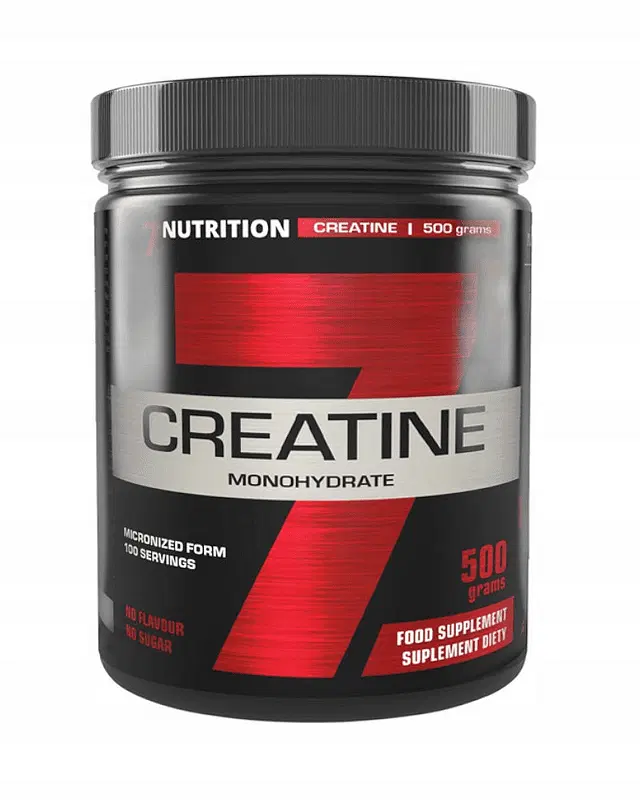
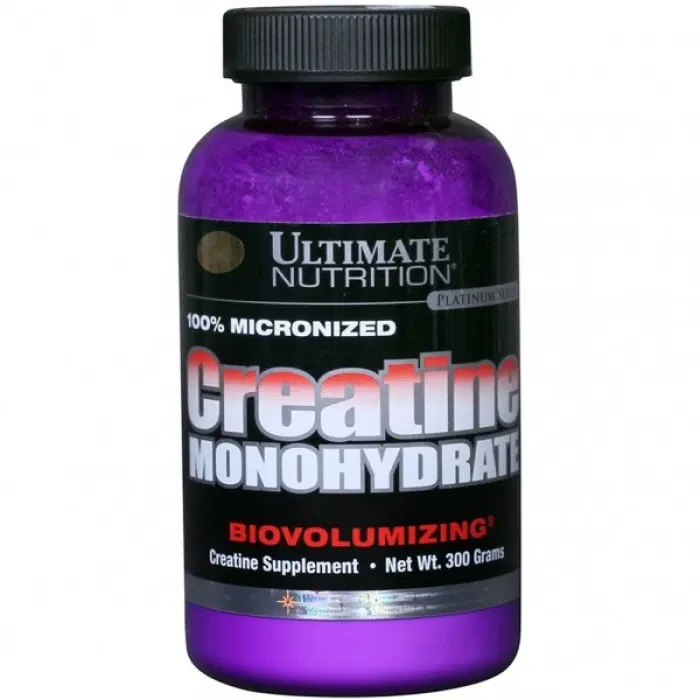
Recommended products

Frequently asked questions
When is the best time to take creatine – before or after training?
Studies show a slight advantage for post-workout intake, as increased blood flow and insulin sensitivity improve absorption. The difference in muscle mass and strength is about 5% in favor of the post-workout group, but consistency is more important than the exact timing.
Is a loading phase of 20 grams daily necessary?
A loading phase is not mandatory, but it saturates muscle stores in 5-7 days instead of 3-4 weeks. A standard intake of 3-5 grams daily achieves the same concentration levels in the long run without the risk of stomach discomfort.
What are the so-called 'non-responders'?
About 20-30% of people do not experience the effects of creatine because their muscle stores are naturally filled through diet and endogenous production. These individuals typically have higher baseline creatine levels and more Type I muscle fibers.
Should creatine be taken on rest days?
Yes, maintaining maximum saturation requires a daily intake of 3-5 grams, regardless of whether you are training or resting. Skipping doses leads to a drop in phosphocreatine levels, which directly affects ATP regeneration.