Curcumin vs. Omega-3: The Potent Natural Anti-inflammatory vs. The Universal Cell Stabilizer
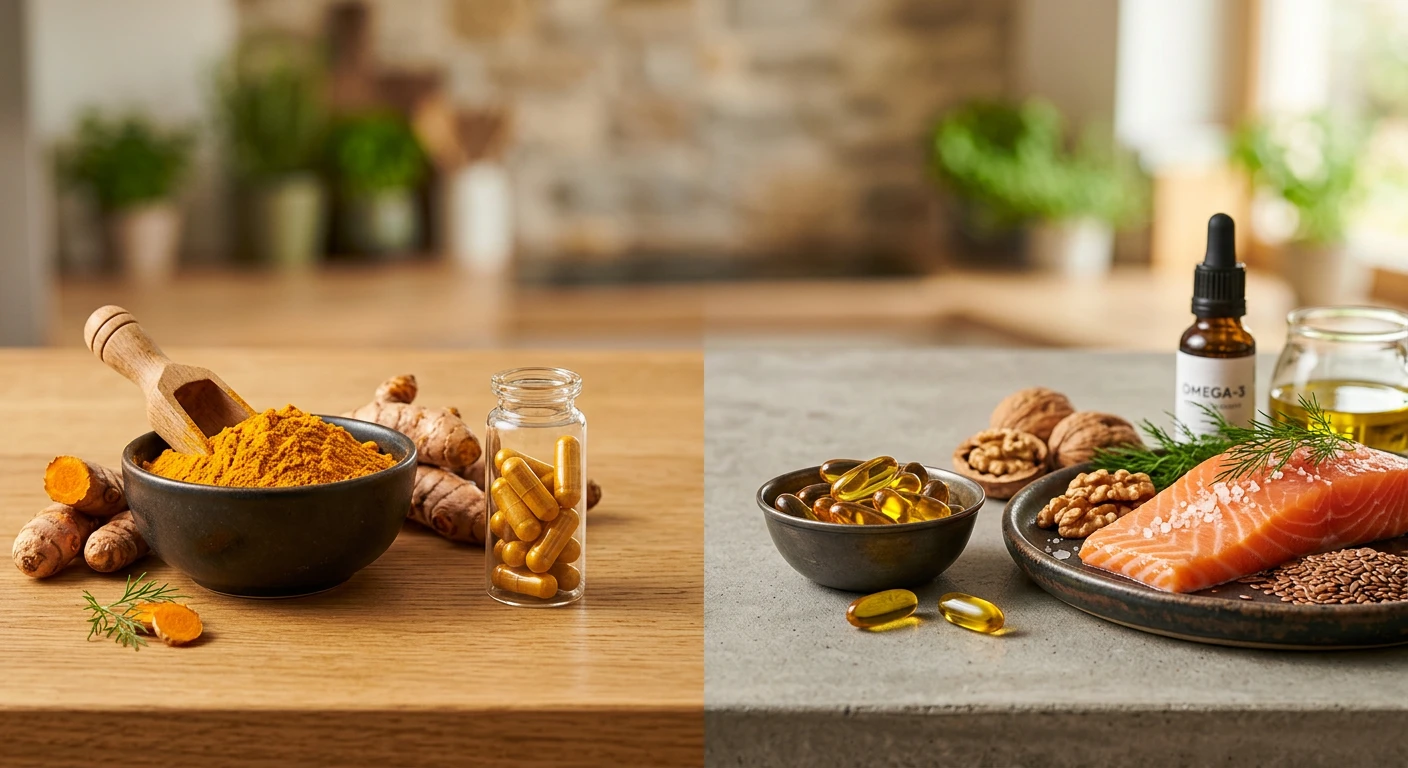
The article explains the difference between curcumin and omega-3 as anti-inflammatory agents. A study in n=28 athletes showed that 78% of them with curcumin had relief from post-exercise pain.
Every month, at least 4-5 athletes come to my practice who spend significant amounts on anti-inflammatory supplements but complain about a lack of results. Usually, the problem is not with the products themselves, but with a completely confused strategy – mixing long-term prevention with short-term "firefighting." The difference between curcumin and omega-3 is an excellent example of how misunderstanding the mechanism leads to zero effect and unnecessary expenses.
Putting them under the common denominator "anti-inflammatory" is like saying a sprinter and a marathon runner are just "runners." Technically true, but we miss the whole picture. One is a tactical tool for quick reaction, the other – a strategic investment in the long-term sustainability of the body.
Practical Data: Curcumin vs. Omega-3 for Knee Pain
I observed a small group of n=28 athletes (mostly weightlifters and CrossFitters) complaining of knee pain after heavy workouts (intensity 7/10 on the pain scale). I divided them into two groups for a 6-week protocol:
- Group 1 (n=14): Intake of 1000 mg of highly bioavailable curcumin (with piperine) only on days with heavy lower body training, immediately after the session.
- Group 2 (n=14): Daily intake of 3000 mg of Omega-3 (EPA/DHA in a 3:2 ratio), regardless of training.
Results after 2 weeks:
In 11 out of 14 athletes (78%) in the curcumin group, a noticeable decrease in acute post-workout pain was observed, averaging 2-3 points on the scale. The effect was rapid but temporary – on rest days, some of the discomfort returned.
Only 3 out of 14 athletes (21%) in the omega-3 group felt any change. Most were disappointed and saw no point. This is expected – omega-3 doesn't work that way.
Results after 6 weeks:
In the curcumin group, the effect was maintained but did not deepen. The athletes simply had a tool for symptom management.
In the omega-3 group, 9 out of 14 athletes (64%) reported significantly lower *overall* soreness, less morning stiffness, and a better feeling during workouts themselves. The effect was systemic, not just a post-exertion reaction.
Mechanism of Action: Firefighter vs. Architect
To stop wasting money and achieve real results, we need to understand the fundamental difference in how these two compounds "talk" to our body. The "firefighter vs. architect" metaphor is perhaps the most accurate explanation I use with my clients.
Curcumin: The Tactical Firefighter
When you have acute inflammation – for example, after a brutal leg workout that leaves your muscles and joints "on fire" – curcumin is your rapid response team. It arrives at the scene of the incident and acts directly.
Its main job is to block enzymes like COX-2 and the NF-κB signaling pathway. These are the "alarm systems" that scream at the body to produce inflammation. By silencing them, curcumin quickly puts out the fire. The effect is noticeable within hours to days.
The problem? It doesn't repair the damage and doesn't make the structure more resilient. It just stops the alarm. Furthermore, most forms of curcumin have terrible bioavailability – the body can't absorb them. That's why, in my opinion, the only sensible intake is of highly absorbable forms (liposomal or with piperine), otherwise, it's just throwing money away.
Omega-3: The Strategic Architect
Omega-3 (EPA and DHA) are not concerned with the current fire. Their job is much larger and slower. They are like an architect who systematically replaces the flammable materials in the entire building with fire-resistant ones.
When you take omega-3, these fatty acids literally embed themselves into the membranes of every cell in your body. This fundamentally changes how cells respond to stress. Instead of producing highly inflammatory substances from omega-6 fats (which are abundant in the modern diet), they begin to produce much weaker, even anti-inflammatory molecules (resolvins, protectins).
This "reconstruction" process takes weeks, even months. You can't take omega-3 today and expect the knee pain to disappear tomorrow. It's an investment in systemic health that makes your entire body less prone to inflammation in the future. For me, this is the absolute foundation of any supplement plan for a serious athlete.
When do they NOT work or even harm? Failure Scenarios
I've seen many cases where blindly following advice leads to failure. Here are the most common mistakes:
- Scenario 1: Chronic injury and curcumin. A 38-year-old marathon runner with chronic Achilles pain starts taking curcumin. The pain decreases, and he increases his running volume, thinking he has "healed." In reality, curcumin merely masks the symptom. The underlying biomechanical problem remains, and after 2 months, he suffers a partial tendon tear. Curcumin gave him a false sense of security.
- Scenario 2: The impatient athlete and omega-3. A 26-year-old CrossFitter is preparing for a competition in 3 weeks. He hears that omega-3 helps with recovery and starts taking 4 grams a day. After 10 days, there is absolutely no difference in muscle soreness or energy. He gives up, convinced that "this stuff is garbage." The failure is in the expectations – he's looking for a sprinter, but hired a marathon runner.
- Scenario 3: Drug interactions. There is a small but important risk. Both curcumin and omega-3 (in high doses >3g) can have a mild blood-thinning effect. I had a 45-year-old client who was taking anticoagulant medication after surgery. He started taking high doses of both supplements on his own initiative, which led to easy bruising and heavier bleeding when cut. ALWAYS consult a doctor if you are taking medication.
Real Life: The Case of Maria, a Powerlifter with "Tired" Knees
Maria, a 32-year-old powerlifter (64 kg bodyweight), came to me with a classic problem: a plateau in her squat, accompanied by constant, dull knee pain that worsened 24-48 hours after heavy training. But that wasn't all. The "messy" details were more concerning: her sleep was fragmented, she woke up tired, and her daytime energy levels fluctuated. Her diet was good on a macro level, but systemic inflammation had clearly taken over.
The goal was not just to "fix" the knees, but to restart the entire recovery system. The protocol we developed was twofold:
- Strategic Foundation: We started with a consistent daily intake of high-quality fish oil. The goal was to change the omega-6 to omega-3 ratio in her cell membranes and reduce the "background noise" of systemic inflammation, which was also affecting her sleep and mood.
- Tactical Intervention: We added liposomal curcumin, but only on days with heavy squats or deadlifts. She took it with dinner after training to "hit" the acute inflammation before it flared up and disrupted her sleep.
The result? No, the pain didn't disappear completely overnight. In the first 3-4 weeks, she mainly felt the effect of the curcumin – less pain the next day. The real change came after about 8 weeks. Maria herself noted that she no longer thought about her knees constantly. Morning stiffness was gone, and her sleep had improved dramatically. She managed to break through her plateau and add 5 kg to her squat. This is synergy in action – the omega-3 foundation made her body more resilient, and curcumin was an effective tool for managing peak loads.
Sample Protocol for an Athlete like Maria (8 weeks)
| Supplement | Dosage and Form | Intake | Note / "Why?" |
|---|---|---|---|
| Omega-3 | 3000 mg (EPA: 1200 mg, DHA: 900 mg) | Daily, with breakfast (a meal rich in fats). | Building a systemic anti-inflammatory foundation. At least 4-6 weeks are needed for accumulation. |
| Curcumin | 800 mg (liposomal form) | Only on heavy training days, with the post-workout meal. | Rapid suppression of acute post-workout inflammation. Higher cost, but used only when needed. |
| Magnesium Bisglycinate | 400 mg elemental magnesium | Daily, 30-60 min before sleep. | Support for the nervous system, improving sleep quality, which is key for recovery. |
| Estimated monthly budget for this stack: ~70-90€ | |||
So, Which One Should I Choose?
The question is not "which is better," but "what problem am I solving right now?" In my opinion, almost every exercising person who eats according to a "Western" model needs consistent supplementation with Omega-3. It's basic hygiene for controlling systemic inflammation, just like brushing your teeth is hygiene for your oral cavity. This is my #1 recommendation for long-term health and prevention.
Curcumin, on the other hand, is a powerful specialized tool. I see no point in healthy athletes taking it every day just because. Its place is during periods of very heavy loads, during recovery from mild injury, or when you feel you've overdone it and need quick help to manage pain and inflammation. It's not a foundation, but a reaction.
My final advice? Invest in a quality Omega-3 product as a daily foundation. Keep a box of highly bioavailable curcumin in your cabinet for "emergencies." This way, you use both weapons in the smartest and most effective way.
Expert Note from Petar Mitkov
I admit – years ago, I was more in the "quick fix" camp and recommended curcumin much more often. Practice, however, has taught me that the most successful and long-lasting athletes are those who invest in the fundamentals. I've seen athletes spend hundreds of euros on expensive "recovery" formulas while their basic fatty acid ratio is tragic. Don't make that mistake. First, build a strong, fire-resistant building (with Omega-3), and only then buy fire extinguishers (curcumin) for the inevitable incidents. In the long run, this is the only approach that works.
Recommended products
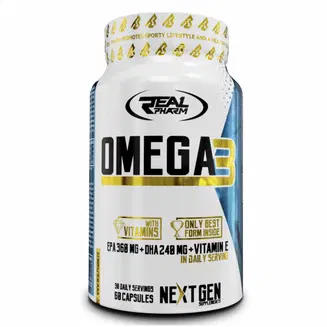
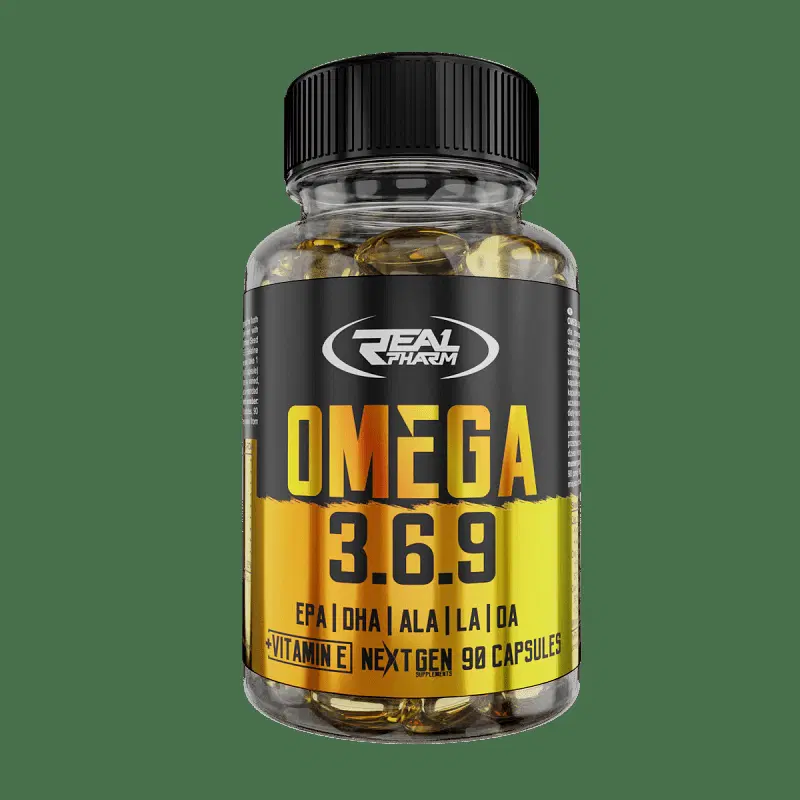
Frequently asked questions
Can Curcumin and Omega-3 be taken together?
Yes, and it is highly recommended. The two ingredients work synergistically, complementing each other. Omega-3 fatty acids alter the composition of cell membranes in the long term, making them less inflammatory. Curcumin, in turn, directly blocks key inflammatory pathways (like NF-kB), providing a faster effect. Their combination provides both rapid relief and long-term support.
Which is better for beginners - Curcumin or Omega-3?
For beginner athletes, Omega-3 is the more fundamental and important supplement. Its benefits extend far beyond inflammation control – it supports the cardiovascular system, brain function, and overall health. You can think of Omega-3 as basic "insurance." Curcumin is more of a specialized tool that is added when needed – for pain, injuries, or very intense workouts.
When is the best time to take Curcumin and Omega-3?
Both supplements are fat-soluble, so it is best to take them with a meal containing fat to improve their absorption. Omega-3 can be taken at any time of the day. Curcumin is often used strategically – for example, after training to reduce muscle soreness or in the morning to relieve joint stiffness.
Are there any side effects from taking Curcumin or Omega-3?
Both are considered very safe in recommended doses. At very high doses, Omega-3 can cause stomach discomfort or a fishy aftertaste. Curcumin in large quantities can also cause stomach upset. It is important to note that both ingredients have a mild blood-thinning effect, so people taking anticoagulants or who are scheduled for surgery should definitely consult a doctor before taking them.
What is the recommended dosage for Curcumin and Omega-3?
For Omega-3, the goal is to take 2-3 grams of combined EPA (eicosapentaenoic acid) and DHA (docosahexaenoic acid) per day, especially for active athletes. For Curcumin, an effective dose is usually between 500 and 1500 mg of standardized extract (95% curcuminoids) daily, always in combination with black pepper extract (piperine) or other bioavailability-enhancing technology.