Lactate threshold — what it is and how to train
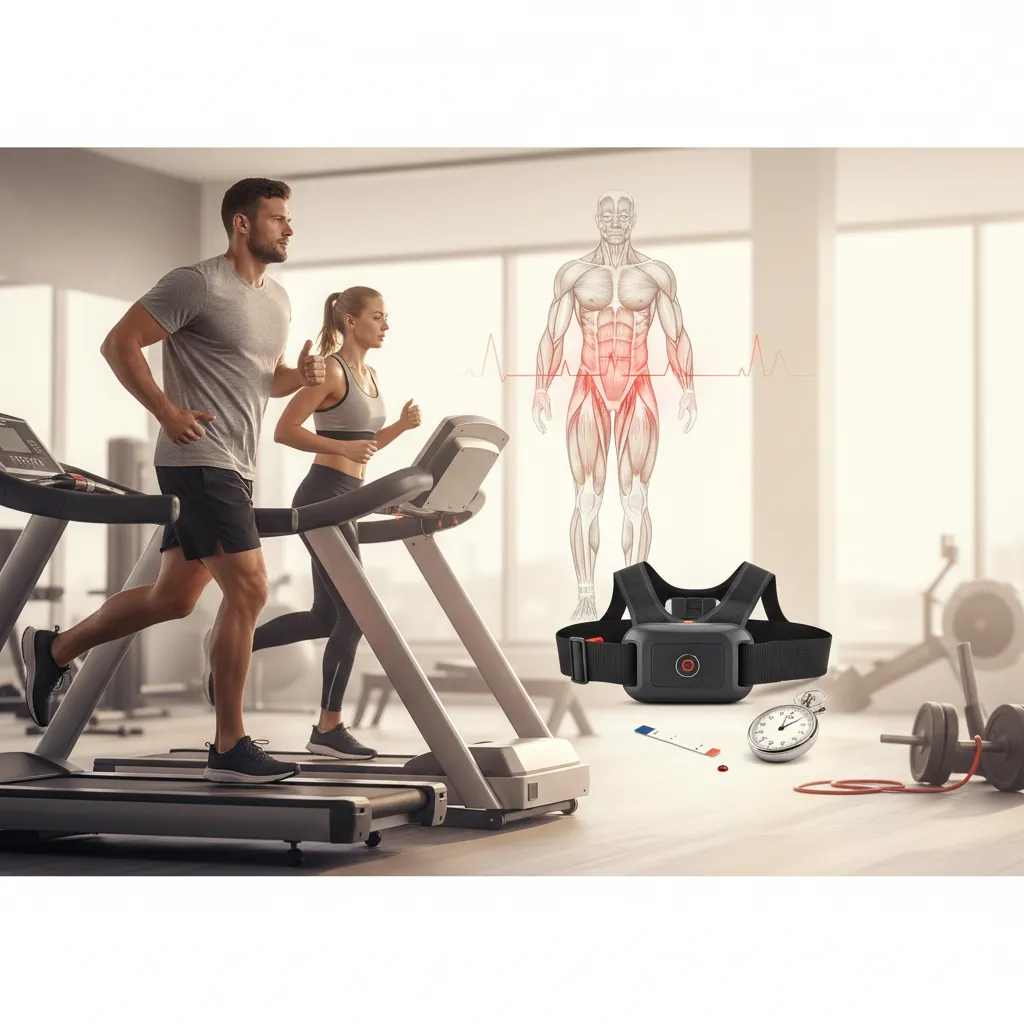
Lactate accumulation, OBLA 4 mmol/L, tempo training for improvement
Short answer: Lactate threshold (LT) is the most important endurance indicator, even more significant than VO2 max for determining race pace. • Lactate is not the enemy, but a fuel source; fatigue is due to the accompanying buildup of hydrogen ions (acidosis). • Training the threshold through tempo runs or intervals increases the speed you can sustain for a long time (up to 60 minutes).
Lactate threshold is the maximum exercise intensity at which the production of lactate in the blood equals the rate at which the body is able to clear it.

3 key takeaways
- Lactate threshold (LT) is the most important endurance indicator, even more significant than VO2 max for determining race pace.
- Lactate is not the enemy, but a fuel source; fatigue is due to the accompanying buildup of hydrogen ions (acidosis).
- Training the threshold through tempo runs or intervals increases the speed you can sustain for a long time (up to 60 minutes).
What exactly is lactate threshold?
Simply put: Lactate threshold is the level of exertion during exercise at which the body can process lactic acid as quickly as it produces it, without it accumulating and causing fatigue.
How does it work?
Let's take two runners who want to run a 10k race as an example. Both have a similar maximum heart rate (190 bpm) and VO2 max. Runner A (Untrained): * His lactate threshold (LT2) occurs at 75% of his maximum heart rate, which is about 142 bpm. * This corresponds to a pace of 6:30 min/km. * If he tries to run faster than this, say at 6:15 min/km, his lactate will rise sharply above 4 mmol/L, his breathing will become heavy, and he will be forced to stop or drastically reduce his pace after 5-10 minutes. Runner B (Trained): * Through targeted training, his lactate threshold has been "shifted" to the right and occurs at 90% of his maximum heart rate, or 171 bpm. * This corresponds to a pace of 5:15 min/km. * He can sustain this pace for nearly an hour. His lactate concentration will remain stable around 4 mmol/L, allowing him to finish the 10k in 52 minutes and 30 seconds without "hitting the wall." Increasing lactate threshold means the body becomes more efficient at clearing lactate and using it as fuel. This allows you to sustain a higher speed or power at the same or lower blood lactate concentration, which directly translates to better athletic performance.From practice
A few years ago, I worked with an amateur cyclist who was stuck in a plateau. His training consisted only of long, slow rides or very short, intense sprints. He lacked work in the "threshold zone." After determining his approximate threshold heart rate (around 165 bpm), we introduced one weekly workout: 2 x 15 minutes of riding at a steady heart rate of 160-165, with 5 minutes of easy riding for recovery between them. At first, he barely finished the second interval. After 6 weeks, he was doing 2 x 20 minutes at the same heart rate, but with an average speed 2 km/h higher. This allowed him to improve his personal best time on an 80km course by almost 10 minutes.
When and how to use it?
Training lactate threshold is crucial for any sport requiring sustained endurance – running, cycling, swimming, triathlon, cross-country skiing. The goal is to spend a certain amount of time in a training zone that is very close to your LT2. Determining the zone: Without a lab test, you can approximate your threshold zone: * By heart rate: 88-92% of your maximum heart rate. * By perceived exertion (RPE): "Comfortably hard." You can say 2-3 words, but not a full sentence. The exertion feels like 7-8 on a scale of 1 to 10. * By pace: The average pace you can sustain at maximum effort for 30 minutes. Main training methods: 1. Tempo training (Tempo run/ride): The classic method. It consists of a warm-up (10-15 min), followed by 20-40 minutes of continuous effort right at the lactate threshold, and ends with a cool-down (10-15 min). This is the "gold standard" for improving LT. 2. Cruise intervals (long intervals with short rests): Longer intervals at threshold intensity, separated by short rests. This allows you to accumulate more total time in the zone than with continuous tempo training. Example: 4 x 8 minutes at threshold pace with 2 minutes of easy running for recovery between them. Total time in the zone is 32 minutes.Comparison of LT Training Methods
| Method | Structure | Duration in Zone | Suitable for |
|---|---|---|---|
| Tempo training | 20-40 min continuous | 20-40 min | Advanced, race preparation |
| Cruise intervals | 3-6 x 5-12 min with short rest | 25-50 min | Beginners and advanced |
| Long intervals | 2-3 x 15-20 min with longer rest | 30-60 min | Very advanced athletes |
What are common mistakes and misconceptions?
Correctly understanding and applying lactate threshold training is key to its success. Many athletes make mistakes that reduce effectiveness or lead to overtraining.Common mistakes include training at too high an intensity and confusing lactate with muscle soreness. Training above threshold intensity leads to excessive fatigue buildup without the desired adaptation for lactate clearance.
- Training too hard: The most common mistake. Tempo training is not a race. If you do it at an intensity higher than threshold, you are primarily training the VO2 max system, accumulating much more fatigue, and not achieving the desired adaptation for lactate clearance.
- Confusing lactate with muscle soreness: Lactate and the associated acidosis cause the acute burning sensation *during* exercise. Muscle soreness (DOMS), which you feel 1-2 days later, is due to micro-tears in muscle fibers.
- Too frequent threshold workouts: These workouts are demanding. Including more than 1-2 such sessions per week without adequate recovery and easy workouts is a sure recipe for overtraining and injuries.
- Lack of aerobic base: You cannot build a high lactate threshold without a solid foundation of long, slow training. The aerobic system is the "factory" that clears lactate. Without it, your threshold will always be low.
Q: How can I measure my lactate threshold without expensive equipment?
A: The best practical method is a 30-minute maximal effort test (running or cycling). Your average heart rate and pace from the last 20 minutes of the test are a very good indicator of your lactate threshold.
Q: How often should I do tempo workouts?
A: For most amateurs, one tempo/threshold workout per week is sufficient to stimulate significant improvement. Elite athletes can do up to two, depending on the training phase.
Q: Can strength training improve my lactate threshold?
A: Yes, indirectly. Stronger muscles are more efficient and produce less lactate at a given power output. Strength training, especially for the legs in runners and cyclists, improves muscular economy and can contribute to a higher lactate threshold.
Q: Why do my muscles burn if lactate is fuel?
A: The burning sensation does not come from lactate itself, but from the hydrogen ions (H+) that are released along with it during anaerobic glycolysis. These ions lower the pH of the muscle cell (acidosis), which interferes with enzyme function and causes the familiar "burning" sensation.
See more in the fitness guides of Sport Zona Academy.
Expert note from Sport Zona
From the numerous studies and training regimens we have implemented, I observe that a large portion of Bulgarian athletes underestimate specific work on lactate threshold. This often leads to stagnation and difficulties in progressing to the next level of performance. It is often necessary to reorganize the entire training program to achieve real progress.
See more in the fitness guides of Sport Zona Academy.
Recommended products



Frequently asked questions
What is the lactate threshold and why is it important for endurance?
The lactate threshold is the maximum intensity at which the body can effectively process and clear lactate. It is a key indicator of endurance, as it determines the speed you can sustain for an extended period.
What are the main types of lactate thresholds?
There are two main types: the aerobic threshold (LT1) with a slight increase in lactate, suitable for long efforts, and the anaerobic threshold (LT2) associated with a sharp rise in lactate, often defined at 4 mmol/L (OBLA), which determines the maximum speed for about an hour.
How can the lactate threshold be effectively trained?
Training the lactate threshold is best achieved through tempo runs or interval training. These methods help the body become more efficient at using lactate as an energy source and increase the sustainable speed.
Is lactate harmful to muscles or is it an energy source?
Lactate is not a harmful byproduct that causes muscle soreness. It is an important intermediate metabolite and an energy source for muscles, the heart, and the brain, especially as intensity increases.