Avocado Oil vs. Sesame Oil: Lipid Profile and Restorative Capacity
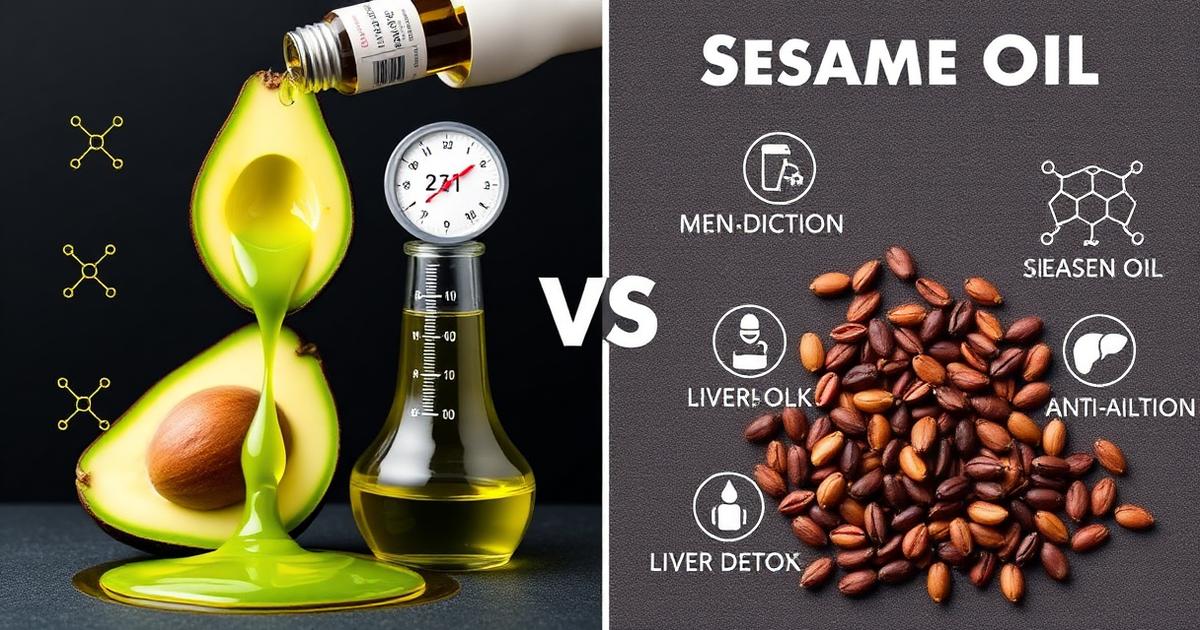
How the choice of fat affects cellular inflammation and nutrient bioavailability. Avocado oil offers a record smoke point and mitochondrial support, while sesame oil contains sesamin – an activator of fat beta-oxidation.
In 2026, sports nutrition views fats as "signaling molecules." The choice is not limited to the smoke point but whether you need a potent anti-inflammatory response (Sesame) or maximum metabolic stability (Avocado).
📊 Comparative Matrix: System Analysis
| Characteristic | Avocado Oil (Extra Virgin) | Sesame Oil (Raw/Untoasted) |
|---|---|---|
| Smoke Point | ~250 – 271°C (Record) | ~177 – 210°C (Average) |
| Oleic Acid (Omega-9) | ~70% (Cardiac Protection) | ~40% |
| Linoleic Acid (Omega-6) | ~12% (Very Low) | ~42% (Inflammation Risk) |
| Vitamin E (mg/100g) | ~15 mg | ~1.4 mg |
| Specific Phytonutrients | Lutein, Chlorophyll | Sesamin, Sesamol |
| Storage Stability | High | Medium (requires dark place) |
🧬 In-depth Analysis of Mechanisms for Athletes
1. Avocado Oil: "The Cellular and Metabolic Guardian"
Avocado oil is almost identical in composition to elite olive oil but with greater temperature tolerance.
💬 Simply put: Imagine avocado oil as a high-performance sports car that can withstand high revs without overheating. It's stable and reliable for any culinary challenge.
⚡ Mitochondrial Support
Studies show that avocado oil can directly improve mitochondrial function, reducing free radical production. For athletes, this means higher efficiency in ATP production.
🥗 Carotenoid Bioavailability
Adding avocado oil to a salad increases the absorption of alpha- and beta-carotene by up to 15 times. These pigments are essential for the repair of connective tissue and joints after heavy strength training.
🛡️ Peroxidation Resistance
Due to its low content of polyunsaturated fats, it is extremely resistant to oxidation within the body – a process often amplified during intense cardio.
2. Sesame Oil: "The Lipid Antioxidant and Hormonal Modulator"
Sesame oil is a treasure trove of lignans, which have an almost "pharmacological" effect on metabolism.
💬 Simply put: Sesame oil is like a software update that optimizes processor performance. Its components directly improve the body's efficiency in burning fat for energy.
🔥 Sesamin and Fat Oxidation
Sesamin, a lignan found in sesame oil, has been shown to increase fat oxidation by up to 10%. This means your body becomes more efficient at using stored fat for energy, which is crucial for endurance athletes.
The combination of Omega-3 and Omega-6 fatty acids in sesame oil also plays a role in reducing inflammation, which is vital for muscle recovery and overall recovery.
When considering your sports nutrition, remember that fats are not the enemy. They are essential for hormone production, nutrient absorption, and providing sustained energy. A balanced intake, focusing on quality sources like avocado and sesame oil, is key to optimal athletic performance and health. For more on how to tailor your nutrition, explore our resources on diet and supplementation.
Recommended products
Frequently asked questions
Which oil is better for high-temperature cooking?
Avocado oil with a smoke point of 250-271°C is the undisputed leader for high-temperature cooking. Sesame oil (177-210°C) is only suitable for light sautéing or as a dressing.
Why does sesame oil help with weight loss?
Sesamin in sesame oil activates enzymes in the liver that stimulate beta-oxidation – the process of burning fatty acids for energy. Limit to 1-2 teaspoons per day due to high Omega-6 content.
How does avocado oil improve vitamin absorption?
Avocado oil increases the absorption of fat-soluble carotenoids by up to 15 times and vitamins D3/K2 by up to 400%, acting as a carrier through the intestinal wall.
Can I combine both oils in my diet?
Yes – use avocado oil as your primary cooking and salad oil, and sesame oil as an accent (1-2 tsp) for Asian dishes and post-workout dressings for its sesamin and flavor.