Melatonin vs. Magnesium: The Night Hormone vs. The Mineral Relaxer

Melatonin signals when to fall asleep, and magnesium ensures deep and restful sleep. Understanding their differences is key to proper recovery.
Short Answer: Magnesium is a mineral that improves sleep *quality* by relaxing the nervous system, while melatonin is a hormone that directly *induces* sleep and regulates the circadian rhythm. Practical advice: Use Magnesium (200-400mg bisglycinate) as a daily foundation for deeper sleep. Add Melatonin (0.5-3mg) only strategically — for jet lag or to "reset" sleep, but not as a constant supplement.
Quality sleep is perhaps the most underestimated, yet most beneficial approach for recovery for any athlete. Without it, hormonal balance is disrupted, muscle growth stops, and the risk of injury and overtraining increases. In search of adequate rest, many turn to supplements, with melatonin and magnesium being two of the most popular choices. Although both are related to sleep, they work in different ways and solve different problems.
Melatonin signals that it's time for sleep. It sets the rhythm and the starting time. Magnesium, on the other hand, provides comfort and tranquility. It doesn't give the initial signal, but contributes to deep and restorative sleep throughout the night. Understanding what you exactly need is key to complete recovery.
This article is part of the Expert Hub for Supplements — over 270 expertly verified articles by Petar Mitkov and the Sport Zona team.
Which is Better: Melatonin or Magnesium?
Melatonin is a neurohormone that signals the body to prepare for sleep, while magnesium is an essential mineral that supports nervous system relaxation.
| Criterion | Melatonin | Magnesium |
|---|---|---|
| Biological Status | Neurohormone | Essential Mineral |
| Primary Focus | Sleep Onset (Falling Asleep) | Sleep Quality and Maintenance |
| Mechanism of Action | Regulates circadian rhythm via MT1/MT2 receptors | Reduces nervous system excitability (GABA agonist) |
| Time Horizon | Rapid onset (30-60 min.) | Cumulative effect (days to weeks) |
| Benefit for Athletes | Synchronizing the biological clock | Muscle relaxation and stress reduction |
| Recommended Form | Controlled-release formulations | Magnesium bisglycinate, citrate, taurate |
What are the Mechanisms of Action of Melatonin and Magnesium?
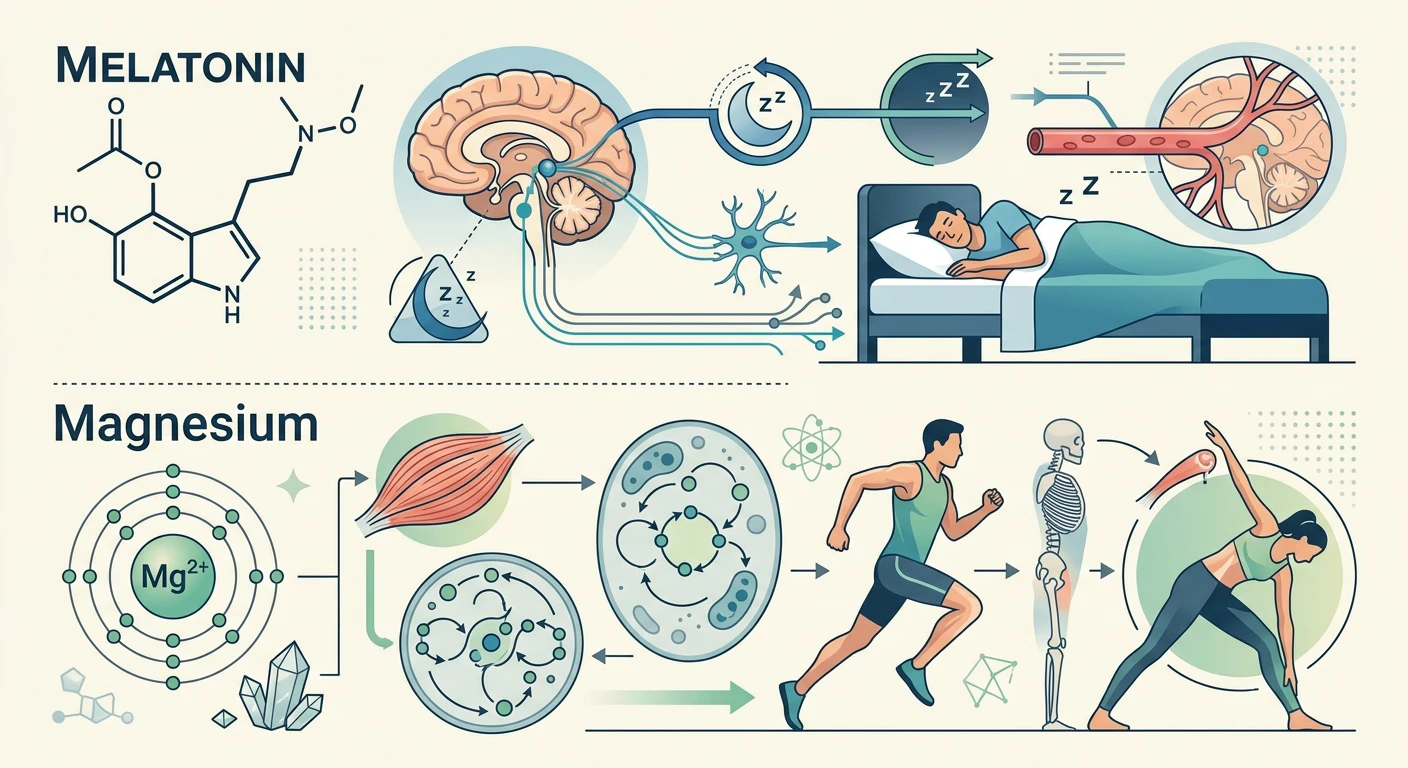
1. Melatonin: The Biological Clock
Melatonin is a hormone naturally produced by the pineal gland in darkness, whose primary function is to regulate the circadian rhythm and signal the body that it's time to sleep. It binds to specific receptors in the suprachiasmatic nucleus, facilitating the transition to sleep, and is particularly effective for problems with falling asleep, jet lag, or shift work.
Simply put: Melatonin is like a bedtime alarm for your body. It doesn't force you to sleep, but simply tells your brain, "It's dark now, time to prepare for sleep."
2. Magnesium: The Neural Calmer
Magnesium is an essential mineral involved in over 300 enzymatic reactions in the body. Unlike melatonin, it does not directly affect the circadian rhythm. Its role in sleep is related to calming the central nervous system. Magnesium acts as an agonist at the gamma-aminobutyric acid (GABA) receptors—the primary inhibitory (calming) neurotransmitter in the brain. Increased GABA activity reduces neuronal excitability and leads to a feeling of relaxation and calmness. Furthermore, magnesium blocks NMDA receptors, which are activated by excitatory neurotransmitters like glutamate. On a physiological level, it helps relax muscle fibers by competing with calcium, which is responsible for muscle contractions. This dual effect—on the mind and muscles—makes magnesium effective in improving sleep *quality* and *depth*, especially for individuals under stress or with intense training.
Simply put: Magnesium is like a "volume down" button for your nervous system. It calms brain activity and relaxes muscles, creating conditions for deep and uninterrupted sleep.
Scientific Sources
- Abbasi B, Kimiagar M, et al. The effect of magnesium supplementation on primary insomnia in elderly: A double-blind placebo-controlled clinical trial. J Res Med Sci, 2012.
- Linus Pauling Institute at Oregon State University. "Magnesium" Micronutrient Information Center.
- Zisapel N. New perspectives on the role of melatonin in human sleep, circadian rhythms and their regulation. Br J Pharmacol, 2018.
- Examine.com. Melatonin Health Benefits, Dosage, and Side Effects.
- Office of Dietary Supplements - National Institutes of Health. "Magnesium Fact Sheet for Health Professionals".
The Synergistic Effect: Why Do They Work Better Together?
Melatonin and magnesium are not competitors, but partners. Combining them can lead to a synergistic effect that addresses sleep problems from two different angles. Melatonin provides the initial boost, facilitating falling asleep at the right time. Once asleep, magnesium takes over, suppressing nervous system excitability and muscle tension, leading to fewer awakenings during the night and more time spent in deep, restorative sleep phases. This combination is beneficial for athletes who are "overstimulated" after a late evening workout. Melatonin helps overcome the effects of bright gym lights and adrenaline, while magnesium calms the body and mind, preparing them for quality rest.
How to Choose the Right Algorithm?
Choose Melatonin if:
- You have trouble falling asleep, but once you fall asleep, you sleep well.
- You travel frequently and suffer from jet lag.
- You work shifts and your biological clock is disrupted.
- You want to shift your bedtime earlier.
🔵 Choose Magnesium if:
- You fall asleep easily but wake up frequently during the night.
- You feel tense, anxious, or "overstimulated" in the evening.
- You experience muscle cramps, stiffness, or twitches.
- You are looking for deeper, more restorative sleep in general.
A recommended stack for maximum recovery involves a combination of 200-400mg of magnesium bisglycinate, taken with dinner or 1-2 hours before sleep, with 0.5-3mg of melatonin, taken 30-60 minutes before bedtime to provide a sleep-onset signal and support quality sleep throughout the night.
Should We Take Melatonin and Magnesium Together?
The 2026 "Foundation and Performance Stack" protocol is an approach where magnesium is taken as a "foundation" for recovery, and melatonin is used as a "tool" for appropriate and sustainable recovery, with the two supplements taken separately.
- Daily Foundation: 200-400 mg of elemental magnesium (in the form of bisglycinate or citrate) is taken with the last meal of the day. This will help with overall relaxation and prepare the nervous system for rest.
- Tool as Needed: 0.5-3 mg of melatonin is taken 30-60 minutes before the desired bedtime. Use it purposefully—for travel, after a very late workout, or if your cycle has been disrupted. It's not necessary to take it every night.
Expert Note
Always start with the lowest effective dose, especially with melatonin. For many people, 0.5mg to 1mg is perfectly sufficient. Higher doses (above 5mg) are not always more effective and increase the risk of side effects like morning grogginess. With magnesium, if you choose citrate, be mindful of the dose, as higher amounts can have a laxative effect.
🧭 When to Choose What?
- Choose Melatonin if your main problem is Falling Asleep on time.
- Choose Magnesium if the problem is sleep Quality and frequent awakenings.
- Combine Both if you have issues with both falling asleep and maintaining deep sleep, especially after intense workouts or under high stress.
📖 What are Melatonin and Magnesium?
Melatonin: A neurohormone produced by the body in response to darkness. Its primary role is to regulate the 24-hour "sleep-wake" cycle (circadian rhythm).
Magnesium: A vital mineral involved in hundreds of biochemical processes. For sleep, it contributes by calming the nervous system and supporting muscle relaxation.
⚖ Pros and Cons
| Melatonin | Magnesium |
|---|---|
Pros:
|
Pros:
|
Cons:
|
Cons:
|
🗣 Simply Explained
If sleep were a flight, melatonin is the gate agent announcing "Boarding has begun." Magnesium is the comfortable seat and quiet engine that ensures a smooth flight without turbulence.
| Criterion | Melatonin | Magnesium |
|---|---|---|
| Role | Conductor | Calmer |
| Problem | Can't fall asleep | Wake up during the night |
| Metaphor | Ignition Key | Engine Oil |
Choose the Right Product for Your Goal:
- 😴 For basic sleep support: Explore our high-quality magnesium supplements.
- 🧘 For stress reduction and relaxation: Try a combination of magnesium and adaptogens like Ashwagandha.
Combined Protocol for Athletes:
- With Dinner: Take magnesium for muscle relaxation.
- 60 min Before Sleep: Add ZMA or amino acids like GABA/Theanine to calm the mind.
- 30 min Before Sleep (if needed): Melatonin for quick sleep onset.
⚖ When to Choose Melatonin
- You want to fall asleep faster.
- You have a disrupted schedule (travel, shifts).
- You are sensitive to light in the evening.
- You need a "reset" for your internal clock.
⚖ When to Choose Magnesium
- You wake up tired, even after 8 hours of sleep.
- You experience anxiety or "racing thoughts" in the evening.
- You train intensely and have muscle fatigue.
- You are looking for a long-term solution for better sleep.
Expert Note from Sport Zona
In my practice with athletes, I see that magnesium deficiency is common due to increased needs from intense training and stress. Therefore, I always recommend magnesium as a foundational supplement for serious trainees. Melatonin is more of a specialized tool—powerful, but for specific situations. I often advise my clients to start with magnesium, optimize their sleep hygiene (no screens, dark room), and only then, if they still have trouble falling asleep, add a small dose of melatonin. Don't rush to reach for melatonin as the first solution.
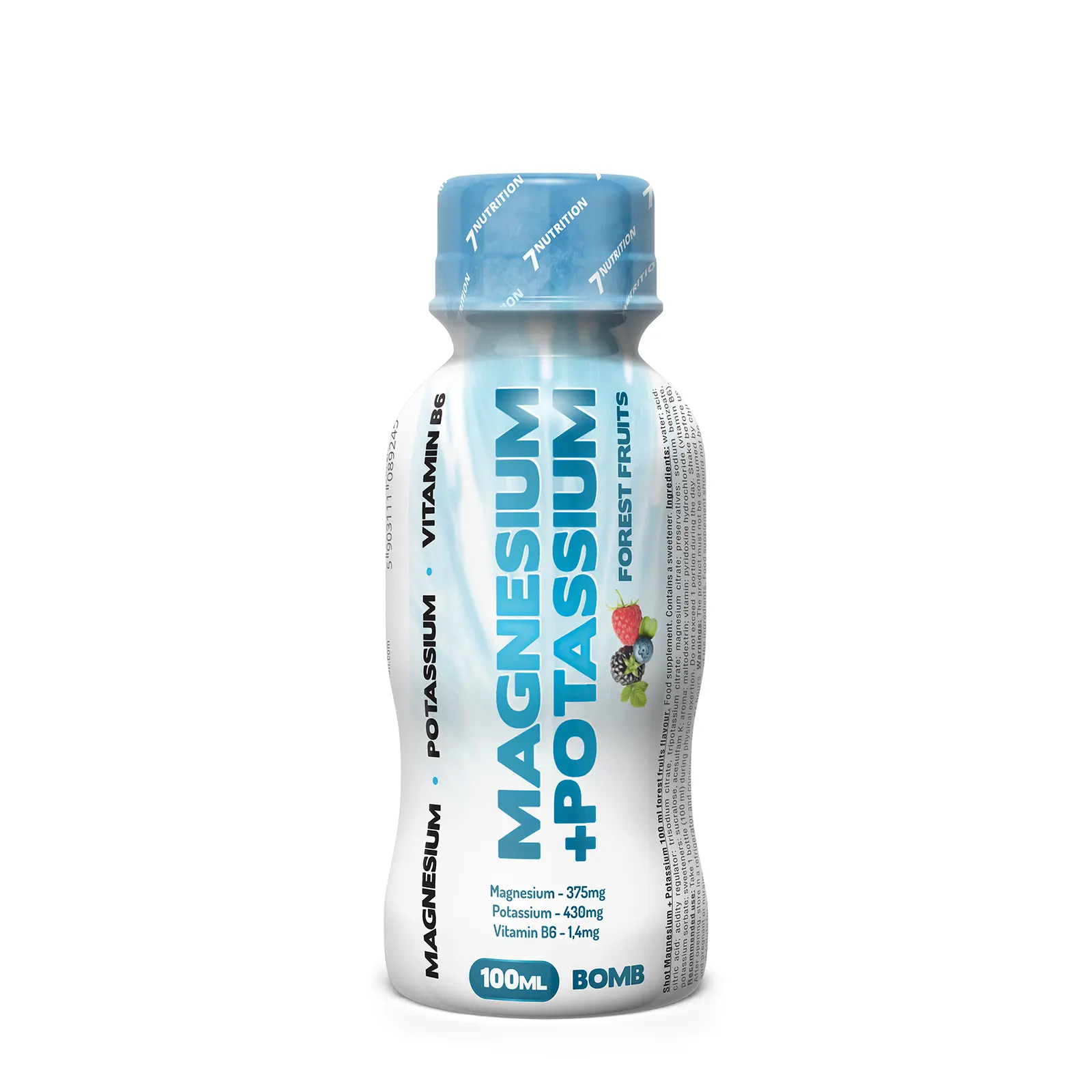
Recommended products

Frequently asked questions
Can Melatonin and Magnesium be taken together?
Yes, they can be taken together and often have a complementary effect. Magnesium helps the body relax, and melatonin signals that it's time to sleep. The combination can improve both the speed of falling asleep and the quality of sleep. Always start with lower doses to assess your individual tolerance.
Which is better for beginners - Melatonin or Magnesium?
For beginners looking to improve their overall sleep quality, magnesium is the safer and more versatile first choice. It's an essential mineral with many benefits beyond sleep and rarely causes side effects. Melatonin is a hormone and is better used purposefully rather than as a daily supplement without a serious reason.
When is the best time to take Melatonin and Magnesium?
Both supplements are taken about 30 to 60 minutes before the desired bedtime. This gives magnesium enough time to support nervous system relaxation and melatonin enough time to start inducing sleepiness.
Are there any side effects from taking Melatonin or Magnesium?
Yes. With magnesium, high doses (especially from forms like oxide) can cause gastrointestinal discomfort. With melatonin, morning grogginess or dizziness is possible, especially at higher doses. Long-term use may potentially reduce the body's natural melatonin production.
What is the recommended dosage for Melatonin and Magnesium?
For magnesium, a sleep-supportive dose is 200-400 mg of elemental magnesium, with forms like bisglycinate or citrate being preferred. For melatonin, an effective dose ranges from 0.5 mg to 5 mg. It is recommended to start with the lowest possible dose (0.5-1 mg) and increase only if needed.