MSM vs. Glucosamine: Sulfur for Joints vs. Cartilage Builder

MSM reduces inflammation and speeds up recovery, while glucosamine builds and maintains cartilage. The choice depends on your goals.
Short answer: MSM primarily acts as an anti-inflammatory agent, providing faster pain relief (2-4 weeks), while Glucosamine is a structural component that supports cartilage repair in the long term (3-6 months). Practical advice: For comprehensive joint support, combine 1500 mg of Glucosamine Sulfate with 2000-3000 mg of MSM daily, divided into two doses with food.
Active athletes know that healthy joints are the foundation of every movement. When experiencing pain or discomfort, we often turn to two of the most popular supplements: MSM and glucosamine. These two supplements support joints but work differently and serve different purposes. The choice between them – or the decision to combine them – depends entirely on the specific problem and the athlete's long-term strategy.
Glucosamine provides the building blocks for maintaining and repairing cartilage. It works slowly, methodically, and with a focus on long-term integrity. MSM (methylsulfonylmethane) helps reduce inflammation and clear waste products from intense exertion. Its role is to manage symptoms and ensure normal joint function in the present moment.
This article is part of the Expert Hub for Nutritional Supplements — over 270 expert-verified articles by Petar Mitkov and the Sport Zona team.
How does MSM differ from Glucosamine?
The comparative matrix systematically analyzes key criteria such as biological role, primary focus, mechanism of action, and time horizon for MSM (Methylsulfonylmethane) and Glucosamine.
| Criterion | MSM (Methylsulfonylmethane) | Glucosamine |
|---|---|---|
| Biological Role | Sulfur donor, anti-inflammatory agent | Precursor for cartilage tissue synthesis |
| Primary Focus | Reducing pain, inflammation, and oxidative stress | Structural support and repair of cartilage |
| Mechanism of Action | Inhibits pro-inflammatory pathways (NF-κB), increases glutathione | Stimulates the synthesis of glycosaminoglycans and proteoglycans |
| Time Horizon | Short-term (days to weeks) for symptom relief | Long-term (weeks to months) for structural effect |
| Additional Bonus | Reduces post-workout muscle soreness (DOMS) | May slow the progression of osteoarthritis |
| Best Form | Pure MSM (powder or capsules) | Glucosamine sulfate |
How do we interpret the mechanisms of MSM and Glucosamine?
An in-depth analysis of the mechanisms of MSM and Glucosamine involves studying their biological pathways, which is essential for choosing the most suitable approach – one, the other, or a combination of both.
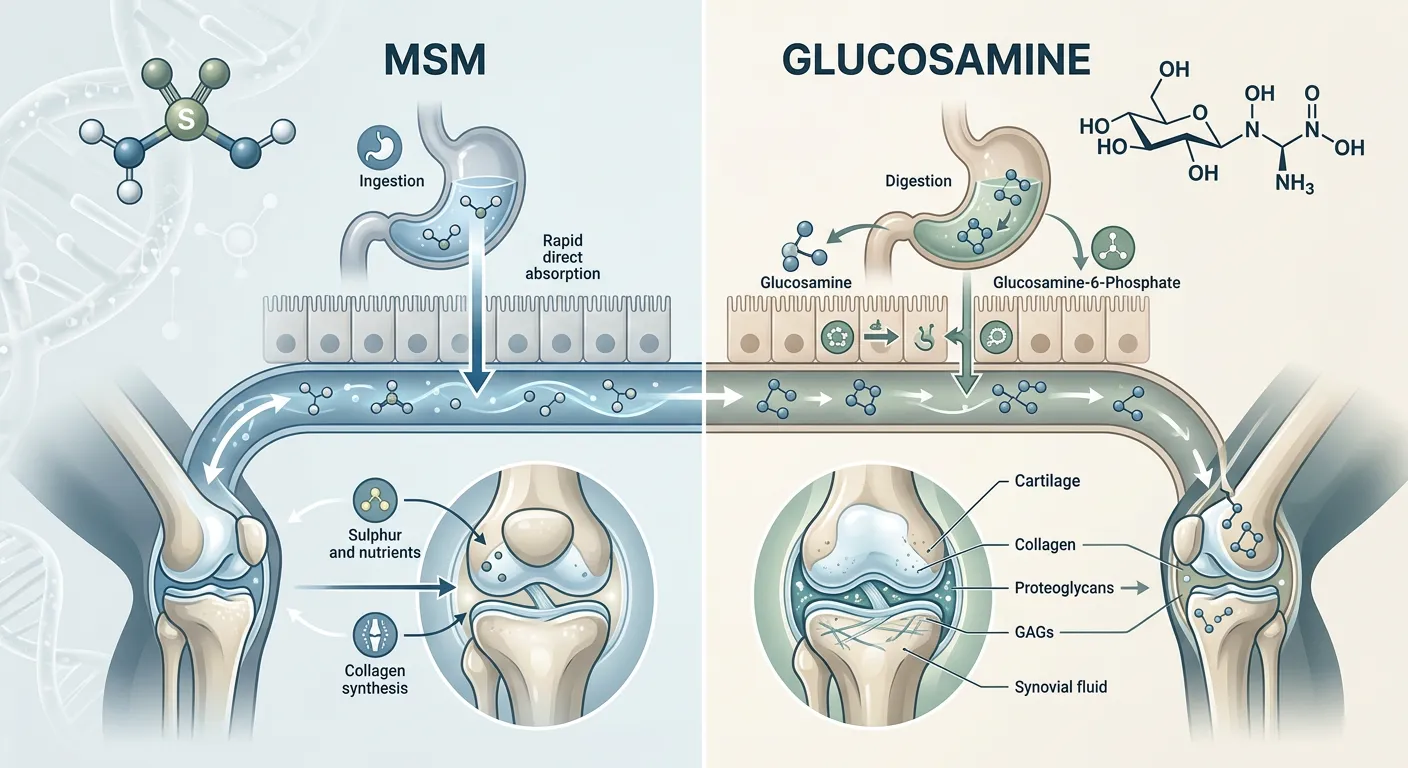
1. MSM: The Anti-inflammatory Sulfur Donor
MSM is an organic sulfur compound that plays a role in many bodily processes. Sulfur is the fourth most abundant mineral and a critical component of connective tissue, including collagen, keratin, and elastin. However, MSM's primary strength lies in modulating the joint environment.
MSM has a dual mechanism of action: it acts as an anti-inflammatory agent by suppressing the activity of NF-κB (nuclear factor kappa-B) – a protein complex that regulates the inflammatory response. Simultaneously, MSM has strong antioxidant properties by increasing glutathione levels, the most important intracellular antioxidant. This helps neutralize free radicals generated during intense training, which would otherwise damage cartilage cells (chondrocytes).
Simply put: MSM reduces pain and swelling caused by inflammation and clears oxidative stress accumulated after heavy exertion.
2. Glucosamine: The Cartilage Architect
Glucosamine is an amino sugar that the body produces naturally and uses as a primary building block for cartilage tissue. It is a precursor for the synthesis of glycosaminoglycans (GAGs) and proteoglycans – the two main classes of molecules that form the structure of cartilage and give it elasticity and shock-absorbing capacity.
As we age or with constant high exertion, the body's ability to produce enough glucosamine decreases. Supplementation aims to provide the necessary "raw material" for the body to maintain and repair the cartilage matrix. The most commonly studied and likely most effective form is glucosamine sulfate, as it provides both glucosamine and sulfur – a key element it shares with MSM.
Simply put: Glucosamine provides the materials the body needs to maintain and repair cartilage in the long term.
Scientific Sources
- Lubis, A. M. et al. (2017). Comparison of Glucosamine-Chondroitin Sulfate with and without Methylsulfonylmethane in Grade I-II Knee Osteoarthritis.
- Ogata, T. et al. (2018). Effects of glucosamine in patients with osteoarthritis of the knee: a systematic review and meta-analysis.
- Examine.com. (2023). MSM Health Benefits, Dosage, and Side Effects.
- Office of Dietary Supplements - NIH. (2021). Glucosamine and Chondroitin for Osteoarthritis.
- Mayo Clinic. (2023). Glucosamine.
The Synergistic Effect: Why Do They Work Better Together?
The question is not always "MSM or glucosamine," but rather "when should I combine them." The synergy between them comes from their complementary mechanisms. MSM quickly reduces pain and inflammation, creating a more favorable environment for movement and training. Glucosamine works in the background to provide the structural components for long-term repair. Combining them allows for simultaneous management of symptoms and addressing the root cause.
Example: An athlete experiencing knee pain after heavy squats. Taking MSM can alleviate pain and swelling within a few days, allowing them to continue training (albeit at a lower intensity). Simultaneously taking glucosamine will support the repair of the cartilage that has been stressed, reducing the risk of long-term damage.
What is the practical algorithm for selection?
Choose MSM if:
- You have acute pain and inflammation after training.
- You are looking for quick symptom relief (pain, stiffness).
- You want to reduce muscle soreness (DOMS).
- Your primary problem is related to inflammation, not structural degeneration.
🔵 Choose Glucosamine if:
- Your goal is long-term prevention and joint maintenance.
- You have chronic discomfort or diagnosed early osteoarthritis.
- Your exertion is consistently high, and you want to ensure "raw materials" for cartilage.
- You are looking for a structural, not symptomatic, effect.
The recommended stack for maximum support is a combination of 1500 mg of Glucosamine Sulfate daily for structural support and 1.5-3 g of MSM (divided into 2 doses) for managing inflammation and oxidative stress, suitable for serious athletes.
When are MSM and Glucosamine Supplements Effective?
- Daily (base): 1500 mg Glucosamine Sulfate and 1500-3000 mg MSM. Can be taken with food, divided into two or three doses (e.g., morning and evening) to maintain consistent levels.
- ♀ On heavy training days (supplement): An additional dose of 1000-1500 mg MSM can be added immediately after training to counteract inflammation and muscle soreness.
Expert Note
The effectiveness of MSM and Glucosamine supplements relies on consistency, with Glucosamine requiring accumulation for results after 4-8 weeks, while MSM acts faster for symptom relief.
🧭 When to Choose Which?
- Choose only MSM if your main problem is acute pain, muscle soreness, and inflammation after specific exertion.
- Choose only Glucosamine if you are a young athlete without pain but want long-term prevention and structural support due to heavy training.
- Combine both if you are an active athlete experiencing periodic discomfort, have chronic issues, or want the most comprehensive protection possible – simultaneous symptom management and long-term care.
📖 What are MSM and Glucosamine?
MSM (Methylsulfonylmethane): An organic sulfur compound with potent anti-inflammatory and antioxidant properties that helps reduce joint pain and oxidative stress.
Glucosamine: An amino sugar that serves as a primary building block for cartilage tissue synthesis, supporting its structure and resilience.
⚖ Pros and Cons
| Supplement | Pros | Cons |
|---|---|---|
| MSM | Fast acting, strong anti-inflammatory effect, reduces muscle soreness. | Does not directly build cartilage, primarily acts on symptoms. |
| Glucosamine | Supports cartilage structure, long-term prevention, slows degeneration. | Very slow acting (weeks/months), weak effect on acute pain. |
🗣 Explained Simply
If we had to explain the difference to a friend, we could use the following table:
| Criterion | MSM | Glucosamine |
|---|---|---|
| Goal | To reduce pain Now. | To keep joints healthy In the future. |
| Speed | Fast (days). | Slow (months). |
| Metaphor | Helps with inflammation. | Helps with building. |
Choose the right product for your goal:
- Long-term joint protection: Combined Joint Formulas
- 🧱 Structural Support: Collagen Products
- Comprehensive Care: Vitamins and Minerals
Combined Protocol for Athletes:
⚖ When to choose MSM
- For quick relief of pain and stiffness.
- If you suffer from severe muscle soreness (DOMS).
- For acute injuries and inflammatory processes.
- As a supplement to other joint supplements for symptomatic control.
⚖ When to choose Glucosamine
- For long-term prevention and cartilage maintenance.
- If you have chronic issues or a family history.
- When the goal is to slow down joint degeneration.
- As a base supplement to be taken continuously.
Expert Note from Sport Zona
In my practice with athletes, I rarely consider MSM and glucosamine as interchangeable. For most individuals undergoing serious exertion, they are part of a unified protocol. I often recommend a baseline intake of glucosamine and chondroitin, while MSM is used more dynamically – in higher doses during intense training periods or after injury, and in lower maintenance doses otherwise. It's important to know that these supplements are not a panacea. They work best in conjunction with proper technique, adequate recovery, and an anti-inflammatory diet.
Recommended products
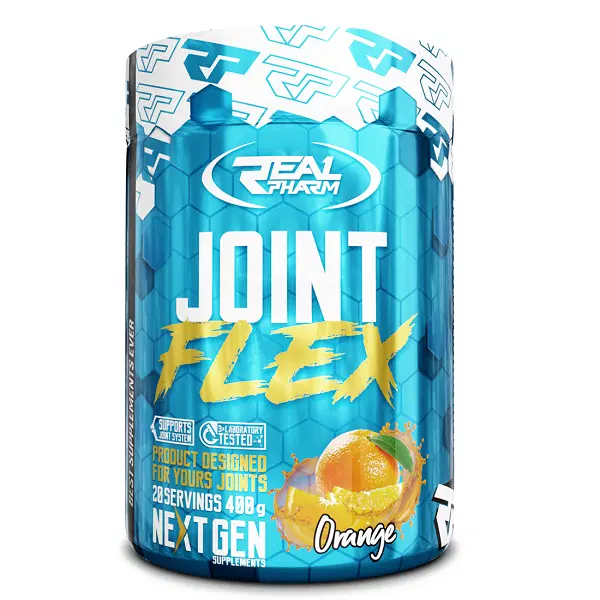
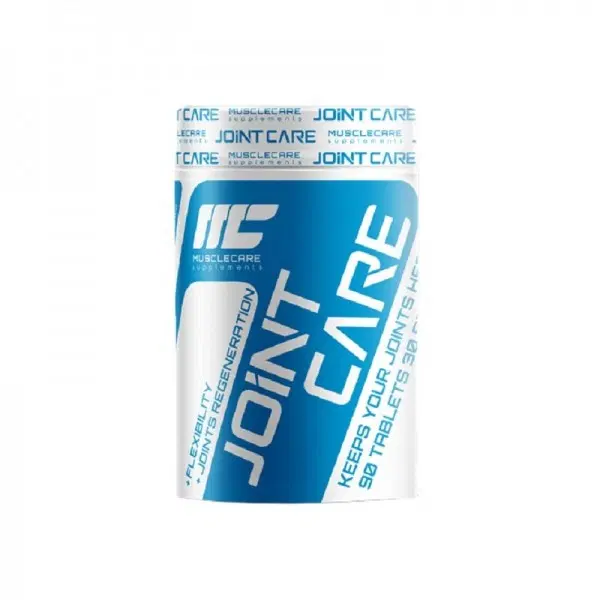
Frequently asked questions
Can MSM and Glucosamine be taken together?
Yes, and it is even highly recommended. They have complementary mechanisms of action. Glucosamine provides the "building blocks" for cartilage, while MSM reduces inflammation and pain, creating a better environment for recovery. Most modern combined joint formulas contain them together.
Which is better for beginners - MSM or Glucosamine?
If the primary goal is rapid pain relief from a new training program, MSM may provide a faster result. For long-term prevention and maintenance of joint health, Glucosamine is a more fundamental choice. The ideal start for a beginner with joint discomfort is a combination of both.
When is the best time to take MSM and Glucosamine?
It is best to take them during meals to minimize the risk of stomach discomfort. The daily dose can be divided into two or three smaller intakes throughout the day, for example, morning and evening.
Are there any side effects from taking MSM or Glucosamine?
Both supplements are considered safe with a low risk of side effects. Some people may experience mild digestive upset such as bloating, gas, or nausea. Taking them with food usually resolves these issues. People with seafood allergies should choose a vegetarian source of Glucosamine.
What is the recommended dosage of MSM and Glucosamine?
For Glucosamine, the standard clinically effective dose is 1500 mg daily, most commonly in the form of Glucosamine Sulfate. For MSM, effective doses range from 1500 mg to 6000 mg daily, with 2000-3000 mg being the most common amount for reducing joint pain and inflammation.