Chickpeas vs. Lentils: Nutrient Density and Glycemic Response
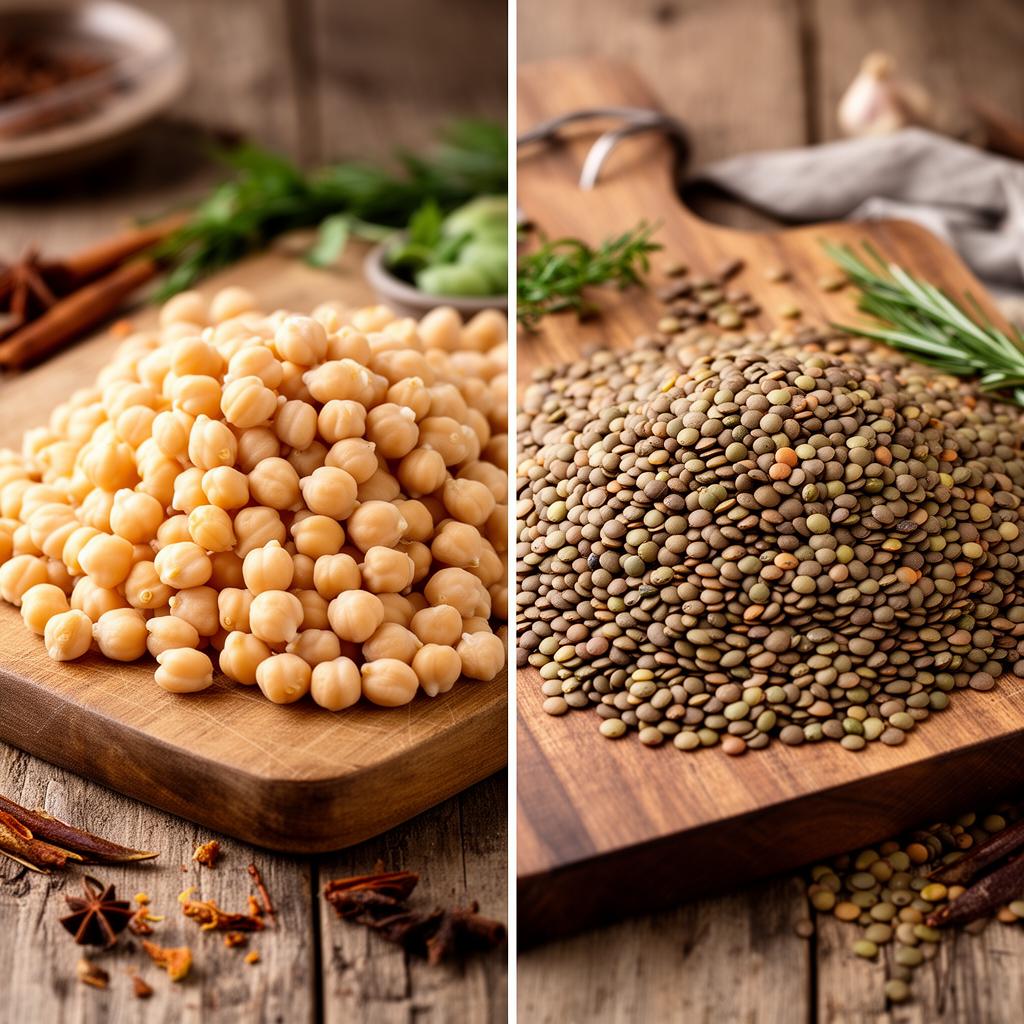
Lentils are a fast provider of iron and folate with an ultra-low GI, and chickpeas optimize the gut microbiome through resistant starch. Understand when to choose each one — from anti-anemia to muscle synthesis.
In modern nutrigenomics (2026), chickpeas and lentils are not just seen as side dishes, but as strategic tools for regulating the microbiome and metabolic health. While lentils excel in iron content, chickpeas offer a unique amino acid balance, critical for protein synthesis.
🧩 Simply put
Imagine lentils as a USB-C charger — fast, compact, instantly charges with iron and folate. Chickpeas are like a power bank — larger, slower, but provides stable energy for hours through their fiber and resistant starch.
📊 Comparative Matrix: Systems Analysis (per 100g cooked product)
| Characteristic | Brown / Green Lentils | Chickpeas (cooked) |
|---|---|---|
| Protein | 9.0 g | 8.9 g |
| Total Fiber | 7.9 g | 7.6 g |
| Iron (% DV)* | 18 % | 12 % |
| Folate B9 (% DV)* | 45 % | 43 % |
| Manganese (% DV)* | 25 % | 43 % |
| Glycemic Index | Very Low (~21–32) | Low (~28–36) |
| Cooking Time | 15–30 min (no soaking) | 60–90 min (requires soaking) |
*Percent of Daily Value (DV) for adults according to USDA.
🧬 In-depth Mechanism Analysis
1. Lentils: The Fast Track to Blood Formation
According to Harvard Health data, lentils are one of the best plant-based sources of non-heme iron. iron
💬 Simply put: Imagine lentils as a sports car – fast, efficient, and delivering energy instantly, ideal for quick recovery. Chickpeas, on the other hand, are like an off-road jeep – slower, but extremely stable and keeping the digestive "road" in perfect condition.
- Metabolic Effect: Its exceptionally low glycemic index (~21) makes it a "metabolic anchor," preventing sharp insulin spikes.
- Folate (B9): Lentils are critical for DNA synthesis and cell division — more effective than chickpeas in supporting nervous system health and during pregnancy.
🏋️ Observation from SportZone
Athletes who include lentils 3–4 times a week demonstrate more stable ferritin levels without the need for iron supplements. The effect is particularly noticeable in women in an active training phase.
2. Chickpeas: The Architect of Satiety and Gut Health
Chickpeas contain a higher percentage of resistant starch and soluble fibers (raffinose).
💬 Simply put: If your body were a computer, lentils would be like a fast RAM module, providing instant access to important data (nutrients). Chickpeas are like a large hard drive, storing information and keeping the system stable in the long run.
- "Second Meal" Effect: Chickpea consumption improves levels of
Recommended products
Frequently asked questions
Which legume contains more iron — chickpeas or lentils?
Lentils contain about 18% of the daily iron intake per 100g of cooked product, compared to 12% for chickpeas. For maximum absorption, combine with vitamin C.
Is it safe to eat chickpeas and lentils every day?
Yes, with proper preparation (soaking and cooking), daily consumption is safe and recommended for improving the microbiome and stabilizing blood sugar.
Why do chickpeas cause more bloating than lentils?
Chickpeas contain more raffinose and lectins. Soaking for 12 hours with discarding the water reduces lectins by up to 85%, and full cooking by over 95%.
Can I replace meat with chickpeas and lentils?
The combination of chickpeas and lentils covers almost the entire amino acid spectrum. Add brown rice or quinoa for complete protein compliance.