Hydration Guide: Water, Electrolytes, and Sports Drinks
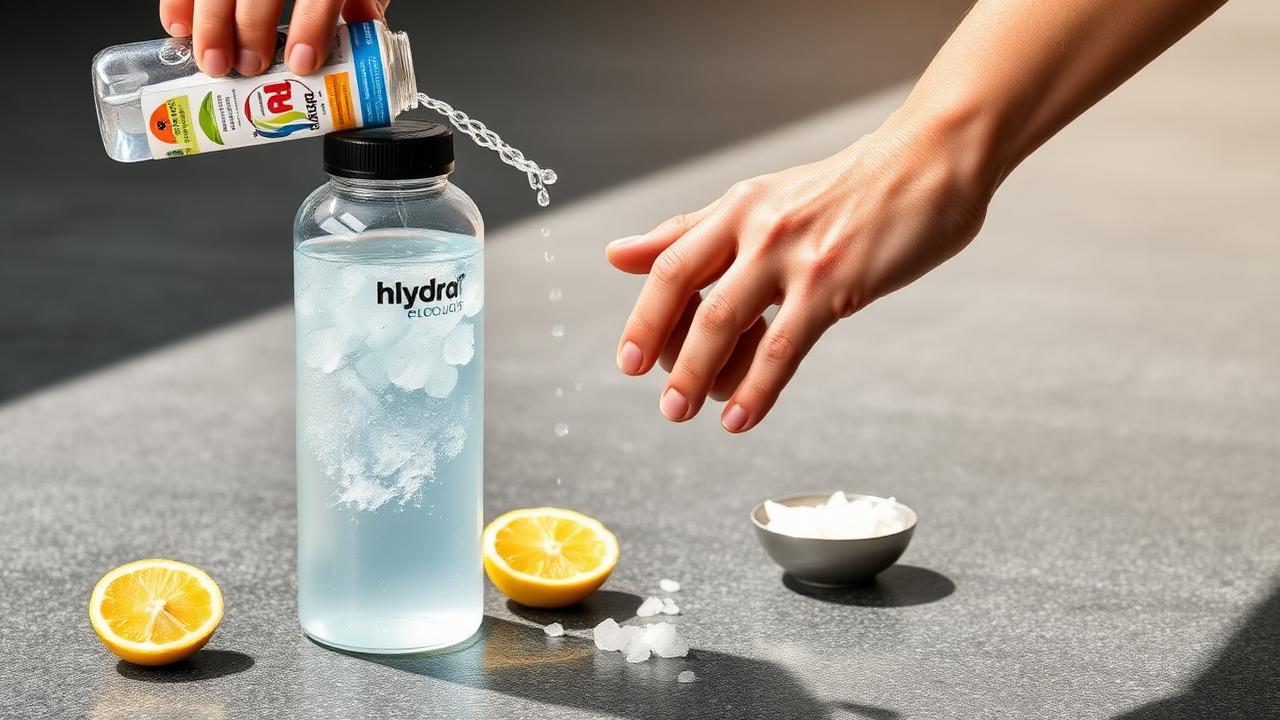
hydration — water, electrolytes, isotonic drinks, needs, dehydration signals
Proper hydration is the process of maintaining optimal water and electrolyte balance in the body, which is crucial for all vital functions.
Why Water is More Than Just "Liquid" for the Body
💬 Simply put: Hydration is about drinking enough water and maintaining a balance of salts in your body so it functions well, especially when you're exercising.
📖 Proper Hydration
Maintaining optimal water and electrolyte balance in the body, which is key for all vital functions and performance.
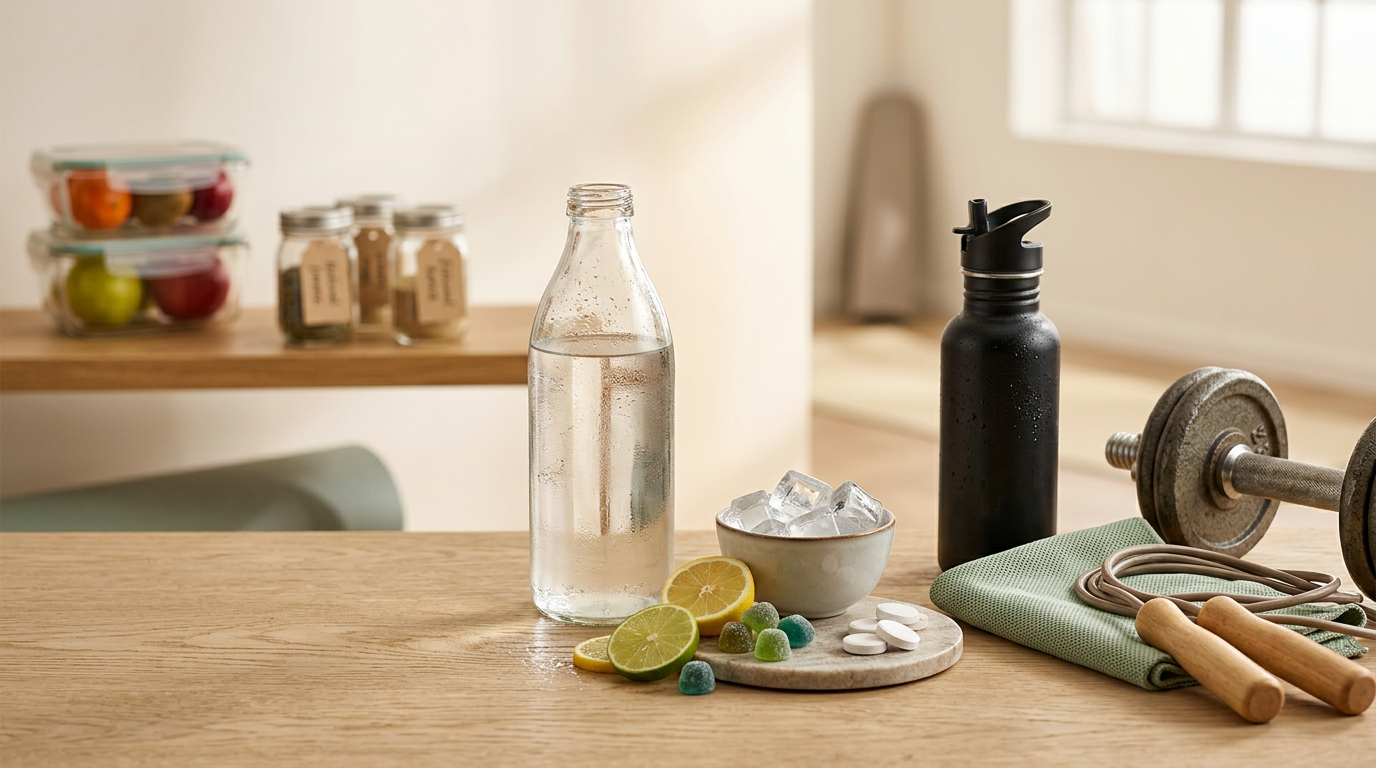
Water makes up about 60% of an adult's body weight and is involved in literally every process in the body. It's not just a passive filler but an active working substance. Imagine it as a transport system: it carries nutrients to cells, removes metabolic waste products (like urea and carbon dioxide), and helps circulate hormones and neurotransmitters. Without an adequate amount of water, this transport slows down, leading to fatigue and reduced concentration. Losing just 2% of body weight in fluids can reduce physical and mental performance by up to 20-30%.
Thermoregulation is another critical function. When we exercise or are in a hot environment, the body cools itself through sweating. Sweat, by evaporating from the skin, removes heat. This mechanism is extremely effective but relies on the availability of enough "fuel" – water. During dehydration, the body starts to "conserve" water by reducing sweating. This can quickly lead to overheating, heatstroke, and collapse, especially during intense exertion. In my opinion, people often underestimate how quickly this scenario can occur, especially in the summer. I often see amateur athletes heading out for a long run in the heat with just a small bottle of water, which is a recipe for disaster.
Furthermore, water lubricates the joints (through synovial fluid) and acts as a shock absorber for organs and tissues, including the spine and brain. Adequate hydration aids digestion, preventing constipation, and maintains skin elasticity and a healthy appearance. When a client complains of dry, "sagging" skin, one of the first things we check is their fluid intake. Sometimes the solution isn't in expensive cosmetics, but in a bottle of water. Often, after just 2-3 weeks of adequate intake, the results are visible.
How to Recognize Dehydration: Beyond Thirst
✅ Advantages
- Improves transport of nutrients and waste products
- Ensures effective thermoregulation through sweating
- Maintains joint elasticity and organ function
- Prevents fatigue, headaches, and concentration problems
⚠️ Disadvantages
- Thirst is a late sign of dehydration, not a proactive one
- Drinking only plain water without electrolytes can lead to hyponatremia
- Excessive water intake can dilute electrolytes
- Individual water needs vary, and universal advice is inadequate
The main problem with the symptom of "thirst" is that it's reactive, not proactive. When you feel thirsty, your body is already in a state of mild to moderate dehydration, typically with a loss of about 1-2% of body fluids. This means your performance is already compromised. Therefore, relying solely on thirst, especially for athletes, the elderly, and children (whose thirst mechanisms are less sensitive), is a flawed strategy. Instead, we need to learn to recognize the earlier and subtler signals our body sends us.
The easiest and most accessible daily test is urine color. Aim for a light lemonade color (pale yellow). If your urine is completely clear, you're likely drinking too much water and risk diluting your electrolytes. If it's dark yellow, amber, or apple juice colored, it's a clear sign of dehydration and the need for urgent rehydration. Other early symptoms include dry mouth, fatigue, and headaches, which are often mistaken for hunger. I often see people reaching for something sweet in the afternoon when a large glass of water would actually solve the energy slump. The brain, which is nearly 75% water, is extremely sensitive to dehydration, leading to irritability and concentration problems.
With more severe dehydration (3-5% body weight loss), symptoms deepen: reduced urination, rapid pulse, dizziness, muscle cramps, and sunken eyes. A loss of over 5% is already a serious medical problem that can lead to loss of consciousness and requires immediate intervention. A practical tip from me: weigh yourself before and after a longer workout (over an hour). Every kilogram of body weight lost equals about 1 liter of fluid lost. For optimal recovery, you should consume about 120-150% of the lost amount over the next few hours. That is, if you lost 1 kg, you should drink 1.2-1.5 liters of fluid to compensate for sweat losses as well as urination.
Electrolytes: The Silent Heroes of Hydration (and Why Sodium is Your Friend)
Many people think hydration is just about drinking water, but that's only half the equation. Electrolytes are minerals with an electrical charge (ions) in body fluids that play a fundamental role. The main electrolytes are sodium (Na+), potassium (K+), chloride (Cl-), magnesium (Mg2+), calcium (Ca2+), and bicarbonate (HCO3-). They control fluid balance between cells and extracellular space, regulate blood pH, transmit nerve impulses, and are responsible for muscle contractions, including the heart's. Drinking large amounts of plain water without adequate electrolyte intake can lead to a condition called hyponatremia (low blood sodium levels), which is extremely dangerous.
Sodium is the big "villain" in modern dietetics, but in hydration, it's an absolute hero. It's the primary electrolyte we lose through sweat and is key to retaining water in the body. Sodium stimulates thirst and improves the absorption of water and carbohydrates in the intestines. The average athlete loses between 500 and 2000 mg of sodium per liter of sweat, and for some individuals (so-called "salty sweaters" who leave white marks on their clothes), losses can reach 3000 mg/liter. I often see clients, especially women, fearing sodium due to the myth that it causes bloating and high blood pressure. In the context of an active lifestyle and sweating, adequate sodium intake is essential for maintaining performance and preventing cramps.
Potassium works in tandem with sodium and is important for intracellular water balance and nerve function. Magnesium, on the other hand, participates in over 300 enzymatic reactions, including energy production and muscle relaxation. Its deficiency is often associated with muscle cramps and twitches. In my opinion, the best strategy is not to focus on just one electrolyte, but on the balance between them. For shorter workouts (up to 60 minutes), special supplementation is usually not needed, unless it's very hot. But for prolonged efforts (marathon, triathlon, long mountain hike), adding electrolytes to water is not just recommended, but essential for health and performance.
🔬 From Practice
I had a case with a client, an active woman around 35 years old, who did CrossFit. She complained of constant muscle cramps during and after training, as well as afternoon fatigue, even though she was very strict and drank 3-4 liters of plain water a day. Her food diary was impeccable. The problem was exactly this – she was drinking *too much* plain water for her activity level, without replenishing the electrolytes she lost abundantly during intense workouts. She was literally washing valuable minerals out of her body. The solution was simple: we added about 1/4 teaspoon of Himalayan salt (about 500-600 mg of sodium) and a little lemon juice to every liter of water she drank during training. After just a week, the cramps disappeared completely, and her energy levels stabilized. This is a perfect example of how "more" water isn't always "better" if it's not combined with the right electrolytes.
How Much Water to Drink? Personalizing Your Needs
The universal advice "drink 8 glasses (about 2 liters) of water a day" is a good start, but it's too simplistic. Individual fluid needs vary significantly depending on multiple factors: body weight, physical activity level, climate, health status, and even diet. My recommendation is to start with a basic rule: 30–35 ml of water per kilogram of body weight. For example, for a 70 kg person, this means between 2.1 and 2.45 liters per day. This is the starting point for days without significant physical activity.
Physical activity is the biggest factor that changes these needs. For every 30 minutes of moderate exercise, you should add about 350-500 ml of fluids. During intense or prolonged exertion, needs skyrocket. As I mentioned, weighing yourself before and after exercise is the most accurate method for determining losses. Climate is also of great importance. Living in a hot and humid climate can double your basic water needs due to increased sweating, even without exercising. People working outdoors in the summer often need 5-6 liters of fluids per day to stay hydrated.
As a specialist in women's health, I always pay attention to the specific needs during pregnancy and breastfeeding. During pregnancy, water needs increase to support the formation of amniotic fluid, increased blood volume, and fetal growth. The recommended intake is about 2.5–3.0 liters per day. Breastfeeding is even more demanding, as breast milk is about 87% water. A breastfeeding mother needs to drink enough to cover her own needs plus the amount she loses through milk – this often means over 3.5 liters daily. I often see young mothers complaining of fatigue and headaches, without realizing they are chronically dehydrated. A glass of water before each feeding is an easy habit that can make a huge difference.
Sports Drinks: Isotonic, Hypotonic, Hypertonic – When and Why?
The market is flooded with sports drinks of various names and colors, but the key to choosing correctly lies in their concentration, or so-called osmolality. This is a measure of the concentration of dissolved particles (carbohydrates, electrolytes) in the drink relative to blood plasma. Based on their osmolality, drinks are divided into three main types: isotonic, hypotonic, and hypertonic.
Isotonic drinks have a concentration close to that of blood plasma. This allows them to be absorbed relatively quickly, delivering fluids, energy (carbohydrates), and electrolytes simultaneously. They typically contain 4-8% carbohydrate solutions (40-80 grams per liter) and key electrolytes like sodium and potassium. They are the "gold standard" for most sports activities lasting over 60-90 minutes, such as soccer, basketball, tennis, or longer runs. A common mistake I observe is consuming isotonic drinks in the office or as a refreshing beverage. They contain sugar and calories that are needed during sports but are excessive for a sedentary lifestyle.
Hypotonic drinks have a lower concentration than blood plasma (under 4% carbohydrates). This means they are absorbed faster than plain water. They are ideal for rapid hydration when the main goal is to deliver fluids and electrolytes without a significant amount of energy. They are suitable for shorter workouts (under 60 minutes), for athletes who need rehydration without calories (e.g., gymnasts, jockeys), or for hydration in hot weather when sweat losses are high but energy expenditure is not as high. Many electrolyte tablets dissolved in water create precisely a hypotonic drink.
Hypertonic drinks have a higher concentration than blood plasma (over 8% carbohydrates). They are very rich in energy and are absorbed more slowly. Paradoxically, they can initially even draw water from the blood into the intestines to dilute themselves, temporarily worsening hydration. Their primary purpose is to deliver maximum carbohydrates for energy, usually after training to replenish glycogen stores, or in very small amounts during ultra-long competitions (e.g., ultramarathons), often in combination with water or hypotonic drinks. Juices, soft drinks, and special "Recovery" shakes are examples of hypertonic fluids.
⚠️ Common Mistakes
- Drinking too much plain water during a marathon. This is a classic path to hyponatremia. For long efforts (over 2 hours), some of the fluids should contain electrolytes and carbohydrates.
- Avoiding sodium at all costs. People on low-carb or keto diets, as well as active athletes, lose more sodium and need to replenish it adequately to avoid fatigue, headaches, and cramps.
- Using energy gels without water. Gels are highly concentrated (hypertonic) and should be consumed with sufficient water to facilitate their absorption and avoid stomach discomfort.
- Assuming muscle cramps are solely due to dehydration or magnesium. Often, the main culprit is sodium deficiency combined with muscle fatigue.
DIY Sports Drink: Effective and Budget-Friendly Solutions
Commercial sports drinks are convenient, but they often contain artificial colors, flavors, and preservatives, and their cost adds up. Making your own drink gives you full control over the ingredients and is extremely easy and budget-friendly. An effective isotonic drink needs three main components: water (for hydration), a source of fast carbohydrates (for energy), and electrolytes (for fluid balance).
Here is a basic but very effective recipe that I recommend to my clients. For 1 liter of drink, mix:
- 900 ml water
- 100 ml natural fruit juice (orange, apple, grape). This provides about 10-12 grams of carbohydrates (sugars) and a little potassium.
- 1/4 to 1/2 teaspoon of table or Himalayan salt. This adds about 600–1200 mg of sodium chloride, which is adequate for most needs. Start with the smaller amount and try it. The taste should be barely perceptible, not like seawater.
- Optional: juice of half a lemon or lime for flavor and a little extra potassium.
This solution provides about a 4-6% carbohydrate concentration and an adequate amount of sodium, making it a great isotonic drink for workouts up to 2-3 hours. You can experiment. Instead of juice, you can use 40-60 grams of dextrose, maltodextrin, or even regular sugar. A combination of honey and maple syrup also works well. In my opinion, the key is simplicity. There's no need for complex formulas to achieve an effective result that will support your performance and save you money.
Comparison of Hydration Drinks
| Drink | Concentration (Osmolality) | Primary Goal | Best Suited For |
|---|---|---|---|
| Water | Hypotonic | General Hydration | Daily intake; workouts under 60 minutes |
| Hypotonic Drink | Lower than blood (<4% carbs) | Rapid Rehydration | Light workouts in hot weather; athletes on a diet |
| Isotonic Drink | Close to blood (4-8% carbs) | Hydration and Energy | Workouts and competitions lasting over 60-90 min. |
| Hypertonic Drink | Higher than blood (>8% carbs) | Energy Delivery/Recovery | Post-workout glycogen replenishment; during ultra-races |
| 100% Natural Fruit Juice | Hypertonic (10-15% carbs) | Energy and Vitamin Delivery | Diluted in sports drink or in small amounts post-exercise |
Q: Can I drink too much water?
A: Yes, it's possible, though rare. The condition is called hyponatremia or water intoxication, and it occurs when consuming huge amounts of water in a short time without electrolyte intake. This dilutes blood sodium to dangerously low levels, which can lead to brain swelling and even death. This risk is highest for endurance athletes (e.g., marathon runners) who drink only plain water for hours.
Q: Do coffee and tea dehydrate you?
A: This is a popular myth. Although caffeine has a mild diuretic effect, studies show that with moderate consumption (up to 300-400 mg of caffeine daily, which is 3-4 cups of coffee), the fluid volume in the drink compensates for the diuretic effect. So, your morning coffee or tea contributes to your daily fluid intake, rather than reducing it.
Q: Are electrolyte powders and tablets better than ready-made sports drinks?
A: They have different advantages. Powders and tablets are more concentrated in electrolytes and usually contain few or no carbohydrates and calories, making them ideal for hydration without energy. They are also more convenient to carry and more budget-friendly. Ready-made sports drinks offer a calculated balance of fluids, electrolytes, and carbohydrates, making them a better "all-in-one" choice for energy and hydration during prolonged activity.
Q: Are electrolytes really necessary for a 45-minute gym workout?
A: In most cases, no. For moderate-intensity workouts lasting under 60-75 minutes, electrolyte losses are not significant enough to require special supplementation during the workout itself. Plain water is perfectly sufficient. However, it's important to be well-hydrated before you start and to restore fluids and minerals afterward with food and water.
Q: Does hydration affect mood and cognitive function?
A: Absolutely. The brain is extremely sensitive to fluid balance. Even mild dehydration (1-2%) can lead to a drop in concentration, impaired memory, increased irritability, and a feeling of mental fatigue. Maintaining good hydration throughout the day is one of the easiest ways to keep your brain in optimal condition.
🔍 In Depth
🎯 Remember: Proper hydration is a balance between water and electrolytes, personalized according to physical activity and individual needs, not just drinking large amounts of water.
🔬 Expert Note from Sport Zona
For many years, I've observed that most athletes underestimate hydration as a fundamental pillar of performance and recovery. They often focus on nutrition and training but forget that even mild dehydration can derail their goals. Regular planning of fluid intake, especially during intense sessions and in hot weather, is critically important for success.
Recommended products
Frequently asked questions
When is water alone not enough for hydration during sports?
Water alone is not sufficient for training sessions lasting over 60-90 minutes, or when exercising in hot weather. In these cases, the body also needs electrolytes, primarily sodium, to retain fluids optimally.
What is the easiest way to check if I am sufficiently hydrated throughout the day?
The easiest daily indicator of hydration is urine color. Aim for a pale yellow color, similar to lemonade. Dark yellow or amber urine indicates dehydration.
When should I consume sports drinks instead of plain water?
Sports drinks are suitable for prolonged or intense physical exertion when not only fluids but also electrolytes are needed. They should not replace daily water intake.
What are the early signs of dehydration, besides thirst?
Thirst is a late symptom. Early signs of dehydration include dry mouth, fatigue, headaches (often mistaken for hunger), and difficulty concentrating.