Nitrites vs. Sulfites: Vasodilation and Chemical Safety
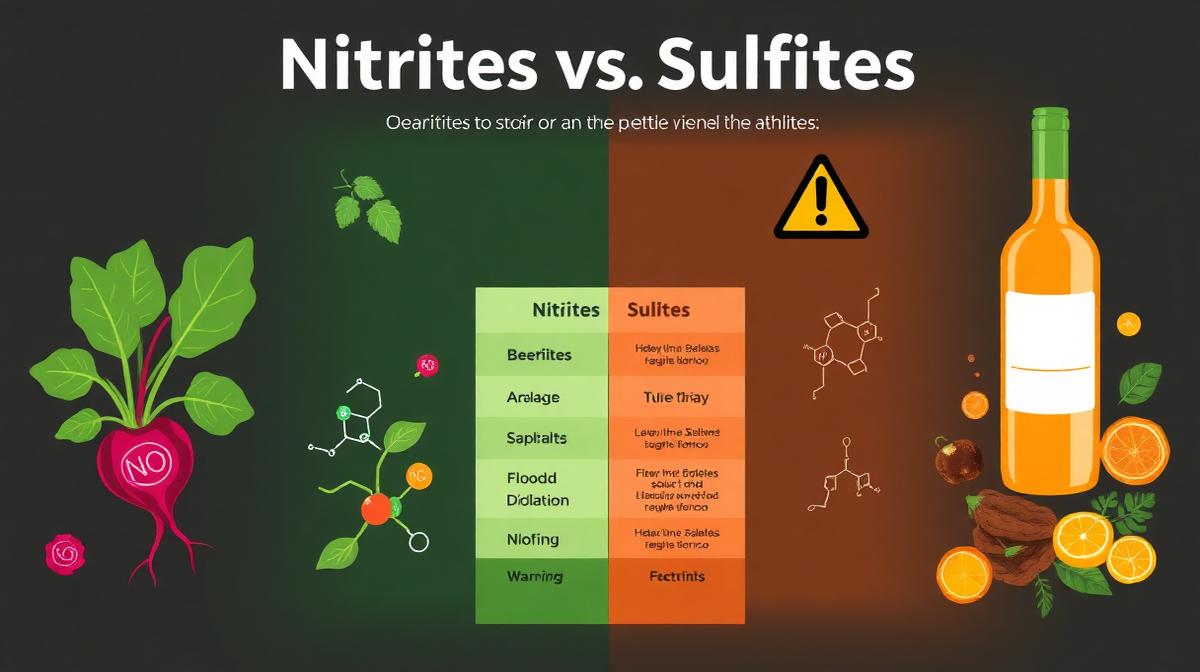
How do preservatives affect mitochondrial efficiency and blood flow? Learn the difference between the ergogenic effect of nitrates (NO) and the risks of sulfite sensitivity in athletes.
How Preservatives Affect Mitochondrial Efficiency and Blood Flow
In 2026, sports nutrition views preservatives not just as "chemicals," but as "biochemical precursors." The choice between them is the difference between improving endurance (Nitrites) and risking respiratory discomfort (Sulfites).
| Characteristic | Nitrites/Nitrates (E249-E252) | Sulfites/Sulfates (E220-E228) |
|---|---|---|
| Primary Function | Meat preservation, color | Wine preservation, dried fruits |
| Athletic Effect | Increase Nitric Oxide (NO) | No ergogenic effect |
| Mechanism | Vasodilation | Bacteriostatic agent |
| Mitochondrial Effect | Improve efficiency | Neutral |
| Critical Risk | Nitrosamine formation (when heated) | Allergies, Asthmatic reactions |
| Natural Sources | Beets, arugula, spinach | Fermented foods (naturally) |
🧬 In-depth Analysis of Mechanisms for Athletes
1. Nitrites as "Ergogenic Fuel"
When consumed, nitrites and nitrates enter a specific cycle (Nitrate → Nitrite → Nitric Oxide pathway) that is independent of the L-arginine pathway. This pathway is crucial for improving exercise performance, as it directly influences tempo.
💬 Simply put: Nitrites are like a turbo boost for a sports car's engine, widening the fuel pathways (blood), while sulfites are like bad fuel that can clog the filters and reduce power.
- Vasodilation and Transport: Nitric oxide relaxes the smooth muscles of blood vessels. This allows a greater volume of blood to reach the working muscle, accelerating nutrient delivery and lactate removal. This process is closely related to the concept of Nitric Oxide.
- Mitochondrial Economy: Studies in the Journal of Applied Physiology show that nitrates reduce the amount of oxygen required to maintain a certain intensity. This literally makes your "metabolic engine" more fuel-efficient, impacting overall protein synthesis and utilization.
- Muscle Contraction: There is evidence that nitrites improve calcium release within muscle fibers, which increases explosive power. Proper hydration is also essential for optimal muscle function.
2. Sulfites: The "Hidden Antiseptic"
Sulfites are used to prevent oxidation and color changes (e.g., in dried apricots or wines). While they have preservative qualities, their impact on athletes is generally neutral, unlike the benefits seen from compounds like vitamin C.
💬 Simply put: Imagine nitrites as a software update that optimizes the processor's (mitochondria) performance and speeds up the network connection (blood circulation). Sulfites, on the other hand, are like a bug that can slow down the system and cause crashes.
- The "Sulfite Sensitivity" Risk: Approximately 1% of the population (and up to 5% of athletes with asthma) have sulfite intolerance. Symptoms include chest tightness, wheezing, and dizziness – conditions that can be fatal during intense cardio.
Recommended products
Frequently asked questions
Is beetroot juice safe before training?
Yes, beetroot juice is one of the most researched ergogenic aids. The natural nitrates in it are converted to nitric oxide, improving oxygen efficiency by 3-5%. The optimal intake is 500ml, 2-3 hours before exercise.
Why are nitrites in bacon dangerous, but those in spinach are not?
Vegetables contain nitrates along with Vitamin C and polyphenols, which block the formation of carcinogenic nitrosamines. In processed meats, heating above 130°C binds nitrites with amines, creating dangerous compounds.
Can I drink wine before a competition because of the sulfites?
Sulfites in wine have no sporting effect – they are purely a technological additive for preservation. In athletes with asthma, they can even cause bronchospasm. Wine before a competition is counterproductive for numerous reasons.
How does antibacterial mouthwash affect the nitrate effect?
Bacteria in the oral cavity are a critical step in the conversion of nitrates to nitrites. Strong antiseptics destroy them, blocking up to 90% of the beneficial effect of beetroot juice. It is recommended to avoid antibacterial mouthwashes in the days of nitrate intake.