Oatmeal vs. Muesli: The Power of Beta-Glucan vs. Sugar Traps
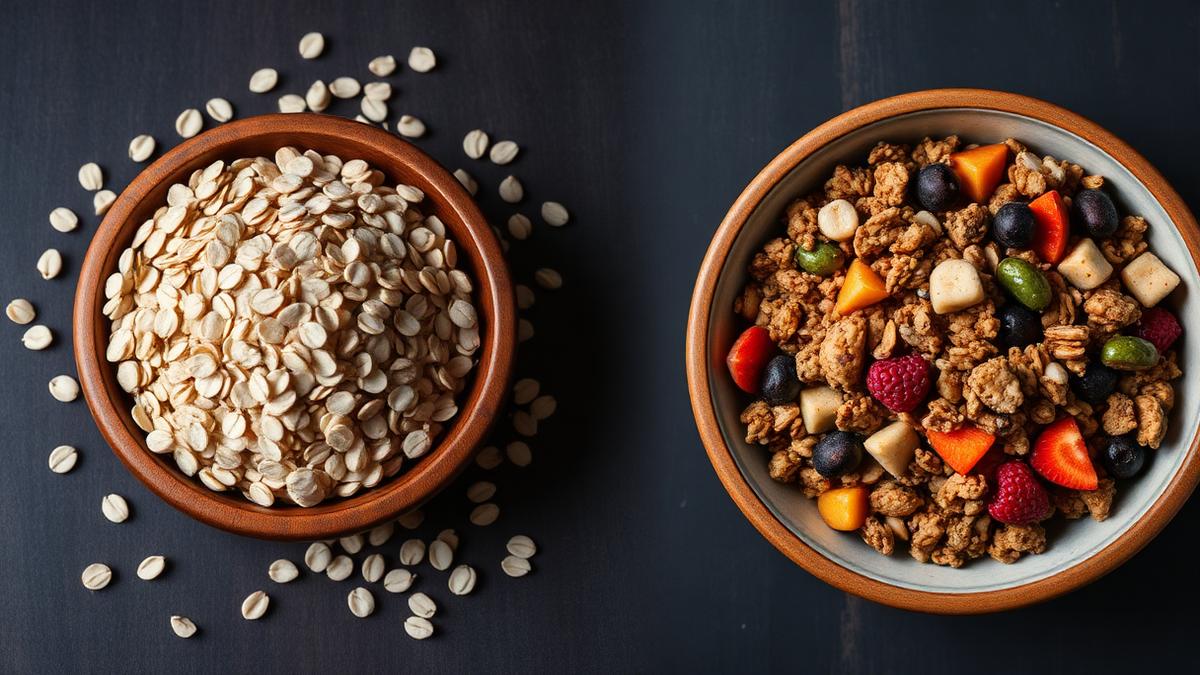
The difference between oatmeal and ready-made muesli is often the difference between a steady energy flow and an insulin rollercoaster. While oats are a raw material with high functional value, muesli is a finished product whose quality varies dramatically depending on the manufacturer.
Why a "Clean" Breakfast is the Software Key to Stable Energy
This comparison presents us with a choice between the "Metabolic Regulator" and the "Energy Combo." In the body's system architecture, oats act as a precise modulator of glucose and cholesterol, while muesli is a complex (and sometimes chaotic) mix that requires careful label reading.
🏋️ From SportZone Practice
When analyzing our clients' food diaries, one of the most common "invisible problems" is the morning breakfast of ready-made muesli, which they consider healthy. After switching to plain oats with controlled additions, most report significantly more stable energy and easier appetite control until lunch.
📊 Comparative Matrix: Nutritional Efficiency (per 100g product)
| Characteristic | Oats (Whole) | Muesli (Standard Ready-made) |
|---|---|---|
| Added Sugar | 0g | 10–25g (often hidden) |
| Glycemic Index | Low (~55) | Medium to High (~65–80) |
| Beta-glucans | High levels | Varies (diluted) |
| Fats | ~6g (healthy) | ~10–15g (often palm oil) |
| Processing | Mechanical pressing | Thermal and chemical |
| Satiety | Long-lasting (4–5h) | Short (1–2h) |
📚 What Science Says
EFSA (European Food Safety Authority) has approved a health claim stating that 3g of beta-glucan daily from oats lowers LDL cholesterol. This is equivalent to approximately 75g of dry oats – a normal breakfast portion.
🧬 In-depth Analysis of Mechanisms
1. Oats: The Magic of Beta-Glucan
Oats contain a unique type of soluble fiber – beta-glucan, which is their main functional active ingredient.
💬 Simply put: This section explains exactly how things work in our bodies, as if we were looking at a car engine to understand how it produces energy.
💬 Simply put: Here we will understand how the special fiber in oats (beta-glucan) acts like a "slow burn" in the body, releasing energy gradually and steadily.
- The "Gel" Effect: In the stomach, beta-glucan absorbs water and turns into a thick, viscous gel. This gel slows down the passage of food through the stomach and small intestine, which stabilizes blood sugar and prolongs satiety.
- Cholesterol Regulation: The gel physically "traps" bile acids (rich in cholesterol) and eliminates them from the body, rather than letting them be recycled. This is the most effective natural mechanism for lowering LDL cholesterol.
- Prebiotic Effect: Beta-glucan also serves as a
Recommended products
Frequently asked questions
Which is better for weight loss – oats or muesli?
Oats are definitively more effective for weight loss. They contain 0g added sugar and provide 4–5 hours of satiety thanks to beta-glucan. Ready-made muesli often contains 10–25g of hidden sugar and palm oil, which increases calories without nutritional value.
What is beta-glucan and why is it important?
Beta-glucan is a soluble fiber unique to oats. In the stomach, it forms a viscous gel that slows digestion, stabilizes blood sugar, and physically traps bile acids, naturally lowering LDL cholesterol.
How do I identify quality muesli from poor quality?
Check the label for three things: 1) Added sugar (should be under 5g per 100g); 2) Palm oil or hydrogenated fats (should not be present); 3) Percentage of oats versus additives. If sugar is among the first three ingredients, it's a dessert, not breakfast.
What is the overnight oats technique?
Soaking oats overnight in yogurt or lemon water neutralizes phytic acid. This makes minerals (magnesium, zinc) much more absorbable and improves texture without the need for cooking.