30-Day Beginner Rowing Machine Plan & Program
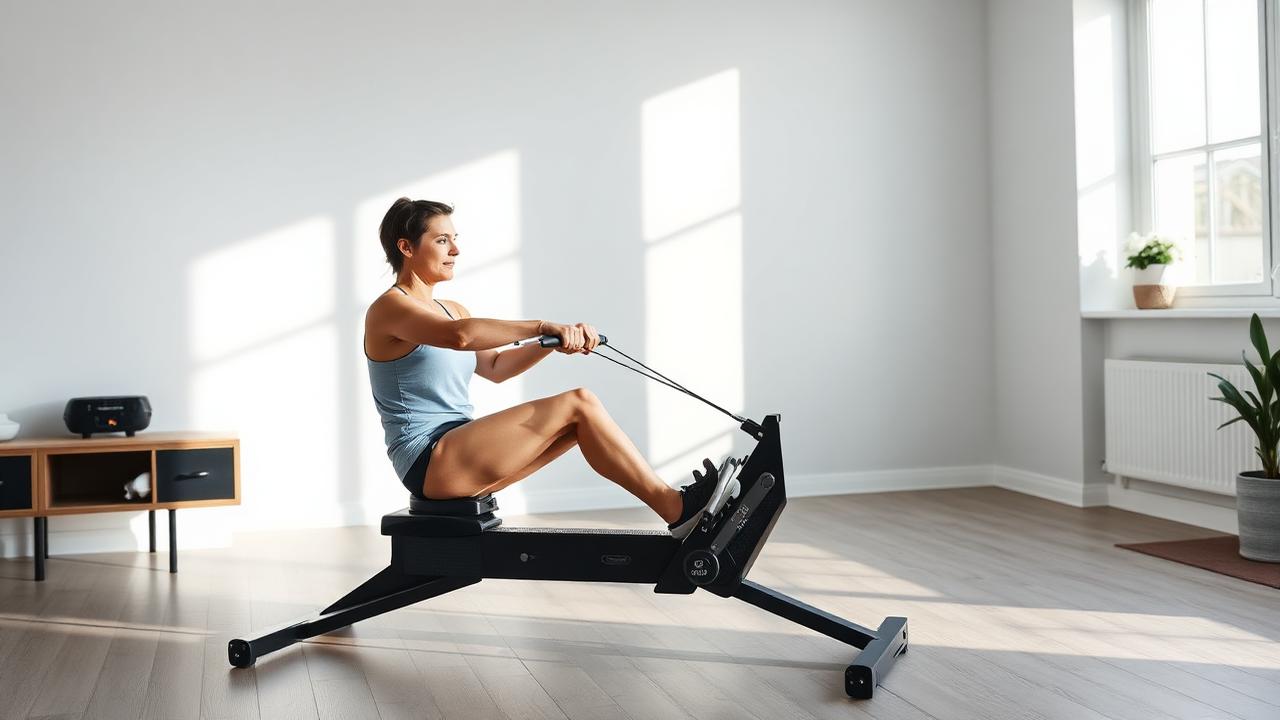
Looking for an effective way to improve your cardio and tone your entire body? This 30-day rowing machine program is designed for complete beginners.
Want to start a fitness routine that's effective, engages the whole body, and is easy on the joints? The rowing machine is your answer. Often overlooked in the corner of the gym, this machine offers one of the most comprehensive cardio workouts available. With this 30-day beginner program, you'll build a solid foundation, improve your technique, and significantly boost your endurance, turning rowing from a challenge into a pleasure.
Why is the rowing machine the perfect start to your fitness journey?
Rowing is a low-impact exercise, which means minimal stress on your ankles, knees, and hips. This makes it a perfect choice for beginners, overweight individuals, or those recovering from injuries. Unlike the treadmill, the rowing machine activates about 86% of your body's musculature, including legs, glutes, back, core, shoulders, and arms – all in a single movement.
This high muscle engagement leads to a greater calorie burn in less time compared to many other cardio machines. Furthermore, it simultaneously builds muscular strength and cardiovascular endurance. This makes it an extremely efficient tool for achieving a variety of fitness goals, from weight loss to improving overall health.
What is the correct rowing technique and why is it so important?
Mastering the correct technique is the key to effectiveness and injury prevention. The rowing stroke consists of four main phases that should merge into a smooth, coordinated motion. Don't rush the pace until you've perfected each phase.
The movement comes primarily from the legs (about 60%), followed by the core (20%), and finally the arms (20%). Remember the mantra: legs, core, arms; then in reverse: arms, core, legs. Here is a breakdown of the phases:
- 1. The Catch: Sit with a straight back, arms extended forward, knees bent, and shins vertical. The body is slightly hinged forward from the hips, as if you are at the 1 o'clock position on a clock face.
- 2. The Drive: Start the movement with a powerful push from the legs. When the legs are almost straight, engage the core, leaning back (to an 11 o'clock position), and finally finish by pulling the handle towards the lower part of your chest.
- 3. The Finish: At the end of the movement, your legs are straight, your torso is slightly leaned back, and the handle has touched your body below the chest. Shoulders are relaxed, and wrists are straight.
- 4. The Recovery: This is the reverse sequence. First, extend your arms, then hinge your torso forward from the hips, and finally, smoothly bend your knees to return to the starting position (The Catch). The recovery phase should be slower than the drive phase.
How should you structure your warm-up and cool-down?
Never skip the warm-up and cool-down. They are crucial for preparing the body for exertion and aiding recovery afterward. A good 5-minute warm-up increases heart rate, blood circulation, and muscle temperature, reducing the risk of injury.
For your warm-up, start with 3-5 minutes of light rowing at a very low resistance and slow pace (about 18-20 strokes per minute). Focus entirely on proper form. Then, do some dynamic stretches like arm circles, lunges, and torso twists. For the cool-down, row lightly for another 3-5 minutes, then perform static stretches for the main muscle groups – quads, hamstrings, glutes, back, and chest, holding each stretch for 20-30 seconds.
How is the 30-day beginner program structured?
The first week is entirely dedicated to mastering the technique and adapting the body to the new movement. Don't focus on speed, but on the quality of each stroke.
Workout Plan – Week 1
| Day | Workout | Intensity (RPE) |
|---|---|---|
| Day 1 | 5 min warm-up. 10 min technique focus. 4 x 500m with 2 min rest. 5 min cool-down. | RPE 4-5 |
| Day 2 | Rest | - |
| Day 3 | 5 min warm-up. 10 min technique focus. 4 x 500m with 90 sec rest. 5 min cool-down. | RPE 5 |
| Day 4 | Rest | - |
| Day 5 | 5 min warm-up. 10 min technique focus. 5 x 500m with 90 sec rest. 5 min cool-down. | RPE 5-6 |
| Day 6-7 | Rest or active recovery (light walk, stretching) | - |
Weeks 2 & 3: How to increase intensity and endurance?
Once you have built a good foundation, it's time to start challenging yourself. In these two weeks, we will increase the volume and introduce interval training to improve your cardio capacity.
Workout Plan – Week 2
| Day | Workout | Intensity (RPE) |
|---|---|---|
| Day 8 | 5 min warm-up. 6 x 500m with 90 sec rest. 5 min cool-down. | RPE 6 |
| Day 10 | 5 min warm-up. Intervals: 250m fast / 250m slow, 8 reps. 5 min cool-down. | RPE 7-8 / 4 |
| Day 12 | 5 min warm-up. 6 x 500m with 75 sec rest. 5 min cool-down. | RPE 6-7 |
Workout Plan – Week 3
| Day | Workout | Intensity (RPE) |
|---|---|---|
| Day 15 | 5 min warm-up. Pyramid: 250m, 500m, 750m, 500m, 250m. Rest = work time. | RPE 7-8 |
| Day 17 | 5 min warm-up. 3 x 750m with 2 min rest. 5 min cool-down. | RPE 7 |
| Day 19 | 5 min warm-up. Pyramid: 250m, 500m, 750m, 500m, 250m. Rest = 90 sec between each. | RPE 8 |
Week 4: Are you ready to set your first personal record?
The final week is the culmination of your efforts. We will reduce the training volume so your body can recover and be in top form for the final test – a 5000-meter row for time. This is your first benchmark, which will show the huge progress you've made.
On the day of the test, be well-hydrated and rested. Warm up well and get in the right mindset. The goal is not to sprint from the start, but to find a sustainable pace you can maintain for the entire distance. Divide the 5 kilometers into 5 parts of 1000 meters and try to maintain a consistent time for each part. Good luck!
Workout Plan – Week 4
| Day | Workout | Intensity (RPE) |
|---|---|---|
| Day 22 | 5 min warm-up. 3 x 1000m with 3 min rest. 5 min cool-down. | RPE 7 |
| Day 24 | Active recovery: 15-20 min very light rowing. Focus on breathing and technique. | RPE 3-4 |
| Day 26 | Test: 5000m for time. 5-10 min warm-up. Row 5km at your best sustainable pace. 10 min cool-down. | RPE 9 |
What are the key tips for success and consistency?
Getting through a 30-day program requires dedication. To ensure success and turn rowing into a habit, follow these few simple but effective tips.
- Listen to your body: If you feel sharp pain (different from muscle soreness), give yourself an extra rest day. Recovery is just as important as the workout.
- Stay hydrated: Drink plenty of water before, during, and after your workout. Even slight dehydration can negatively affect your performance.
- Be consistent: Try to stick to the schedule as closely as possible. Consistency is what brings long-term results. Record your 5k time and use it as motivation for future improvements.
Frequently asked questions
How often should I use a rowing machine as a beginner?
Starting with 3-4 workouts per week is sufficient. This allows your body to adapt and recover, preventing overtraining.
What muscles does the rowing machine work?
Rowing is a full-body workout that engages about 86% of your muscles, including your legs, glutes, back, shoulders, arms, and core.
What is RPE and how do I use it?
RPE (Rating of Perceived Exertion) is a scale from 1 to 10 for gauging your subjective feeling of effort. 1 is rest, and 10 is maximum effort. Aim for the levels indicated in the program.
Can I lose weight with this program?
Yes, rowing is an excellent cardio exercise for burning calories. Combined with a balanced diet, this program can significantly contribute to weight loss.
What should I do if I miss a workout?
Don't worry. Just continue with the plan from the next scheduled day. Do not try to make up for it by doing two workouts in one day to avoid exhaustion.