Kettlebells for Beginners — A Complete Guide
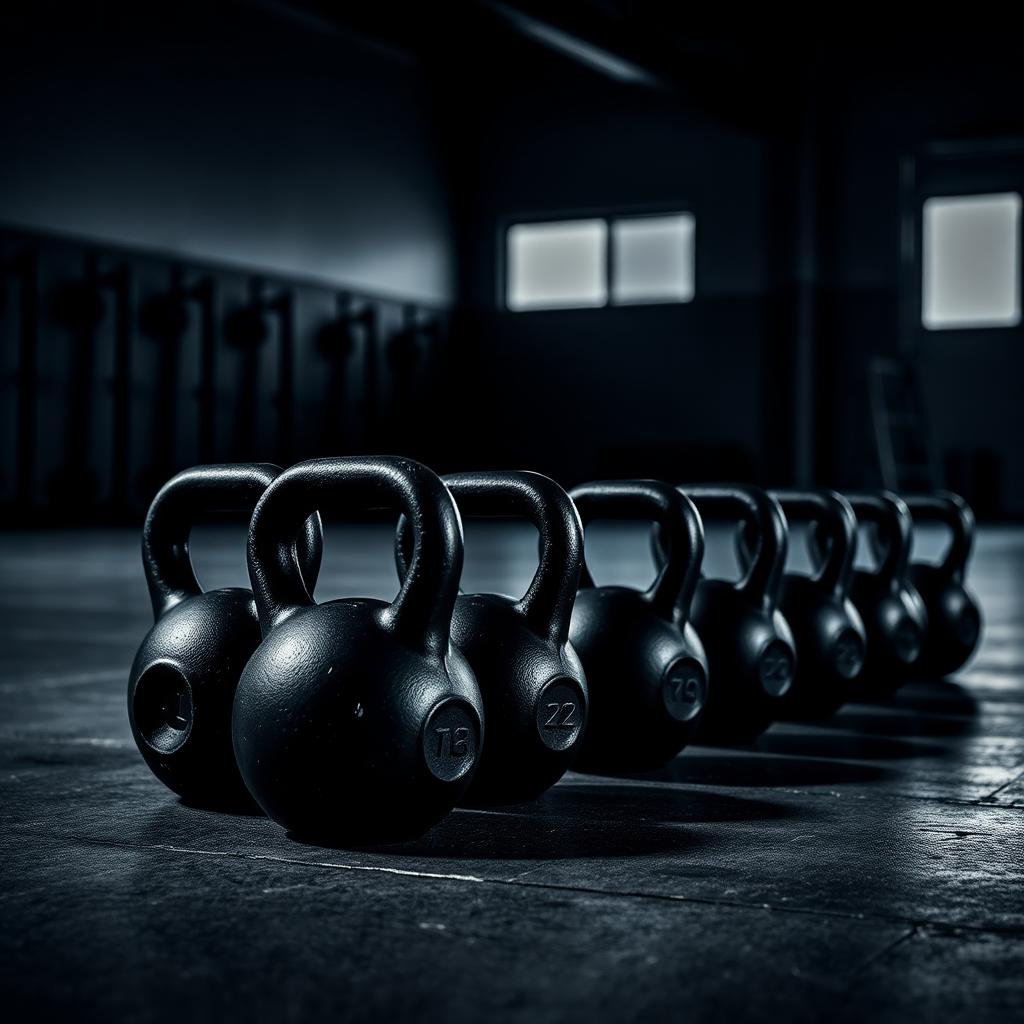
The first kettlebell for women is usually 8–12 kg, for men — 16–20 kg. Classic cast iron kettlebells are cheaper, but competition kettlebells have a standard size regardless of weight, which makes it easier to transition to heavier ones.
Short answer: Women: start with 8 kg (for swing) or 6 kg (for press). Men: start with 16 kg (swing) or 12 kg (press). Start with deadlift → swing → goblet squat → press → Turkish get-up.
Why choose a kettlebell over a dumbbell?
Kettlebells engage more muscles simultaneously, especially stabilizers, and build functional strength because their center of gravity is offset compared to dumbbells.
A kettlebell has an offset center of gravity — the ball hangs below the handle. This activates stabilizing muscles, engages the core, and builds functional strength that a dumbbell cannot provide. An exercise with a kettlebell like the swing works over 200 muscles simultaneously.
What weight should I choose for my first kettlebell?
Women
- No sports experience: 6–8 kg
- Active (3+ workouts per week): 10–12 kg
- Experienced (strength training 1+ year): 14–16 kg
Men
- No sports experience: 12 kg
- Active: 16 kg (standard for swing)
- Experienced: 20–24 kg
The weight for upper body exercises (press, Turkish get-up) should be 4–6 kg less than for the swing.
What types of kettlebells are there?
1. Classic Cast Iron
Cast iron kettlebells with a smooth or powder-coated finish are the cheapest option (€15–€25/kg), with their size usually increasing with weight.
2. Vinyl (for beginners)
Cast iron coated in vinyl/neoprene. Safe for floors and quiet. Suitable up to 12 kg. See vinyl kettlebells.
3. Competition
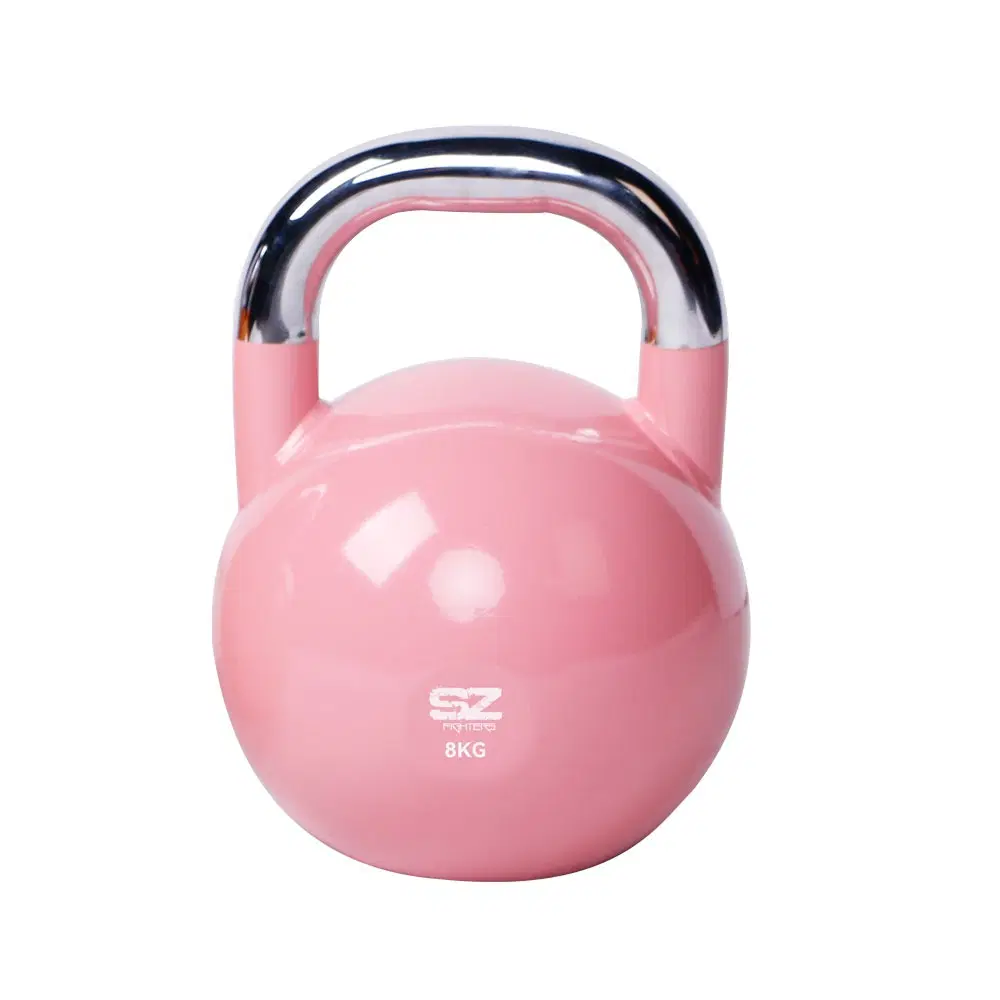
Steel, same size regardless of weight (33 cm height, 21 cm ball diameter). Color-coded by the IKSFA federation. Recommended if you plan to progress systematically.
What are the 5 basic exercises for beginners?
Kettlebell deadlift, Goblet squat, Two-Hand Swing, Single-Arm Press, and Turkish Get-Up are five fundamental exercises suitable for beginners looking to train with kettlebells. They develop important movements and body stability.
- Kettlebell Deadlift — the foundation for all others. Hip hinge, straight back, weight between the heels.
- Goblet Squat — squatting with the kettlebell in front of the chest. Teaches proper knee and spine positioning.
- Two-Hand Swing — the main exercise in kettlebell sport. Hip hinge (not a squat!), explosive hip extension, arms are just the rope.
- Single-Arm Press — overhead press. Stabilizes the shoulder girdle and core.
- Turkish Get-Up — a technical exercise from lying down to standing up. A master test of stability.
What are the common mistakes?
Common mistakes when training with kettlebells include performing the swing with the arms instead of the hips, rounding the back during the deadlift, using a kettlebell that is too heavy from the start, skipping the warm-up, and training on an unsuitable surface.
- Swinging with the arms, not the hips — The swing is a hip hinge movement. The arms do not lift the weight.
- Rounded back during deadlift — guaranteed injury. Always maintain a neutral spine.
- Kettlebell too heavy from the start — technique suffers, risk of injury increases.
- Skipping warm-up — kettlebells load the shoulders and lower back explosively.
- Training on a rubber floor — dropping it on a hard surface will break the kettlebell and the floor.
How many kettlebells are needed for a complete workout?
For a complete workout at home, a progression of 3 kettlebells is recommended.
- Light — for press, get-up, technical exercises
- Medium — for swing, snatch, clean
- Heavy — for heavy swing, deadlift, farmer's carry
Women: 8/12/16 kg. Men: 12/16/24 kg.
🔬 Expert Note from Sport Zona
From my years of experience, I notice that beginners often underestimate the importance of proper technique over weight. I always recommend starting with a lighter kettlebell and mastering the movement before increasing the weight. This minimizes the risk of injury and ensures more effective progress.
Recommended products
Frequently asked questions
What kettlebell weight should I start with?
Women without experience — 6–8 kg. Men without experience — 12 kg. Active women — 10–12 kg, active men — 16 kg. Technique is more important than weight.
What is the difference between classic and competition kettlebells?
Classic kettlebells increase in size with weight. Competition kettlebells have a standard size (33 cm) regardless of weight — they allow for clean technique during progression.
Are kettlebells dangerous for the back?
No — if the technique is correct. A swing with a hip hinge (not a squat), a neutral spine, and power from the hips protect the lower back. It is only dangerous with a rounded back or an excessively heavy kettlebell.
How often should I train with a kettlebell?
3 times a week with 1 day of rest between workouts. Kettlebells heavily load the CNS — more than this leads to overtraining.